
Marketing has evolved dramatically with the integration of AI-powered marketing automation, reshaping how businesses connect with customers and optimize their strategies.
Gone are the days when marketers relied solely on intuition or manually intensive processes.
Marketing AI automation brings to life the power of machine learning algorithms, predictive analytics, and behavioral targeting, making marketing more personalized, efficient, and impactful.
As organizations seek to scale their marketing efforts, the deployment of AI in marketing automation becomes not just a competitive advantage but a necessity.
However, implementing automated marketing using AI at scale can be complex. It requires a deep understanding of both the technology and the process behind it to ensure seamless deployment that delivers real business value.
This guide delves into the core aspects of Marketing AI Automation, covering the strategies, tools, implementation steps, and case studies that exemplify successful deployment.
Let’s dive deep into the fascinating world of AI agents in marketing automation and explore how it can transform the future of marketing.
Key Takeaways
- AI marketing tools can significantly enhance personalization and customer targeting.
- Automated marketing technology with AI helps streamline campaign management, reducing manual intervention.
- Behavioral marketing automation powered by machine learning allows for dynamic content generation and improved customer engagement.
- Implementing intelligent marketing automation at scale requires a strategic approach involving data-driven insights, system integration, and proper scalability planning.
- Real-world case studies from top brands demonstrate the practical applications and success of AI marketing systems.
What is Marketing AI Automation?
It refers to the use of artificial intelligence and machine learning algorithms to automate various aspects of marketing, including content creation, customer segmentation, lead generation, and campaign optimization.
With AI, marketers can enhance their decision-making processes, personalized customer interactions, and boost efficiency, all while reducing human intervention.
AI can enhance traditional marketing automation tools by incorporating predictive analytics, behavioral targeting, and personalization at scale, thus allowing businesses to deliver hyper-relevant content to customers at the right time and through the right channels.
The Importance of AI in Marketing Automation
The adoption of AI marketing tools is transforming marketing by automating repetitive tasks and enhancing campaign performance. AI allows businesses to:
Improving Efficiency and Accuracy
- AI systems automate tedious, time-consuming tasks like data entry, campaign reporting, and customer segmentation.
- This increases operational efficiency while reducing the risk of human error.
Enhancing Customer Experience and Personalization
- Through AI-driven campaigns, businesses can deliver highly personalized experiences to customers at scale.
- AI’s ability to analyze vast amounts of data allows brands to create tailored experiences based on customer interests, past behaviors, and preferences.
Benefits of Marketing AI Automation
Increased Productivity and Cost Efficiency
By automating routine tasks such as email marketing, social media posting, and reporting, AI marketing systems allow marketing teams to focus on more strategic, creative aspects of their work, ultimately leading to greater productivity.
Data-Driven Decision Making and Insights
- AI tools leverage machine learning algorithms to analyze and interpret customer data, providing actionable insights that help marketers optimize their strategies.
- This data-driven marketing AI approach ensures decisions are based on evidence rather than intuition.
Real-Time Campaign Optimization
- AI marketing automation systems provide real-time feedback on campaign performance.
- With this information, marketers can make quick adjustments to optimize their campaigns, ensuring they’re always running at peak performance.
The Different Types of Marketing AI Automation
AI for Lead Generation and Scoring
- AI-powered marketing automation can identify high-potential leads by analyzing customer behaviors and interactions.
- AI can assign scores to leads based on their likelihood of conversion, enabling businesses to prioritize their marketing efforts effectively.
Predictive Analytics in Marketing
- Using predictive marketing AI, businesses in sales AI automation can forecast trends, customer behaviors, and sales outcomes.
- This empowers marketers to anticipate customer needs and adjust strategies accordingly.
AI in Content Creation and Personalization
- AI tools can create personalized content based on data gathered from users’ behaviors and interactions with brands.
- Dynamic content generation powered by AI marketing systems ensures each user gets a tailored experience.
How to Implement AI Marketing Automation at Scale?
Deploying AI at scale involves several critical steps:
a. Define Clear Objectives
- Before implementation, identify specific goals such as lead generation, customer retention, or campaign optimization.
- Clear objectives guide the selection of appropriate AI tools and strategies.
b. Choose the Right AI Tools
- Select AI-powered marketing automation platforms or deploy an AI agent in marketing that aligns with your business needs.
- Consider factors like scalability, integration capabilities, and support for multichannel campaigns.
c. Integrate with Existing Systems
Ensure that AI tools integrate seamlessly with your current CRM, analytics, and content management systems to maintain data consistency and workflow efficiency.
d. Train Your Team
- Equip your marketing team with the necessary skills to leverage AI tools effectively.
- Continuous training ensures that your team stays updated with the latest AI advancements.
e. Monitor and Optimize
- Regularly assess the performance of AI-driven campaigns.
- Use analytics to identify areas for improvement and optimize strategies accordingly.
Overcoming Common Challenges in AI Marketing Automation
Implementing AI in marketing is not without its challenges:
- Data Quality Issues: Inaccurate or incomplete data can lead to ineffective AI models. Implement data cleansing and validation processes to ensure high-quality input.
- Integration Complexities: Integrating AI tools with existing systems can be complex. Work with IT teams to ensure smooth integration and data flow.
- Skill Gaps: A shortage of skilled professionals can hinder AI adoption. Invest in training programs and consider partnering with AI solution providers to bridge the gap.
- Privacy Concerns: Handling customer data responsibly is paramount. Adhere to data protection regulations and implement robust security measures to maintain customer trust.
Emerging Trends in AI Marketing Automation
AI-Powered Visual Content Creation:
- AI tools are now capable of generating high-quality visual content like banners, videos, and social media posts.
- These tools use deep learning algorithms to analyze current design trends, automate repetitive tasks, and create tailored visuals, saving time and enhancing marketing creativity.
Voice Search Optimization with AI:
- As voice assistants like Alexa and Siri become more integrated into daily life, optimizing for voice search is crucial.
- Predictive analytics AI can analyze voice search patterns, helping businesses understand customer intent and adjust content for better voice search visibility.
AI in Social Media Marketing:
AI tools assist with sentiment analysis, tracking influencer marketing ROI, and automating content creation for social media.
They also optimize ad targeting by analyzing audience behavior, making social strategies more precise and efficient.
The Role of Chatbots and Conversational AI in Marketing Automation
AI Chatbots for Customer Service:
AI-powered chatbots are revolutionizing customer service by providing instant responses to inquiries, guiding customers through sales processes, and even nurturing leads with personalized recommendations.
Conversational Marketing:
AI is enhancing conversational marketing, enabling businesses to engage with potential customers in real time through chatbots, messaging apps, and social media, fostering deeper, more immediate customer relationships.
AI in Email Marketing Automation
- AI is transforming email marketing by personalizing subject lines, optimizing send times, and conducting A/B testing automatically.
- It helps improve engagement by analyzing customer behavior and preferences, ensuring relevant content reaches the right person at the right time.
AI Ethics and Accountability
- As AI grows, ethical concerns surrounding customer data privacy and bias in algorithms are increasingly important.
- Transparency in data use and mitigating AI biases ensures fairness, maintains consumer trust, and regulatory compliance.
Integration with Other Technologies: IoT, Blockchain, and AI
- Explore how AI marketing automation can be integrated with other advanced technologies, like IoT (Internet of Things) or Blockchain.
Example: AI can optimize smart device data for hyper-targeted marketing campaigns, and blockchain can be used to ensure transparency in customer data management.
AI in Predictive Marketing
Go deeper into how predictive analytics AI is being used to forecast customer behavior, sales trends, and market conditions, providing businesses with insights to make proactive decisions.
Comparison of Leading AI Marketing Automation Tools
| Platform | Strengths | Ideal For | Notable Feature |
| HubSpot | Ease of integration, predictive lead scoring | SMEs | CRM-AI synergy |
| Marketo | Advanced campaign automation | Enterprises | Smart engagement engine |
| Salesforce Einstein | Deep data analytics and personalization | Large organizations | Cross-cloud intelligence |
| Adobe Experience Cloud | Omnichannel personalization | Creative teams & enterprises | Dynamic content orchestration |
Case Studies of Successful AI Marketing Automation
Case Study 1: HubSpot’s AI-Powered Marketing Automation
HubSpot’s AI marketing tools have transformed how they engage with prospects and customers.
By using AI-powered tools like predictive lead scoring and behavioral email automation, HubSpot has improved customer engagement and increased conversions.
Their integration of AI into CRM systems enables personalized outreach, delivering tailored content to each lead at the optimal time.
Case Study 2: Salesforce’s AI Solutions for Marketing
Salesforce Einstein uses AI marketing automation to deliver personalized marketing at scale.
By analyzing customer data, it can predict sales opportunities, automate responses, and recommend actions, all while delivering a seamless customer experience across all touchpoints.
Case Study 3: Adobe’s Intelligent Marketing Automation Strategies
Adobe leverages AI marketing systems to provide businesses with automated marketing solutions that optimize customer journeys.
By incorporating AI into Adobe Experience Cloud, they deliver highly personalized content at scale, enhancing engagement and improving ROI.
Conclusion
Implementing Marketing AI Automation at scale is a strategic endeavor that can yield significant benefits, including enhanced personalization, improved efficiency, and data-driven decision-making.
By following a structured approach, defining clear objectives, selecting the right tools, ensuring seamless integration, and addressing common challenges, businesses can harness the full potential of AI in their marketing efforts.
At Kogents.ai, we are committed to helping brands navigate the complexities of AI-powered marketing automation. Partner with us to navigate the complexities of AI implementation and drive your marketing success.
FAQs
What is Marketing AI Automation?
Marketing AI Automation refers to the use of artificial intelligence to automate marketing tasks such as content creation, customer segmentation, and campaign optimization. It enables businesses to deliver personalized experiences at scale.
How does AI improve customer personalization?
AI analyzes customer data to identify patterns and preferences, allowing businesses to deliver tailored content and recommendations, enhancing the customer experience.
What are the key benefits of AI in marketing?
Key benefits include increased efficiency, improved targeting and segmentation, enhanced personalization, and data-driven decision-making.
Are AI marketing tools suitable for small businesses?
Yes, many AI marketing tools are scalable and can be tailored to meet the needs of small businesses, helping them compete with larger enterprises.
How do I choose the right AI marketing platform?
Consider factors like ease of integration, scalability, support for multichannel campaigns, and the specific features that align with your business objectives.
What challenges might I face when implementing AI in marketing?
Challenges include data quality issues, integration complexities, skill gaps, and privacy concerns. Addressing these proactively can ensure successful implementation.
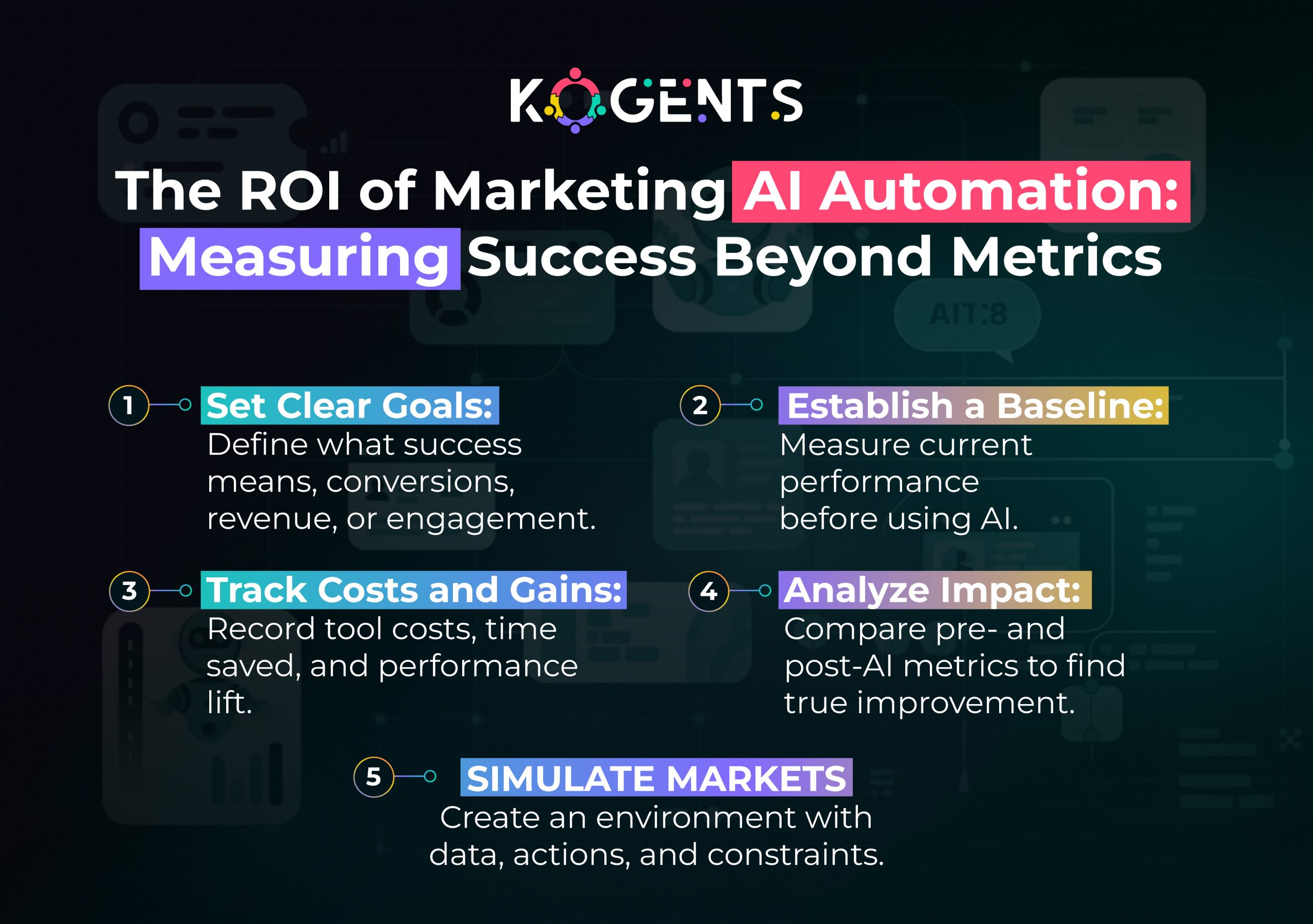
How can I measure the ROI of AI marketing automation?
Track metrics such as conversion rates, customer engagement levels, and cost savings to assess the effectiveness of AI-driven campaigns.
Is AI marketing automation a one-time setup?
No, AI marketing automation requires ongoing monitoring and optimization to adapt to changing customer behaviors and market conditions.
Can AI replace human marketers?
While AI can automate certain tasks, human creativity and strategic thinking remain essential in marketing. AI serves as a tool to augment human capabilities.
What does the future hold for AI in marketing?
The future of AI in marketing includes advancements in predictive analytics, deeper personalization, and greater integration across marketing channels, leading to more efficient and effective campaigns.