A decade ago, customers were satisfied when brands responded quickly, but today the scenario has been revamped 360 degrees.
Now, they expect brands to anticipate their needs, instantly, accurately, invisibly.
We live in the era of anticipatory intelligence, powered by predictive AI tools, predictive analytics tools, predictive AI tools, and predictive intelligence software capable of understanding intent before humans articulate it.
Whether you’re browsing Amazon, watching Netflix, chatting with a support bot, or shopping at a retail store, you’re already experiencing the influence of predictive machine learning tools, AI learning algorithms, and predictive modeling tools running silently in the background.
These tools do more than forecast demand.
They interpret unspoken preferences, detect behavioral patterns, and deliver personalized experiences at scale.
Backed by breakthroughs from MIT CSAIL, Gartner, Stanford AI Lab, Google AI Research, and real-world enterprise deployments, predictive AI has shifted from a competitive advantage to an operational requirement.
Key Takeaways
- Predictive AI tools are the engine of anticipatory customer experience (ACX).
- They don’t wait for questions; they deliver insights, recommendations, and solutions ahead of time, as they are the best AI agents for customer support.
- Modern prediction uses neural networks, behavioral analytics & automated forecasting, not guesswork.
- This includes time-series forecasting, regression models, classification algorithms, and real-time predictive insights.
- Data-driven personalization backed by predictive AI increases customer lifetime value.
- Predictive AI tools are no longer enterprise-only.
- Cloud-based systems and affordable predictive AI tools for small businesses have democratized access.
What Are Predictive AI Tools?
They are advanced systems powered by machine learning, statistical modeling, and big data analytics that forecast customer actions before they occur.
They analyze:
- browsing behavior
- purchase history
- sentiment
- churn likelihood
- contextual triggers
- market shifts
- user signals across digital touchpoints
Predictive AI tools differ from traditional analytics because they learn, adapt, optimize, and automate decisions in real time.
How AI Predicts Customer Needs Before They Even Ask?
AI prediction involves a multi-layered pipeline, combining engineering, data science, neuroscience-inspired models, and behavioral analysis.
1. Customer Data Signals Are Captured
Predictive AI collects data from:
- CRM interactions
- website clickstreams
- mobile events
- previous purchases
- search queries
- chatbot transcripts
- location patterns
- payment behavior
- social sentiment
- IoT interactions
These signals feed into predictive data analysis software that processes customer activity with tremendous granularity.
2. Machine Learning & Deep Learning Models Are Trained
Predictive models include:
- Regression algorithms for numerical forecasting
- classification models for churn prediction
- neural networks for complex behavioral predictions
- time-series forecasting models for demand trends
- recommendation engines for personalization
These systems form the backbone of enterprise predictive AI solutions.
3. Hidden Behavioral Patterns Are Identified
AI identifies:
- Subtle preference changes
- micro-intentions
- sentiment polarity shifts
- friction points in digital journeys
- signals of dissatisfaction
- purchase triggers
This enables brands to predict what a customer might need before they communicate it.
4. Real-Time Predictions Influence the Customer Experience
Examples:
- AI adjusts product recommendations
- Predictive scoring triggers proactive retention
- Dynamic pricing models adapt based on behavior
- Marketing automation workflows activate
- Risk models flag anomalies instantly
This is how businesses deliver predictive experiences, not reactive ones.
Why Predictive Intelligence Is Now a Competitive Necessity?
AI-powered lead scoring boosts conversion rates by 25% (HubSpot, Forbes)
 Core Predictive AI Tool Variations (With Use Cases)
Below is a breakdown with integrated keyword variations:
1. Predictive AI Tools for Customer Behavior Analysis
Predicts:
- purchase intent
- churn probability
- next-best actions
Tools: Salesforce Einstein, H2O.ai, RapidMiner
2. Predictive AI Tools for Marketing Automation
AI personalizes emails, offers, landing pages, and ads.
Tools: HubSpot AI, Klaviyo AI, ActiveCampaign AI
3. Predictive AI Software for Sales Forecasting
Predicts pipeline health, deal closure probability, and quota risk.
Tools: Zoho AI, Microsoft Dynamics 365 AI
4. Predictive AI Tools for Financial Risk Analysis
Used for:
- fraud detection
- credit scoring
- portfolio risk modeling
Tools: IBM Watson Studio, SAS Viya
5. Predictive AI Tools for Cybersecurity Threat Detection
Detect anomalies and breach patterns before attacks occur.
Tools: CrowdStrike Falcon, Darktrace AI
6. Predictive AI Tools for Healthcare Forecasting
Used for:
- Patient volume forecasting
- disease progression modeling
- triage workflows
Tools: Google Cloud AutoML, Azure AI Health
7. Predictive AI Tools for Supply Chain Optimization
Used for:
- replenishment forecasting
- routing optimization
- warehouse automation
Tools: Amazon SageMaker, SAP Integrated Business Planning
The Architecture Behind Predictive Customer Intelligence
Predictive AI systems are built on a layered architecture:
1. Data Layer
Includes structured + unstructured data:
- CRM
- ERP
- clickstreams
- NLP-driven text data
- image/video data
- IoT sensor data
2. Intelligence Layer
Contains:
- ML pipelines
- AutoML workflows
- neural network models
- real-time anomaly detection
3. Decision Layer
Implements:
- predictive scoring
- automated customer actions
- contextual decision engines
- probabilistic outcome mapping
4. Experience Layer
Where AI interacts with customers:
- best AI chatbot for WhatsApp
- AI messenger bot
- recommendation engines
- support agents
- dynamic pricing systems
This architecture powers AI-powered predictive tools and enterprise forecasting engines.
Why Traditional Analytics Fail in Modern Prediction?
Traditional analytics answers:
“What happened?”
“Why did it happen?”
Predictive AI answers:
“What will happen next?”
“What should we do about it?”
Why traditional analytics fails:
- It cannot process unstructured behavioral data.
- It lacks real-time adaptability.
- It relies on fixed rules, not learning systems.
- It cannot personalize at scale.
- It struggles with micro-intent detection.
The Psychology of Anticipatory AI: Understanding Hidden Intent
Predictive AI doesn’t just analyze actions; it interprets psychological drivers:
- motivation
- sentiment
- hesitations
- cognitive biases
- emotional triggers
AI identifies:
- When a user is about to churn
- When they are price sensitive
- When they need support
- When they are frustrated
- When they are considering a competitor
Understanding hidden intent is the hallmark of predictive intelligence software.
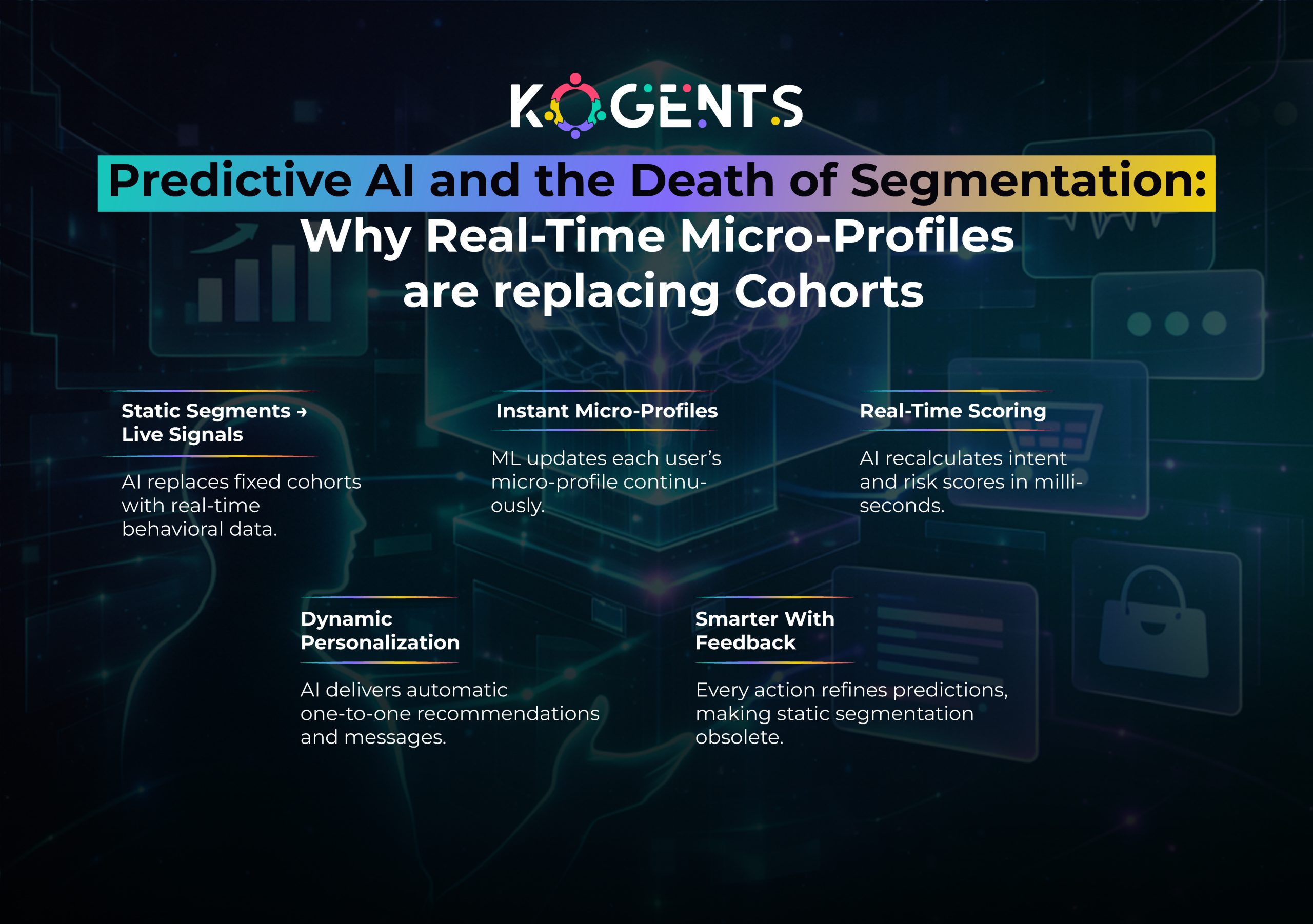
Predictive AI in the Customer Journey
Predictive AI tools influence each stage:
1. Awareness
AI identifies audiences most likely to engage and predicts trending topics.
2. Consideration
AI tailors product messaging, content recommendations, and email personalization.
3. Decision
AI provides next-best offers, urgency signals, and dynamic pricing.
4. Retention
AI detects early signs of churn and triggers automated retention playbooks.
5. Loyalty
- AI helps deliver personalized perks, rewards, and experiences.
- Predictive tools create hyper-relevant journeys across every digital touchpoint.
Predictive AI Across Major Industries
Already covered in depth earlier, but expanded here.
Retail (Predictive Commerce)
Predicts:
- purchase patterns
- replenishment cycles
- store traffic
- discount sensitivity
Healthcare
Predicts:
- Patient no-show likelihood
- treatment adherence
- resource load
Tools: cloud-based predictive AI tools used for forecasting.
Finance
Predicts:
- fraud
- credit risk
- loan default
- investment movement
SaaS
Predicts:
- churn
- product adoption
- upsell potential
Cybersecurity
Predicts breaches before signature-based tools can detect them.
Case Studies
Case Study 1: Starbucks – DeepBrew Predictive Engine
DeepBrew by Starbucks uses predictive AI tools to analyze:
- order history
- weather patterns
- store proximity
- time-of-day behavior
Impact:
- App engagement tripled
- Over $1 billion in incremental revenue
Case Study 2: Netflix – Predictive Recommendation System
Netflix uses predictive modeling tools to analyze:
- viewing sequences
- interaction speed
- content preferences
Impact: 80% of streams come from AI-powered recommendations.
Case Study 3: Walmart – AI Demand Forecasting System
Walmart uses enterprise predictive AI solutions to forecast national demand.
Impact:
- 35% increase in forecast accuracy
- 20% reduction in supply chain delays
Table of Leading Predictive AI Tools (2025)
| Tool | Best For | Key Strengths | Compliance | Price Tier |
| Google Cloud AutoML | General AI prediction | Scalable, AutoML | ISO 27001 | Medium |
| IBM Watson Studio | Enterprise analytics | NLP + ML powerhouse | HIPAA | High |
| Amazon SageMaker | ML pipelines | Best MLOps workflows | ISO 27001 | Medium–High |
| Salesforce Einstein | CRM forecasting | Sales + Service AI | SOC 2 | Medium |
| DataRobot | Enterprise AutoML | Fast deployment | SOC 2 | High |
| H2O.ai | Open-source prediction | Custom modeling | SOC 2 | Low–Medium |
The Predictive Experience Revolution (PX 2.0)
It has four pillars:
1. Anticipatory Service
Serving customers before they express a need.
2. Context-Driven Personalization
Offers change in real time based on user behavior.
3. Adaptive Intelligence
Systems continuously learn, no static rules, no manual updates.
4. Invisible AI Integration
- AI works behind the scenes, creating effortless journeys.
- This is the future of predictive intelligence software and AI predictive analytics platforms.
The Organizations That Predict the Future Will Own It!
The companies winning in 2025 and beyond are those that understand customer intent before it becomes action.
Predictive AI tools allow brands to transition from reactive to anticipatory, unlocking next-level personalization, automation, and intelligence.
If your organization wants to harness predictive AI systems, model development, integration, automation workflows, forecasting pipelines, or enterprise implementation, now is the time.
Brands that predict succeed. Brands that react fall behind.
We at Kogents.ai help businesses deploy predictive AI, build intelligent decision systems, automate customer experience, and unlock new revenue through anticipatory insights.
From enterprise predictive AI solutions to cloud-based predictive AI tools, we architect, implement, and optimize your predictive future.
FAQs
What makes predictive AI tools different from traditional analytics?
Traditional analytics explains the past; predictive AI tools forecast the future using machine learning, neural networks, and behavioral modeling. They adapt continuously, automate decisions, and generate real-time predictive insights.
How do predictive AI tools improve customer experience?
By identifying intent signals before customers communicate them. This includes predicting churn, personalizing content, optimizing recommendations, and enabling anticipatory customer service.
Which industries benefit most from predictive AI?
Retail, healthcare, finance, cybersecurity, SaaS, logistics, and telecom sectors benefit from AI predictive analytics platforms and predictive modeling tools.
Are predictive AI tools expensive to implement?
Costs vary widely:
- Small business tools: $1,000–$10,000
- Mid-market AI systems: $25k–$250k
- Enterprise predictive AI deployments: $500k–$5M
How accurate are predictive AI models?
Accuracy ranges from 75% to 95% depending on data quality, model type, and feedback loops.
Can predictive AI tools be used without a data science team?
Yes. Platforms like DataRobot, H2O.ai, and Google AutoML provide AutoML capabilities requiring minimal coding.
What data is required for predictive modeling?
CRM data, behavioral logs, transaction history, NLP-derived sentiment data, and real-time engagement metrics are most commonly used.
How do predictive AI tools support sales forecasting?
They use predictive machine learning tools to predict quota risk, deal health, and revenue velocity.
Can predictive AI detect cybersecurity threats?
Yes. Tools like Darktrace and CrowdStrike detect anomalies using behavioral pattern recognition and predictive intelligence software.
What role does MLOps play in predictive AI?
MLOps enables continuous training, monitoring, deployment, and optimization of predictive AI models at enterprise scale.
How do predictive AI tools help reduce customer churn?
By analyzing friction points, detecting dissatisfaction signals, predicting drop-off behavior, and triggering proactive retention flows.
Do predictive AI tools require cloud infrastructure?
Not always. There are cloud-based predictive AI tools and on-premise enterprise solutions, depending on security needs.