Most teams treat page speed like housekeeping, something engineering “handles later.”
But do you want to know the uncomfortable truth? Here it is: if your site is slow, your Conversion Rate Optimization program is handicapped before it even starts.
You can invest in CRO consulting, run a sophisticated CRO testing framework, hire a conversion optimization agency, or deploy premium personalization tools, but if users feel lag, hesitation, or jank, they won’t wait for your beautifully optimized CTA to load.
Speed changes how users feel, and feelings drive decisions.
In this guide, we’ll connect the dots between website performance optimization, funnel optimization, website usability, and the business outcomes that matter: conversion lift, retention, and customer satisfaction (CSAT).
Key Takeaways
- Speed is a foundational lever for CRO optimization, not a secondary enhancement.
- Performance improvements amplify every other CRO tactic, copy, UX, personalization, and testing.
- Slow response time increases bounce rate, reduces click-through rate (CTR), and breaks user momentum.
- Core Web Vitals (LCP, INP, CLS) are practical CRO KPIs, not “SEO-only” metrics.
- Faster experiences measurably improve both conversion rate and CSAT through trust and reduced cognitive load.
What Conversion Rate Optimization Really Means And Why Speed Belongs Inside It?
Conversion rate optimization is the systematic process of enhancing the percentage of visitors who complete a desired action, buy, subscribe, request a demo, book a call, or complete onboarding by improving the experience by inducing behavioral analytics, experimentation, and UX improvements.
In practice, website conversion optimization depends on:
- User behavior analysis (scroll depth, rage clicks, hesitations)
- Customer journey mapping across touchpoints
- Experimentation (A/B testing, multivariate testing)
- Persuasion principles (trust badges, social proof, clarity)
- Website performance optimization (speed, responsiveness, stability)
Note: Speed isn’t separate from CRO; it’s the foundation that makes the funnel usable.
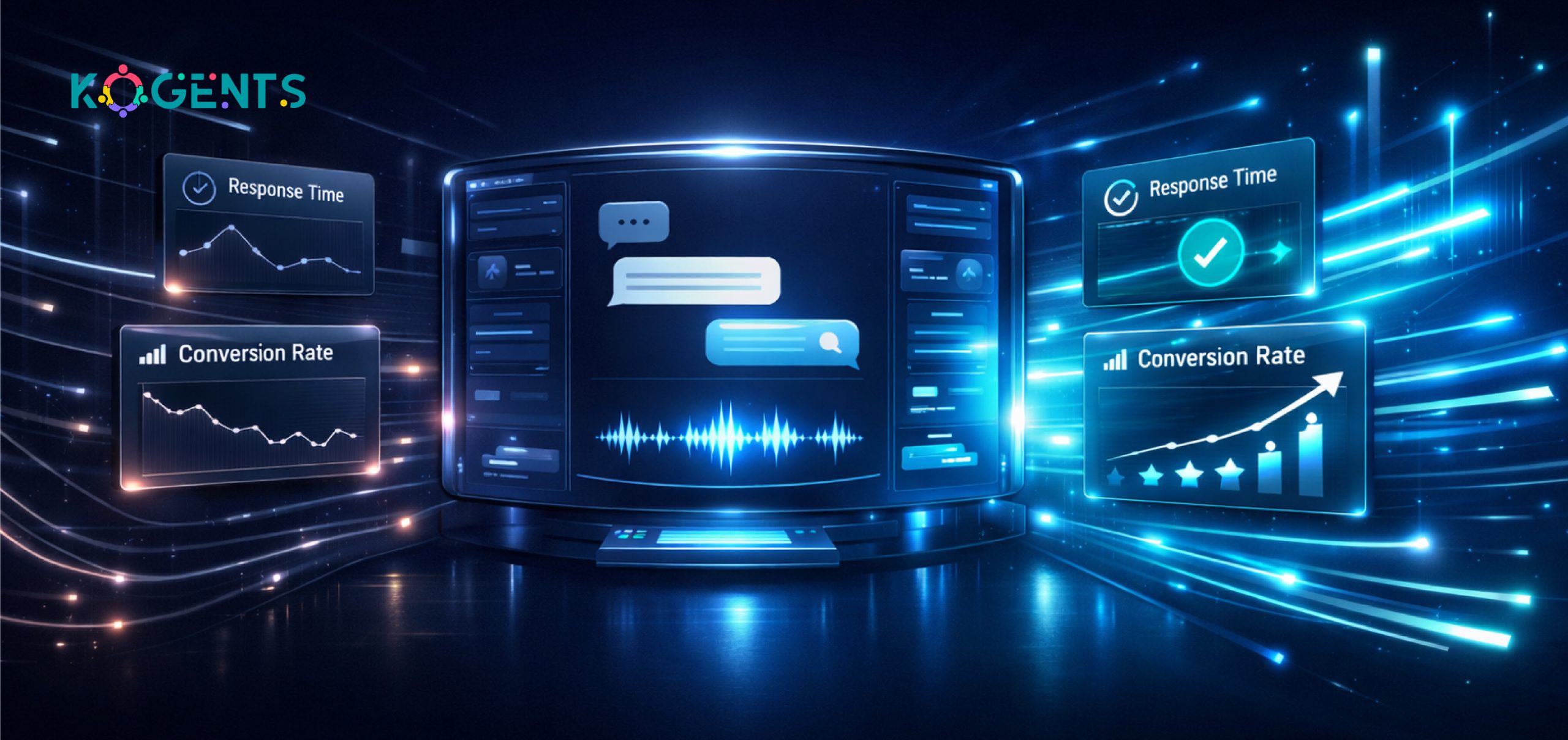
Graphical Representation: How Speed Pushes Users Out of the Funnel?
Below is a simplified view of what many teams see in analytics: conversion rate drops as load time rises.
Key Note: This aligns with Google’s published behavior patterns around bounce probability and loading delays.
The Psychology of Speed: Why Response Time Changes Decisions?
Speed shapes conversion behavior because it alters:
1) Cognitive Load
- Slow sites force users to “hold context” while waiting.
- That increases mental effort and reduces completion rates, especially on mobile.
2) Trust Signals
- Performance is perceived as credibility.
- A lagging checkout or delayed form submission triggers doubt: “Is this secure?”
- “Did it submit?” “Will I be charged twice?”
3) Decision Velocity
Fast experiences are naturally intact to maintaining momentum and reducing drop-off between micro-steps.
(add to cart → checkout → payment).
This is why UX leaders and CRO educators like Peep Laja (CXL), Tim Ash, and Avinash Kaushik) consistently emphasize that conversion is rarely “one element”; it’s the entire experience: clarity, friction, and confidence.
Speed Metrics CRO Teams Should Treat as Revenue Metrics
A modern CRO audit checklist should include performance diagnostics, not only design critiques.
Core performance KPIs that influence CRO
- LCP (Largest Contentful Paint): how quickly the main content becomes usable
- INP (Interaction to Next Paint): responsiveness during taps/clicks
- CLS (Cumulative Layout Shift): stability (prevents mis-clicks)
- TTFB (Time to First Byte): backend responsiveness
Case in Point: Vodafone’s web.dev case study is a perfect example of treating performance as a conversion experiment: they A/B tested Web Vitals improvements and measured business outcomes.
Table: Speed → Funnel → Business Outcome
| Performance factor | What users experience | CRO impact | Business result |
| Faster LCP | Content appears quickly | Lower bounce, higher engagement | More leads/sales |
| Better INP | Site feels responsive | Higher CTR, fewer abandoned steps | Higher conversions |
| Lower CLS | Page doesn’t jump | Fewer mis-clicks & errors | Higher CSAT |
| Faster TTFB | Immediate feedback | More completed forms/checkouts | More revenue & trust |
Note: These factors are strongly reflected in real-world case studies like Vodafone and AliExpress.
A Speed-First CRO Framework So You Don’t Optimize the Wrong Thing!
Most conversion optimization services fail when teams test “surface tweaks” while the experience remains slow.
Here’s a practical conversion optimization roadmap that treats speed as a CRO layer:
Phase 1 — Diagnose Friction
Use behavioral analytics (session recordings, heatmaps, GA4 event tracking) to identify:
- Where do users drop?
- Which step slows down?
- Whether frustration signals spike on slow pages?
Phase 2 — Fix Performance Bottlenecks
Prioritize:
- slow landing pages (paid traffic waste)
- product pages (ecommerce intent)
- signup/demo flows (CRO for SaaS websites)
- checkout and payment (trust-critical)
Phase 3 — Then Run Experiments
Once baseline speed is stable, your CRO testing framework becomes more reliable (less noise, higher statistical signal).
Soft Reminder: This is the difference between “testing” and data-driven conversion optimization.
Why Slow Sites Create False A/B Test Winners?
A/B tests assume a stable environment.
But speed instability introduces bias:
- Variant B might appear “worse” simply because it loads more slowly.
- One variant may trigger higher CLS, causing accidental clicks.
- Mobile performance changes can skew results by device type.
Key Insight: If you’re running CRO optimization at scale, treat performance as an “experiment prerequisite,” not a nice-to-have.
CSAT, Support Tickets, and Speed: The CRO Cost People Forget About
CRO isn’t just “more conversions.”
Slow experiences increase:
- failed form submissions,
- duplicate clicks, accidental purchases,
- checkout retries, and payment anxiety
- “Where is my confirmation?” support tickets
For brands handling high mobile traffic, integrating the best AI chatbot for WhatsApp helps deliver instant order updates, payment confirmations, and support responses, reducing friction and improving CSAT.
Note: Many of these issues can be eliminated by implementing AI to handle slow replies, which ensures instant confirmations, real-time feedback, and reduced customer anxiety during critical conversion moments.
Case in Point: Deloitte’s research on milliseconds and mobile performance highlights how speed changes engagement and funnel progression, directly affecting conversion behavior and brand perception.
Highlight: Speed improvements often reduce customer effort, which is a silent CSAT booster.
Case Studies
Case Study 1 — Vodafone (Web Vitals A/B Test → More Sales)
Vodafone ran an A/B test focused on Web Vitals. A 31% improvement in LCP was produced:
Why it matters: This is pure landing page conversion optimization where performance is the tested variable.
Case Study 2 — AliExpress (PWA Performance → Massive Conversion Gains)
After launching a Progressive Web App, AliExpress reported:
- +104% conversion rate for new users
- +82% conversion on iOS (Safari)
- 2x pages per session
- +74% time spent per session
Why it matters: This is ecommerce conversion rate optimization driven by speed + experience upgrades.
Case Study 3 — Pinterest (Faster Mobile Web → Higher Signup Conversion)
Pinterest engineers improved mobile web landing performance by 60% and saw:
Why it matters: This is CRO for SaaS websites’ style growth mechanics applied to consumer acquisition.
Case Study 4 — COOK (Speed Reduction → Conversion Lift + Better Engagement)
COOK reduced average page load time by 0.85 seconds and saw:
Why it matters: It shows speed impacts both conversion and engagement quality.
Case Study 5 — Mobify (100ms Improvements → Measurable Conversion Lift)
Mobify reported that for their customer base:
Each 100ms decrease in homepage load speed produced a 1.11% lift in session-based conversion
Why it matters: This quantifies “milliseconds matter” in a way CRO teams can model into ROI.
Case Study 6 — BBC (Each Additional Second → Audience Loss)
The BBC observed that they lose 10% of users for every additional second it takes their site to load.
Why it matters: While not a checkout metric, this is a top-funnel reality: no traffic retention, no conversions.
How to Improve Conversion Rate Through Speed?
To strengthen conversion rate optimization best practices, prioritize:
Performance fixes that directly support conversions
- Reduce render-blocking JS (improves LCP/INP)
- Optimize images and responsive media delivery
- Server-side rendering for critical content (especially for landing pages)
- Remove/limit heavy third-party scripts (chat widgets, trackers)
- Use a CDN and caching strategy for global responsiveness
In addition, deploying an AI messenger bot can significantly reduce perceived wait time by projecting prompt responses, confirmations, and guidance while pages or actions are being complete.
The CRO Edge Is Often Hidden in Milliseconds!
If you want sustainable growth, treat speed as a conversion asset, not a technical burden for the sake!
The strongest CRO strategy doesn’t originate with button colors; it begins with removing friction that prevents users from even reaching your best persuasive elements.
The winning teams blend:
- performance engineering
- UX/UI improvements
- behavioral analytics
- a disciplined CRO testing framework
That’s how you create a fast, trustworthy experience that converts and keeps customers satisfied.
If your goal is to out-convert competitors, not just “optimize”, build a speed-first engine for Conversion Rate Optimization.
When response time improves, everything else you do in CRO works harder, tests cleaner, and scales faster.
So, are you ready to elevate your conversion rate and enhance your brand positioning? Then Kogents.ai is the right platform for you! Contact us today for more insights!
FAQs
What is Conversion Rate Optimization, and why does it matter?
Conversion rate optimization is the practice of increasing the percentage of visitors who take a desired action by improving UX, reducing friction, and aligning pages with user intent. It matters because CRO raises revenue without increasing ad spend by improving funnel performance and turning existing traffic into results.
How does CRO work in real life (not theory)?
CRO works by combining behavioral data (what users do) with structured experimentation (what changes improve outcomes). A typical cycle includes: baseline metrics → user behavior analysis → hypothesis creation → A/B testing → validation via statistical confidence → rollout + iteration. Moreover, speed belongs early in the cycle because performance problems distort user behavior patterns and test outcomes.
Why does website speed matter so much for conversions and CSAT?
Because speed affects perceived trust, cognitive load, and decision momentum. Even when users “want” what you offer, slow response time creates doubt and friction that suppress conversions. Studies and case evidence show performance improvements can directly increase sales/lead rates.
What’s the difference between CRO and SEO?
SEO brings traffic; website conversion optimization turns that traffic into outcomes. Speed overlaps both: it supports search visibility and user engagement, but CRO measures success in conversions, signups, purchases, demo requests, and revenue, not rankings.
What is a good average website conversion rate?
It varies by industry, device, and offer. Instead of chasing a generic “average,” CRO teams benchmark by channel (paid vs organic), device (mobile vs desktop), and page type (landing page vs product page). Speed becomes your “unfair advantage” because faster sites typically retain more sessions and give users fewer reasons to abandon.
Which CRO metrics should I track alongside speed metrics?
Track performance (LCP/INP/CLS/TTFB) alongside CRO metrics like bounce rate, CTR, scroll depth, add-to-cart rate, checkout completion, and form completion. Pairing these reveals whether you’re fixing the right friction point—e.g., improving LCP on a landing page but seeing no lift might mean the bottleneck is trust, clarity, or offer mismatch.
What tools are best for measuring CRO + speed together?
Use Google Analytics 4 (GA4) for event tracking and funnel analysis; combine it with performance diagnostics (PageSpeed Insights/web performance monitoring) plus UX tools like heatmaps and session recordings.
Should SaaS and ecommerce approach speed-driven CRO differently?
Yes. CRO for SaaS websites often focuses on demo/trial funnels, pricing clarity, onboarding speed, and perceived reliability. CRO for ecommerce stores prioritizes product page speed, search/filter responsiveness, cart/checkout stability, and payment confidence. Both depend on speed, but the conversion moments differ.
Should I hire a CRO agency or build in-house capability?
If you need faster wins, an experienced conversion optimization agency or CRO consulting partner can bring proven frameworks, tool stacks, and experiment design maturity. In-house teams are great for long-term iteration, especially when engineering resources are consistently available for speed improvements.
What’s the ROI of CRO services when speed is included?
Speed-driven CRO can deliver compounding ROI because performance upgrades lift multiple metrics: more sessions retained, more steps completed, fewer abandoned checkouts, and better CSAT.