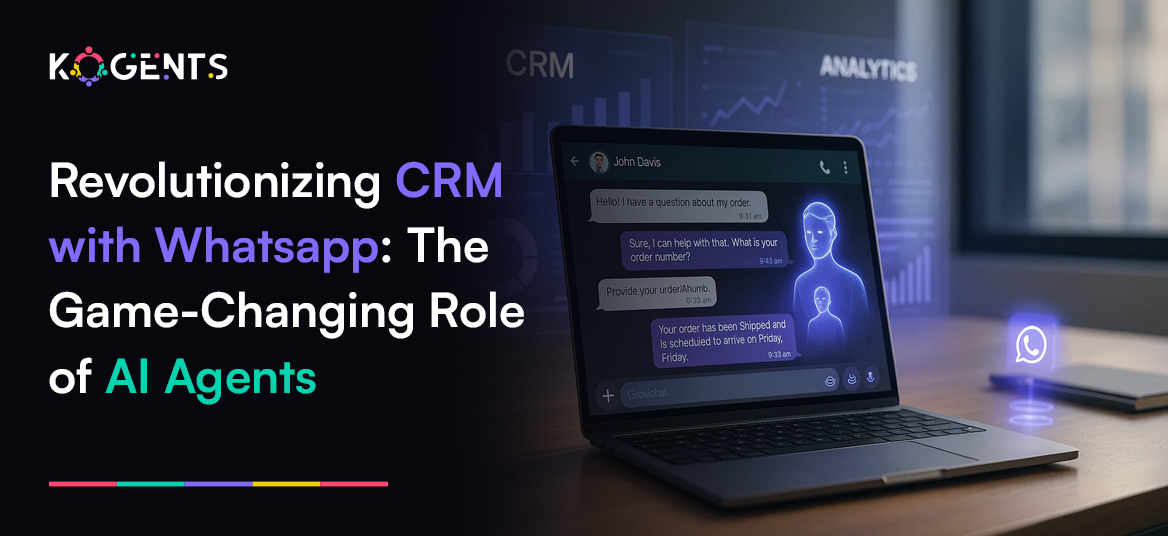
Yet, most brands still use it as a basic broadcast tool, missing the powerful potential of AI-driven personalization, dynamic segmentation, and automated conversation flows that directly increase retention, repeat purchases, and upsell revenue.
With the advent of modern AI Chat Assistants for Whatsapp, a new generation of intelligent conversational engines has emerged that fuse LLMs, NLP-driven chat systems, behavioral analytics, and multi-step automation workflows.
Unlike traditional chatbots that operate on rigid scripts, today’s smart chat assistant adapts to user context, predicts intent, triggers tailored messaging, and orchestrates full-funnel WhatsApp journeys that feel hyper-personalized, real-time, and human-like.
This blog unveils how businesses can deploy advanced WhatsApp automation workflows using an AI-powered chat assistant to transform customer engagement, reduce churn, and increase lifetime value.
Key Takeaways
-
AI-driven personalization in WhatsApp increases retention.
-
- When powered by intent recognition, context-aware assistant logic, and behavioral segmentation, personalized messages skyrocket user engagement.
-
AI Chat Assistants outperform traditional chatbots.
-
- They leverage LLMs, natural language processing, and user intent detection AI to deliver human-level support and automated decision-making.
-
Upsell revenue grows significantly with dynamic recommendation engines
-
- AI-based cross-sell and upsell workflows on WhatsApp can increase AOV depending on the industry.
-
Advanced workflows unlock scalable automation.
-
- From appointment scheduling to subscription renewals to abandoned cart recovery, AI workflows reduce manual workload.
-
WhatsApp + AI is now a full-funnel revenue engine.
- Not just customer support, this includes lead qualification, sales automation, proactive retention flows, and hyper-personalized follow-ups.
Understanding AI Chat Assistants & WhatsApp Personalization Workflows
What is an AI Chat Assistant?
An AI chat assistant for WhatsApp is more than a simple rule-based bot.
It’s a conversational AI assistant built on natural language processing (NLP), machine learning, and sometimes large language models (LLMs).
These systems understand user intent, maintain conversational context, and can even integrate with backend systems (like CRMs, databases, or recommendation engines) to deliver relevant, personalized responses.
Compared to legacy chatbots, AI assistants can:
- Interpret complex, varied user queries (not just fixed menu options).
- Maintain context over a conversation, enabling follow-ups, upsell offers, or support hand-offs.
- Learn from interactions, improving over time, and adapting to customer behavior patterns.
Why Does WhatsApp + AI Chat Assistant Make Sense?
WhatsApp is one of the most widely used messaging platforms globally, offering a direct line to customers without the friction of apps or email.
Pairing it with an AI assistant unlocks powerful workflows:
- Always-On Support & Engagement: The AI assistant can greet users, answer FAQs, handle basic support, and engage customers at any time of day, crucial in regions like South Asia, MENA, and globally. This supports customer support automation and dramatically reduces response times.
- Personalized Re-engagement: Based on purchase history, browsing behavior, or customer profile, the AI assistant can send targeted messages, promos, reminders, and upsell suggestions.
- Cart Abandonment & Conversion Boost: For e-commerce, if a user left items in their cart, a timely WhatsApp message from the AI assistant can nudge them to complete the purchase. This taps into conversational marketing and AI website chat widget strategies.
- Seamless Handoff to Humans When Needed: For queries the AI assistant can’t handle, it can trigger escalation workflows to human agents, preserving user experience while optimizing efficiency.
Business Benefits: Retention, Efficiency & Upsell Revenue
Deploying an AI chat assistant via WhatsApp with these workflows brings real, measurable results.
Here’s why forward-thinking companies are investing heavily in this direction:
- Remarkable Customer Satisfaction & Loyalty
- Studies show that the best AI chatbot for WhatsApp significantly improves customer satisfaction by providing quick, accurate, and personalized responses.
- When customers feel heard, understood, and valued, they stay longer.
- A strong satisfaction experience becomes a loyalty driver.
- Cost Savings & Operational Efficiency
- Using AI assistants reduces operational burden and support costs.
- This translates into improved efficiency, especially when scaling.
One source notes businesses using AI chatbots save up to 30% in customer support costs and speed up response times dramatically.
- Increased Revenue via Upselling & Cross-Selling
- With personalized product recommendations, cart-abandonment reminders, and tailored suggestions, AI chat assistants can increase conversions and average order values.
- For businesses, this means higher lifetime value per customer without significantly higher acquisition cost.
- Enhanced Data & Analytics for Better Marketing
- AI assistants can track user behavior, preferences, purchase history, and engagement patterns.
- This data helps build robust customer personas, inform marketing strategies, and deliver more relevant future engagements, all through context-aware AI and user intent detection AI.
- Competitive Advantage & Scalability
- As adoption of AI-driven customer engagement rises, businesses using these tools gain an edge in responsiveness, personalization, and customer experience.
- Scalability, especially across geographies and time zones, becomes feasible thanks to automation.
According to a report, AI-enabled customer service can increase engagement, cross-sell/upsell opportunities, and reduce cost-to-serve.
Real-World Use Cases & Case Studies
To make this more concrete, here are used cases explaining AI agents’ benefits, showing how businesses leveraged an AI chat assistant
Case Study 1: SaaS / Subscription Services Improving Customer Retention
A recent compilation of customer retention stories across SaaS, eCommerce, and subscription-based services found that companies using AI-driven retention strategies, including AI assistants for follow-up, re-engagement, and timely personalized outreach, saw up to a 25% increase in customer retention rates.
Outcome: This demonstrates how a well-implemented AI chat assistant ecosystem can reduce churn and boost long-term customer lifetime value (CLV).
Case Study 2: 24/7 Automated Support & Cost Savings
For companies with global customers or high support volume, such automation, especially on messaging platforms like WhatsApp, delivers major operational efficiencies.
Case Study 3: Hybrid AI-Human Assistance in Contact Centers (Next-Gen Agent Assist)
In a breakthrough 2025 paper, researchers described a system called Minerva CQ, an agentic AI deployed in live voice-based customer support that uses real-time transcription, intent detection, sentiment analysis, and dynamic conversational context tracking.
Outcome: This reflects the future direction of AI assistants beyond standalone bots: deeply integrated co-pilot systems that help companies scale high-quality support without losing personalization.
A Unique Approach: Psychology-Driven WhatsApp Personalization Workflows
So far, much has been written about technical workflows and business logic. But to truly stand out and create loyalty, I propose a psychology-driven approach to personalization workflows using an AI chat assistant on WhatsApp.
Here’s how:
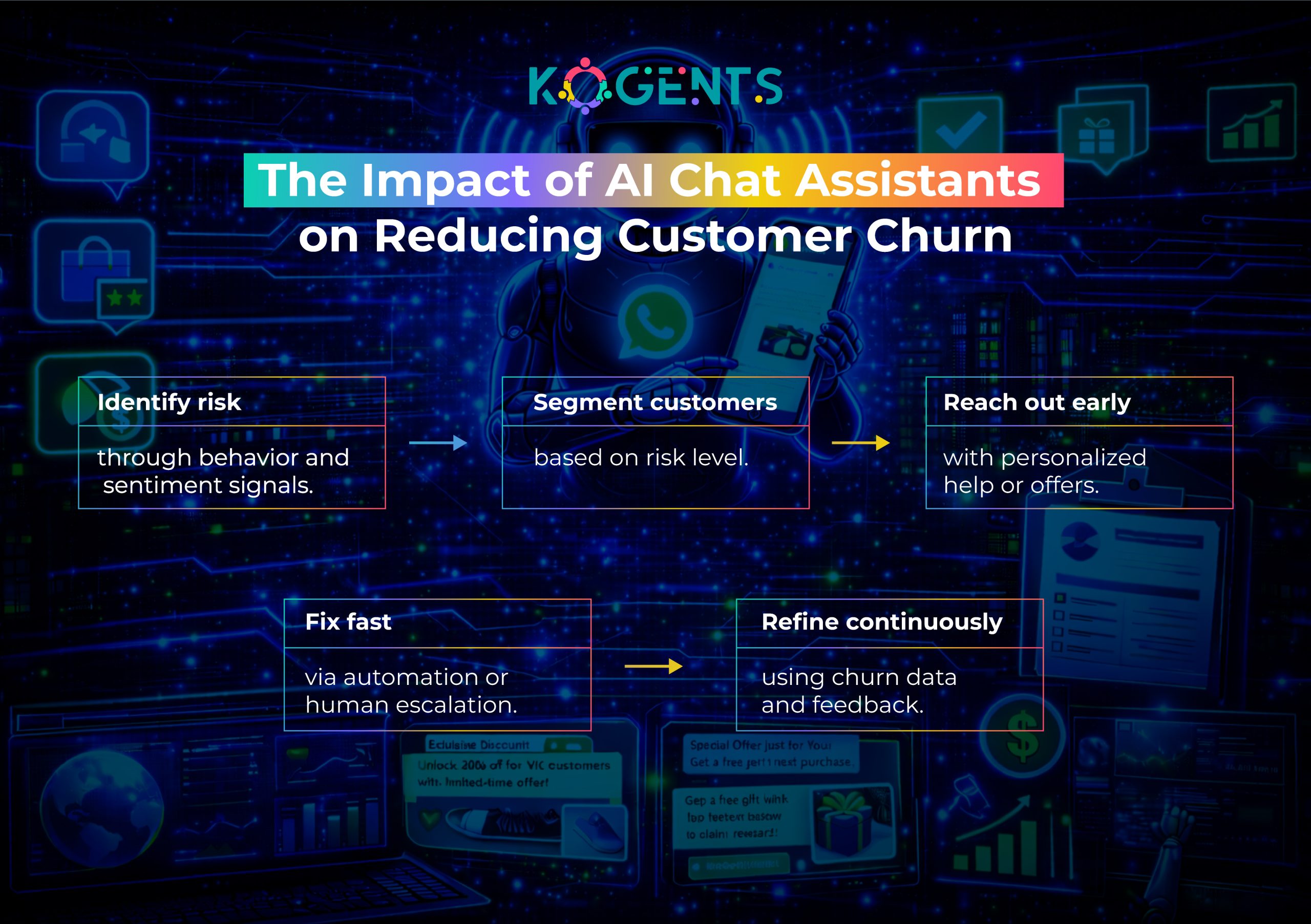
- Behavioral Trigger Messages Based on User Segments
- Instead of generic “Hey, come back” messages, segment users by behavior/emotion: e.g., “dormant,” “frequent buyer,” “first-time,” “window shopper.” Tailor tone accordingly (friendly nudge vs. exclusive VIP deal).
- Use user intent detection AI + sentiment analysis to pick up signals (e.g., dissatisfaction, curiosity, indecision) and trigger subtle nudges.
- Conversational Storytelling & Experience Reminders
- After purchase, send a “Your friend called it” message: e.g., “Many customers loved how comfy those shoes were, want to check what others pair them with?” Add social proof and storytelling.
- Fetch data from reviews, FAQs, and user feedback to generate dynamic, story-like follow-ups.
- Timed Micro-Missions — Engagement Hooks
- For subscription-based services or eCommerce, after a certain period, send micro-missions: “You loved X — check this limited-stock offer,” or “Time to refill,” or “Seasonal upgrade suggestions.”
- This keeps engagement alive.
- Feedback-Loop Automation for Continuous Improvement
- After support or purchase, trigger a quick chat-based feedback request.
- Use responses to adapt future messaging style, tone, and content, creating a hybrid-intelligence loop of continuous learning.
- Contextual Cross-Channel Memory & Unified Experience
- If a user engages on WhatsApp but then visits the website or uses another channel, the system, via WhatsApp CRM integration that recalls context and continues the conversation seamlessly.
- This ensures omnichannel consistency and prevents repeated questions.
Note: By combining behavioral psychology, context-awareness, and dynamic workflows, rather than just reactive responses, you turn your AI chat assistant into a brand companion: someone who understands your customer and engages with empathy, relevance, and timing.
Implementation Considerations & Best Practices
Deploying an AI chat assistant + WhatsApp personalization is powerful, but doing it right requires care. Here are some best practices and caveats:
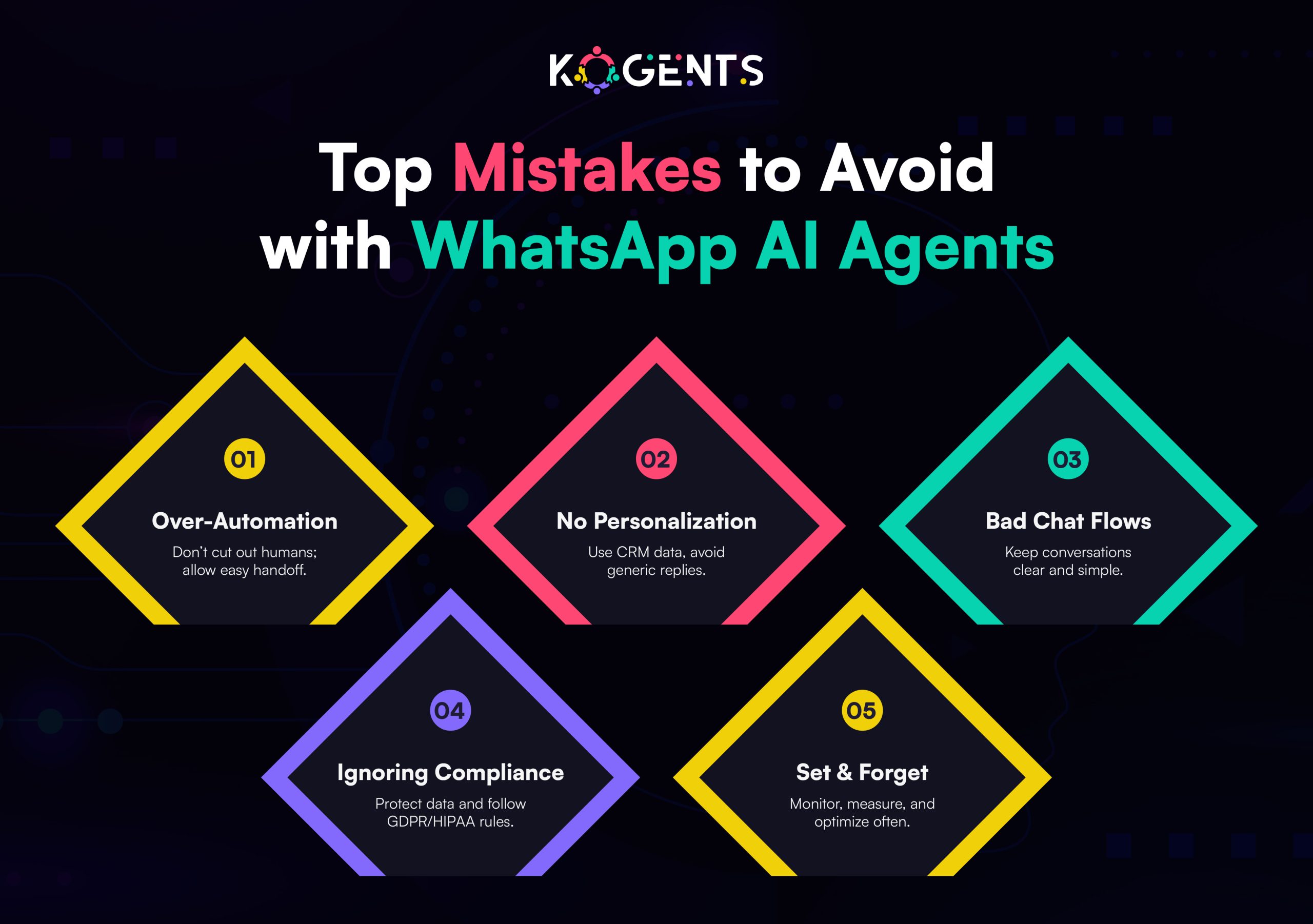
- Quality of Data is Critical: Since personalization depends on understanding user behavior, purchase history, and preferences, a clean, centralized CRM or customer-data platform is vital. Garbage in → irrelevant messages.
- Balance Automation & Human Handoff: Not all queries suit bots. Provide easy paths for human agents for complex issues or emotional support. This maintains trust and ensures quality.
- Respect Privacy & Consent: Ensure compliance with privacy laws (data processing, opt-ins), especially when using messaging platforms like WhatsApp. Transparency builds trust.
- Iterative Feedback & Optimization: Use user feedback to refine tone, workflows, timing, and frequency. Over-messaging can annoy customers; under-messaging may lose an opportunity.
- Monitor Key Metrics: Track retention rate, repeat purchase rate, average order value, support resolution time, and customer satisfaction, to measure ROI and iterate.
The Role of Advanced AI Technologies — Beyond Basic Chatbots
While many businesses still rely on rule-based chatbots, the future belongs to AI-powered and generative AI chat assistants.
Some key technology enablers:
- Natural Language Understanding (NLU) & user intent detection AI — to parse customer queries accurately and maintain context.
- Dialog state management — to manage multi-turn conversations, follow-ups, and context-aware suggestions.
- Knowledge graph integration/backend systems integration (CRM, product catalog, analytics) — to fetch user data, transaction history, personalize recommendations, and trigger workflows.
- Semantic search & contextual retrieval — for better product recommendations or support answers based on user history.
- Hybrid feedback systems — combining human-in-the-loop feedback with AI-learning to continuously improve responses and personalization.
Companies investing in these advanced systems, rather than simple rule-based bots, are the ones witnessing real gains in retention, upsell, and customer loyalty.
Example Metrics & Impact (Illustrative Table)
Here’s a consolidated view of key business impact metrics from multiple sources after implementing AI chat assistants + personalization workflows:
|
Metric / KPI |
Improvement or Gain |
|
Customer Support Cost |
30% reduction |
|
Response Time / Wait Time |
Wait times cut by 50% |
|
First Contact Resolution Rate |
40% improvement |
|
Customer Satisfaction / NPS |
15–25 points increase |
|
Retention / Repeat Customer Rate |
20–30% (some businesses) |
|
Sales Conversion / Upsell / Cross-Sell Revenue
|
|
|
Handling of Customer Interactions via Chatbots |
Why Many Traditional Chatbots Fail — And How Smart AI Chat Assistants Overcome It?
Traditional chatbots often falter because they:
- Rely on rigid decision trees and fail on unfamiliar queries.
- Lose context after each interaction, forcing customers to repeat themselves.
- Provide generic responses, lacking empathy, personalization, or real-time relevance.
- Cannot scale personalization or adapt to changing customer behavior over time.
Unveil Why Your Business Should Care About This?
If you’re running an online store, SaaS platform, subscription business, or even just offering customer support, an AI chat assistant deployed via WhatsApp (or any chat channel) is no longer optional. It’s a strategic advantage.
When implemented with advanced personalization workflows, good data integration, and smart automation, AI chat assistants:
- Strengthen customer relationships and loyalty,
- Lower support and operational costs,
- Deliver measurable upsell/cross-sell revenue and higher lifetime value,
- Offer scalable, around-the-clock engagement, and
- Provide actionable customer insights to continuously improve the experience.
For businesses serious about growth and differentiation, the future is conversational and personal.
The brands that treat chat not just as support, but as a sales engine and a customer companion, will win.
If you want to build or integrate a powerful Whatsapp AI chat assistant for your business, consider giving Kogents.ai a try is the best option available!
In that case, we specialize in building smart, context-aware chat assistants tailored to your workflows and revenue goals.
Reach out to explore how we can help you convert conversations into growth.
FAQs
What is an AI chat assistant, and how is it different from a regular chatbot?
An AI chat assistant uses natural language understanding (NLP) and often machine-learning or generative AI to interpret user queries, maintain context, and provide dynamic, personalized responses. A regular chatbot is typically rule-based with fixed decision trees and limited flexibility.
How do AI chat assistants improve customer retention?
By delivering consistent, personalized engagement through timely recommendations, re-engagement messages, support follow-ups, and tailored offers, AI chat assistants make customers feel valued, improving loyalty and repeat purchases.
Can AI chat assistants work on WhatsApp?
Yes, integrating an AI chat assistant with WhatsApp allows businesses to meet customers where they are, provide 24/7 availability, send personalized messages, and tap into conversational workflows.
Do AI chat assistants actually boost revenue?
Yes. In e-commerce use cases, businesses have reported sales increases up to 67% thanks to personalized recommendations, cart recovery, and conversational upselling.
Are there cost benefits to using an AI chat assistant?
Absolutely. Companies often see up to 30% reduction in support costs, faster response times, and more efficient handling of queries, especially routine ones.
What kind of data is needed to power effective personalization workflows?
You need a centralized customer data store (CRM) containing information like purchase history, browsing behavior, preferences, demographics, and past interactions — to fuel personalized messages and recommendations.
How do you balance automation with human touch when using AI chat assistants?
Implement escalation or handoff protocols: AI handles routine questions, FAQ, basic support — but routes complex or emotionally sensitive issues to human agents. This hybrid approach ensures quality and trust.
What are common mistakes when deploying AI chat assistants?
Mistakes include poor data quality, over-messaging (spamming customers), impersonal or generic responses, ignoring privacy/consent laws, and failing to monitor performance metrics for optimization.
How do AI chat assistants handle context and conversational history?
Advanced AI assistants use dialog state management, intent recognition, and integration with backend systems to remember user history, previous purchases, and preferences, enabling context-aware, follow-up interactions and personalized engagement.
Are AI chat assistants suitable only for e-commerce, or can other industries benefit?
They’re suitable across industries — SaaS, subscription services, customer support, healthcare, finance, etc. Any domain that involves recurring customer interactions, support, or opportunities for upsell and personalization can benefit.