Category: medical ai agent

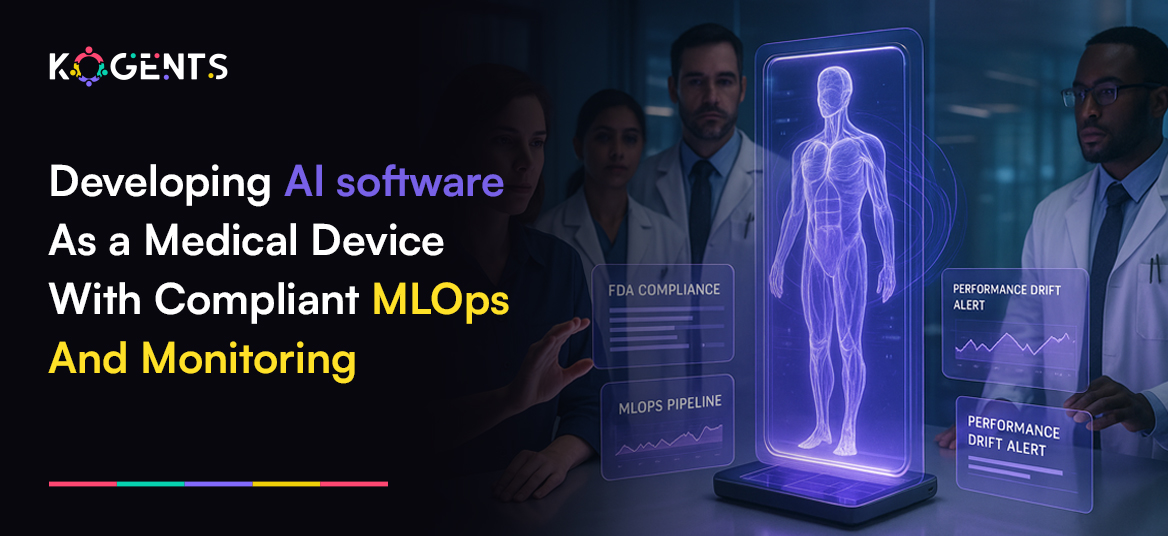
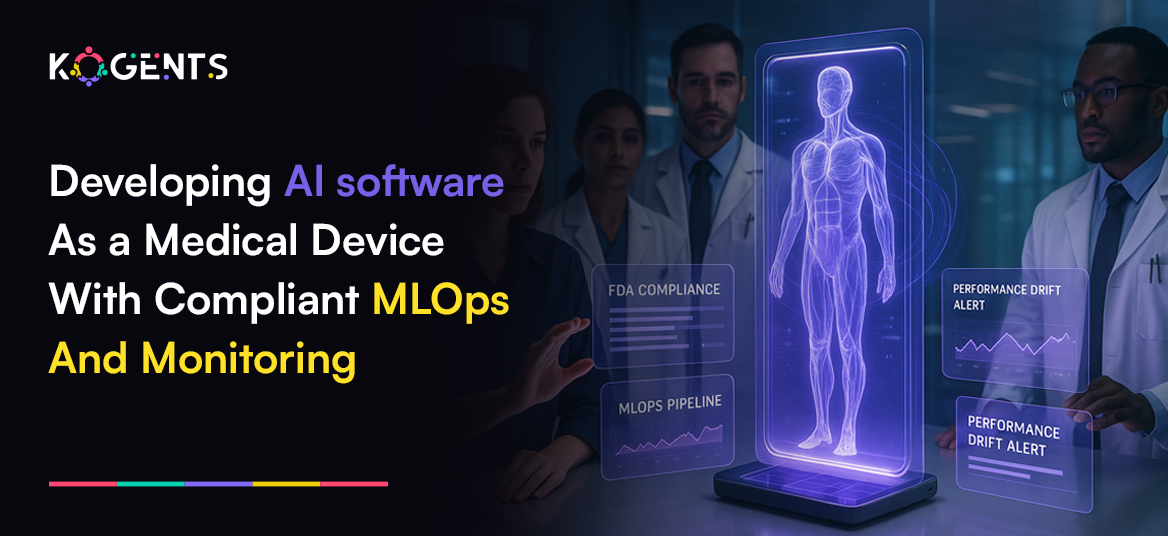
  • Developing AI software as a medical device with compliant MLOps and monitoring

    Developing AI software as a medical device with compliant MLOps and monitoring

    The number of AI-enabled medical devices approved by the FDA has grown exponentially in recent years, and half of all devices (467 devices [51.7%]) were submitted by North American–based applicants, with most being registered in the US. 

    This statistical fact clearly depicts that the future of medicine is digital, and at its core lies Software as a Medical Device (SaMD), an emerging category of regulated software that performs medical functions without being part of a physical device. 

    From AI-powered imaging diagnostics to digital stethoscopes and mental health monitoring apps, SaMD is transforming how clinicians diagnose, predict, and personalize treatment.

    For entrepreneurs and solopreneurs in health tech, the opportunity is massive, but so is the regulatory responsibility. 

    Developing AI SaMD requires mastering compliance, building trust with regulators like the FDA and European Commission, and maintaining consistent performance post-deployment. 

    The foundation for achieving this is compliant MLOps, a framework that unites machine learning development, regulatory governance, and post-market monitoring into a single, auditable lifecycle.

    This guide breaks down everything you need to know about developing AI Software as a Medical Device, how to implement compliant MLOps pipelines, and how to ensure your solution meets global regulatory standards while remaining agile and innovative.

    Key Takeaways

    • Software as a Medical Device (SaMD) is revolutionizing healthcare through AI and digital innovation.
    • Compliance and quality management aren’t optional; they’re the backbone of trust.
    • MLOps for AI SaMD ensures traceability, validation, and continuous monitoring.
    • Post-market vigilance guarantees patient safety and regulatory confidence.
    • For entrepreneurs, early adoption of compliance frameworks translates into faster approvals and sustainable growth.

    Decode The Term: Software as a Medical Device (SaMD)?

    The International Medical Device Regulators Forum (IMDRF) defines Software as a Medical Device (SaMD) as “software intended to be used for one or more medical purposes that perform these purposes without being part of a hardware medical device.”

    SaMD vs. SiMD

    It’s important to distinguish between:

    • SaMD (Software as a Medical Device): Standalone software like an AI radiology model, remote health monitoring tool, or mental health app.
    • SiMD (Software in a Medical Device): Embedded software inside a device, such as firmware in an insulin pump.

    Regulatory Frameworks

    Different regions define and regulate SaMD differently:

    • United States (FDA): Overseen by the Center for Devices and Radiological Health (CDRH). Submissions fall under 510(k), De Novo, or PMA pathways.
    • European Union (EU MDR): Defines “Medical Device Software (MDSW)” under MDR Article 2. Classification is risk-based (Class I–III) depending on intended use.
    • IMDRF: Provides global harmonization through risk-based frameworks and clinical evaluation guidance.

    Examples of SaMD

    • Aidoc – AI imaging triage tool cleared by FDA.
    • Eko Health – Digital stethoscope with AI for cardiac analysis.
    • Caption Health – AI for ultrasound guidance.

    Note: These examples prove that software alone, when properly validated and regulated, can truly become a clinical-grade medical device.
    software as a medical device

    The Rise of AI in SaMD Development

    Artificial Intelligence (AI) has accelerated the SaMD landscape, enabling predictive AI doctor diagnosis and real-time patient insights. 

    AI and Machine Learning (ML) models can detect subtle patterns invisible to human eyes, powering clinical decision support (CDS) tools and automated diagnostics.

    However, AI also introduces complexity. Unlike static rule-based software, AI models learn and evolve.

    A model that performs well today might degrade tomorrow if data distributions change, a phenomenon known as data drift.

    That’s why regulators require strong governance over every step of the AI lifecycle.

    To manage this, the FDA, IMDRF, and WHO are promoting Good Machine Learning Practice (GMLP) principles for data quality, transparency, reproducibility, and monitoring.

    GMLP bridges AI innovation and regulatory reliability.

    In essence, AI SaMD = Software + AI Model + Medical Purpose + Regulation.
    The secret to sustaining this equilibrium lies in compliant MLOps, the operational discipline that ensures ML systems are built, deployed, and maintained under quality management and regulatory control.

    Regulatory Foundations for SaMD

    • Developing SaMD is not just about writing code; it’s about engineering trust. 
    • Regulators demand that every software component be traceable, validated, and risk-managed. 

    Let’s explore the foundational standards that guide this process.

    Core SaMD Standards

    Standard Purpose
    IEC 62304 Defines the software life-cycle processes for medical device software. Covers design, implementation, verification, and maintenance.
    ISO 14971 Focuses on risk management for medical devices — identifying, evaluating, and mitigating hazards.
    ISO 13485 Defines quality management systems (QMS) specific to medical device organizations.
    IEC 82304-1 Addresses health software product safety and security.
    ISO/IEC 27001 Manages data security and integrity, critical for clinical datasets.

    Key Regulatory Elements

    1. Intended Use – Clearly define the medical purpose.
    2. Risk Classification – Based on AI patient scheduling impact.
    3. Design Controls – Traceability from requirements → implementation → verification.
    4. Validation & Verification (V&V) – Ensures that the software meets its intended use.
    5. Clinical Evaluation – Demonstrate safety and performance through evidence.
    6. Post-Market Surveillance (PMS) – Monitor and report performance post-deployment.

    Pro Tip: Start with IEC 62304 mapping early, as even small startups can embed traceability and risk management into their Git workflows with tools like Greenlight Guru or Orcanos QMS.

    Building Compliant MLOps Pipelines for AI SaMD

    MLOps (Machine Learning Operations) applies DevOps principles to ML development, but in regulated environments, it also embeds compliance, validation, and quality management.

    A compliant MLOps pipeline ensures every dataset, model version, and metric powering AI agents for healthcare automation is traceable, validated, and reproducible.

    Key Components of Compliant MLOps

    1. Data Governance & Lineage
      • Maintain detailed records of dataset sources, preprocessing steps, and labeling methods.
      • Use data versioning tools (like DVC or MLflow) integrated with QMS for audit readiness.
    2. Model Version Control & Traceability
      • Every model iteration must link back to specific training data, hyperparameters, and validation results.
      • Maintain a Model Card summarizing performance, limitations, and clinical use conditions.
    3. Validation & Verification Automation
      • Automate unit, integration, and regression testing.
      • Integrate automated pipelines with Design Review and Risk Management checkpoints.
    4. Change Management
      • Document every change affecting safety or performance.
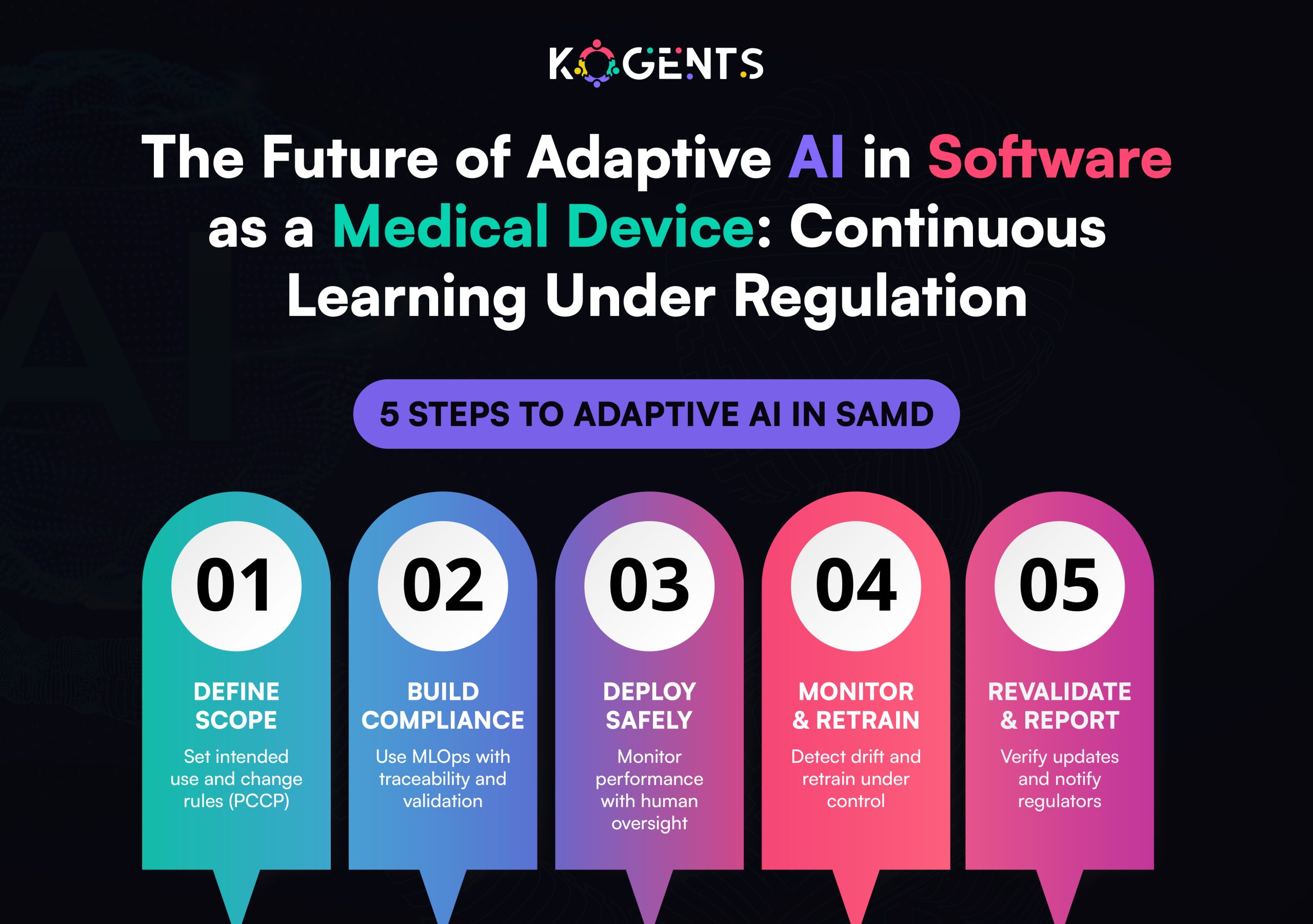
      • Follow the FDA’s Predetermined Change Control Plan (PCCP) for AI models that evolve post-approval.
    5. Auditability & Reproducibility
      • Store logs, metrics, and artifacts to enable end-to-end audit trails for regulators.

    Compliant MLOps Tools

    • MLflow / Kubeflow for experiment tracking.
    • Greenlight Guru for medical QMS integration.
    • Azure ML, AWS SageMaker, or GCP Vertex AI with compliance configurations.

    Continuous Monitoring and Post-Market Surveillance

    Once your AI SaMD is deployed, your compliance journey doesn’t end; it begins. Regulators expect post-market surveillance (PMS) to ensure continued safety, performance, and real-world accuracy.

    Post-Market Monitoring in Practice

    • Performance Drift Monitoring: Track accuracy, precision, sensitivity/specificity over time.
    • Data Drift Detection: Monitor input data for shifts in distribution or quality.
    • Bias Detection: Evaluate demographic fairness continuously.
    • Adverse Event Reporting: Log and report incidents as per regulatory timelines.
    • Explainability Tracking: Ensure clinicians understand AI outputs.

    Automation Opportunities

    Integrate monitoring into MLOps dashboards:

    • Trigger alerts when metrics drop below thresholds.
    • Automate retraining workflows under a controlled, validated process.
    • Generate Regulatory PMS Reports periodically.

    Global Best Practices

    Both the FDA and EU MDR emphasize continuous oversight, not one-time approval. The FDA’s Total Product Lifecycle (TPLC) framework aligns perfectly with this model, blending pre-market validation with post-market vigilance.

    Challenges and Pitfalls in AI SaMD Development

    Even the best teams face challenges in balancing innovation with compliance.

    Common Challenges

    1. Data Scarcity and Privacy Constraints
      • Medical datasets are limited and often fragmented.
      • Compliance with HIPAA (US) and GDPR (EU) is mandatory.
    2. Algorithmic Bias and Explainability
      • Black-box models risk clinical mistrust. Regulators demand transparency.
    3. Validation Across Environments
      • Models must generalize across clinical settings, devices, and populations.
    4. Interoperability Barriers
      • Integration with hospital EHRs (Epic, Cerner, FHIR APIs) can be complex.
    5. High Regulatory Costs
      • Verification, documentation, and QMS setup require upfront investment.

    Avoid These Compliance Mistakes

    • Skipping early risk classification.
    • Missing traceability between requirements and tests.
    • Ignoring usability engineering (human factors).
    • Deploying unvalidated updates to production models.

    Soft Reminder: Adopt a “compliance-by-design” approach, embed validation gates within your CI/CD pipelines rather than adding them later.

    AI SaMD vs. Traditional Medical Software

    Aspect Traditional Medical Software AI-Enabled SaMD
    Decision Logic Rule-based, deterministic Data-driven, adaptive
    Regulation Model Fixed function validation Continuous oversight required
    Validation Process One-time premarket validation Continuous validation & monitoring
    Risk Management Stable Dynamic (requires active reclassification for updates)
    Maintenance Periodic updates Continuous learning and retraining
    Oversight Manual Automated through MLOps & audit trails
    Transparency Clear logic flow Requires model explainability tools

    Case Study Spotlight: From Startup to FDA Clearance

    Case: Aidoc — AI Imaging Diagnostics

    Aidoc, founded in Israel, built an AI-based diagnostic platform that helps radiologists detect critical findings in CT scans. Its journey offers a masterclass in AI SaMD lifecycle excellence.

    1. Intended Use: Assist radiologists by prioritizing scans with potential abnormalities.
    2. Risk Classification: Moderate risk (FDA Class II).
    3. Clinical Data Pipeline: Trained on millions of de-identified medical images under HIPAA compliance.
    4. Model Validation: Conducted multi-site clinical trials to prove sensitivity/specificity.
    5. Regulatory Submission: Submitted through the FDA’s 510(k) pathway.
    6. Post-Market Surveillance: Continuous model performance tracking with real-time dashboards.

    Result: Aidoc became one of the first AI radiology SaMDs cleared by the FDA, setting a precedent for AI-enabled diagnostics worldwide.

    Takeaway for Entrepreneurs: Invest early in compliance infrastructure. Aidoc didn’t treat validation as an afterthought; it built compliance into its product DNA.

    Best Practices & ROI for Entrepreneurs and Solopreneurs

    For founders entering the medical AI space, compliance can seem overwhelming. But early adherence to SaMD best practices can save time, money, and regulatory pain later.

    Top Best Practices

    • Start with intended use clarity:  Your regulatory pathway depends on it.
    • Build a minimal QMS early: Even small startups can use templates aligned to ISO 13485.
    • Implement traceability from day one: Link code commits to design controls and risk items.
    • Use validated tools: Only deploy AI models in qualified cloud environments.
    • Engage regulatory consultants: They can shorten approval cycles dramatically.

    Mini Case Example: A digital pathology startup using compliant MLOps reduced its FDA submission cycle from 18 months to 12 months, saving over $500,000 in development delays.

    The Future of AI Software as a Medical Device

    The next generation of SaMD will be adaptive, interoperable, and context-aware. Regulators are already preparing for this evolution.

    Emerging Trends

    1. Adaptive AI Regulation: FDA’s forthcoming framework for continuously learning models.
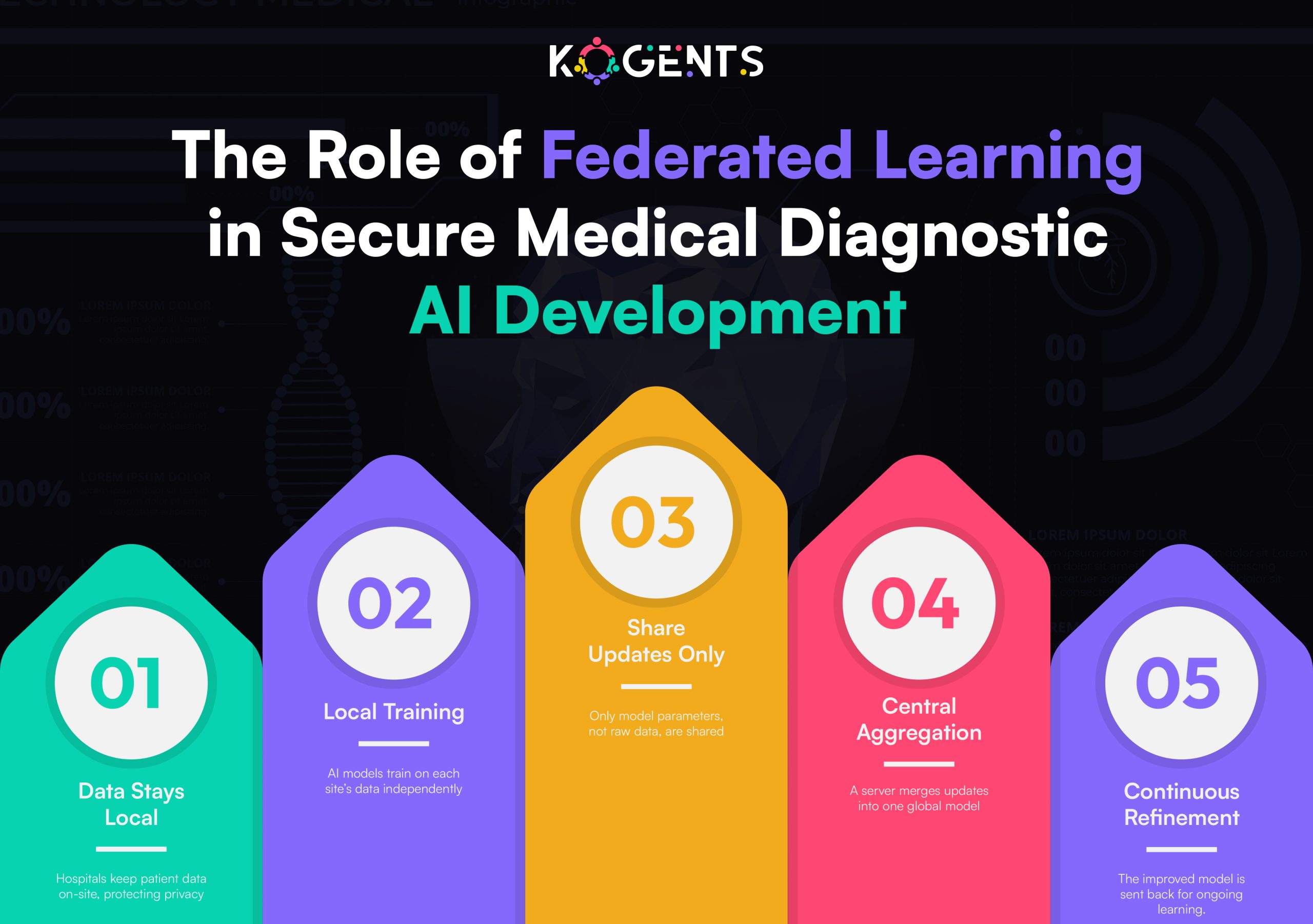
    2. Federated Learning: Privacy-preserving model training across hospitals.
    3. Real-World Evidence (RWE): Using real-world performance data for post-market validation.
    4. FHIR & HL7 Integration: Seamless exchange between SaMD and EHR systems.
    5. Global Harmonization: IMDRF, WHO, and regional bodies aligning AI medical device standards.

    Pro Tip: Compliance is not bureaucracy; it’s a competitive advantage in winning trust, funding, and regulatory approval.
    software as a medical device

     Before You Leave! 

    The line between software and medical device has blurred, and for good reason. As AI Software as a Medical Device becomes central to modern medicine, entrepreneurs who embrace compliant MLOps and continuous monitoring will define the future of digital health.

    Building SaMD isn’t just about compliance; it’s about saving lives with software that’s safe, effective, and transparent. 

    Whether you’re a solopreneur developing a diagnostic app or a startup founder scaling AI in healthcare, regulatory alignment will amplify your innovation, not hinder it.

    Look how Kogents.ai empowers entrepreneurs, solopreneurs, and healthcare providers to build compliant AI medical devices. 

    FAQs

    How do you ensure continuous monitoring after SaMD deployment?

    Post-market surveillance (PMS) includes monitoring data and performance drift, detecting bias, logging adverse events, and generating periodic regulatory reports. Automation in MLOps pipelines enables real-time alerts and retraining workflows.

    What are the common challenges in developing AI-based SaMD?

    Challenges include limited clinical datasets, data privacy (HIPAA, GDPR), algorithmic bias, validation across multiple environments, interoperability with EHRs, and high regulatory costs.

    What is the difference between traditional medical software and AI-enabled SaMD?

    Traditional software uses fixed, rule-based logic and requires one-time validation.
    AI-enabled SaMD is adaptive, requiring continuous validation, risk reassessment, and ongoing monitoring for fairness and reliability.

    What is Software as a Medical Device (SaMD)?

    SaMD refers to software that performs medical functions — such as diagnosis, monitoring, or treatment — without being part of a physical medical device. Examples include AI imaging tools, digital stethoscopes, and mental health monitoring apps.

    How is SaMD different from Software in a Medical Device (SiMD)?

    SaMD operates independently of hardware, like an AI-based radiology model. SiMD, on the other hand, is embedded in a physical device, such as firmware in an insulin pump.
  • How Medical diagnostics AI improves accuracy and speeds regulatory approval

    How Medical diagnostics AI improves accuracy and speeds regulatory approval

    Healthcare is at a tipping point where medical diagnostics AI is not just enhancing precision but fundamentally reshaping how new tools earn regulatory trust

    Hospitals, startups, and solopreneurs alike are discovering that AI systems capable of interpreting scans, lab data, and genomic signals can shorten diagnostic times, reduce human error, and even accelerate FDA or CE mark approvals.

    For entrepreneurs, this convergence means something powerful: the same machine learning models that improve diagnostic accuracy can simultaneously generate the structured evidence regulators require.

    What used to take years, clinical trials, validation cycles, and audit documentation can now be expedited through built-in explainability, audit trails, and real-world performance monitoring.

    This article explores how AI in medical diagnostics drives both precision and compliance, helping innovators transform algorithms into trusted, market-ready medical devices.

    Decoding the Term: Medical Diagnostics AI

    AI in medical diagnostics refers to the use of machine learning, deep learning, and AI agents for healthcare automation to detect, classify, or predict disease states from clinical data.

    These AI diagnostic tools range from image-analysis systems in radiology to genomic predictors, lab test analyzers, and multimodal platforms that merge imaging, electronic health records (EHR), and biomarkers.

    Unlike static rule engines, AI-based diagnostic systems learn patterns from large labeled datasets, X-rays, CTs, MRIs, pathology slides, or molecular data. 

    The models then generate probabilities or alerts indicating potential abnormalities.

    Common technologies include:

    • Convolutional neural networks (CNNs) for medical imaging segmentation and classification
    • Transformer and attention models for pathology or textual EHR interpretation
    • Ensemble models for predictive diagnostics combining labs and imaging
    • Federated learning and privacy-preserving AI for cross-hospital data without violating HIPAA or GDPR

    Today, such systems are increasingly regulated as Software as a Medical Device (SaMD). That shift means accuracy and validation are not academic exercises; they’re legal and commercial prerequisites.

    How AI Improves Diagnostic Accuracy? 

    Diagnostic precision is the cornerstone of clinical AI success. 

    Here’s how AI diagnostic systems deliver measurable accuracy gains compared to traditional workflows:

    1. Pattern recognition beyond human perception

    AI can detect faint patterns in imaging or molecular data, subtle radiomic features, or genomic variants that clinicians might miss. 

    Deep learning models trained on millions of examples reach high sensitivity and specificity, often outperforming radiologists in narrow tasks such as lung nodule or fracture detection.

    2. Reduced inter-reader variability

    Human diagnosticians vary in interpretation, and AI doctor diagnosis systems bring consistency, applying the same learned criteria across every case.

    In studies on chest X-rays and mammography, AI models cut variability by more than 50%, improving diagnostic reliability.

    3. Robust validation and cross-site generalization

    Modern AI agents employ external validation using datasets from multiple hospitals, scanner types, and demographics. 

    This ensures generalization and prepares evidence for regulatory review, since the FDA now expects performance across subgroups and devices.

    4. Quantitative metrics: ROC, AUC, F1, confusion matrix

    AI’s accuracy isn’t anecdotal; it’s quantifiable. Metrics like ROC/AUC, F1 score, and precision-recall curves demonstrate statistical performance. 

    When benchmarked against gold-standard datasets (e.g., MedPerf, MIMIC-CXR), these numbers become the evidence base for approval submissions.

    5. Continuous learning and drift detection

    Drift detection systems measure when input data shifts (e.g., new scanner type or demographic mix).

    Automatic alerts and retraining pipelines keep performance stable, ensuring real-world accuracy long after release.

    Together, these mechanisms produce diagnostic agents that don’t just detect disease; they generate traceable, reproducible proof of their accuracy, fuel for regulatory success.

    One fact reveals that deep learning algorithms are used to detect pneumonia from chest radiography with a sensitivity and specificity of 96% and 64% compared to radiologists 50% and 73%, respectively.

    Metric What It Measures Why It Matters for Regulatory Approval
    Sensitivity True positive rate Ensures diseases aren’t missed; high sensitivity supports safety claims.
    Specificity True negative rate Prevents false alarms; important for clinical reliability.
    ROC / AUC Model discrimination power Quantifies ability to distinguish between conditions; key for FDA submissions.
    F1 Score Balance of precision and recall Useful for imbalanced medical datasets.
    Confusion Matrix Overall prediction accuracy Provides transparency and traceability in model evaluation.

    From Accuracy to Approval: The Regulatory Flywheel

    Why does accuracy matter so much for regulatory approval? Because every metric, specificity, sensitivity, ROC/AUC, translates directly into the risk–benefit assessment that agencies like the U.S. Food and Drug Administration (FDA) or European Medicines Agency (EMA) perform.

    Here’s how the “accuracy → approval” flywheel works:

    1. Explainability builds clinical trust

    • Regulators demand interpretability.
    •  Explainable AI (XAI) techniques, saliency maps, SHAP values, and attention overlays show why a model flagged an abnormality.
    • These visual explanations improve clinician understanding and regulatory confidence.

    2. Traceability satisfies SaMD requirements

    • Every AI diagnostic agent must maintain audit trails: model version, dataset used, validation protocol, and performance metrics.
    • Traceability allows reviewers to replicate results and ensures that updates remain compliant.

    3. Bias and fairness documentation

    • Accuracy across demographics is now mandatory.
    • Regulators require reporting of subgroup performance (e.g., by sex, age, ethnicity). 
    • Demonstrating fairness and low bias speeds the approval review by preempting safety concerns.

    4. Prospective and real-world validation

    • FDA reviewers favor evidence beyond retrospective testing. 
    • AI agents that perform in prospective clinical trials or real-world deployments can submit stronger safety and efficacy data, shortening review cycles.

    5. Post-market surveillance readiness

    Under evolving frameworks, especially the FDA’s Predetermined Change Control Plan (PCCP), companies that design post-market monitoring and drift-control pipelines from day one gain approval faster because regulators can trust lifecycle safety.

    medical diagnostics ai

    Operational Pipeline Built for Approval

    Entrepreneurs who bake compliance into their AI pipelines from the start save months of regulatory rework. 

    A well-architected medical AI diagnosis platform follows this operational blueprint:

    1. Data governance & privacy

    • De-identification and encryption to meet HIPAA/GDPR
    • Federated learning or on-premise training for privacy-preserving development
    • Audit logs record every data access.

    2. Standardization & interoperability

    • Use of DICOM, HL7, and FHIR standards for imaging and EHR data
    • Integration with PACS and clinical workflow tools
    • Data normalization and version control for consistent model input

    3. Model development & validation

    • Balanced datasets and cross-validation to avoid overfitting
    • External multi-site validation and hold-out cohorts
    • Reporting of sensitivity, specificity, ROC/AUC with 95% confidence intervals

    4. Explainability & uncertainty management

    • Implement saliency maps, feature importance ranking, or attention visualization
    • Provide confidence intervals or uncertainty scores in outputs

    5. Documentation & submission readiness

    • Design history files, validation protocols, and clinical performance summaries
    • Clear alignment with IMDRF and SaMD documentation standards

    6. Change control & monitoring

    • Built-in version control for models and data
    • Drift detection alerts
    • Defined boundaries for retraining under the PCCP framework

    Key Point: By aligning engineering with regulatory science, entrepreneurs can accelerate from prototype to market-cleared product without costly rewrites.

    High-Impact Diagnostic Use Cases

    Radiology and Imaging AI

    AI-driven radiology solutions like Aidoc and Viz.ai detect critical conditions, stroke, hemorrhage, and pulmonary embolism within minutes. 

    These AI diagnostic imaging systems reduce review times and have achieved multiple FDA 510(k) clearances.

    Their success stems from rigorous multi-site validation, real-time alerting, and seamless PACS integration.

    Digital Pathology and Histopathology

    Deep learning diagnostics in pathology analyzes gigapixel whole-slide images to identify tumors, grade cancer severity, or quantify biomarkers. 

    FDA-cleared systems such as Paige.AI demonstrate that automated histopathology can meet or exceed human accuracy with documented reproducibility, key for regulatory confidence.

    Genomics and Precision Medicine

    AI in genomic diagnostics interprets variant significance, predicts disease risk, and supports personalized treatment planning. 

    Companies like Tempus AI and Sophia Genetics use multimodal fusion (genomics + imaging + EHR) to reach higher predictive power and regulatory-grade evidence.

    Cardiology and Digital Stethoscopes

    Eko Health’s AI-enabled stethoscopes analyze heart sounds to detect murmurs or arrhythmias. 

    The combination of signal processing and deep learning achieved FDA clearance, showing that even portable diagnostic devices can meet regulatory standards if the evidence is rigorous.

    Laboratory and Biomarker Analysis

    AI in lab diagnostics automates the detection of abnormal blood cell morphology, predictive analytics for infection risk, and anomaly detection in chemistry panels. 

    These tools improve lab throughput and accuracy, forming an evidence base for CLIA-aligned validations.

    Telemedicine and Point-of-Care Diagnostics

    Portable devices using AI-enabled diagnostic tools, from smartphone skin lesion detectors to handheld ultrasound, bring accurate screening to remote health monitoring areas. 

    As long as models are validated and explainable, regulators are increasingly open to decentralized AI diagnostics.

    Challenges & Limitations

    Even the most sophisticated AI diagnostic tools face technical and regulatory hurdles.

    Data bias & generalization

    • AI models can underperform on populations not represented in training data. 
    • Regulators scrutinize demographic subgroup results. 
    • Addressing bias through balanced sampling and fairness metrics is now a prerequisite for clearance.

    Model drift & lifecycle management

    • Post-deployment, real-world data often diverges from training distributions. 
    • Without drift detection and PCCP plans, accuracy degrades and compliance risks emerge.

    Black-box opacity

    • Complex deep neural networks can lack transparency. 
    • Without explainable AI, clinicians hesitate to trust predictions, and regulators may delay approval pending interpretability evidence.

    Integration complexity

    Hospitals rely on legacy EHRs and PACS systems; interoperability gaps can stall adoption. Entrepreneurs must invest early in standards compliance (FHIR, HL7, DICOM).

    Regulatory uncertainty

    • Frameworks evolve quickly. 
    • The FDA and EU’s IVDR now require ongoing monitoring, not one-time approval. 
    • Startups must budget for lifecycle compliance, not static submissions.

    Cybersecurity & data privacy

    • AI diagnostic software is still subject to medical-device cybersecurity rules. 
    • Encryption, authentication, and privacy safeguards must be built into design documentation.

    medical diagnostics ai

    Case Study Spotlight: Aidoc & Eko Health

    Aidoc — Accelerating AI Doctor Diagnosis and Approval

    Aidoc’s imaging AI platform analyzes CT scans to flag critical findings like pulmonary embolism and hemorrhage.

    By combining deep learning, multi-site validation, and workflow integration, Aidoc secured over a dozen FDA 510(k) clearances

    Their approach, continuous monitoring, audit logging, and transparent validation reports, became a template for how diagnostic AI can both improve accuracy and satisfy regulators quickly.

    Eko Health — AI-Enabled Cardiac Diagnostics

    Eko Health integrates AI algorithms with digital stethoscopes to detect cardiac abnormalities. Each version of its model underwent prospective trials and external validation. 

    FDA clearance was granted because Eko documented bias analysis, sensitivity/specificity, and a robust post-market update plan, demonstrating how explainability and lifecycle management accelerate approval.

    Both cases underscore a truth: AI companies that treat accuracy, transparency, and compliance as coequal goals reach the market faster and with greater trust.

    Future of AI Diagnostics That Speeds Approval

    The next generation of AI diagnostic agents will make approval even faster and safer.

    1. Federated learning and privacy-preserving collaboration
      Hospitals can jointly train models without exchanging raw data, creating larger, more diverse datasets for validation, ideal for the FDA’s real-world evidence (RWE) requirements.
    2. Standardized benchmarking frameworks
      Initiatives like MedPerf and precisionFDA will provide reproducible performance benchmarks, reducing the need for redundant validation studies.
    3. Adaptive regulatory pathways
      The FDA’s PCCP and EU adaptive frameworks allow controlled model updates without full re-submission, enabling continuous improvement.
    4. Multimodal and causal AI models
      By integrating imaging, genomics, and clinical data, these models improve sensitivity and specificity, yielding stronger clinical evidence per study.
    5. Explainability-by-design architectures
      Next-gen agents will embed interpretability natively, producing self-auditing outputs that regulators can review instantly.

    Conclusion 

    AI in medical diagnostics is proving that automation can enhance, not replace, human judgment, turning radiology, pathology, and cardiology into data-driven disciplines rooted in measurable accuracy and transparent oversight.

    If your next innovation aims to detect disease faster, secure approval sooner, and inspire clinician trust, start by embedding explainability, validation, and monitoring into your design.

    Then partner up with Kogents AI by calling us at +1 (267) 248-9454 or dropping an email at info@kogents.ai. 

    FAQs

    What makes AI in medical diagnostics different from standard analytics?

    Diagnostic AI directly influences patient care and therefore qualifies as a medical device (SaMD), subject to regulatory oversight and clinical validation.

    How does improved accuracy lead to faster regulatory approval?

    Strong sensitivity/specificity and well-documented validation simplify the FDA’s risk–benefit assessment, shortening review cycles.

    What are the key FDA pathways for diagnostic AI?

    Most products follow 510(k), De Novo, or PMA pathways depending on risk. Clear validation data and explainability accelerate all three.

    What is a Predetermined Change Control Plan (PCCP)?

    It’s an FDA mechanism allowing defined post-market model updates without full re-submission—crucial for continuous-learning AI systems.

    How can startups ensure their AI generalizes across hospitals?

    Use multi-site data, external validation, and domain adaptation to prove consistent performance across devices and demographics.

    What documentation speeds regulatory clearance?

    Comprehensive validation reports, audit logs, bias analyses, and explainability evidence aligned with IMDRF SaMD guidelines.

    How does explainable AI affect clinician adoption?

    Saliency maps or feature-attribution visuals let physicians see why the model flagged a case, increasing trust and compliance.

    Can diagnostic AI be updated after approval?

    Yes—if you define update boundaries in your PCCP and maintain version control with real-world monitoring.

    What are common pitfalls delaying approval?

    Insufficient external validation, unreported bias, missing audit trails, or lack of post-market surveillance plans.

    How can solopreneurs compete with large medtech firms?

    By focusing on niche diagnostic problems, using open datasets for validation, integrating explainability from day one, and partnering early with regulatory consultants.