Category: marketers agent

  • Marketing AI Automation Implementation Guide for Robust AI Deployment at Scale

    Marketing AI Automation Implementation Guide for Robust AI Deployment at Scale

    Marketing has evolved dramatically with the integration of AI-powered marketing automation, reshaping how businesses connect with customers and optimize their strategies. 

    Gone are the days when marketers relied solely on intuition or manually intensive processes. 

    Marketing AI automation brings to life the power of machine learning algorithms, predictive analytics, and behavioral targeting, making marketing more personalized, efficient, and impactful.

    As organizations seek to scale their marketing efforts, the deployment of AI in marketing automation becomes not just a competitive advantage but a necessity. 

    However, implementing automated marketing using AI at scale can be complex. It requires a deep understanding of both the technology and the process behind it to ensure seamless deployment that delivers real business value.

    This guide delves into the core aspects of Marketing AI Automation, covering the strategies, tools, implementation steps, and case studies that exemplify successful deployment. 

    Let’s dive deep into the fascinating world of AI agents in marketing automation and explore how it can transform the future of marketing.

    Key Takeaways

    • AI marketing tools can significantly enhance personalization and customer targeting.
    • Automated marketing technology with AI helps streamline campaign management, reducing manual intervention.
    • Behavioral marketing automation powered by machine learning allows for dynamic content generation and improved customer engagement.
    • Implementing intelligent marketing automation at scale requires a strategic approach involving data-driven insights, system integration, and proper scalability planning.
    • Real-world case studies from top brands demonstrate the practical applications and success of AI marketing systems.

    What is Marketing AI Automation?

    It refers to the use of artificial intelligence and machine learning algorithms to automate various aspects of marketing, including content creation, customer segmentation, lead generation, and campaign optimization. 

    With AI, marketers can enhance their decision-making processes, personalized customer interactions, and boost efficiency, all while reducing human intervention.

    AI can enhance traditional marketing automation tools by incorporating predictive analytics, behavioral targeting, and personalization at scale, thus allowing businesses to deliver hyper-relevant content to customers at the right time and through the right channels.

    The Importance of AI in Marketing Automation

    The adoption of AI marketing tools is transforming marketing by automating repetitive tasks and enhancing campaign performance. AI allows businesses to:

    Improving Efficiency and Accuracy

    • AI systems automate tedious, time-consuming tasks like data entry, campaign reporting, and customer segmentation. 
    • This increases operational efficiency while reducing the risk of human error.

    Enhancing Customer Experience and Personalization

    • Through AI-driven campaigns, businesses can deliver highly personalized experiences to customers at scale. 
    • AI’s ability to analyze vast amounts of data allows brands to create tailored experiences based on customer interests, past behaviors, and preferences.

    According to a 2025 survey, 88% of marketers use AI in their day-to-day roles, highlighting its widespread adoption.

    A report by SAS and Coleman Parkes reveals that 93% of CMOs and 83% of marketing teams report clear returns on investment from Generative AI. 

    Benefits of Marketing AI Automation

    Increased Productivity and Cost Efficiency

    By automating routine tasks such as email marketing, social media posting, and reporting, AI marketing systems allow marketing teams to focus on more strategic, creative aspects of their work, ultimately leading to greater productivity.

    Data-Driven Decision Making and Insights

    • AI tools leverage machine learning algorithms to analyze and interpret customer data, providing actionable insights that help marketers optimize their strategies. 
    • This data-driven marketing AI approach ensures decisions are based on evidence rather than intuition.

    Real-Time Campaign Optimization

    • AI marketing automation systems provide real-time feedback on campaign performance. 
    • With this information, marketers can make quick adjustments to optimize their campaigns, ensuring they’re always running at peak performance.
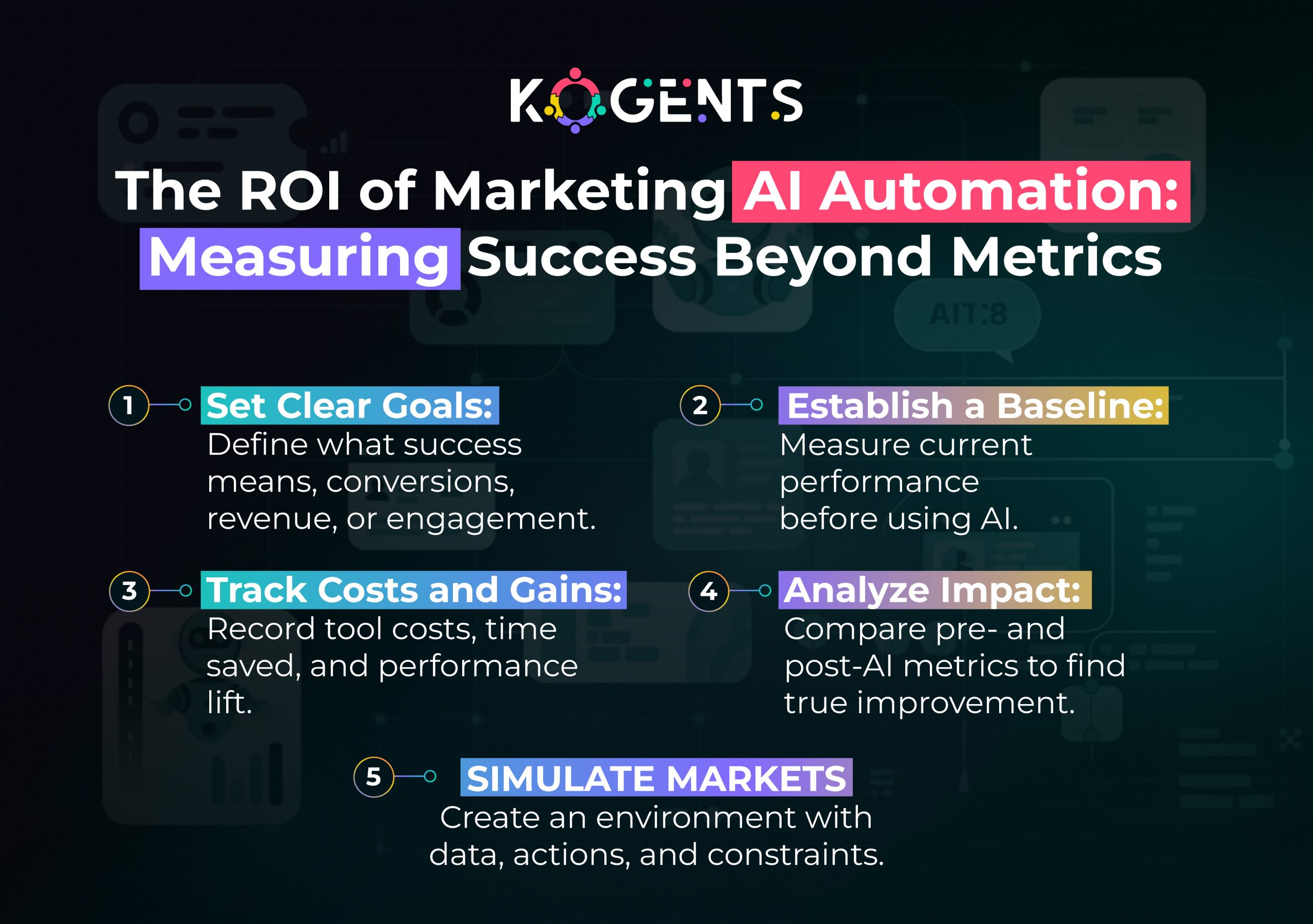
    roi of marketing ai automation

    The Different Types of Marketing AI Automation

    AI for Lead Generation and Scoring

    • AI-powered marketing automation can identify high-potential leads by analyzing customer behaviors and interactions. 
    • AI can assign scores to leads based on their likelihood of conversion, enabling businesses to prioritize their marketing efforts effectively.

    Predictive Analytics in Marketing

    • Using predictive marketing AI, businesses in sales AI automation can forecast trends, customer behaviors, and sales outcomes. 
    • This empowers marketers to anticipate customer needs and adjust strategies accordingly.

    AI in Content Creation and Personalization

    • AI tools can create personalized content based on data gathered from users’ behaviors and interactions with brands. 
    • Dynamic content generation powered by AI marketing systems ensures each user gets a tailored experience.

    How to Implement AI Marketing Automation at Scale? 

    Deploying AI at scale involves several critical steps:

    a. Define Clear Objectives

    • Before implementation, identify specific goals such as lead generation, customer retention, or campaign optimization. 
    • Clear objectives guide the selection of appropriate AI tools and strategies.

    b. Choose the Right AI Tools

    • Select AI-powered marketing automation platforms or deploy an AI agent in marketing that aligns with your business needs.
    • Consider factors like scalability, integration capabilities, and support for multichannel campaigns.

    c. Integrate with Existing Systems

    Ensure that AI tools integrate seamlessly with your current CRM, analytics, and content management systems to maintain data consistency and workflow efficiency.

    d. Train Your Team

    • Equip your marketing team with the necessary skills to leverage AI tools effectively. 
    • Continuous training ensures that your team stays updated with the latest AI advancements.

    e. Monitor and Optimize

    • Regularly assess the performance of AI-driven campaigns. 
    • Use analytics to identify areas for improvement and optimize strategies accordingly.

    Overcoming Common Challenges in AI Marketing Automation

    Implementing AI in marketing is not without its challenges:

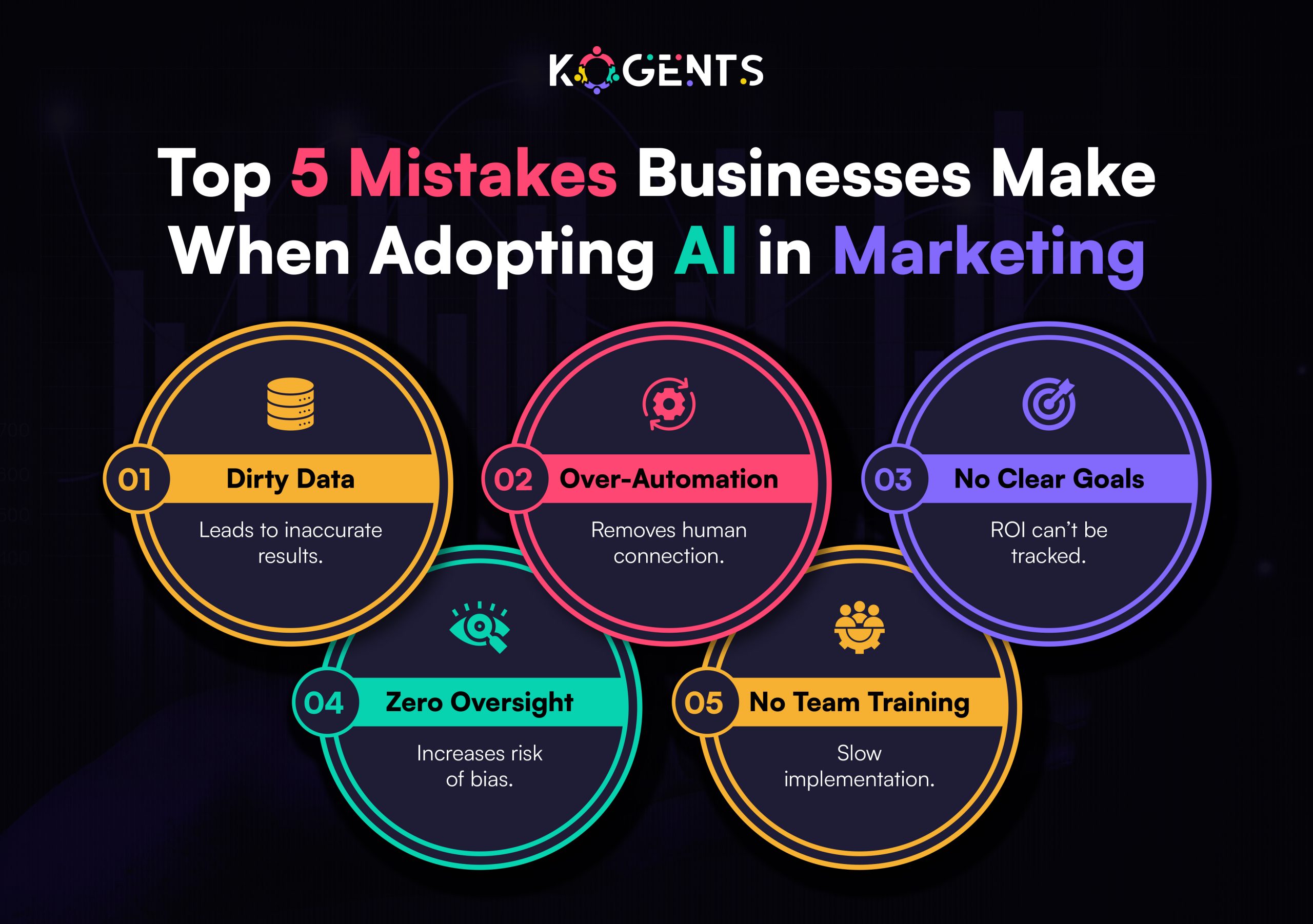
    • Data Quality Issues: Inaccurate or incomplete data can lead to ineffective AI models. Implement data cleansing and validation processes to ensure high-quality input.
    • Integration Complexities: Integrating AI tools with existing systems can be complex. Work with IT teams to ensure smooth integration and data flow.
    • Skill Gaps: A shortage of skilled professionals can hinder AI adoption. Invest in training programs and consider partnering with AI solution providers to bridge the gap.
    • Privacy Concerns: Handling customer data responsibly is paramount. Adhere to data protection regulations and implement robust security measures to maintain customer trust.
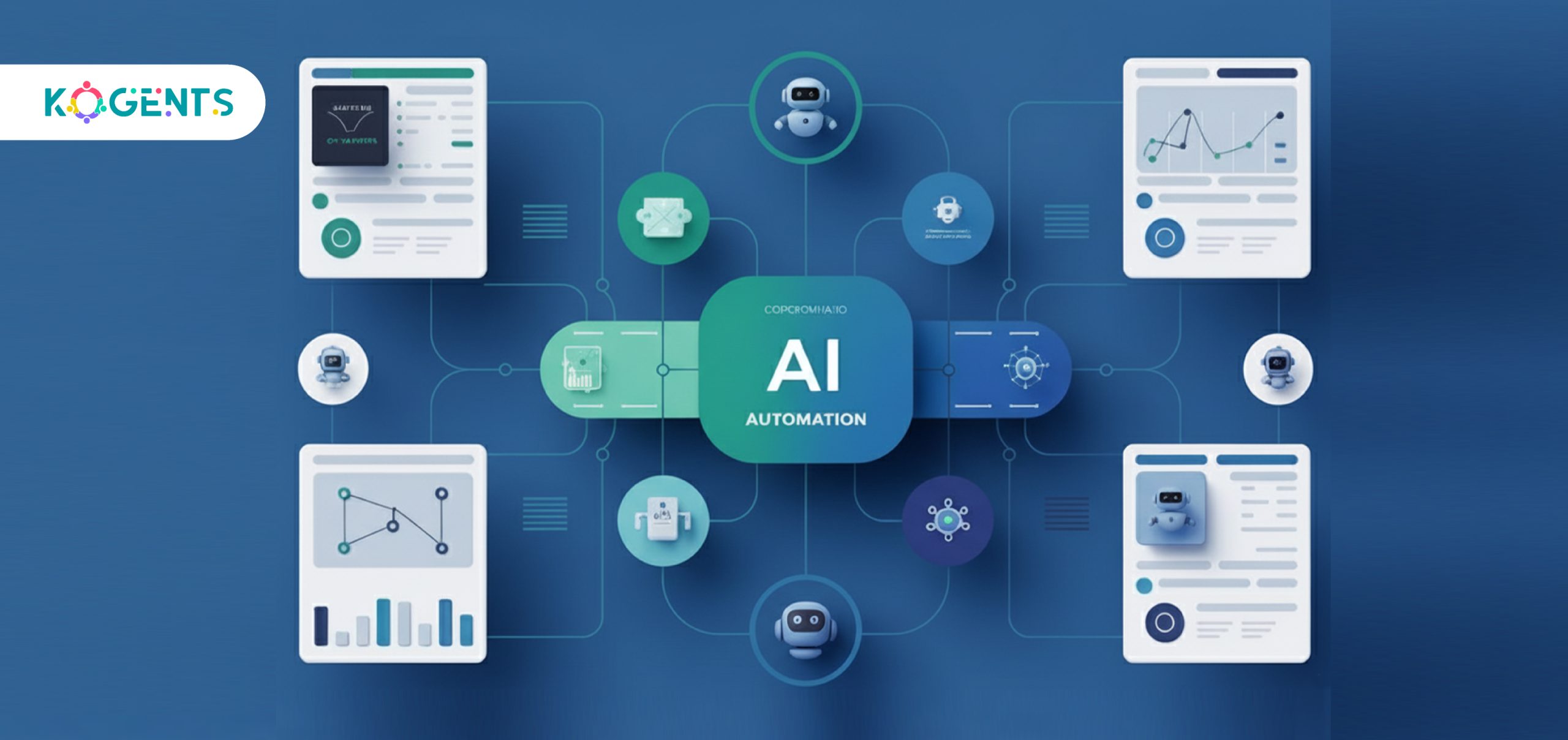
    ai marketing automation

    Emerging Trends in AI Marketing Automation

    AI-Powered Visual Content Creation: 

    • AI tools are now capable of generating high-quality visual content like banners, videos, and social media posts. 
    • These tools use deep learning algorithms to analyze current design trends, automate repetitive tasks, and create tailored visuals, saving time and enhancing marketing creativity.

    Voice Search Optimization with AI: 

    • As voice assistants like Alexa and Siri become more integrated into daily life, optimizing for voice search is crucial. 
    • Predictive analytics AI can analyze voice search patterns, helping businesses understand customer intent and adjust content for better voice search visibility.

    AI in Social Media Marketing:

    AI tools assist with sentiment analysis, tracking influencer marketing ROI, and automating content creation for social media. 

    They also optimize ad targeting by analyzing audience behavior, making social strategies more precise and efficient.

    The Role of Chatbots and Conversational AI in Marketing Automation

    AI Chatbots for Customer Service: 

    AI-powered chatbots are revolutionizing customer service by providing instant responses to inquiries, guiding customers through sales processes, and even nurturing leads with personalized recommendations.

    Conversational Marketing: 

    AI is enhancing conversational marketing, enabling businesses to engage with potential customers in real time through chatbots, messaging apps, and social media, fostering deeper, more immediate customer relationships.

    AI in Email Marketing Automation

    • AI is transforming email marketing by personalizing subject lines, optimizing send times, and conducting A/B testing automatically. 
    • It helps improve engagement by analyzing customer behavior and preferences, ensuring relevant content reaches the right person at the right time.

    AI Ethics and Accountability

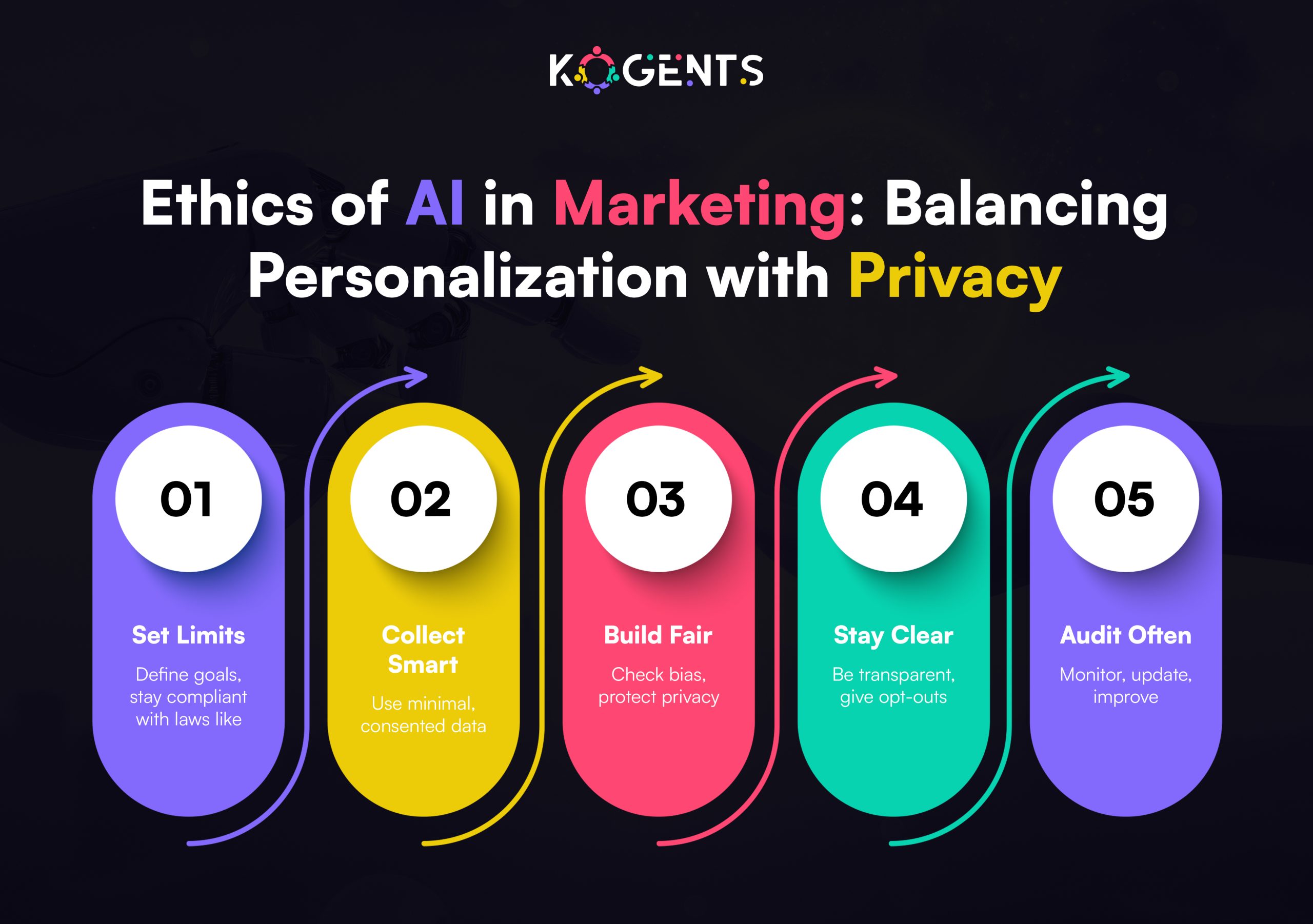
    • As AI grows, ethical concerns surrounding customer data privacy and bias in algorithms are increasingly important. 
    • Transparency in data use and mitigating AI biases ensures fairness, maintains consumer trust, and regulatory compliance.

    Integration with Other Technologies: IoT, Blockchain, and AI

    • Explore how AI marketing automation can be integrated with other advanced technologies, like IoT (Internet of Things) or Blockchain. 

    Example: AI can optimize smart device data for hyper-targeted marketing campaigns, and blockchain can be used to ensure transparency in customer data management.

    AI in Predictive Marketing

    Go deeper into how predictive analytics AI is being used to forecast customer behavior, sales trends, and market conditions, providing businesses with insights to make proactive decisions.

    Comparison of Leading AI Marketing Automation Tools

    Platform Strengths Ideal For Notable Feature
    HubSpot Ease of integration, predictive lead scoring SMEs CRM-AI synergy
    Marketo Advanced campaign automation Enterprises Smart engagement engine
    Salesforce Einstein Deep data analytics and personalization Large organizations Cross-cloud intelligence
    Adobe Experience Cloud Omnichannel personalization Creative teams & enterprises Dynamic content orchestration

    Case Studies of Successful AI Marketing Automation

    Case Study 1: HubSpot’s AI-Powered Marketing Automation

    HubSpot’s AI marketing tools have transformed how they engage with prospects and customers. 

    By using AI-powered tools like predictive lead scoring and behavioral email automation, HubSpot has improved customer engagement and increased conversions. 

    Their integration of AI into CRM systems enables personalized outreach, delivering tailored content to each lead at the optimal time.

    Case Study 2: Salesforce’s AI Solutions for Marketing

    Salesforce Einstein uses AI marketing automation to deliver personalized marketing at scale. 

    By analyzing customer data, it can predict sales opportunities, automate responses, and recommend actions, all while delivering a seamless customer experience across all touchpoints.

    Case Study 3: Adobe’s Intelligent Marketing Automation Strategies

    Adobe leverages AI marketing systems to provide businesses with automated marketing solutions that optimize customer journeys. 

    By incorporating AI into Adobe Experience Cloud, they deliver highly personalized content at scale, enhancing engagement and improving ROI.

    Conclusion

    Implementing Marketing AI Automation at scale is a strategic endeavor that can yield significant benefits, including enhanced personalization, improved efficiency, and data-driven decision-making. 

    By following a structured approach, defining clear objectives, selecting the right tools, ensuring seamless integration, and addressing common challenges, businesses can harness the full potential of AI in their marketing efforts.

    At Kogents.ai, we are committed to helping brands navigate the complexities of AI-powered marketing automation. Partner with us to navigate the complexities of AI implementation and drive your marketing success.

    FAQs

    What is Marketing AI Automation?

    Marketing AI Automation refers to the use of artificial intelligence to automate marketing tasks such as content creation, customer segmentation, and campaign optimization. It enables businesses to deliver personalized experiences at scale.

    How does AI improve customer personalization?

    AI analyzes customer data to identify patterns and preferences, allowing businesses to deliver tailored content and recommendations, enhancing the customer experience.

    What are the key benefits of AI in marketing?

    Key benefits include increased efficiency, improved targeting and segmentation, enhanced personalization, and data-driven decision-making.

    Are AI marketing tools suitable for small businesses?

    Yes, many AI marketing tools are scalable and can be tailored to meet the needs of small businesses, helping them compete with larger enterprises.

    How do I choose the right AI marketing platform?

    Consider factors like ease of integration, scalability, support for multichannel campaigns, and the specific features that align with your business objectives.

    What challenges might I face when implementing AI in marketing?

    Challenges include data quality issues, integration complexities, skill gaps, and privacy concerns. Addressing these proactively can ensure successful implementation.

    How can I measure the ROI of AI marketing automation?

    Track metrics such as conversion rates, customer engagement levels, and cost savings to assess the effectiveness of AI-driven campaigns.

    Is AI marketing automation a one-time setup?

    No, AI marketing automation requires ongoing monitoring and optimization to adapt to changing customer behaviors and market conditions.

    Can AI replace human marketers?

    While AI can automate certain tasks, human creativity and strategic thinking remain essential in marketing. AI serves as a tool to augment human capabilities.

    What does the future hold for AI in marketing?

    The future of AI in marketing includes advancements in predictive analytics, deeper personalization, and greater integration across marketing channels, leading to more efficient and effective campaigns.
  • How AI is changing Marketing

    How AI is changing Marketing


    Marketing has always been about connecting the right message with the right audience at the right time. 

    Yet in today’s hyper-digital economy, that alignment is harder than ever. Customers are bombarded with endless ads, messages, and offers

    Traditional strategies are no longer enough to cut through the noise. 

    This is where artificial intelligence (AI) is stepping in and reshaping the entire marketing landscape.

    From AI-powered personalization engines to predictive analytics and programmatic advertising, businesses of every size are finding new ways to optimize their customer journey. Entrepreneurs, solopreneurs, and enterprises alike are turning to AI-driven marketing strategies to gain competitive edges once reserved for the big players.

    In this blog, we’ll explore in depth how AI is changing marketing, why it matters for entrepreneurs and healthcare providers, the challenges, the benefits, and real-world case studies. 

    Whether you’re running a one-person online shop or leading a mid-size healthcare brand, this guide will show you why AI isn’t the future of marketing; it’s the present.

    Key Takeaways

    • AI is revolutionizing marketing by enabling personalization, predictive analytics, and automation.
    • Entrepreneurs and solopreneurs benefit most by saving time, cutting costs, and gaining enterprise-level insights.
    • Healthcare marketing is transformed through predictive campaigns, patient engagement, and compliance.
    • The future of AI in marketing is secure, blending human creativity with machine intelligence.

    Exploring AI Agents for Marketing

    At its core, an AI agent in marketing is a software system that leverages artificial intelligence to analyze data, make decisions, and automate tasks that would typically require human intervention. 

    Think of it as your intelligent digital assistant that never sleeps, continuously learning from customer interactions to deliver smarter insights and actions.

    Some examples include:

    • Chatbots & Conversational AI that engage with customers 24/7.
    • Recommendation engines that suggest products based on browsing history.
    • Predictive analytics tools that forecast buying behaviors.
    • Programmatic advertising systems that automatically optimize ad placements.

    Know It:  Unlike traditional marketing tools, AI agents adapt and learn. With each campaign, they process massive datasets, from customer demographics to real-time engagement signals. 

    Why Entrepreneurs & Solopreneurs Need AI Agents in Marketing? 

    For entrepreneurs and solopreneurs, the playing field has never been more competitive. Competing with established enterprises often feels like bringing a knife to a gunfight. 

    But AI levels the battlefield by giving smaller players access to enterprise-grade insights and automation.

    Key Reasons They Need AI:

    Time Efficiency: 

    Entrepreneurs often juggle multiple roles. 

    AI-powered marketing automation platforms take care of repetitive tasks like email campaigns, social media scheduling, and customer segmentation.

    Cost Optimization: 

    Instead of hiring large marketing teams, solopreneurs can leverage AI-driven marketing tools that are both affordable and scalable.

    Data-Driven Decisions: 

    With AI, even small businesses can analyze consumer insights at the scale of Fortune 500 companies.

    Personalized Marketing at Scale: 

    AI and personalization in marketing allow solopreneurs to build strong, loyal relationships with their customers, without manually customizing every message.

    Competitive Advantage: 

    By implementing AI-powered SEO, behavioral analytics, and customer journey optimization, entrepreneurs can target customers more effectively than competitors who still rely on guesswork.

    Pro Tip: Start small with AI tools like HubSpot AI for inbound campaigns or chatbots for instant customer engagement. Gradually expand into predictive analytics and advanced personalization engines.

    63% of retailers use AI agents for personalized marketing, inventory tracking, and customer support.

    How AI is Revamping Marketing for Businesses, Healthcare, Educators & Learners? 

    AI is no longer a futuristic concept; it is actively revamping marketing across industries. While its impact on businesses and healthcare is already profound, the shift is equally significant in education and learning environments.

    Businesses

    For businesses, AI reshapes marketing by enabling customer journey optimization at scale. Companies now leverage:

    • Predictive analytics to anticipate customer needs and trends.
    • AI-driven personalization engines to deliver tailored content across email, websites, and social platforms.
    • Programmatic advertising that automatically adjusts bids and placements in real time, ensuring every ad dollar generates maximum ROI.
    • AI-powered SEO tools that analyze search intent and optimize content to align with consumer behavior.

    Example: Retailers like Amazon use recommendation engines to drive over 30% of their sales by suggesting products based on browsing and purchase history.

    Healthcare

    Healthcare marketing has always been sensitive due to privacy and trust issues. AI is helping overcome these barriers:

    • Patient engagement chatbots deliver accurate health guidance 24/7.
    • Predictive outreach campaigns identify patients likely to miss appointments, reducing no-shows.
    • Sentiment analysis helps providers understand patient concerns and improve trust-based communication.
    • Data-driven personalization ensures HIPAA-compliant campaigns with secure patient targeting.

    Example: Cleveland Clinic improved appointment adherence by 20% using predictive AI tools for follow-up communication.

    Educators & Learners

    Education is undergoing a marketing revolution powered by AI. Schools, universities, and online educators now compete for learner attention, making AI-driven marketing strategies critical:

    Personalized learning journeys: 

    AI marketing platforms recommend courses, certifications, or learning modules based on student interests and prior engagement.

    Automated student outreach: 

    Universities use chatbots to answer FAQs, manage admissions queries, and nurture leads into enrolled students.

    Behavioral analytics: 

    Predicts dropout risks and sends tailored retention campaigns to at-risk learners.

    Content optimization

    Educators can leverage AI-powered SEO to reach global learners with optimized course content.

    Example: Online learning platforms like Coursera and edX use AI-powered marketing tools to match students with the right courses, boosting sign-ups and course completion rates.

    Incredible Impact: Across all sectors, the impact of AI on digital marketing is clear: smarter decisions, improved customer experience, and more efficient campaigns.

    how ai is changing marketing

    Use Cases for Entrepreneurs, Solopreneurs, Healthcare & Educators

    For Entrepreneurs & Solopreneurs

    • AI-powered SEO tools (like SurferSEO, Clearscope) help rank higher.
    • Chatbots engage leads 24/7, improving conversions without extra staff.
    • Predictive lead scoring identifies the hottest leads for small businesses.
    • Dynamic content personalization ensures even small websites feel “enterprise-grade.”

    For Healthcare

    • AI chatbots reduce strain on staff by answering routine patient questions.
    • Predictive engagement reminds patients of screenings or wellness checks.
    • AI marketing compliance tools protect sensitive health data while enabling personalization.

    For Educators & Learners

    • Chatbots for admissions: Handle queries, saving staff time.
    • Course recommendation engines: Suggest relevant modules to learners.
    • Retention campaigns: AI predicts when a student might drop out and launches engagement initiatives.
    • Virtual teaching assistants: Provide learners with real-time responses to FAQs.

    Pro Tip: Solopreneurs and educators should integrate AI chatbots early, as they’re often the highest-ROI entry point into AI marketing.

    AI Agents for Marketing vs Other Tools 

    Feature AI Agents for Marketing Traditional Marketing Tools Basic Automation Tools
    Personalization Hyper-personalized via machine learning Limited (manual targeting) Basic segmentation only
    Scalability Highly scalable across channels Resource-intensive Limited scaling
    Predictive Analytics Yes, forecast behaviors No forecasting Minimal analytics
    Customer Engagement Real-time via chatbots & NLP Reactive/manual Scheduled but not adaptive
    Cost Efficiency High ROI with automation High human resource cost Moderate savings
    Learning & Adaptation Continuously improves with data Static Limited adaptability

    Key Highlight: AI agents outperform traditional tools by offering intelligence, adaptability, and efficiency, critical for future-proof strategies.

    Why AI Agents in Marketing Are Game-Changers? 

    AI agents are game-changers because they offer benefits that compound over time:

    • Scalability: Scale campaigns without additional staff.
    • Accuracy & Precision: Minimize human bias and errors in data-driven campaigns.
    • Cost Reduction: Replace repetitive manual work with affordable automation.
    • Speed & Agility: Launch, monitor, and adapt campaigns in real time.
    • Deeper Customer Insights: AI identifies patterns humans may overlook.
    • Hyper-Personalization: Content, emails, and ads tailored down to the individual.
    • ROI Enhancement: Every dollar spent is optimized by predictive analytics.
    • 24/7 Engagement: Chatbots and automation ensure businesses never miss a customer inquiry.
    • Omnichannel Marketing: Seamlessly integrates data across email, web, social, and even voice search.
    • Customer Retention: Proactive campaigns based on behavior prevent churn.

    Challenges & Limitations of AI in Marketing 

    Despite its promise, AI agents for marketing have real-world challenges:

    Data Privacy Concerns
    With regulations like GDPR and HIPAA, mishandling consumer data can harm brand reputation.

    High Implementation Costs
    Advanced AI systems may be costly for smaller businesses to adopt.

    Skill Gaps
    Entrepreneurs and educators often lack the expertise to implement and maximize AI tools.

    Over-Automation Risks
    When businesses rely too heavily on AI, customer interactions can feel robotic.

    Integration Issues
    Existing systems may not easily sync with AI platforms, slowing adoption.

    Bias in AI Systems
    AI can inadvertently reflect biases in the data it’s trained on, leading to inaccurate or discriminatory results.

    Unveil The Solution: Blend AI with human creativity, oversight, and empathy.

    how ai is changing marketing


    Case Study Spotlight

    1. Sephora (Retail & AI Chatbots)

    Sephora uses conversational AI chatbots for personalized shopping assistance. 

    Customers receive tailored recommendations, improving online engagement rates by 30%.

    2. Cleveland Clinic (Healthcare Marketing)

    Cleveland Clinic leveraged predictive analytics and AI-driven outreach to improve patient appointment adherence by 20%.

    3. HubSpot AI for Entrepreneurs

    Small businesses using HubSpot AI tools saw significant improvements in lead nurturing and email campaign effectiveness, reporting up to 40% higher conversion rates.

    AI in Marketing: The Key to a Secure Future

    AI is changing marketing; it is a necessity for future-proofing marketing strategies. Here’s why:

    Evolving Consumer Expectations: 

    Customers now demand personalized experiences. 

    AI-driven marketing strategies ensure brands meet these expectations.

    Global Competition: 

    In a world where even small businesses can reach global audiences, AI provides the agility to adapt instantly.

    Data Overload:

    Human marketers can’t process terabytes of customer data, but AI thrives on it.

    Future of AI in Marketing: 

    As machine learning in marketing grows smarter, early adopters will always be ahead of the curve.

    Resilience in Uncertain Times:

    AI provides predictive forecasting, helping businesses pivot during market disruptions.

    Wrapping Up! 

    The digital economy has entered an AI-first era, where automation, personalization, and predictive analytics are no longer luxuries but necessities. 

    For entrepreneurs, solopreneurs, healthcare providers, and educators, how AI is changing marketing is more than just technology; it’s a survival strategy.

    By blending human creativity with AI-powered marketing tools, businesses can build stronger customer relationships, predict future demands, and drive scalable growth.

    Partner with Kogents AI by giving us a call at (267) 248-9454 or dropping an email at info@portal.kogents.ai, and see how we empower entrepreneurs, solopreneurs, and healthcare providers to fully harness the transformative potential of AI in marketing.

    FAQs

    What is the role of AI in marketing?

    The role of AI in marketing is to automate, personalize, and optimize campaigns. From predictive analytics to chatbots, AI helps businesses engage customers in smarter, data-driven ways.

    What are examples of AI in digital marketing?

    Examples include chatbots & conversational AI, programmatic advertising, personalization engines, and recommendation systems like Amazon’s product suggestions.

    How does AI improve customer engagement?

    AI improves customer engagement by providing real-time, personalized interactions through chatbots, dynamic content delivery, and predictive campaigns that anticipate customer needs.

    What are the benefits of AI in marketing campaigns?

    The benefits of AI in marketing campaigns include scalability, ROI improvement, personalization, better insights, and 24/7 engagement.

    How does AI personalize content for customers?

    AI personalizes content using algorithms that analyze user data, browsing patterns, and purchase history to deliver hyper-targeted recommendations and messages.

    What are the best AI tools for digital marketing?

    Some of the best AI tools for digital marketing include HubSpot AI, Salesforce Einstein, Adobe Sensei, Clearscope, and ChatGPT-based marketing assistants.

    What is AI vs traditional marketing techniques, and which is better?

    AI vs traditional marketing techniques shows a clear edge for AI: it scales better, personalizes more deeply, and delivers higher ROI compared to manual, broad-based campaigns.

    Which top companies are using AI in marketing successfully?

    Top companies using AI in marketing include Amazon, Netflix, HubSpot, Salesforce, and the Cleveland Clinic (in healthcare marketing).

    What is the pricing for AI marketing automation tools?

    Pricing for AI marketing automation tools varies; some start as low as $50/month for solopreneurs, while enterprise solutions like Salesforce or Adobe Sensei may cost thousands monthly.

    How can I hire an AI marketing agency for my business?

    To hire an AI marketing agency, research providers that specialize in your industry (e.g., healthcare or e-commerce), evaluate case studies, and ask about pricing, ROI benchmarks, and tools they use.

  • How AI Agents Can Reduce Marketing Costs and Boost ROI

    How AI Agents Can Reduce Marketing Costs and Boost ROI

    Marketing isn’t just an expense; it’s often the lifeline of growth. 

    For entrepreneurs, solopreneurs, mental health experts, educators, and lifelong learners, every marketing dollar must be worth every count. Yet, traditional campaigns often feel like throwing money into a black hole,  budgets disappear fast, and insights on what truly drives results remain blurry.

    But, it’s not the same anymore! With the advent of AI and marketinga powerful alliance is transforming how businesses attract, engage, and retain customers

    Today’s AI marketing tools give even the smallest teams superpowers: automating repetitive tasks, running predictive analytics, and delivering hyper-personalized experiences once reserved for enterprise players.

    In this guide, we’ll explore how AI agents slash marketing costs and supercharge ROI, no matter your industry or team size. 

    Key Takeaways

    • AI agents cut costs by automating manual marketing tasks.
    • Hyper-personalization boosts engagement and conversion.
    • Predictive analytics ensure better spend allocation.
    • Entrepreneurs, educators, and clinicians can achieve enterprise-grade results without enterprise budgets.

    What Are AI Agents in Marketing?

    At their core, AI agents are intelligent software programs that can take input, analyze data, make decisions, and execute tasks, all with minimal human intervention. 

    In the context of marketing AI, these agents can perform tasks like:

    • Identifying target audience segments through customer segmentation.
    • Generating ad copy using natural language generation.
    • Optimizing campaigns with real-time A/B testing and attribution modeling.
    • Providing hyper-personalized recommendations to improve conversion rates.

    Think of AI agents as virtual team members who work tirelessly to optimize every step of the funnel, from content creation and social media marketing to email marketing automation and campaign optimization. 

    According to a report by MarketingProfs, 71% of marketers believe that AI-powered marketing automation is crucial for delivering personalized customer experiences.

    Why Entrepreneurs, Solopreneurs, Mental Health Experts, and Learners Need AI Agents?

    When you’re running a business or a personal brand on your own, every minute and dollar counts. 

    Entrepreneurs and solopreneurs often juggle strategy, content creation, client acquisition, and delivery simultaneously. 

    Similarly, healthcare professionals and educators are busy serving patients or students, leaving little time for marketing experimentation.

    Here’s why AI agents matter:

    • Time Efficiency: AI handles repetitive tasks such as scheduling posts, segmenting email lists, and running analytics, freeing you up to focus on strategy.
    • Cost Savings: Instead of hiring multiple specialists, one AI marketing solution can cover campaign management, copywriting, and data analysis.
    • Better Decisions: AI uses data, not guesswork, to guide marketing spend,  helping you double down on what works and stop wasting budget.
    • Scalability: AI grows with you, enabling even solo practitioners to operate like larger organizations.
    • Improved Outcomes: For mental health experts, AI can tailor outreach messaging to resonate with patients. For educators, AI can recommend content that engages learners.

    The bottom line: AI for marketing democratizes access to sophisticated growth strategies that were once reserved for enterprises.
    Mini Case Study: A small telehealth provider reduced administrative overhead by 40% using AI to triage patient queries, allowing staff to focus on high-value consultations. Meanwhile, a YouTube educator used AI to test thumbnail variations and doubled click-through rates.

    Role of Cost Reduction by AI Agents in Business, Healthcare, and Education? 

    AI agents are most powerful when applied to cost-sensitive functions like marketing, patient engagement, and student outreach. By combining automation, data science, and adaptive learning, they directly tackle the inefficiencies that inflate marketing budgets.

    Data-Driven Spend Optimization

    AI agents analyze advertising channels, keyword performance, and audience segments in real time. 

    They automatically pause underperforming campaigns, preventing wasted spend. 

    In education, this means stopping ads for courses that attract low-intent users and re-investing in high-enrollment keywords.

    Predictive Targeting and Personalization

    An AI agent for marketing uses machine learning models to forecast which leads are most likely to convert, allowing entrepreneurs to spend less on broad targeting

    Healthcare clinics can focus outreach on patients who are overdue for appointments, improving health outcomes and reducing the cost of re-engagement.

    Workflow Automation for Labor Savings

    AI-powered systems handle segmentation, scheduling, copy generation, and A/B testing, freeing up human staff for high-value strategic work. 

    This leads to measurable cost savings. Forrester research shows automation can cut campaign execution time by 40%.

    Outcome Enhancement Through Continuous Learning

    Because AI agents learn from every click, email open, and engagement metric, they improve campaign results over time. 

    Businesses see compounding ROI gains, while educators witness better course completion rates thanks to timely learner nudges

    According to a report by Email Monday, AI-powered marketing automation can increase email open rates by up to 50% and click-through rates by up to 100%.

    Use Cases In Reducing Marketing Costs and Boosting ROI

    AI agents are not theoretical; they’re already delivering measurable savings across industries.

    Entrepreneurs & Solopreneurs

    • Lead Scoring & Qualification: Automate lead nurturing sequences, perform customer segmentation, and even generate weekly content calendars.
    • Content Calendar Generation: Save hours weekly by auto-generating blog and social schedules.
    • Dynamic Pricing: Adjust prices based on demand, reducing discount reliance.

    Case in Point: A solopreneur coach reported a 3x increase in leads after using AI tools to personalize webinar invitations based on audience behavior data.

    Healthcare Providers

    • Patient Segmentation: Target campaigns only to relevant patient groups, reducing blanket outreach costs.
    • Automated Reminders: Decrease no-shows and lost revenue.
    • Predictive Sentiment Analysis: Use predictive modeling to identify at-risk patients and proactively engage them. AI-powered virtual assistants reduce phone traffic by answering common questions.

    Mini Case Study: A small mental health clinic implemented AI-powered patient outreach and reduced marketing expenses by 33% while increasing appointment bookings by 18%. 

    Education & Learning

    • Personalized Enrollment Campaigns: Market courses to students most likely to register.
    • Adaptive Retargeting: Build adaptive learning paths for students, automatically grading assignments and suggesting supplemental material.
    • Progress-Based Nudges: Increase course completion rates, boosting student lifetime value.

    Example: a micro-SaaS founder saw CAC drop by 28% after deploying AI-driven ad optimization that reallocated spend in real time.

    How AI Agents Reduce Marketing Costs and Boost ROI? 

    AI agents don’t just make workflows more efficient; they directly impact the bottom line by reducing wasted spend and driving measurable growth.

    1. Reducing Paid Media Waste

    AI-powered predictive analytics helps businesses identify underperforming ads early and shift spend to higher-performing campaigns. 

    According to a McKinsey study, predictive targeting can increase marketing ROI by up to 20–30%.

    Case Study: A telehealth provider used AI to analyze patient acquisition channels and discovered that 60% of their ad spend was going to keywords that generated few appointments. After the AI agent reallocated the budget to high-performing terms, cost-per-acquisition dropped 35%.

    2. Automating Time-Intensive Tasks

    AI-driven campaign automation saves countless hours by scheduling posts, segmenting lists, and running A/B tests in real time. 

    For small businesses, this can mean thousands of dollars saved annually in labor costs.

    Example: A solo educator automated email drip campaigns for a new course launch.

    The AI handled segmentation and timing, reducing manual work by 15 hours per week and increasing conversions by 28%.

    3. Improving Personalization to Increase Conversions

    AI agents leverage hyper-personalization to deliver tailored messaging. Gartner reports that personalization can lift conversion rates by up to 50%. 

    Personalized subject lines alone can boost open rates by 26%.

    Mini Case Study: A mental health clinic used AI to send custom mindfulness tips based on patient engagement data. 

    This increased follow-up appointment bookings by 22%, reducing churn and boosting lifetime value.

    4. Enhancing Attribution and Budget Allocation

    AI provides real-time, multi-touch attribution models that help businesses understand which channels drive the most revenue. 

    This reduces guesswork and maximizes every dollar spent.

    Example: An edtech startup discovered through AI-driven attribution modeling that referral traffic converted at twice the rate of paid ads. 

    They shifted strategy, reducing ad spend by 25% while maintaining revenue growth.

    5. Driving Continuous Optimization

    Unlike static dashboards, AI agents constantly learn. They improve recommendations and campaign efficiency over time, leading to compounding ROI gains.

    Key Metric: Businesses using AI-driven marketing optimization have seen 15–20% lower customer acquisition costs (CAC) and up to 30% higher marketing ROI year-over-year.

    Challenges & Limitations

    While powerful, AI agents come with caveats:

    • Data Privacy: Sensitive healthcare or student data must be protected under regulations like HIPAA and FERPA.
    • Bias & Fairness: AI must be monitored to avoid perpetuating bias in marketing or educational recommendations.
    • Human Touch: Automation should enhance, not replace, human connection, especially critical in therapy and education.
    • Initial Investment: High-quality AI tools can have upfront costs and require onboarding time.
    • Ethical & Regulatory Risks: Non-compliance can lead to fines or reputational damage.

    Pro Tip: Use platforms that offer transparency (Explainable AI) and ensure a human-in-the-loop approach for critical decisions.

    adopting ai in marketing


    AI Agents vs Other Tools

    Feature / Tool AI Agents Traditional Automation Tools Human-Only Approach
    Decision-Making Adaptive, data-driven Rule-based only Intuition-driven
    Personalization Hyper-personalized at scale Basic segmentation One-to-one only
    Cost Efficiency High (reduces human labor) Moderate Low
    Learning Capability Improves over time (ML models) Static Human learning only
    Real-Time Optimization Yes Limited Very slow
    Scalability Scales instantly Limited Requires more staff

    Future of AI in Marketing 

    The future of AI agents promises to make cost reduction and ROI improvement even more seamless and autonomous.

    Autonomous Campaign Management

    Next-generation AI agents will not only optimize campaigns but also design them from scratch. 

    Using generative AI, they will draft ad copy, select creative assets, allocate budget, and adjust bids in real time, all without human intervention. 

    This means entrepreneurs and educators will be able to launch sophisticated campaigns with minimal overhead.

    Multi-Modal Personalization

    Future AI will integrate text, voice, image, and behavioral data to create highly contextual experiences. 

    Imagine a mental health platform sending a personalized video tip or an education platform delivering AR-based learning reinforcement right when a student is likely to disengage.

    Key Fact: Companies like Netflix and HubSpot continue to invest in AI-powered marketing automation, it’s clear that this technology is becoming a cornerstone of modern marketing strategies.

    Proactive ROI Monitoring

    AI will shift from reactive reporting to proactive recommendations. 

    Agents will alert users when CAC is rising or when a campaign is underperforming, providing actionable steps to fix the issue instantly.

    Integration with Predictive Market Trends

    By analyzing macroeconomic and seasonal data, AI agents will forecast market conditions and adjust spending ahead of time. 

    For example, a healthcare clinic could anticipate flu season and ramp up vaccination campaigns automatically.

    Industry Outlook: Gartner predicts that by 2027, marketing teams using fully autonomous AI agents could reduce acquisition costs by up to 40% while improving conversion rates by 35%, creating a compounding growth advantage.

    Conclusion

    AI in marketing is smarter, leaner, and more profitable by automating workflows, personalizing engagement, and reallocating budgets to where they create the highest impact. 

    The result? Lower costs, better outcomes, and compounding ROI over time.

    If you’re ready to scale your business, streamline your marketing, and finally see clarity in your ROI metrics, now is the time to act. 

    So, start using AI to cut costs and boost ROI today,  explore Kogents.ai, by dropping an email at info@portal.kogents.ai or give us a call at (267) 248-9454 and see how effortless smart marketing can be! 

    FAQs

    What is AI in marketing, and why does it matter?

    AI in marketing refers to using machine learning, natural language processing, and predictive analytics to optimize campaigns. It matters because it automates time-consuming tasks, improves targeting, and helps entrepreneurs and educators get better results with less spend.

    What are the best AI marketing tools for small businesses and educators?

    Popular solutions include HubSpot AI, Adobe Experience Cloud, Salesforce Marketing Cloud, and Omneky for creative optimization. Free AI tools like ChatGPT can help solopreneurs generate content calendars or ad copy at no cost.

    How can AI be applied to social media and email marketing?

    AI can schedule posts at peak engagement times, generate hashtags, write subject lines, and segment email lists automatically. This ensures higher open rates and engagement without manual labor.

    What are the risks or challenges of using AI in marketing?

    Risks include data privacy concerns, algorithmic bias, over-automation that feels impersonal, and the need for proper oversight. Businesses should choose platforms with explainability features and human-in-the-loop controls.

    Is AI marketing better than traditional marketing automation?

    Yes, because AI learns and adapts. Unlike rule-based automation, AI predicts future behavior, dynamically adjusts campaigns, and provides granular attribution insights that help businesses spend smarter.

    How do I measure the ROI of AI marketing solutions?

    Track metrics such as cost-per-acquisition (CPA), customer lifetime value (CLV), conversion rate lift, and time saved on manual tasks. Many AI platforms offer built-in dashboards to calculate ROI and compare results pre- and post-implementation.