Category: healthcare ai agents

  • Clinical decision support that scales securely across enterprise EHR systems

    Clinical decision support that scales securely across enterprise EHR systems

    The complexity of modern healthcare is growing exponentially, and clinicians are expected to process vast streams of data, ab results, imaging, genomics, medications, clinical notes, all while maintaining patient safety, efficiency, and compliance. 

    This is where clinical decision support becomes indispensable.

    Clinical decision support systems (CDSS), also known as clinical decision support tools or clinical decision support software, help clinicians make evidence-based decisions at the point of care

    Yet as hospitals scale, integrating these tools securely across diverse electronic health record (EHR) systems becomes a formidable challenge.

    Enter AI agents,  intelligent, autonomous systems capable of interpreting clinical data, reasoning contextually, and interacting seamlessly with EHRs. 

    When designed responsibly, AI-based clinical decision support systems can unify fragmented data, reduce alert fatigue, and enhance outcomes,  all while maintaining compliance and data security.

    This article explores how AI agents are enabling scalable, secure, and interoperable clinical decision support platforms across enterprise healthcare environments. 

    Key Takeaways

    • How AI-driven clinical decision support enhances diagnosis and care quality.
    • The importance of scalable, secure integration across enterprise EHR systems.
    • How interoperability standards enable seamless data exchange in healthcare.
    • The role of privacy-preserving AI and compliance in modern CDS platforms.
    • Why adaptive, intelligent systems are redefining clinical workflows and outcomes.

    What Is Clinical Decision Support (CDS)?

    It is a foundational element of health informatics that delivers patient-specific insights, alerts, and recommendations to improve clinical decisions. 

    A clinical decision support system (CDSS) typically integrates data from multiple sources,  EHRs, lab systems, and knowledge bases, to present relevant, actionable information to clinicians.

    These tools can be rules-based, relying on pre-set algorithms (“If patient’s potassium < 3.0 → suggest supplementation”), or predictive decision support systems powered by machine learning that adapt to new evidence over time.

    Moreover, modern clinical decision support platforms increasingly employ AI, natural language processing (NLP), and predictive modeling to analyze both structured (lab data, vitals) and unstructured data (physician notes, discharge summaries). 

    This enables context-aware, evidence-based decision support tailored to individual patient needs.

    Key benefits:

    • Reduces diagnostic errors and adverse events
    • Enhances adherence to clinical guidelines
    • Improves workflow efficiency and patient outcomes
    • Strengthens clinical quality measures and compliance tracking

    The AI-Powered Clinical Decision Support Market size is estimated at USD 0.87 billion in 2025, and is expected to reach USD 1.79 billion by 2030, at a CAGR of 15.6% during the forecast period (2025-2030).

    The Enterprise EHR Challenge

    Scaling clinical decision support software across large healthcare organizations introduces both technical and regulatory challenges.

    Data Silos and Interoperability

    • Hospitals often operate on different EHR vendors (Epic, Cerner, Allscripts), making data exchange difficult. 
    • Further, even with standards like HL7 and FHIR, true interoperability remains elusive due to varied implementations, inconsistent data schemas, and limited support for real-time communication.

    Security and Compliance Risks

    • Protected health information (PHI) must comply with HIPAA, GDPR, and HITECH
    • Transmitting patient data between systems introduces vulnerabilities unless encryption, access control, and audit logs are meticulously enforced.

    Alert Fatigue and Workflow Integration

    • When poorly designed, clinical decision support tools overwhelm clinicians with irrelevant alerts, leading to alert fatigue and missed warnings. 
    • This challenge underscores the need for contextual awareness and usability-driven design.

    Scalability and Governance

    • Each hospital or region may have unique clinical workflows and protocols
    • Scaling a clinical decision support platform requires modular, adaptable infrastructure, one that can update rules, guidelines, and algorithms across thousands of users without disrupting care.

    clinical decision support ai

    How AI Agents Transform Clinical Decision Support

    The emergence of AI agents for healthcare automation represents a paradigm shift in clinical decision support systems (CDSS).

    Unlike static rule engines, AI-driven CDS continuously learns, reasons, and collaborates with clinicians in real time.

    Key Capabilities of AI Agents in CDS:

    1. Continuous Learning: AI agents ingest real-world data, outcomes, and feedback to refine decision logic. This creates a learning health system that improves with every AI patient scheduling and interaction.
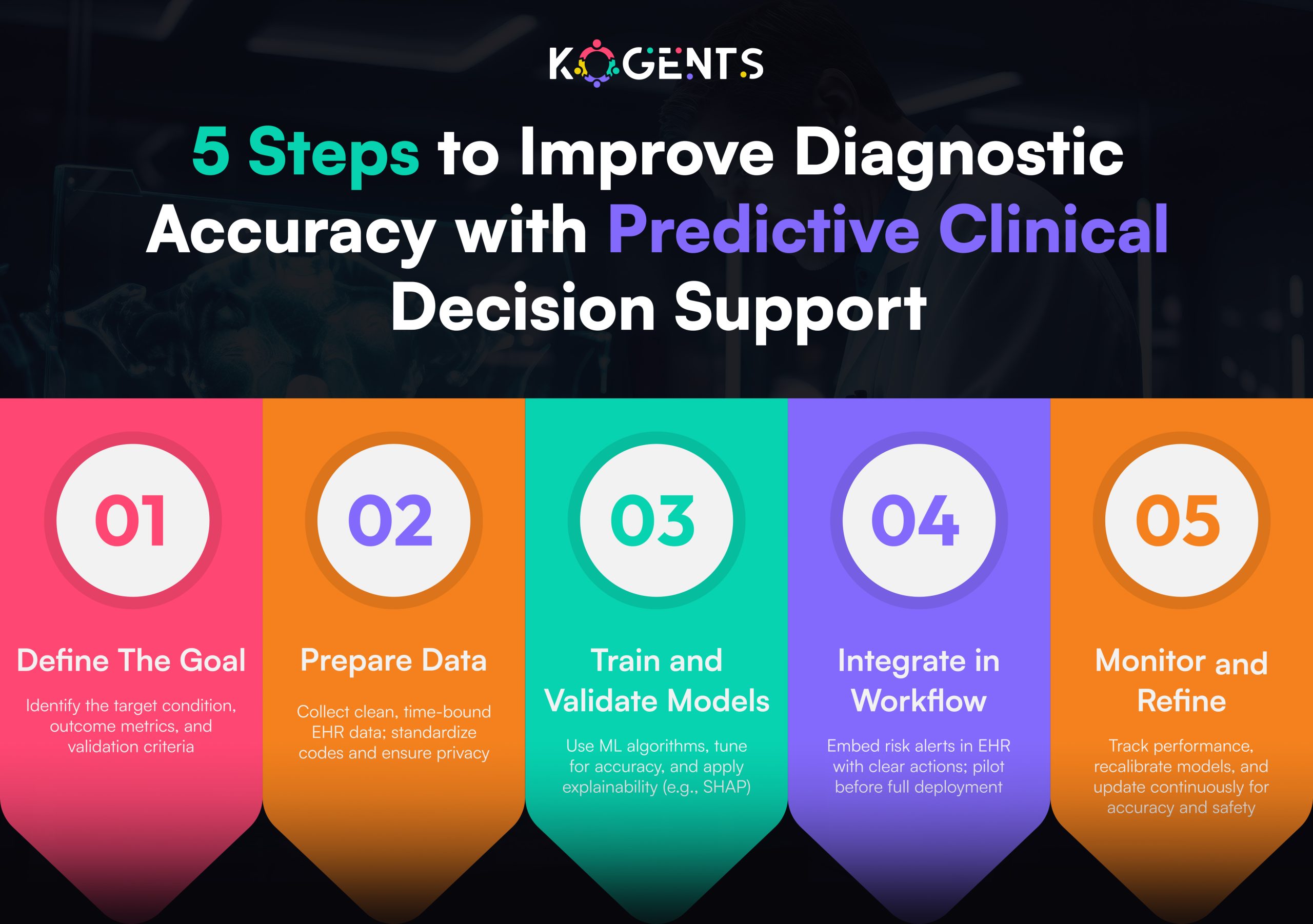
    2. Predictive and Contextual Analysis: Using machine learning and natural language processing, AI agents analyze structured and unstructured data to predict events like sepsis, adverse drug reactions, or readmission risks.
    3. Explainable AI (XAI): Transparency is vital in healthcare, and techniques such as SHAP and LIME allow clinicians to understand why an AI agent recommends a certain action, maintaining trust and accountability.
    4. Interoperability and Integration: Through FHIR-based APIs, AI agents integrate seamlessly with diverse EHRs, enabling interoperable clinical decision support without custom coding for each vendor.
    5. Workflow Intelligence: AI agents detect contextual signals,  clinician specialty, patient acuity, time of day, and tailor alerts to minimize alert fatigue while improving clinical workflow efficiency.
    clinical decision support

    Case Study 1: Sepsis Prediction at a Major U.S. Health Network

    A multi-hospital system integrated an AI-based clinical decision support platform powered by agents that monitored EHR streams for sepsis risk indicators.

    • Result: Early warning alerts 4 hours before traditional systems.
    • Impact: 24% reduction in sepsis mortality, 31% fewer ICU transfers.
    • Compliance: Fully aligned with the FDA’s SaMD and HIPAA standards using secure federated learning.

    Note: This demonstrates how AI agents for health care automation make predictive decisions to support scalable, secure, and life-saving.

    Scaling CDS Across Enterprise EHR Systems

    To deliver value enterprise-wide, clinical decision support systems must scale without compromising performance, security, or accuracy.

    Scalable Architecture

    A modular design built on microservices enables hospitals to deploy CDS components independently, from rules-based engines to predictive AI modules. 

    Containerization (Docker, Kubernetes) supports load balancing and fault tolerance across multiple facilities.

    Federated Learning for Privacy-Preserving Scale

    Traditional model training centralizes sensitive patient data. 

    Besides, in contrast, federated learning allows local models to learn independently while sharing only encrypted parameters. 

    This ensures compliance with HIPAA, GDPR, and emerging FDA AI/ML guidelines.

    Standardized Data Interoperability

    Adherence to FHIR, SNOMED CT, LOINC, and ICD-10 standards ensures that AI agents interpret data consistently across institutions. This is a cornerstone not only for interoperable clinical decision support but also for reliable AI doctor diagnosis frameworks.

    Scaling Strategy Description Key Benefits
    FHIR-Based APIs Unified integration with EHR systems using HL7/FHIR standards Reduces integration costs and time
    Federated Learning Decentralized model training without sharing raw patient data Ensures HIPAA/GDPR compliance
    Microservices Architecture Modular, containerized services Enables scalability and fault tolerance
    Edge AI Deployment Local inference for real-time responsiveness Improves latency and data control
    Unified Governance Layer Centralized model oversight and rule management Ensures regulatory consistency

    Key Point: These strategies allow EHR-integrated decision support to function enterprise-wide, delivering consistent and evidence-based clinical decision making while safeguarding data.

    Case Study 2: Predictive CDS Across a European Hospital Consortium

    A consortium of five hospitals in the EU deployed an AI-driven clinical decision support engine to predict patient deterioration.

    • Integrated with five distinct EHR systems via FHIR APIs.
    • Achieved 99.8% data integrity through on-premise encryption.
    • Resulted in a 17% reduction in hospital readmissions and faster ICU triage.

    This case illustrates that scalability is not just about computing power; it’s about intelligent, compliant architecture.

    Ensuring Security, Privacy, and Compliance At Your Assistance

    Trust is non-negotiable in healthcare technology. Clinical decision support platforms must uphold the highest standards of security, transparency, and regulatory compliance.

    Core Security Practices

    • End-to-End Encryption for all data in motion and at rest.
    • Role-Based Access Control (RBAC) to ensure only authorized users have access to PHI.
    • Immutable Audit Trails to document every decision, data access, and algorithm update.

    Privacy-Preserving AI

    Using federated learning, differential privacy, and data anonymization, organizations can maintain algorithmic performance without sharing raw patient data.

    Regulatory Alignment

    AI-driven CDS solutions must comply with:

    • HIPAA (U.S.)
    • GDPR (EU)
    • FDA SaMD Guidance
    • ONC Health IT Certification

    Note: These frameworks ensure algorithmic transparency, explainability, and patient safety.

    Implementation Strategies for Healthcare Enterprises

    To succeed, healthcare organizations must approach CDS implementation as both a technical and cultural transformation.

    1. Establish Governance

    Define policies for algorithm validation, clinician oversight, and version control to meet medical liability standards.

    2. Standardize Data Models

    It’s feasible to adopt HL7 FHIR, CQL, and Arden Syntax for unified, interoperable frameworks.

    3. Start Small, Scale Fast

    Pilot point-of-care decision support for specific clinical pathways (e.g., antibiotic stewardship, radiology appropriateness) before full-scale rollout.

    4. Integrate Clinician Feedback

    Usability is critical, and that is why it must incorporate feedback loops for continuous improvement of alert thresholds, UX, and data presentation.

    5. Choose Vendor-Neutral Platforms

    Solutions like Kogents.ai provide modular AI agent orchestration that integrates with any EHR vendor, ensuring future-proof interoperability.

    The Future of AI-Driven Clinical Decision Support

    Healthcare is evolving toward a learning health system,  one that continuously improves by analyzing outcomes and adapting decision logic.

    Emerging Trends:

    • Generative AI for Clinical Documentation: Automatically summarize visits, create structured notes, and suggest next steps aligned with guidelines.
    • Collaborative AI Agents: Multiple agents working together, for example, one managing medications while another predicts complications.
    • Predictive Population Health Management: Using AI-driven clinical decision support to identify at-risk groups early.
    • Explainable and Ethical AI: Reinforcing algorithm transparency, fairness, and model drift monitoring.

    Know the Highlight: Ultimately, the convergence of EHR-integrated decision support, AI orchestration, and secure interoperability will redefine clinical care delivery.

    Transforming Healthcare Intelligence with Kogents.ai

    Clinical decision support systems have evolved from static alert engines into intelligent, adaptive platforms that drive safer, smarter care. 

    But the future belongs to AI-driven, interoperable, and secure clinical decision support, the kind enabled by autonomous AI agents.

    By combining machine learning, federated architectures, and evidence-based decision logic, healthcare organizations can transform scattered data into a cohesive intelligence ecosystem. 

    These systems not only improve clinical decision-making but also foster a learning health system capable of continuous self-improvement.

    But, the question is, are you ready to bring scalable, secure, and explainable AI into your clinical workflows? 

    If yes, then partner with Kogents.ai, the platform purpose-built for deploying AI agents that power interoperable clinical decision support systems, unify EHR data, and deliver enterprise-grade performance with regulatory confidence. Give us a call at +1 (267) 248-9454 or drop an email at info@kogents.ai. 

    FAQs

    What is clinical decision support (CDS)?

    Clinical decision support provides clinicians with actionable, data-driven insights during care delivery. It combines clinical guidelines, EHR data, and predictive algorithms to enhance patient outcomes.

    How does AI enhance clinical decision support systems (CDSS)?

    AI introduces context awareness, predictive analytics, and continuous learning. This reduces false positives and alert fatigue, delivering more relevant recommendations.

    What are the types of CDS tools we must be aware of?

    • Rules-based decision support
    • Predictive decision support (AI/ML)
    • Guideline-driven decision support
    • Workflow-integrated clinical decision support

    What are the benefits of integrating CDS with EHRs?

    EHR-integrated decision support ensures real-time access to patient context, improving efficiency, compliance, and care coordination.

    What limits CDS scalability?

    Barriers include data silos, lack of interoperability, and security constraints across EHR systems.

    How does the FDA regulate AI-based CDS?

    The U.S. FDA governs clinical decision support software as part of its Software as a Medical Device (SaMD) framework, requiring validation, transparency, and explainability.

    How can healthcare systems secure CDS deployments?

    By implementing encryption, federated learning, and audit trails, and maintaining compliance with HIPAA, GDPR, and HITECH.

    What’s the difference between CDS and general decision support systems?

    While general systems apply to business or logistics, clinical decision support systems rely on clinical knowledge bases, evidence-based medicine, and regulatory compliance.

    How do AI agents collaborate with clinicians?

    They act as intelligent co-pilots, providing real-time insights while clinicians retain final authority over patient care.

    What’s the ROI of deploying enterprise CDS?

    Hospitals report reduced adverse events, improved clinical quality metrics, and measurable financial ROI within 12–24 months.
  • Can an AI Health Assistant Reduce Healthcare Costs?

    Can an AI Health Assistant Reduce Healthcare Costs?

    Ever feel like you’re jumping through hoops just to get the care you need, but wish there was an easier way forward?

    Well, you’re not alone in this case. 

    With the rising costs of healthcare in the United States, finding effective and affordable solutions is a pressing concern for many.

    Virtual health assistants are revolutionizing the healthcare environment by providing 24/7 support and personalized guidance.

    AI-powered tools help patients adhere to their treatment plans and make informed decisions about their care.

    By leveraging these innovative solutions, you can take control of your health journey and potentially reduce your healthcare expenses.

    But how exactly do these AI health assistants work, and what benefits do they offer? Let’s uncover this in this blog. 

    Key Takeaways

    • Discover how AI-powered health assistants provide round-the-clock support and personalized guidance.
    • Explore the growing financial challenges in the American healthcare system and how technology offers promising solutions.
    • Learn about the core features of modern AI health assistants and their impact on patient outcomes.
    • Understand how virtual health platforms can bridge gaps in care and enhance medication adherence.
    • Find out how AI tools can support both patients and healthcare providers.

    The Rising Challenge of Healthcare Costs in America

    America is facing a healthcare cost crisis that impacts patients, providers, and the overall healthcare system. 

    The financial strain of healthcare costs is a pervasive issue that affects various aspects of the medical care setup. 

    The United States spends a significant portion of its GDP on healthcare, with a total expenditure of $4,866.5 billion in 2023.

    This excessive expenditure contributes to the financial burden on both patients and healthcare providers.

    Financial Burden on Patients and Providers

    You may be among the millions of Americans who delay or avoid seeking medical care due to concerns about cost, potentially leading to more serious and expensive health issues down the road. 

    Healthcare providers face their own financial challenges, including unpaid medical bills and complex billing systems that increase operational costs. 

    AI health assistants, including digital health assistants, health chatbots, and AI wellness assistants, offer a path forward. 

    By delivering round-the-clock support, automating routine tasks, and enhancing medication adherence, they help lower costs and improve outcomes. 

    Integrated with remote patient monitoring (RPM) systems, these tools enable early detection of health issues and reduce unnecessary hospital visits.

    Modern digital health tools and AI diagnostic assistants provide clinical decision support by analyzing data and offering evidence-based recommendations. 

    What Is an AI Health Assistant?

    An AI health assistant comes equipped with several key features that enhance patient care. These include advanced machine learning algorithms that improve over time, natural language processing (NLP) for better understanding, and integration with wearable devices for real-time data collection.

    • Your assistant uses artificial intelligence (AI) and continuously learns from interactions to improve its accuracy and effectiveness. 
    • Moreover, Chatbot capabilities allow it to answer patient questions in natural, everyday language, making it more accessible.
    • Modern platforms integrate with remote patient monitoring (RPM) systems and digital health tools, enabling continuous tracking of vital signs and early detection of health risks. 
    • Many also provide clinical decision support, helping healthcare providers make data-driven, evidence-based recommendations.
    • When combined with telehealth/telemedicine services and healthcare workflow automation, AI health assistants streamline communication, reduce administrative burdens, and deliver a seamless, patient-centered care experience.

    How AI Technology Powers Modern Health Assistants

    The technology behind AI health assistants is sophisticated, using complex systems that analyze medical literature and clinical guidelines to provide evidence-based recommendations tailored to your health profile. 

    This approach is consistent with standards highlighted by the Agency for Healthcare Research and Quality (AHRQ), which promotes evidence-based practice in healthcare decision-making (Bipartisan Policy Center).

    Advanced AI assistants can integrate with wearable devices and health monitoring tools to collect real-time data on your vital signs and activities, a practice supported by research on remote patient monitoring with AI that demonstrates its potential to reduce hospitalizations and improve outcomes. 

    Safety and compliance are also crucial. These assistants follow sophisticated clinical escalation systems to ensure patients receive appropriate care when necessary, aligning with oversight principles emphasized by the U.S. Food & Drug Administration’s (FDA) Digital Health Advisory Committee and The Joint Commission’s telehealth accreditation guidelines (Reuters, PMC).

    By providing accurate, timely, and guideline-based information, AI health assistants empower you to take a more active role in your healthcare. 

    This improves patient experience and contributes to a more efficient healthcare system, a goal consistent with the Centers for Medicare & Medicaid Services (CMS) efforts to encourage value-based care models.

    AI health assistants

    How AI Health Assistants Drive Cost Reduction

    AI health assistants are emerging as a key factor in reducing healthcare expenditures.

    By streamlining various processes and improving patient care, these assistants are proving to be a valuable asset for healthcare providers.

    Preventative Care and Early Intervention

    AI health assistants facilitate preventative care by identifying potential health issues early on. This enables timely intervention, reducing the likelihood of costly complications down the line. By focusing on prevention, healthcare costs can be significantly lowered.

    Reducing Unnecessary Hospital Visits

    These assistants can pre-screen patients and gather relevant health information before appointments, making clinical visits more efficient. 

    This not only saves time for both patients and healthcare providers but also reduces unnecessary hospital visits, thereby cutting costs.

    Streamlining Administrative Processes

    AI health assistants and AI agents for healthcare automation streamline routine administrative tasks such as appointment scheduling and data entry.

    This reduces the workload for the healthcare team, allowing them to focus more on direct patient care. The table below highlights the benefits of streamlining administrative processes.

    By leveraging AI technology, healthcare providers can optimize their resources, improve care quality, and reduce costs. 

    The integration of AI health assistants is a step towards a more efficient and cost-effective healthcare system.

    Improving Medication Adherence and Management

    Medication adherence technology

    Medication adherence is a critical aspect of healthcare that AI health assistants can significantly improve. 

    By leveraging technology, these assistants can help you stay on track with your medication regimen.

    The Cost of Non-Adherence

    Non-adherence to medication can lead to significant healthcare costs, including hospital readmissions and additional treatments. 

    Studies have shown that non-adherence can result in billions of dollars in unnecessary healthcare expenses annually.

    How AI Assistants Boost Adherence Rates

    They can boost adherence rates by sending personalized medication reminders, providing education on medication importance, and tracking your adherence behavior. 

    These tools adapt to your behavior patterns, ensuring the most effective reminder strategies are used.

    • Receive personalized reminders based on your prescription schedule.
    • Gain education on the benefits and potential side effects of your medications.
    • Benefit from proactive support in managing side effects and addressing concerns.

    Remote Monitoring and Chronic Disease Management

    Remote patient monitoring systems

    You can now take control of your health with the help of remote monitoring systems designed for chronic disease management. 

    These systems enable continuous tracking of your vital signs and health metrics, allowing for timely interventions.

    Cost-Effective Monitoring of Chronic Conditions

    Remote monitoring reduces the need for hospital visits, making it a cost-effective solution for managing chronic conditions. 

    Your AI health assistant continuously collects and analyzes data, identifying patterns and trends that might not be apparent during occasional doctor visits.

    Real-Time Data Collection and Analysis

    Real-time analysis allows for immediate feedback on how lifestyle factors like diet, exercise, and sleep affect your health metrics, enabling you to make informed adjustments. 

    The comprehensive data collected creates a more complete health profile that helps healthcare providers make more accurate diagnoses and treatment recommendations.

    The insights generated from your data can help personalize your care plan, focusing interventions on the specific factors most affecting your health. 

    AI health assistants

    Personalized Health Insights and Preventive Care

    By leveraging AI technology, you can gain valuable insights into your health and take proactive steps towards preventative care. 

    AI health assistants analyze your data to provide customized recommendations that address your specific health needs.

    Customized Health Recommendations

    Your AI health assistant can offer customized advice on lifestyle modifications, such as diet and exercise, to help mitigate potential health risks. 

    By understanding how your daily habits affect your health, you can make informed decisions to improve your well-being.

    Identifying Risk Factors Before They Become Costly

    • Your AI health assistant can identify potential risk factors in your health data that might indicate developing problems before they require expensive interventions.
    • By analyzing patterns in your vital signs, symptoms, and behaviors, these systems can detect subtle changes that might escape notice during routine care.
    • The assistant can provide specific advice about lifestyle modifications that address your personal risk factors, potentially preventing the development of chronic conditions.
    • Early identification of health risks allows for targeted preventative measures that are typically much less expensive than treating established diseases.
    • The AI can help you understand how specific behaviors like diet choices, exercise habits, and stress management affect your personal health risks.
    • These insights enable a proactive approach to health management, shifting resources from expensive disease treatment to more cost-effective prevention.
    • By highlighting connections between your daily habits and health outcomes, AI assistants make abstract health risks more concrete and actionable.

    Note: With AI-driven health insights, you can take a proactive role in managing your health and reducing the likelihood of costly medical interventions in the future.

    Case Study Analysis: Esper’s 

    The implementation of AI health assistants has led to measurable reductions in healthcare costs. 

    Esper, an AI health assistant, has achieved a significant 36% increase in patient adherence. By handling outreach on behalf of staff, Esper streamlines incoming phone calls, scheduling, and inquiries. 

    It assists with full-service onboarding, consent, enrollment, health assessments, patient scheduling, medication reminders, and auto-refilling device supplies, ultimately improving outcomes for patients.

    Reducing Administrative Burden for Healthcare Providers

    AI health assistants significantly reduce the administrative burden on healthcare teams by automating routine tasks like appointment scheduling and medication reminders. 

    They can handle frequently asked questions from patients, freeing up staff time for more complex patient interactions.

        Benefits         Description             Impact
    Automated Tasks Appointment scheduling, medication reminders Reduced administrative burden
    Patient Engagement Handling patient inquiries, health assessments Improved patient satisfaction
    Staff Reallocation Freeing up staff for complex tasks Enhanced care quality

    Implementing an AI Health Assistant in Your Healthcare Routine

    By leveraging this technology, you can enhance your overall health management strategy.

    Choosing the Right AI Health Assistant

    When selecting an AI health assistant, look for platforms that can integrate with your existing healthcare services. 

    Consider the features that are most important to you, such as medication reminders or personalized health insights.

    Integrating AI Support with Traditional Healthcare

    To get the most out of your AI health assistant, use it as a complement to traditional healthcare services. Discuss your use of the assistant with your healthcare provider to ensure they’re aware of the additional support you’re receiving.

    • Maximize benefits by using your AI health assistant to track your health data privacy and security and share insights with your healthcare provider.
    • Enhance your visits by using the assistant’s insights to focus on key issues during in-person appointments.
    • Remember, while AI health assistants provide valuable support, critical health decisions should still involve consultation with qualified healthcare professionals.

    AI Health Assistants: Paving the Way for a Sustainable Healthcare Future!

    By leveraging AI health assistants, you can take a proactive approach to healthcare cost management.

    These innovative tools offer promising solutions for reducing healthcare costs while improving patient outcomes and experiences. 

    As AI technology advances, you can expect more sophisticated health assistants that integrate seamlessly with traditional healthcare and daily life.

    The future of healthcare cost management will involve greater collaboration between AI systems and human providers. 

    While AI health assistants aren’t a complete solution, they represent an important tool in creating more sustainable healthcare systems.

    By embracing AI health assistants, you can enjoy better health outcomes and contribute to more efficient healthcare resource use. So, pair up with Kogents AI today and drop an email at info@portal.kogents.ai or give us a call at (267) 248-9454

    FAQs

    How can an AI health assistant help me manage my medication regimen?

    An AI health assistant can provide personalized reminders, track your medication adherence, and offer guidance on potential interactions or side effects, helping you stay on top of your treatment plan.

    Can an AI health assistant help me monitor my chronic condition remotely?

    Yes, many AI health assistants offer remote monitoring capabilities, allowing you to track your vital signs, symptoms, and other relevant data in real-time, and share it with your healthcare provider for timely interventions.

    How do AI health assistants ensure the accuracy of the information they provide?

    AI health assistants rely on high-quality data and are trained on evidence-based guidelines to provide accurate insights and recommendations, helping you make informed decisions about your care.

    Can I trust the advice provided by an AI health assistant?

    While AI health assistants are designed to provide reliable guidance, it’s essential to consult with your healthcare provider before making any significant changes to your treatment plan or care routine.

    How can an AI health assistant support my overall well-being?

    By providing personalized insights, recommendations, and support, AI health assistants can help you adopt healthier habits, manage stress, and stay on track with your care plan, promoting overall well-being and better health outcomes.

    Are AI health assistants secure and compliant with healthcare regulations?

    Reputable AI health assistants adhere to strict data protection standards and comply with relevant regulatory oversight, such as HIPAA compliance, to ensure the confidentiality and integrity of your personal and medical information.

    Can I access my AI health assistant through multiple devices?

    Many AI health assistants offer multi-platform access, allowing you to engage with the tool through various devices, such as smartphones, tablets, or computers, for added convenience and flexibility.

    How does it compare to telehealth?

    If you’ve searched “AI health assistant vs telehealth nurse,” AI tools offer instant, automated help, while telehealth nurses provide human judgment; both work best together.

    Are AI health assistants HIPAA-compliant and regulated by the FDA?

    Searches like “HIPAA compliance for AI health assistants” or “FDA regulation of health chatbots” are common, reputable tools that follow strict privacy rules and FDA guidance.

    Who are the top providers?

    Suki AI health assistant, or Microsoft Health AI platform, points to leading companies offering AI-driven clinical and patient support solutions.

  • Automated Patient Intake: ROI Analysis for Mid-Size Hospitals

    Automated Patient Intake: ROI Analysis for Mid-Size Hospitals

    Are mid-size hospitals missing out on significant operational efficiencies by sticking to traditional patient intake methods?

    With the prompt evolution of remarkable digital infrastructure, the digital front door for the healthcare patient intake process is emerging as a key solution. 

    Also, the shift from paper-based systems to fully digital workflows is not just a trend; it’s a necessity for hospitals aiming to improve operational efficiency and enhance patient care.

    In this case, the decision by mid-size hospitals to adopt automated patient intake systems is crucial. 

    It’s not just about keeping up with technology; it’s about evaluating the return on investment (ROI) and understanding how these systems can address the challenges associated with Automated patient registration.

    Key Takeaways

    • Patient onboarding automation systems can significantly improve operational efficiency in mid-size hospitals.
    • Evaluating the ROI of an automated intake system is crucial for informed decision-making.
    • Digital patient intake processes enhance patient care and experience.
    • Traditional intake methods pose significant challenges for mid-size hospitals. 
    • Adopting automated systems can lead to tangible and intangible benefits.

    The Current State of Patient Intake in Mid-Size Hospitals

    Mid-size hospitals face significant challenges with patient intake processes, affecting both operational efficiency and patient satisfaction. 

    Traditional intake methods are often cumbersome and time-consuming.

    Common Challenges with Traditional Intake Methods

    Traditional patient intake methods can lead to inefficiencies that negatively impact the patient experience. 

    Patients often have to spend a significant amount of time filling out paperwork, which can create a negative first impression.

    Impact on Hospital Operations and Patient Experience

    The inefficiencies in patient intake processes can lead to waiting room congestion, affecting both patient comfort and staff workload. 

    • When patients spend less time waiting and more time with their healthcare provider, it boosts patient satisfaction.
    • Adopting touchless patient intake and mobile-first patient registration can significantly reduce manual paperwork, enabling patients to check in digitally from their own devices.
    • For hospitals, implementing an electronic check-in system or a self-service patient intake kiosk not only reduces bottlenecks but also improves throughput during peak hours.
    • When patients spend less time waiting and more time with their healthcare provider, it boosts patient satisfaction. 
    • Integrating these solutions with EHR integration ensures that patient information is instantly available, reducing data entry errors and supporting continuity of care. 
    • Analyzing how inefficient intake processes create scheduling delays that impact the entire hospital’s daily operations highlights why pre-visit registration is so valuable. 
    • Patients can complete forms ahead of time, smoothing the entire workflow.
    • This shift is part of the broader healthcare digital transformation, where automated, data-driven tools improve efficiency, enhance patient experience, and free staff from administrative overload.

    Understanding Automated Patient Intake Systems

    Automated patient Intake solutions

    They are revolutionizing the way mid-size hospitals manage patient data. 

    These systems are designed to streamline the intake process, reducing administrative burdens and improving patient satisfaction through AI agents for healthcare automation that intelligently handle repetitive intake workflows.

    Key Features of Modern Intake Platforms

    They offer a range of features, including secure data storage and bidirectional integration capabilities.

    These features enable hospitals to efficiently manage patient information and ensure that data is accurate and up-to-date.

    Integration Capabilities with Existing Hospital Systems

    Automated intake systems can integrate with various hospital systems, including PM/EHR systems, through open standards such as HL7, FHIR, CCD, and CSV. 

    This integration enables seamless data exchange, reducing duplicate data entry and improving information consistency across hospital systems.

    Note: mid-size hospitals can enhance their operational efficiency and improve patient care.

    automated patient intake

    Primary Benefits of Implementing Automated Patient Intake

    They are redefining patient care by improving data accuracy and clinical decision-making. 

    These systems ensure that clinicians receive accurate, comprehensive information that enhances care efficiency and improves clinical decisions through intelligent algorithms and seamless data integration.

    Operational Efficiency Improvements

    The automation of patient intake processes significantly reduces manual data entry, allowing healthcare staff to focus on more critical tasks. 

    This shift not only improves operational efficiency but also enhances the overall quality of care.

    Enhanced Patient Experience and Satisfaction

    By streamlining the intake process, automated systems reduce wait times and minimize the administrative burden on patients. 

    One data reveals, ‘’AI could automate 30% of administrative tasks, from note transcription to scheduling. ‘’

    Potential Outcome: This leads to an enhanced patient experience, as patients can quickly and easily provide their information, improving their overall satisfaction with the healthcare service.

    Data Accuracy and Compliance Benefits

    Automated intake systems improve clinical data accuracy by reducing transcription errors through direct patient input. 

    They also support regulatory compliance by standardizing documentation and providing a clear audit trail, which is essential for maintaining high standards in healthcare.

    Benefits Description Impact
    Operational Efficiency Reduced manual data entry Improved staff productivity
    Patient Experience Streamlined intake process Enhanced patient satisfaction
    Data Accuracy Direct patient input Reduced transcription errors
    Regulatory Compliance Standardized documentation Improved audit trail

    Financial Impact Analysis for Mid-Size Hospitals

    The financial impact of automated patient intake on mid-size hospitals is multifaceted, offering both cost savings and revenue enhancements. 

    By adopting automated intake solutions, these hospitals can experience significant financial benefits.

    Direct Cost Savings Opportunities

    Automated patient intake creates tangible outcomes for healthcare organizations, including improved time-of-service collections and online payments. 

    Streamlined intake processes reduce administrative burdens, allowing for more efficient use of resources. 

    Revenue Enhancement Potential

    The benefits of automated patient intake include improved insurance eligibility verification, leading to higher clean claim rates and reduced denials.

    Additionally, accurate patient demographic and insurance data enhance revenue cycle management, supporting more comprehensive charge capture and appropriate service billing.

    Key note: Guidance from the Centers for Medicare & Medicaid Services (CMS) and the Office of the National Coordinator for Health IT (ONC) further emphasizes interoperability, HIPAA compliance, and patient access standards, making automated intake an essential part of modern hospital operations.

    Calculating ROI for Automated Patient Intake Implementation

    This helps hospitals determine their financial impact.

    Initial Investment Considerations

    The initial investment for automated patient intake includes software costs, implementation fees, and training expenses.

    Ongoing Operational Costs

    Ongoing costs comprise maintenance fees, support services, and potential upgrades to the system.

    Expected Return Timeline

    It varies based on implementation complexity, hospital size, and process optimization.

    Key considerations for calculating ROI include:

    • Establishing realistic timeframes for achieving ROI milestones based on implementation complexity and hospital size is a critical step in any healthcare digital transformation initiative.
    • Analyzing which benefits typically materialize first, such as improved patient experience, versus those that require longer-term process changes, helps set accurate expectations.
    • Examining how to create a phased ROI expectation model ensures that digital health workflow improvements are measured as adoption scales.
    • It is equally important to discuss the factors that can accelerate or delay ROI achievement in mid-size hospital environments, including training effectiveness and adherence to HIPAA compliance(Health Insurance Portability and Accountability Act) standards.

    automated patient intake

    Implementation Roadmap for Mid-Size Hospitals

    A well-planned implementation roadmap is crucial for mid-size hospitals adopting automated patient intake solutions.

    Successful deployment involves supporting an organization’s digital front-door strategy and engaging patients at every step of their healthcare journey with native applications and integration capabilities.

    Planning and Assessment Phase

    This initial phase is critical for understanding the hospital’s current intake processes and identifying areas for improvement.

    Deployment Strategies and Best Practices

    Effective deployment strategies include leveraging the right tools and technologies to streamline the intake process.

    Staff Training and Adoption Considerations

    Training staff is a vital component of successful implementation, requiring tailored approaches to meet different needs.

    Case Study Analysis: Successful Automated Patient Intake Implementations

    These implementations in mid-size hospitals have yielded impressive results, including streamlined registration processes, improved communication, and a more seamless digital patient onboarding experience. 

    Successful implementations highlight the importance of transparent payment tracking, accurate, customizable data collection, and convenient EHR integration to save providers and staff time.

    Measurable Outcomes 

    One such case study demonstrates significant reductions in patient wait times and increases in patient visits due to more efficient patient intake processes.

    A mid-size hospital in the Midwest reported a 30% decrease in registration errors and a 25% increase in patient satisfaction scores.

    Lessons Learned and Best Practices

    Key success factors include effective change management strategies, comprehensive staff training, and ongoing optimization of the automated system. 

    As one hospital administrator noted, 

    ‘’Clear communication with patients about the new intake process was crucial to its adoption.’’

    Overcoming Common Implementation Challenges

    Hospitals transitioning to automated patient intake pricing systems must navigate various implementation hurdles. A well-planned strategy is crucial for a smooth transition.

    Technical Integration Hurdles

    One of the primary challenges is integrating the new system with the existing hospital infrastructure under the desired pricing. Ensuring compatibility and seamless data transfer is vital.

    Change Management Strategies

    • Effective change management is critical to the successful adoption of automated patient intake. 
    • This involves comprehensive staff training and clear communication about the benefits and operation of the new system.

    Patient Adoption Considerations

    It is enhanced through user-friendly digital forms and intelligent rules engines that tailor the intake process to individual patients, showing them only relevant questions. 

    Systems that remember where patients left off if interrupted also improve the patient experience.

    To facilitate patient adoption, hospitals should:

    • Identify strategies for introducing patients to new intake processes with minimal disruption.
    • Analyze demographic considerations that may impact patient comfort with digital intake methods.
    • Provide support options for patients who need assistance with technology.
    • Communicate clearly about data privacy and security to build patient trust.
    • Explore the role of staff in encouraging patient adoption and providing necessary guidance.

    According to the American Hospital Association (AHA) and the Agency for Healthcare Research and Quality (AHRQ), improving patient intake and administrative efficiency directly supports better health outcomes and reduces care variability.

    Explore the Strategic Value of Automated Patient Intake With Kogents AI! 

    Automated patient intake systems offer a multifaceted solution for mid-size hospitals aiming to reduce costs and enhance patient engagement. 

    By streamlining the intake process, these systems contribute to the quadruple aim of healthcare: improved patient experience, better outcomes, lower costs, and enhanced clinician experience. 

    This technology is a crucial step in creating a seamless digital front door for hospital services, providing a competitive advantage in an increasingly consumer-driven healthcare market.

    The strategic value of automated patient intake lies in its ability to drive operational efficiency, improve patient satisfaction, and support broader digital transformation strategies. 

    As patient intake technology continues to grow, mid-size hospitals that adopt these solutions early are likely to reap significant benefits, including a compelling ROI.

    But are you ready to transform your intake process? Discover how Kogent AI’s automated patient intake platform can be your administrative partner. So, schedule a demo with Kogents AI today by giving us a call at (267) 248-9454 or dropping an email to info@portal.kogents.ai

    FAQs

    How does automated patient registration improve the healthcare experience?

    By streamlining the registration process, healthcare providers can reduce waiting times, enhance patient satisfaction, and improve overall care.

    What are the benefits of integrating automated systems with existing EHR systems?

    Integration with EHR systems enables seamless data exchange, reduces manual data entry, and improves data accuracy, ultimately enhancing the quality of care.

    How can healthcare organizations ensure a smooth transition to automated patient intake systems?

    Effective change management strategies, comprehensive staff training, and clear communication with patients are crucial for a successful implementation.

    What are the key factors to consider when evaluating the ROI of automated patient intake systems?

    Healthcare organizations should consider initial investment costs, ongoing operational expenses, and potential revenue cycle optimization when assessing the ROI of automated patient intake systems.

    How can automated patient intake systems improve patient engagement and satisfaction?

    By providing a more streamlined and efficient experience, automated patient intake systems can enhance patient experience and engagement, reduce wait times, and improve overall satisfaction.

    What are the common challenges associated with implementing automated patient intake systems?

    Technical integration hurdles, staff adoption, and patient acceptance are common challenges that healthcare organizations may face when implementing automated patient intake systems.

    How can healthcare organizations measure the success of their automated patient intake implementation?

    By tracking key performance indicators such as patient satisfaction, wait times, and data accuracy, healthcare interoperability organizations can assess the effectiveness of their automated patient intake systems.

    What is automated patient intake, and why is it important?

    Automated patient intake replaces paper forms with digital consent forms and workflows, letting patients complete registration online. This streamlines the process, improves data accuracy, and reduces wait times, creating a smoother experience for both patients and staff.

    What are the benefits and best practices for patient intake technology in hospitals?

    Digital intake helps hospitals shorten wait times, improve data accuracy, and boost patient satisfaction. The best approach is a phased rollout with staff training and patient education to make adoption smooth and successful.

    Which platforms or vendors offer automated patient intake integration? 

    Leading solutions include Epic, Phreesia, Clearwave, Well Health, and athenahealth. These platforms integrate with EHR systems and offer digital check-in options to streamline registration and reduce administrative workload.

    How much does it cost, and how do I get started?

    Costs vary based on hospital size and feature needs, but most vendors provide demos and consultations to help plan implementation. Choosing a HIPAA-compliant platform ensures patient data remains secure.

    How do hospitals evaluate ROI and compare solutions?

    Vendor reviews, case studies, and patient intake software reviews and ratings comparisons help decision-makers choose the right solution with the strongest long-term impact.

  • AI Virtual Nursing Assistants Cut Hospital Costs by 40%: Real Case Study

    AI Virtual Nursing Assistants Cut Hospital Costs by 40%: Real Case Study

    Do you know that burnout from endless paperwork is draining nurses and doctors everywhere? The scenario calls for a virtual nursing assistant to help alleviate the load, slashing hospital costs by 40% while adding to the concern for care.

    Enter the AI-powered nursing assistant, a prompt, unique, and much-needed solution that takes over time-consuming administrative tasks, streamlines workflows, and gives staff the freedom to focus on care. 

    In one real case study, hospitals using remote nursing assistants cut the total operational costs by 40% without compromising on other areas of concern, such as staff morale and patient satisfaction.

    This article explores the role of AI in nursing and shows how virtual assistants are already driving meaningful improvements in patient care and daily clinical practice.

    Key Takeaways

    • An AI nurse companion can significantly reduce hospital operational costs.
    • The implementation process involves comprehensive integration into existing healthcare systems.
    • Measurable outcomes include improved patient care and staff satisfaction.
    • Virtual assistants are transforming healthcare delivery models across the United States.
    • The technology addresses critical challenges in healthcare staffing and administrative burden.
    • A significant return on investment is achieved through efficiency gains.

    The Rising Challenges in Healthcare Staffing

    The healthcare sector is grappling with significant staffing issues, primarily driven by physician burnout and the increasing administrative burden associated with Electronic Health Record (EHR) systems. 

    These challenges are not only affecting the well-being of healthcare professionals but also the quality of care provided to patients.

    Physician Burnout and Administrative Burden

    It has become a critical issue, largely due to the excessive administrative tasks that consume a significant portion of their time.

    The American Hospital Association (AHA) has reported that physicians spend more than half their workday on EHR-related tasks, leaving limited time for direct patient care.

    EHR Documentation Burden

    The documentation requirements for EHR systems are extensive, including detailed visit notes, order entry, prescription management, and compliance documentation. 

    For every hour physicians spend with patients, they spend nearly two additional hours on EHR and desk work. 

    With the support of a nurse or virtual nursing assistant, healthcare providers can optimize their workflow. 

    What Are Virtual Nursing Assistants?

    They are revolutionizing healthcare by providing support that is both efficient and cost-effective. They offer a range of services that complement traditional nursing care.

    Definition and Core Functions

    Virtual nursing has become a common practice, providing support through monitoring, coordination, and administrative automation. 

    They are trained to perform duties that do not require on-site personnel, allowing healthcare providers to focus on direct patient care.

    Note: virtual nursing assistants and healthcare providers can better appreciate the benefits they bring to patient monitoring and staffing efficiency.

    The 40% Cost Reduction: Breaking Down the Case Study

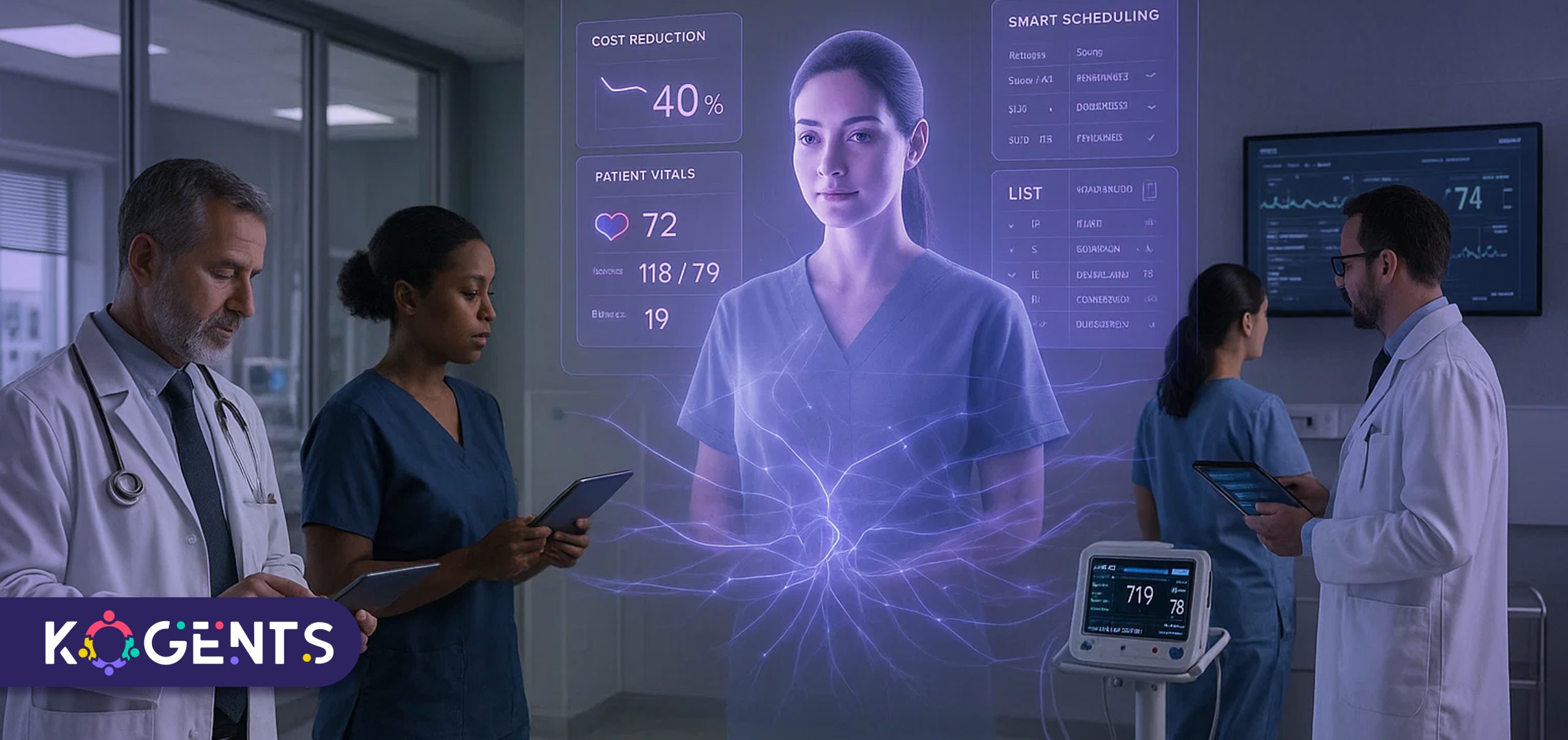
    A leading hospital achieved a significant 40% reduction in staffing-related expenses by implementing virtual nursing assistants.

    This transformation was the result of a thorough process that addressed various challenges.

    Hospital Background and Initial Challenges

    A report by the National Library of Medicine(NLM) says that hospital labor costs increased by over one-third between 2019 and 2022, resulting in an additional financial burden of $24 billion. As a result, hospital labor expense per adjusted discharge increased by 24.8%.

    Moreover, recruitment and onboarding costs were also substantial due to high turnover rates.

    Implementation Process and Timeline

    • The implementation of AI-powered healthcare support required a heavy initial investment in technological equipment, training, and integration. 
    • This process was carefully planned and executed to minimize disruptions.

    Detailed Cost Analysis Before and After

    Staffing efficiency costs were reduced by 85%, saving an additional $4.5 million. Overall, the hospital achieved a total annual cost savings of $10.85 million.

    virtual nursing assistant

    How Virtual Nursing Assistants Provide Relief from Burnout and Workload?

    They bring a multitude of benefits to healthcare, enhancing both patient outcomes and staff experiences.

    AI-powered tools can manage complex medication schedules, helping nurses avoid errors and reduce the mental burden of tracking multiple treatments at once. In addition to supporting clinical accuracy, this kind of automation can significantly reduce costs for healthcare systems. Medication-related inefficiencies are estimated to cost up to $528 billion annually.

    The fact clearly depicts how virtual AI assistants have revamped the entire industry and are taking over human resources. 

    Reduced Operational Expenses

    Healthcare facilities can significantly improve by leveraging virtual nursing assistants. 

    This is achieved through decreased labor costs and improved resource allocation, resulting in cost savings.

    Improved Staff Efficiency and Satisfaction

    With virtual nursing assistants handling administrative and documentation tasks, nursing staff can focus more on direct patient care. 

    ‘’54% of nurses say they look forward to using AI in their jobs.’’

    This leads to improved staff efficiency and satisfaction, which reduces burnout rates, as nurses can devote more time to their core responsibilities.

    Enhanced Patient Care Quality

    Care coordination improves as virtual assistants actively manage referrals, follow-ups, and transitions between care settings.

    Besides, clinical outcomes show measurable improvement, particularly for chronic disease management, as monitoring becomes more consistent.

    The implementation of virtual nursing assistants enhances patient care by offering real-time assistance with 

    • timely reminders
    • comprehensive discharge planning
    • personalized patient education. 

    Key Achievement: When integrated into telehealth nursing programs, these capabilities drive higher patient satisfaction scores and better clinical outcomes.

    Benefits Impact
    Patient Satisfaction 15-20% increase
    Response Times 60% decrease
    Medication Compliance Improved through timely reminders
    Readmission Rates 12-18% reduction

    ai virtual nursing assistant

    Core Services Provided by Virtual Nursing Assistants

    Key point:  They bridge the gap between physicians and patients, ensuring that patient inquiries are addressed promptly.

    Administrative and Documentation Tasks

    They are pro at handling administrative tasks, including managing patient records and documentation, thereby reducing the burden on healthcare staff. 

    One fact reveals, ’AI could automate 30% of administrative tasks, from note transcription to scheduling.’’

    Patient Monitoring and Follow-up

    They monitor patients’ conditions and follow up on their progress, ensuring timely interventions and adjustments to care plans as needed.

    Care Coordination and Communication

    Virtual nursing assistants facilitate seamless communication and coordination among healthcare teams, ensuring that patients receive comprehensive and cohesive care.

    The services provided by virtual nursing assistants include:

    • Facilitating communication between patients and the healthcare team through black Care coordination, ensuring questions are addressed promptly.
    • Coordinating care transitions between departments, facilities, and care settings to ensure continuity of care.
    • Coordinating diagnostic testing, including scheduling, preparation instructions, and results follow-up.
    • Medication management coordination, including working with pharmacies, insurance companies, and providers to ensure access to prescribed treatments while maintaining black HIPAA compliance.
    • Managing referrals to specialists and community resources, tracking completion, and gathering results.
    • Leveraging black voice bot triage and black remote patient engagement tools further strengthens these processes, ensuring timely support and improved patient outcomes.
    • Serving as a central point of contact for patients navigating complex healthcare systems improves the overall experience.

    Appointment Scheduling and Management

    Virtual medical receptionists efficiently manage appointment scheduling, reducing no-show rates and optimizing the healthcare provider’s schedule. 

    They send reminders and notifications to patients about upcoming appointments.

    Patient Intake and Information Processing

    Virtual assistants collect and process patient information, including demographic details, insurance information, and medical histories. 

    This information is then accurately recorded in the electronic health record, making it readily accessible to clinical staff. 

    Some key tasks include: 

    • Managing the pre-visit information collection process by sending and receiving digital forms before appointments.
    • Processing new patient registration and ensuring all required documentation is complete. 
    • Managing consent forms and other required documentation to ensure compliance.
    • Virtual assistants help address the nursing shortage solutions challenge by reducing administrative burden. 
    • They also support clinical decision support systems by ensuring accurate and up-to-date patient data is available. 
    • Through healthcare AI tools, these assistants improve efficiency and reliability in documentation. 
    • Most importantly, they enhance nurse-patient communication, allowing clinical staff to dedicate more time to direct patient care.

    Telehealth Support Services

    Virtual assistants significantly enhance care across various healthcare settings by providing additional support during peak times or staff shortages.

    Pre-visit Preparation

    Virtual assistants can assist with pre-visit planning, ensuring that patients are well-prepared for their telehealth appointments. 

    This includes gathering necessary information and providing patient education.

    Post-visit Documentation and Follow-up

    After the telehealth visit, virtual assistants complete documentation and process orders generated during the visit. 

    They also conduct follow-up calls to assess treatment response and address any new or ongoing concerns, improving care and patient satisfaction.

    • Virtual assistants complete documentation during and immediately after telehealth visits, ensuring comprehensive and timely records. This reduces the burden of nursing documentation support while maintaining accuracy and compliance.
    • Virtual support also contributes to hospital workflow optimization by streamlining scheduling of follow-up appointments and coordinating referrals to specialists when needed.
    • They provide patients with visit summaries, including diagnosis, treatment plan, and next steps in their care.
    • They conduct follow-up calls to assess treatment response and address ongoing concerns, further enhancing 24/7 patient support and continuity of care.

    HIPAA Compliance and Data Security

    Ensuring the security and privacy of patient data is crucial in healthcare, particularly with the integration of AI agents for healthcare automation, such as virtual nursing assistants, which handle large volumes of sensitive clinical information.

    These assistants handle sensitive patient information, making HIPAA compliance and data security paramount.

    Soft reminder: Virtual nursing assistants must adhere to stringent data security protocols to maintain patient trust.

    Security Protocols and Safeguards

    Virtual nursing platforms implement robust security protocols, including automated compliance monitoring tools and regular audits to identify potential security concerns.

    These measures ensure the confidentiality, integrity, and availability of patient data. The use of advanced technology helps to safeguard patient information.

    Staff Training and Compliance Monitoring

    • Virtual nursing staff undergo comprehensive HIPAA training before accessing patient information. 
    • They also participate in regular refresher training to stay updated on compliance requirements.
    • Compliance monitoring includes regular performance evaluations with specific privacy and security metrics.

    Integration with Existing Hospital Systems

    This integration ensures that virtual assistants can effectively support hospital staff without disrupting existing workflows.

    Compatibility with EHR/EMR Systems

    Virtual nursing assistants must be compatible with Electronic Health Record (EHR) and Electronic Medical Record (EMR) systems. 

    Compatibility ensures that patient data is accurately and efficiently managed, reducing the administrative burden on hospital staff.

    Workflow Optimization Strategies

    To improve efficiency, virtual nursing assistants implement various workflow optimization strategies. These include:

    • Comprehensive process mapping to identify inefficiencies
    • Streamlining communication pathways to reduce delays
    • Implementing standardized protocols for routine tasks
    • Utilizing automation for repetitive tasks, such as documentation templates
    • Analyzing workflow data to identify bottlenecks and implement targeted interventions

    Implementation Outcomes: Hospitals can achieve significant efficiency improvements, typically seeing 20-30% improvements within the first six months of implementation. 

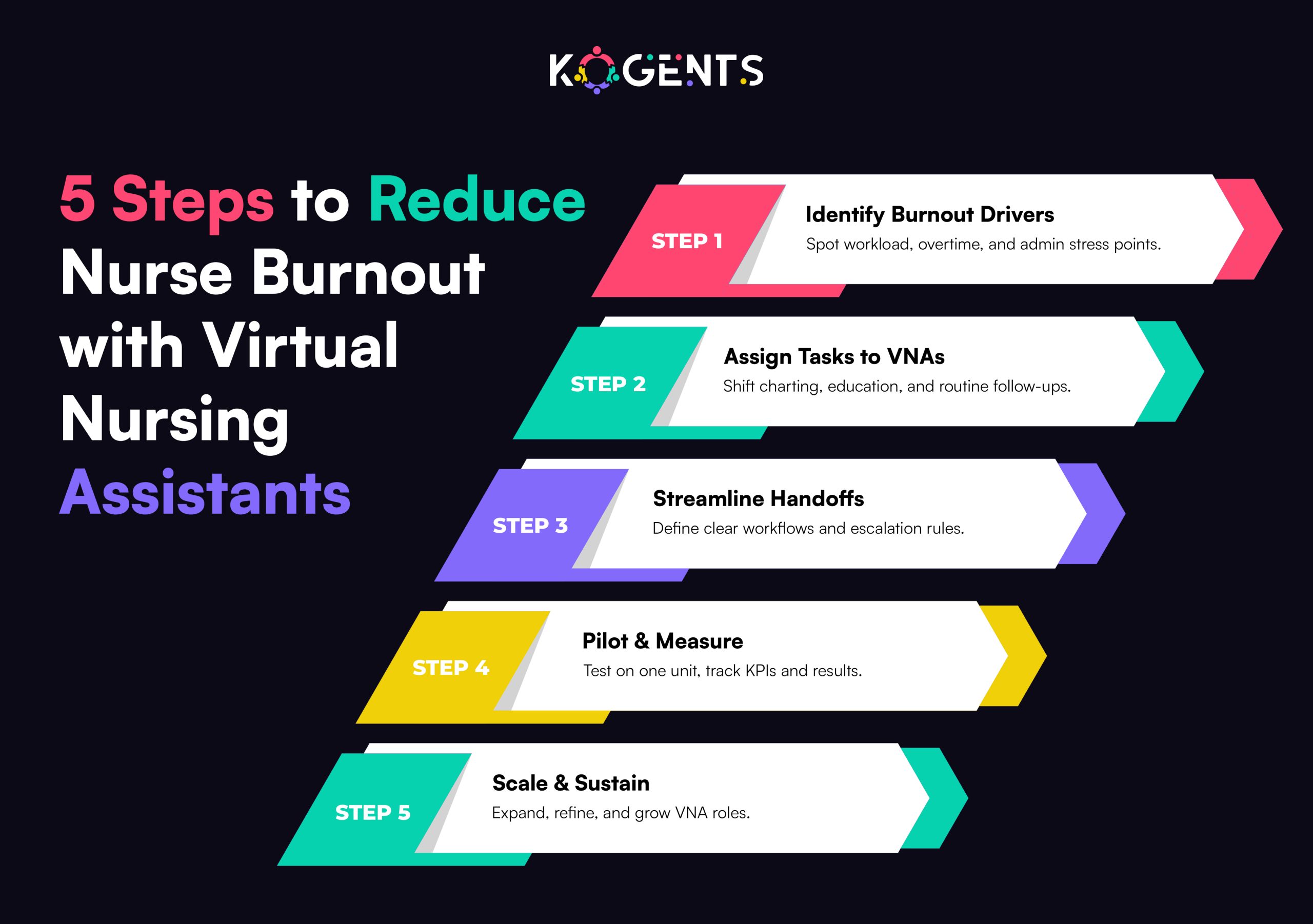
    Implementation Process for Virtual Nursing Assistants

    Effective implementation of virtual nursing assistants involves several key phases, ensuring a seamless integration into existing healthcare systems.

    Assessment and Planning Phase

    This initial phase involves assessing the hospital’s current staffing and operational needs, followed by planning the integration of virtual nursing assistants.

    Training and Onboarding

    They are crucial for the successful adoption of virtual nursing assistants, including change management strategies like regular town halls and daily huddles.

    Monitoring and Optimization

    Post-implementation monitoring includes tracking key performance indicators. Data analysis identifies patterns to guide optimization efforts, ensuring the virtual nursing program meets its established goals.

    • Post-implementation monitoring includes tracking key performance indicators established during the planning phase.
    • Daily huddles during initial implementation allow for rapid identification and resolution of emerging issues.
    • Data analysis identifies patterns in utilization, efficiency, and outcomes to guide optimization efforts.
    • Regular feedback sessions with staff and virtual assistants provide qualitative insights to complement quantitative metrics.
    • Continuous improvement processes address workflow inefficiencies and technical limitations identified during monitoring.
    • System optimization includes refining protocols, templates, and automation based on real-world experience.
    • Regular performance reviews evaluate the virtual nursing program against established goals and identify opportunities for expansion.

    Measuring ROI and Performance Metrics

    To assess the effectiveness of virtual nursing assistants, measuring their return on investment (ROI) is essential. 

    This involves analyzing both the direct financial benefits and the broader impact on healthcare delivery.

    Key Performance Indicators to Track

    Several key performance indicators (KPIs) are crucial for evaluating the success of virtual nursing assistants. 

    These include;

    • cost savings
    • patient readmission rates
    • staff efficiency improvements

    Long-term Financial Impact Analysis

    A comprehensive financial analysis extends beyond immediate cost savings to evaluate the sustained impact over 3-5 years.

    This includes assessing the initial implementation costs, ongoing operational expenses, and projected savings over time. 

    • Long-term financial analysis considers sustained impact over 3-5 years.
    • Financial models account for initial investment and ongoing operational costs.
    • Productivity improvements are monetized by calculating increased capacity and throughput.
    • Sensitivity analysis evaluates changes in key variables affecting financial performance and ROI.

    Overcoming Implementation Challenges

    The integration of virtual nursing assistants into healthcare facilities is not without its challenges, including technical and staff-related issues. 

    A phased implementation approach, starting with medical-surgical units before expanding to specialty departments, can help mitigate these challenges.

    Staff Resistance and Change Management

    Staff resistance is a common challenge when introducing new technologies. 

    Effective change management strategies, including comprehensive training and clear communication about the benefits of virtual nursing assistants, can help alleviate staff concerns and foster a smoother transition.

    Technical Integration Issues

    Technical integration challenges often arise when virtual nursing platforms are incompatible with existing systems. 

    Ensuring compatibility and developing custom interfaces or middleware solutions can facilitate data exchange between virtual nursing platforms and legacy systems.

    The following table highlights key technical integration challenges and potential solutions:

    Challenge Description Potential Solution
    Compatibility Issues Incompatibility between virtual nursing platforms and existing systems. Custom interfaces or middleware solutions.
    Network Infrastructure Limitations Limited network bandwidth is affecting performance, particularly for video-based applications. Upgrading network infrastructure to support higher bandwidth requirements.
    Security Requirements Ensuring data security and compliance with regulations. Implementing robust security protocols and conducting regular compliance monitoring.
    Data Standardization Lack of standardization across different systems. Developing and implementing standardized data formats and protocols.

    By understanding these challenges and implementing appropriate solutions, healthcare organizations can successfully integrate virtual nursing assistants into their existing systems, enhancing patient care and operational efficiency.

    Future of Virtual Nursing in Healthcare

    The future of virtual health support is being shaped by emerging technologies and AI advancements, which are enhancing the capabilities of virtual nursing assistants.

    Emerging Technologies and AI Advancements

    Technological innovations are transforming virtual nursing, enabling more complex clinical decision-making and improving patient outcomes. 

    AI-powered nurse assistants are being integrated into virtual nursing platforms to provide predictive insights and early intervention opportunities.

    Expanding Roles and Responsibilities

    Virtual nurses are taking on increasingly complex roles, including specialized care coordination and population health management. 

    Their responsibilities now encompass a broader scope of practice, including patient education, medication counseling, and after-hours support.

    Transform Healthcare Delivery with Virtual Nursing Assistants

    Virtual nursing assistants are revolutionizing healthcare delivery by addressing critical challenges related to cost, quality, and access. 

    The case study demonstrates a significant reduction in operational costs by 40% while maintaining or improving care quality. 

    Healthcare staff benefit from reduced administrative burden, allowing them to focus on direct patient care.

     As technology advances, the capabilities of virtual nursing assistants will expand, positioning organizations for success in the evolving healthcare landscape.

    The scalability of virtual nursing solutions makes them adaptable to various healthcare settings. 

    By embracing virtual nursing, organizations can enhance patient experience through improved responsiveness and care coordination. In this regard, Kogents can be your partner. So, give us a call at (267) 248-9454 or drop an email at info@portal.kogents.ai

    FAQs

    What are the primary benefits of using virtual nursing assistants in healthcare?

    The primary benefits include reduced operational expenses, improved staff efficiency and satisfaction, and enhanced patient care quality. By automating administrative tasks, healthcare providers can focus more on patient care.

    How do virtual nursing assistants differ from traditional nursing staff?

    Virtual nursing assistants provide support remotely, handling tasks such as administrative duties, patient monitoring, and care coordination, whereas traditional nursing staff work directly with patients on-site.

    Can virtual nursing assistants help with patient monitoring and follow-up?

    Yes, they can. Virtual nursing assistants can track vital signs, analyze data, and provide early intervention opportunities, improving patient outcomes and reducing hospital readmissions.

    How do virtual nursing assistants ensure HIPAA compliance and data security?

    They implement robust security protocols, staff efficiency, and compliance monitoring to safeguard patient data and maintain HIPAA compliance.

    What is the implementation process for integrating virtual nursing assistants into existing healthcare systems?

    The process involves assessment and planning, training and onboarding, and ongoing monitoring and optimization to ensure seamless integration and maximum benefit.

    How can healthcare organizations measure the ROI of virtual nursing assistants?

    By tracking key performance indicators such as cost savings, staff efficiency, patient satisfaction, and long-term financial impact analysis.

    What is a virtual nursing assistant, and how does it work?

    An AI-powered system that supports nurses by handling routine tasks such as symptom checking, patient triage, appointment reminders, and basic health education. It works through natural language processing and real-time assistance, allowing patients to interact via chat, phone, or apps.

    How does a virtual nursing assistant reduce nurse workload?

    By automating repetitive administrative and clinical tasks, virtual assistants free up nurses’ time for direct patient care. They handle patient inquiries, streamline documentation, and support early detection of health issues, reducing burnout and improving efficiency.

    What are the key benefits of virtual nursing assistants for hospital staff? 

    Virtual assistants improve staff efficiency, reduce administrative burden, enhance patient engagement, and provide real-time monitoring support. For staff, this translates into reduced stress, fewer missed alerts, and more time for critical patient interactions.

    Who are the leading vendors of virtual nursing assistant solutions in the U.S.?

    Top vendors include companies like Sensely, Nuance (Microsoft), Orbita, and Care Angel. These platforms differ in features such as integration with EHRs, conversational AI sophistication, and patient engagement tools.

    Where can I find official guidelines or definitions for virtual nursing?

    The Agency for Healthcare Research and Quality (AHRQ) and the American Nurses Association (ANA) publish definitions and principles on virtual nursing. The ANA’s official PDF on virtual nursing outlines ethical standards, best practices, and professional guidelines.

  • How Mental health AI strengthens Value-based Care

    How Mental health AI strengthens Value-based Care

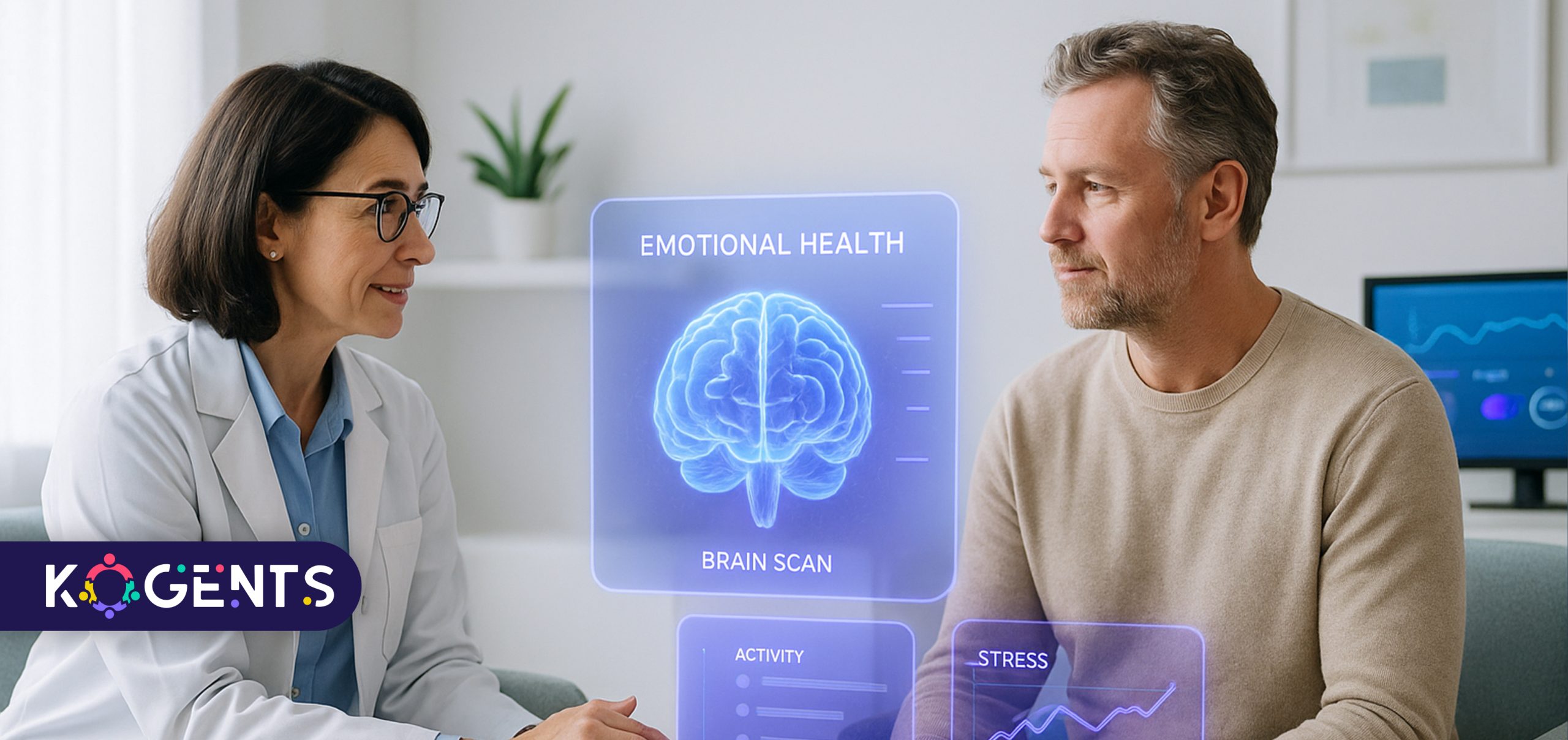
    Mental health AI is more than a breakthrough in patient wellness; it’s a blueprint for efficiency, scalability, and measurable outcomes that every entrepreneur and solopreneur craves for their business.  What began as technology to support behavioral health is now reshaping how businesses and clinics thrive under value-based care models.

    By blending AI-driven behavioral health tools, predictive mental health AI, and digital mental health platforms, businesses and clinics alike can thrive under value-based care modelsFrom AI-powered therapy assistants that personalize patient support to automation platforms that help solopreneurs reclaim precious hours

    So, this comprehensive guide shows how entrepreneurs can draw lessons from mental healthcare’s AI revolution, and why investing in these tools today offers exponential ROI and drives value tomorrow.

    Key Takeaways

    • Mental health AI strengthens value-based care by personalizing support, predicting crises, and improving engagement.
    • Entrepreneurs and solopreneurs benefit from the same AI principles: efficiency, personalization, and outcome-driven performance.
    • AI agents outperform traditional tools, combining predictive insights with automation.
    • Success lies in measured ROI and strategic adoption.

    What Are AI Agents?

    AI agents are autonomous systems that use machine learning, natural language processing (NLP), and predictive analytics to perform tasks with minimal human oversight. Unlike basic chatbots, AI agents can:

    • Understand context
    • Adapt responses dynamically
    • Execute workflows across platforms
    • Learn from data to improve over time

    In healthcare, mental health AI agents operate as digital therapeutic companions, supporting patients between sessions, flagging early warning signs, and empowering providers to deliver outcome-driven care.

    In entrepreneurship, AI agents serve as business co-pilots. For example, a solopreneur running an e-commerce shop might use an AI agent for automated customer support, sales forecasting, or content creation

    These agents reduce repetitive work, enabling entrepreneurs to focus on high-value strategy and growth.

    According to the World Health Organization (WHO) and the National Institute of Mental Health (NIMH), AI holds promise in addressing global mental health workforce shortages.

    Similarly, small businesses adopt AI agents to overcome resource constraints.

    In short, whether for healthcare or startups, AI agents act as force multipliers, scaling human capability without scaling costs.

    Why Entrepreneurs & Solopreneurs Need AI Agents In Mental Health?

    Running lean operations demands efficiency. Entrepreneurs and solopreneurs can’t afford to drown in repetitive tasks, yet they must deliver personalized, high-quality experiences, the same challenge value-based healthcare faces.

    Here’s why AI agents are indispensable:

    Time Savings

    • Automate administrative work: invoicing, email triage, and appointment scheduling.
    • Reduce manual overhead by up to 60%, freeing hours for strategic growth.Scalable Personalization

    Like digital mental health platforms personalize care, AI agents personalize client outreach, content, and support.

    Cost Efficiency

    Hiring teams is expensive. AI agents provide enterprise-level efficiency at a fraction of the cost.

    24/7 Availability

    Just as patients need round-the-clock access to AI-powered therapy tools, customers expect 24/7 responses.

    Outcome-Driven Performance

    Value-based care rewards outcomes, not volume. Similarly, solopreneurs succeed by delivering measurable results, and AI helps optimize outcomes with data-driven insights.

    Note the Pro Tip!: Start with a single AI agent before scaling across multiple domains.

    mental health ai

    How AI Agents Work in Healthcare?

    In healthcare, AI agents are used similarly, but with different end goals.

    • Mental Health AI: Detects mood changes via patient self-reporting and wearable data.
    • Digital Therapeutics: AI-driven behavioral health platforms deliver CBT (Cognitive Behavioral Therapy) modules.
    • Predictive Analytics: Identifies relapse or crisis risk before it happens.
    • Value-Based Care Integration: Improves engagement, reduces hospital readmissions, and validates outcomes.

    Strike the Parallels! Both entrepreneurs and clinicians leverage AI agents to anticipate problems, deliver personalized support, and optimize outcomes.

    Mini Case Study:

    • A solopreneur using AI-driven customer support cut response times from 24 hours to 2 minutes, improving client retention by 30%.
    • A clinic integrating predictive mental health AI reduced emergency psychiatric admissions by 25%, saving costs under value-based reimbursement models.

    Outcome: Both highlight how AI agents deliver measurable ROI.

    The National Library of Medicine found that an AI algorithm could predict suicide attempts within the next week with 92% accuracy and within the next two years with 85% accuracy. 

    Core Features of Modern AI Agents In Healthcare

    Modern healthcare AI agents share core capabilities that make them powerful across domains:

    • NLP enables AI-powered therapy chats and automated business conversations.
    • Predictive Analytics

    In healthcare: risk stratification for patients.

    Personalization Engines

    Tailors therapy modules to patient needs.

    Workflow Automation

    Reduces repetitive tasks: intake forms, billing, and onboarding.

    Integration with Ecosystems

    Healthcare: integrates with Epic Systems EHR.

    Security & Compliance

    HIPAA and HITRUST certifications in healthcare.

    GDPR, SOC 2 compliance in startups.

    ROI Box:
    Adopting AI agents leads to:

    • 30–40% cost reduction in admin tasks.
    • 50% faster customer response times.
    • Higher patient engagement scores in digital mental health platforms.

    What You Need To Know? These features aren’t futuristic; they’re already accessible through solutions like IBM Watson Health, Kogents.ai, and digital therapeutics startups.

    Use Cases for Entrepreneurs, Solopreneurs & Healthcare

    Entrepreneurs & Solopreneurs

    • Marketing Automation: Draft campaigns, segment audiences, optimize spend.
    • Customer Service: AI-driven chatbots handle 80% of inquiries.
    • Operations: Automate accounting, HR, and compliance reporting.

    Healthcare (Mental Health AI)

    • AI-Powered Therapy Assistants: Provide ongoing CBT support.
    • Predictive Mental Health AI: Anticipates crises and relapses.
    • Behavioral Health Platforms: Automate patient engagement via text reminders and progress tracking.

    Crossover Applications

    • Client Retention & Patient Adherence: Both industries use AI to maintain engagement.
    • Value-Based Outcomes: Whether it’s patient wellness or customer success, AI measures and optimizes impact.

    Pro Tip: Entrepreneurs can adopt lessons from mental healthcare by focusing on measurable outcomes, patient-like engagement, and predictive personalization.

    Learn The Benefits of AI Agents In Mental Health 

    AI agents are more than just time-saving tools; they’re strategic assets that drive measurable results across industries.  When properly implemented, they unlock efficiency, personalization, and revenue growth while also improving patient and client engagement.

    1. Operational Efficiency and Time Reallocation

    • Automating administrative tasks (e.g., appointment scheduling, billing, client intake) can reduce operational costs by 30–40%, according to HIMSS (Healthcare Information and Management Systems Society).
    • For solopreneurs, that means reclaiming 10–15 hours weekly, which can be redirected toward high-value work such as networking, product innovation, or client acquisition.

    2. Personalized & Predictive Insights

    • In healthcare, predictive mental health AI can forecast patient deterioration by analyzing speech, sentiment, and wearable data.
    • For entrepreneurs, predictive AI can forecast customer churn or identify high-value leads, and both sectors benefit from anticipating problems before they become crises.

    3. Round-the-Clock Assistance

    • Mental health AI agents act as always-available therapy companions, helping patients between clinician visits.
    • Entrepreneurs can deploy AI-powered customer service agents that resolve 80% of queries autonomously, ensuring customer satisfaction around the clock.

    4. Data-Driven Insights

    • AI transforms raw data into actionable insights. Clinicians can use these insights to improve patient outcomes, while solopreneurs can optimize pricing, sales funnels, and marketing strategies.

    5. Compliance & Risk Reduction

    • AI agents designed with HIPAA, HITRUST, and GDPR compliance reduce risks associated with handling sensitive data.
    • For solopreneurs handling international clients, compliance-ready AI tools prevent costly fines and reputational damage.

    Pro Tip: Entrepreneurs should track ROI metrics when implementing AI agents, such as time saved, revenue growth, and customer satisfaction scores, just as clinics track clinical outcomes and readmission rates.

    Challenges & Limitations 

    While AI agents provide immense value, adopting them isn’t without challenges.  Entrepreneurs and healthcare providers must navigate technical, ethical, and human-centric barriers to ensure successful deployment.

    1. Data Privacy & Security

    • In healthcare, breaches can compromise patient trust and lead to severe penalties. The National Institute of Standards and Technology (NIST) emphasizes secure data handling for AI models.
    • Entrepreneurs face similar risks if poorly protected customer data can result in reputational damage and lawsuits.

    2. Bias & Fairness in AI Models

    • American Psychological Association (APA) research shows AI-driven therapy risks perpetuating biases if trained on non-diverse datasets.
    • In business, biased AI may misclassify leads or underserve certain customer demographics, leading to inequities and lost opportunities.

    3. Integration Complexity

    • Clinics using legacy EHRs (e.g., Epic Systems) may struggle with integrating modern AI solutions.
    • Solopreneurs juggling multiple SaaS platforms often face workflow fragmentation, requiring middleware solutions to unify AI agents.

    4. Cost & ROI Uncertainty

    • Although AI tools are becoming more affordable, the initial setup and training costs can be a barrier, particularly for small clinics or bootstrapped solopreneurs.
    • Without clear ROI tracking, adoption risks being viewed as an expense rather than an investment.

    5. Human Touch vs Automation

    • Mental healthcare AI requires empathy, compassion, and clinical judgment; AI can support but never replace the therapeutic alliance.
    • Similarly, entrepreneurs must balance automated efficiency with authentic human engagement, especially in relationship-driven businesses.
    Feature AI Agents (Mental Health AI) Chatbots RPA Virtual Assistants Digital Therapeutics
    Autonomy High – reasoning + proactive care Low – FAQ scripts Very low – rule-based Medium – reminders Medium – evidence-based but static
    Personalization Context-aware, predictive Weak None Moderate Moderate
    Use in Value-Based Care Core support for outcomes Limited Indirect Surface-level Narrow scope
    Integration Strong with EHR/CRM Limited Strong backend Weak Moderate
    Analytics Predictive + outcome-driven Basic Process metrics Minimal Narrow clinical
    Risks Compliance, hallucinations Low Low Privacy concerns Regulation gaps
    Example Monitors mood, alerts clinician “Clinic hours? Automates billing Sends a med reminder CBT exercises

    mental health ai

    Future of AI Agents In Mental Health 

    The next decade will see AI agents evolve from single-task assistants into multi-agent ecosystems capable of collaborating, learning, and scaling across domains. 

    This transformation will reshape both mental healthcare and entrepreneurial workflows.

    1. Multi-Agent Collaboration

    • In healthcare, one AI agent might track medication adherence, another might analyze therapy session transcripts, while a predictive model monitors relapse risks. Together, they create a comprehensive mental health ecosystem.
    • For solopreneurs, AI agents could independently manage marketing, finance, and client communication, working in tandem without human intervention.

    2. Clinical Validation & FDA Approvals

    • The FDA and European Medicines Agency (EMA) are increasingly approving digital therapeutics powered by AI
    • By 2030, mental health AI could become a standard adjunct therapy for depression, anxiety, and PTSD.
    • This validation strengthens trust and accelerates adoption in clinics, much like how regulatory compliance tools gain traction among startups.

    3. Personalized & Adaptive Agents

    • Future AI agents will learn user preferences deeply, offering hyper-personalized coaching and therapy.
    • Entrepreneurs will see agents capable of tailored business strategy advice, driven by real-time market shifts and competitor analysis.

    4. Integration with Wearables & IoT

    • In healthcare, wearables like Apple Watch and Fitbit will connect seamlessly with AI platforms to detect biometric signals of stress, depression, or burnout.
    • Entrepreneurs can use similar integrations for productivity tracking, ensuring a sustainable work-life balance.

    5. Ethical AI & Human-Centric Design

    • Expect increased focus on explainable AI, ensuring both clinicians and entrepreneurs can understand how decisions are made.
    • Transparency and ethical guardrails will drive trust, especially in sensitive fields like behavioral health.

    Case Study Spotlight

    A behavioral health clinic integrated predictive mental health AI. Within six months, readmissions dropped 22% and patient satisfaction scores climbed. 

    The clinic’s value-based reimbursement improved, boosting financial sustainability.

    Conclusion 

    The rise of mental health AI isn’t just a healthcare story; it’s a new blueprint for entrepreneurs and solopreneurs navigating lean operations and outcome-driven economies.  By adopting AI agents, you save time, cut costs, and deliver exceptional, measurable results.

    The future belongs to those who harness AI-driven personalization and predictive intelligence, whether in patient care or customer engagement. 

    Kogents AI empowers entrepreneurs, solopreneurs, and healthcare providers to scale smarter, faster, and with confidence. So, reach out to us today and drop an email at info@portal.kogents.ai  or give us a call at (267) 248-9454

    FAQs

    What is mental health AI, and how does it relate to value-based care?

    Mental health AI refers to advanced tools like AI-powered therapy assistants, predictive analytics, and digital mental health platforms that enhance patient support, anticipate crises, and improve engagement. In value-based care, these tools strengthen outcomes while lowering costs

    How do AI agents differ from basic chatbots?

    Unlike chatbots, AI agents use machine learning, NLP, and predictive analytics to understand context, adapt dynamically, execute workflows, and learn over time. In healthcare, they serve as digital therapeutic companions; in business, they act as co-pilots for productivity. 

    Why are AI agents valuable for entrepreneurs and solopreneurs?

    AI agents help small businesses save time by automating tasks, cutting costs compared to hiring staff, personalizing outreach, providing 24/7 availability, and delivering measurable, outcome-driven performance, mirroring the efficiencies seen in healthcare

    What challenges exist when adopting AI agents in healthcare and business?

    Adoption hurdles include data privacy and security risks, potential bias in AI models, integration difficulties with existing systems, upfront costs, and balancing automation with the human touch, which is essential in therapy and customer relationships

  • Why AI Doctor Diagnosis Is Key to Next-Gen Smart Hospitals

    Why AI Doctor Diagnosis Is Key to Next-Gen Smart Hospitals

    In a world of soaring patient volumes, chronic staffing shortages, aging populations, and relentless healthcare costs, the future of medicine demands smarter infrastructure.

    Today, where time is oxygen and errors are costly, AI doctor diagnosis platforms are more than technology; it’s the line between early detection and missed diagnosis, between saving a life and suffering a preventable complication.

    An AI Doctor Diagnosis platform is built for the next era of care, which is more than just clinical software, but a platform that is an intelligent agent that blends artificial intelligence in medical diagnosis, AI-assisted clinical diagnosis, and real-time AI symptom checker capabilities into one seamless system. As hospitals transform into sensor-rich, intelligent environments, healthcare AI diagnostic systems emerge as critical nodes, agents that can ponder, reason, and act alongside medical teams in high-stakes situations. 

    The goal isn’t to replace doctors, but to extend them, equipping every clinician with a tireless second brain that processes data at lightning speed and never misses a beat.

    Key Takeaways

    • Understanding how AI doctor diagnosis platforms transform smart hospitals with faster and more accurate care.
    • Learning how AI agents work alongside clinicians to detect risks early and improve patient outcomes.
    • Exploring the core features that make AI diagnosis agents essential for modern healthcare systems.
    • Recognizing the benefits of AI in reducing errors, saving time, and building patient trust.
    • Discovering future trends where AI agents collaborate across hospital ecosystems for seamless care delivery.

    What is an AI Doctor Diagnosis Agent?

    It is a platform-specific healthcare AI agent designed to assist, augment, and, in some cases, automate the medical diagnostic process.

    Unlike generic chatbots or static rule-based systems, these agents apply contextual reasoning, pattern recognition, and domain expertise to deliver real-time diagnostic suggestions and care recommendations tailored to individual patients.

    Rooted in Agentic AI principles, the diagnosis agent operates with:

    Key Highlight: These agents are capable of ingesting multi-source data, structured records like lab results and vital signs, and unstructured content such as physician notes or radiology AI reports, and processing it through clinical ontologies, NLP models, and predictive modelling algorithms to emulate the diagnostic reasoning of human doctors.

    How an AI Doctor Diagnosis Agent Works?

    The operational architecture of a diagnosis agent like MediSyn typically follows a four-step cognitive loop:

    1. Input

    It begins by gathering patient data from multiple sources:

    • Electronic Health Records (EHRs)
    • PACS (Picture Archiving and Communication Systems)
    • Lab Information Systems (LIS)
    • Wearable health devices (smartwatches, glucose monitors)
    • IoT-enabled hospital devices (bedside monitors, infusion pumps)

    2. Reasoning

    Using natural language processing, computer vision, and diagnostic algorithms, the agent synthesizes this data to:

    • Identify abnormal patterns or correlations
    • Apply Bayesian reasoning or decision-tree logic
    • Generate a ranked list of differential diagnoses

    3. Action

    Based on its findings, the agent:

    • Suggests diagnoses and next steps
    • Recommends additional tests or imaging
    • Sends real-time alerts to physicians if critical thresholds are breached

    4. Feedback

    The agent learns from clinician responses:

    • Was the diagnosis correct?
    • Were the recommended tests useful?
    • Was a condition overlooked?

    This feedback is continuously integrated into its models, enhancing its diagnostic precision medicine AI over time.

    Real-World Example:

    A 58-year-old patient presents with shortness of breath and fatigue. MediSyn pulls their EHR, scans historical cardiology notes, and detects a history of atrial fibrillation.  It notes elevated BNP and irregular EKG. Within seconds, it flags potential heart failure and suggests an echocardiogram. 

    The attending physician confirms the suspicion, and the agent logs this as a validated case for future model refinement.

    ai doctor diagnosis

    Core Features of an AI Doctor Diagnosis Agent

    1. Automation

    • Auto-collects symptom descriptions via voice or text.
    • Orders preliminary lab tests based on symptom clusters.
    • Flags potential emergencies even before triage.

    2. Personalization

    • Adjusts diagnostic paths based on genetic markers or family history.
    • Learns from prior visits, prescriptions, allergies, and comorbidities.
    • Consider sociocultural factors (e.g., language, regional disease trends).

    3. Multi-tasking

    • Can manage hundreds of diagnostic processes in parallel.
    • Works across departments: ER, radiology, cardiology, and infectious disease.
    • Integrates asynchronously with remote devices and outpatient monitoring.

    4. Reporting & Analytics

    • Creates standardized clinical summaries for EMRs.
    • Offers decision traceability (why a diagnosis was suggested).
    • Provides population-level insights, flagging rising disease clusters or care gaps.

    5. Clinical Pathway Navigation

    • Guides physicians through gold-standard treatment protocols.
    • Recommends evidence-based interventions based on diagnosis.

    Use Cases for Individuals & Institutions

    Doctors & Medical Entrepreneurs

    • Solo practitioners use these diagnosis platforms for second opinions, especially in rare or complex cases.
    • Telehealth providers integrate it into virtual consults to automate symptom triage.
    • Concierge doctors streamline time-intensive diagnostics, allowing more face time with patients.

    Hospitals & Clinics

    • Emergency departments use the agent to prioritize critical cases.
    • Outpatient clinics use it for follow-up care and chronic condition management.
    • Rural hospitals benefit from built-in specialist-level expertise without needing in-house experts.

    Care Teams and Coordinated Units

    • Nurses receive proactive alerts about patient deterioration.
    • Specialists can collaborate asynchronously through agent-curated case summaries.
    • Case managers use the agent to plan discharges or identify readmission risks.

    Benefits of Using an AI Diagnosis Agent

    1. Time Is Money
    • AI diagnosis agents can process large amounts of patient data within seconds, drastically reducing wait times.

    Pro-Tip! This allows clinicians to reach diagnostic conclusions faster, speeding up the entire care process.

    1. Enhances Accuracy
    • By analyzing vast datasets and patterns, AI minimizes the chances of human oversight or missed details.

    Know What Accuracy Can Do! A broader diagnostic accuracy range increases the likelihood of pinpointing the correct condition.

    1. Dominantly Better Outcomes
    • Early and accurate diagnoses mean treatments can start sooner, improving patient recovery rates.

    Grab The Long-Term Benefits: This proactive approach often results in better long-term health outcomes and reduced complications.

    1. Curbs Cognitive Load 
    •  AI takes over repetitive and data-heavy tasks, freeing up doctors to focus on critical decision-making.

    Shed Your Burden Off! This helps reduce fatigue and stress, improving clinician efficiency and patient care quality.

    1. 24/7 Real-time Support
    • Unlike humans, AI systems are always available, offering diagnostic insights at any time of day.

    It’s A Catch for You! Patients can receive timely support even during nights, weekends, or holidays.

    1. Improves Patient Trust
    • AI provides transparent, evidence-based recommendations that patients can easily understand.

    What Do You Get? It brings forth confidence, helping patients trust both the diagnosis and the medical team.

    1. Cost Efficiency
    • By avoiding unnecessary tests and reducing repeat visits, AI cuts healthcare costs significantly.

    Note: Hospitals and clinics save resources while patients benefit from more affordable care.

    1. Standardized Care
    • AI ensures consistent diagnostic standards across different hospitals, clinics, and regions.

    Impact: This reduces variation in care quality, giving patients reliable treatment no matter where they go.

    In another study, we saw that 85% of patients surveyed in early 2025 are comfortable with AI-assisted health monitoring tools.

    Case in Point of Stanford: How It Leads in AI healthcare

    Stanford leads AI in healthcare through AIMI, uniting 50+ faculty across 20 departments for medical machine-learning. 

    RAISE-Health drives equitable, ethical AI adoption in research and patient care. 

    Clinical tools include AI that gauges heart function in children, drafts patient notes, and enhances telehealth imaging. Imaging data is repurposed to detect hidden risks like coronary calcium for preventive care. 

    In glaucoma, AI predicts surgery needs better than specialists. Bias in screening models is addressed with combined human-AI methods for fairer outcomes. 

    Discovery accelerates via AI in cell morphology, protein evolution, and trial eligibility, translating science into impact.

    Challenges and Limitations

    Data Privacy & Compliance

    • Must operate within HIPAA, GDPR, and other jurisdictional frameworks.
    • Requires encryption, de-identification, and secure audit logs.

    Interoperability Barriers

    • Many hospitals still rely on siloed or legacy systems.
    • Lack of standardized data formats can hinder input parsing.

    Human Trust & Cultural Resistance

    • Some clinicians are skeptical of non-human diagnosis.
    • Trust must be earned through transparency and reliability.

    Legal & Ethical Dilemmas

    • Liability: Who is responsible if a patient is misdiagnosed?
    • Bias: If training data is incomplete or biased, outputs may be skewed.
    • Autonomy: Should an AI ever override a physician’s decision?

    Model Maintenance

    • Clinical guidelines evolve; agents must stay current.
    • Continuous model training is essential to prevent performance decay.

    ai doctor diagnosis

    AI Doctor Diagnosis Agent vs Other Agents

    Feature AI Diagnosis Agent (MediSyn) Slack Agent (Healthcare Bot) WhatsApp Agent (Patient Chat) Botim Agent (Remote Consults)
    Domain Specialization High (Medical Diagnosis) Low Low Medium
    EHR Integration Full (via FHIR,  HL7) Minimal None Limited
    Autonomy High Low Low Medium
    Security & Compliance HIPAA/GDPR-grade Basic Basic Variable
    Diagnostic Capabilities Advanced None None Limited
    Data Handling Structured & Unstructured Structured Unstructured Unstructured
    Feedback Loop for Learning Yes No No Partial
    Real-Time Alerts Yes No No No
    Clinical Workflow Support Extensive Minimal None Moderate

    The Future of AI Doctor Diagnosis Agents

    Smarter Automation and Precision Diagnostics

    • Incorporating genomic data, lifestyle metrics, and continuous glucose monitoring.
    • AI models trained on global datasets, removing local biases and enhancing accuracy.

    Integration into Multi-Agent Hospital Ecosystems

    • Collaboration with nurse agents (for bedside tasks), pharmacist agents (for drug interaction alerts), and scheduling agents (for resource allocation).
    • Coordinated actions across digital twins of hospitals.

    Role in the Agentic AI Wave

    • It becomes one of many specialized agents in a shared environment.
    • Agents self-organize, refer patients to one another, and escalate care intelligently.
    • AI systems gain the capacity for longitudinal memory, tracking health over the years.

    Augmented Intelligence, Not Replacement

    • Doctors become orchestrators of AI agents.
    • Human intuition plus AI computation creates supercharged diagnostic performance.

    Choose Us! 

    In a hospital where every minute counts and every datapoint matters, the AI Doctor Diagnosis Agent is more than a tool; it’s a strategic ally.

    They are showing us how smart hospitals can operate with precision, speed, and safety.

    It turns overwhelming data into actionable insights, supports clinicians in the trenches, and ultimately helps deliver better patient care.

    The evolution of healthcare will not be provider vs. machine, but provider complemented with machine. 

    If you’re building or transforming a healthcare institution, now is the time to explore intelligent diagnostic agents.

    Whether you’re trying to get a solution or planning full-scale integration, platforms like Kogents offer the foundational agent infrastructure to make it real.

    So, explore the future of healthcare today. Visit Kogents AI today and drop an email at info@portal.kogents.ai or give us a call at (267) 248-9454 to gather more insights now.

    FAQs

    Can an AI diagnosis agent replace a human doctor?

    No. AI diagnosis agents are designed to assist and augment human clinicians, not replace them. They handle data-intensive tasks, flag anomalies, and offer recommendations, but final decisions remain with medical professionals.

    How accurate are these AI agents compared to doctors?

    In many diagnostic scenarios, especially those involving large datasets (e.g., radiology, dermatology), AI agents can match or exceed human-level accuracy. However, they are most effective when used alongside clinicians who provide context and judgment.

    Is patient data safe with AI diagnosis agents?

    Yes, provided the system complies with regulations like HIPAA, GDPR, and employs encryption, access controls, and audit trails. Platforms like MediSyn prioritize data security and compliance.

    What medical fields benefit most from AI diagnostic agents?

    Emergency medicine, radiology, pathology, AI, cardiology, and primary care see significant gains. Anywhere large volumes of data must be interpreted quickly can benefit.

    How hard is it to integrate an AI diagnosis agent into existing hospital systems?

    Integration varies based on system maturity. Modern agents support FHIR, HL7, and DICOM standards, making them interoperable with most EHRs, PACS, and hospital management systems. Legacy systems may need middleware or APIs.

    How does AI diagnose diseases?

    AI uses machine learning algorithms trained on large medical datasets to analyze symptoms, lab results, and imaging scans, helping doctors identify possible conditions more quickly and accurately.

    What are the best AI tools for medical diagnosis?

    Some leading options include IBM Watson Health, Google DeepMind, and Ada Health, which provide AI-powered diagnostic support for hospitals, clinics, and patients.

    Can I use AI to check symptoms online?

    Yes, platforms like Ada Health AI app and other AI symptom checkers allow users to input symptoms and receive possible health insights, though they should not replace professional medical advice.


  • How HIPAA Compliant AI Secures Patient Data at Scale

    How HIPAA Compliant AI Secures Patient Data at Scale

    The healthcare environment, protecting patient data at scale has never been more critical than this. With electronic health records (EHRs), telemedicine platforms, and cloud-based compliance services becoming standard, the risk of data breaches grows every year. 

    Cyberattacks on hospitals and clinics are not just disruptive; they can compromise lives.

    This is where HIPAA-compliant AI emerges as a game-changer. Unlike traditional automation tools, HIPAA-compliant AI agents combine secure workflows, intelligent decision-making, and agentic AI principles to streamline operations while safeguarding patient privacy.

    In an age of automation and data-driven healthcare, the HIPAA Compliant AI Agent is not just a tool, it’s a trusted partner for clinicians, hospitals, insurers, and patients alike.

    Key Takeaways

    • How HIPAA-compliant AI agents secure patient data with built-in safeguards.
    • The role of automation and personalization in improving healthcare workflows.
    • Real-world examples of privacy-preserving, large-scale data collaboration.
    • Key benefits for efficiency, compliance, and patient engagement.
    • Future trends in predictive care and global compliance readiness.

    What is a HIPAA Compliant AI Agent?

    Defining AI Agents in Healthcare

    An AI agent is a goal-driven, context-aware system capable of perceiving inputs, reasoning through data, and taking appropriate actions.  In healthcare, this could mean answering patient queries, scheduling appointments, or generating compliance-ready reports.

    HIPAA Compliance: Core Requirements

    HIPAA (Health Insurance Portability and Accountability Act) mandates strict safeguards for patient health information (PHI). Any AI agent must:

    • Encrypt data at rest and in transit
    • Restrict unauthorized access
    • Maintain audit trails
    • Provide breach notifications when required

    The Role of Agentic AI Principles

    Agentic AI brings autonomy and adaptability to healthcare workflows. A HIPAA compliant AI agent is not just reactive, it can anticipate needs, personalize responses, and execute tasks securely across multiple systems.

    Know How HIPAA Compliant AI Agent Operates?

    HIPAA-aligned AI compliance platforms are now used by 62% of digital health firms in the U.S. in 2025.

    A HIPAA Compliant AI Agent is more than just a chatbot, it’s an intelligent digital co-worker that securely processes, interprets, and acts on sensitive health data. 

    Let’s break down the workflow.

    Workflow: Input → Reasoning → Action → Feedback

    1. Input

      • Patients submit queries (via text, portal, or voice).
      • Providers request reports, schedule updates, or compliance checks.
      • External systems feed insurance claims or lab data.
    2. Reasoning

      • The AI applies contextual reasoning: cross-checking HIPAA rules, clinical guidelines, and organizational workflows
      • Example: A patient requests lab results → the AI ensures they are released only after physician sign-off.
    3. Action

      • Executes tasks such as scheduling, secure messaging, updating EHRs, or generating reports.
      • Applies least-privilege access principles, only touching data needed for the task.
    4. Feedback

      • Sends real-time confirmations.
      • Logs every action into immutable audit trails for compliance officers.
      • Provides analytics dashboards to leadership.

    This cycle repeats continuously, with the AI agent learning from prior interactions to improve performance while staying within HIPAA-compliant artificial intelligence chatbots. 

    Real-World Example: VaultDB in the Chicago Area Patient-Centered Outcomes Research Network

    VaultDB is a framework built to allow secure, federated querying over electronic health records (EHRs) from multiple institutions, without needing to move or centralize raw patient data. 

    Scale:

    • Involves multiple health systems (clinics and hospitals) in the Chicago metro area.
    • Represents data from nearly 13 million patients across hundreds of clinics and hospitals.

    How it secures data & ensures HIPAA-compliance at scale:

    1. Secure Multi-Party Computation (MPC): The system allows SQL queries or analytical operations to run in a way that only the result of the query is revealed; raw patient data stays within the original institution and is never aggregated or transferred. This helps maintain confidentiality and limits exposure.
    2. Federated architecture: Each health system keeps its own data; the framework allows collaborative analysis without sharing the underlying protected health information (PHI) across organizational boundaries. This decentralization reduces risk of large-scale data breaches.
    3. Auditability & regulatory alignment: Because data doesn’t move, and because access is tightly controlled, these systems can more easily demonstrate compliance with HIPAA rules (Privacy Rule, Security Rule) regarding access, use, and disclosure. It also simplifies oversight and auditing since the computing happens locally under each entity’s governance.
    4. Scalability: The model shows that even with large patient bases (millions of records), one can perform meaningful analytics and research across institutions while still protecting privacy. VaultDB’s deployment across multiple institutions demonstrated acceptable performance and scalability in queries and computations. 

    hipaa compliant ai

    Core Features of a HIPAA Compliant AI Agent

    1. Automation Across Healthcare Workflows

    • Appointment scheduling, lab result follow-ups, insurance verification.
    • Auto-generation of compliance documentation for audits.
    • Secure messaging that filters out unverified access attempts.

    Automation powered by a healthcare AI agent means a nurse who once spent 4 hours/day on reminders can now devote that time to patient care.

    2. Personalization and Context-Aware Responses

    Unlike static chatbots, HIPAA AI agents pull from a patient’s medical history, care plan, and consent settings.

    • Example: Instead of sending a generic reminder, the AI personalizes:

     “Maria, remember to take your blood pressure medication 30 minutes before your appointment tomorrow at 10 AM.”

    3. Multi-Tasking Across Departments

    A single HIPAA AI agent can simultaneously:

    • Manage billing disputes with insurance.
    • Handle real-time secure patient chats.
    • Generate compliance-ready reports for administrators.

    Key Note: This multi-threading capability is especially valuable in busy hospital systems with thousands of concurrent interactions.

    4. Analytics, Reporting, and Audit Trails

    Every interaction is logged with who, what, when, and why.

    • Generates compliance dashboards for HIPAA audits.
    • Tracks patient engagement metrics (response rates, follow-up completion).
    • Identifies operational bottlenecks (e.g., frequent scheduling conflicts).

    Need For Insights? They help hospitals optimize both compliance and patient care.

    Benefits of Using a HIPAA Compliant AI Agent

    Efficiency and Time Savings

    It is observed that the healthcare staff spend over 20% of their time on administrative tasks. AI agents cut this significantly by automating scheduling, claims, and compliance reports.

    One fact statest that 23% use AI for clinical workflow optimization and automation, streamlining repetitive tasks and improving efficiency.

    24/7 Availability

    • Patients expect Amazon-level responsiveness. 
    • With AI agents, a hospital doesn’t need to hire overnight staff just to handle routine questions.
    •  The AI is always on, always secure.

    Error Reduction and Compliance Assurance

    Manual processes are error-prone, missed signatures, misfiled forms, outdated logs. AI agents enforce compliance by design, ensuring no step is skipped.

    Enhanced Patient Engagement and Trust

    A patient who receives quick, personalized, and secure responses is more likely to trust their provider and follow treatment plans.  This translates into higher satisfaction scores and better health outcomes.

    Challenges and Limitations

    Integration and API Restrictions

    Some EHRs remain closed ecosystems, making seamless integration difficult. Workarounds often require custom connectors or middleware solutions.

    Data Privacy and Security Risks

    Even compliant systems face risks like phishing attacks on staff or insider misuse. AI agents mitigate risks but cannot eliminate them. Hence it pertains to secure HIPAA-compliant AI data storage and protect HIPAA AI patient privacy solutions. 

    Vendor Lock-In

    Many AI providers bundle compliance features into proprietary systems. Hospitals risk becoming overly dependent on a single vendor.

    Adoption Barriers

    • Cost: Smaller clinics may struggle with subscription fees.
    • Training: Staff must learn to trust and work alongside AI.
    • Cultural resistance: Some providers fear AI will “replace” human judgment.

    Tip For You: Addressing these barriers requires a balanced approach of education, governance, and phased adoption.

    hipaa compliant ai

    HIPAA Compliant AI Agents Brings In Future?

    The future is not about replacing humans, it’s about augmenting care with predictive, proactive intelligence.

    Predictive and Proactive Patient Care

    Agents will move from reactive to predictive:

    • Flagging patients at risk of readmission.
    • Recommending early interventions.
    • Sending medication adherence nudges before issues arise.

    Federated Learning and Privacy-Preserving AI

    New AI models allow hospitals to train on shared insights without exchanging raw patient data, enhancing security across networks.

    Multi-Agent Healthcare Ecosystems

    Imagine a hospital AI agent coordinating with pharmacy, insurer, and patient home-monitoring agents, all securely sharing context to deliver seamless care.

    Cross-Border Compliance

    As telemedicine expands globally, HIPAA agents will evolve to comply with GDPR in Europe, PIPEDA in Canada, and APPI in Japan, creating truly global, secure clinical AI

    Use Cases for Individuals and Businesses

    Solopreneurs: Independent Clinicians and Outreach

    Independent practitioners use HIPAA AI agents to:

    • Manage reminders and follow-ups
    • Handle secure patient messaging
    • Streamline insurance paperwork

    Businesses: Hospitals, Insurance, and Customer Support

    Hospitals deploy HIPAA AI agents to:

    • Handle 24/7 patient queries
    • Automate pre-authorization requests
    • Maintain compliance reporting

    Teams: Care Coordination and Internal Communication

    AI agents act as digital assistants for care teams, coordinating schedules, tasks, and monitoring. 

    HIPAA Compliant AI Agent vs. Other Agents

    Comparison with Slack Bots and Consumer Agents

    Slack bots or marketing AI chatbots are not built for HIPAA compliance. They lack medical-grade security, encryption, and regulatory audit features.

    Unique Advantages in Healthcare Compliance

    HIPAA AI agents are designed to handle PHI safely, offering:

    • Encrypted communications
    • Integrated compliance logs
    • Secure interoperability

    HIPAA AI Agent vs. General Agents

    Feature HIPAA AI Agent General AI Agent
    Data Security HIPAA-level encryption Basic encryption
    Compliance Logs Detailed & auditable Rarely supported
    Healthcare Integrations EHR, EMR, insurance APIs Limited
    Personalization Context-aware & compliant Generic responses
    Adoption Readiness Healthcare optimized General-purpose

    Case Study Spotlight

    A regional hospital integrated a HIPAA AI agent into its scheduling and compliance system. Within six months:

    • Manual compliance reporting time dropped by 40%
    • Patient satisfaction scores improved by 18%
    • Staff reported a 25% reduction in administrative burden

    Expert Insights

    “The biggest advantage of HIPAA AI agents is not just efficiency—it’s trust. Patients know their data is safe, and providers know compliance is baked into every action.”

     — Dr. Emily Johnson, Healthcare Compliance Officer

    Before You Leave!

    Healthcare is at a breaking point. Cyberattacks are escalating, and healthcare cybersecurity patient trust is fragile, and clinical teams are stretched beyond capacity. 

    The path forward demands more than incremental fixes, it requires HIPAA-compliant AI agents that can deliver automation, personalization, and compliance at scale.

    These agents safeguard PHI with military-grade encryption while freeing valuable staff time for direct patient care. 

    They ensure compliance through detailed logs and real-time reporting, and they strengthen trust by enabling secure, responsive interactions with patients.

    For hospitals, insurers, and independent clinicians, the adoption of HIPAA-compliant AI is no longer just an innovation, it has become a necessity for delivering sustainable, secure, and patient-centered healthcare.

    To explore HIPAA-compliant AI solutions and case studies, visit Kogents AI today and drop an email at info@portal.kogents.ai or give us a call at (267) 248-9454

    FAQs 

    Is patient data really secure with AI?

    Yes, HIPAA AI agents use encryption, access control, and audit trails to protect PHI.

    Can HIPAA AI integrate with any EHR system?

    Most modern EHRs support API integrations, but some legacy systems may require custom connectors.

    How does AI maintain compliance logs?

    Agents generate time-stamped activity logs that can be reviewed during audits.

    What are the costs for small practices?

    Pricing varies, but independent clinicians often benefit from affordable, subscription-based models.

    How does personalization not violate privacy?

    HIPAA AI uses patient consent and secure data handling to personalize without overstepping.

    Will AI replace human staff in healthcare?

    No. AI augments staff by reducing administrative tasks, not replacing clinical expertise.

    What is HIPAA-compliant AI?

    HIPAA-compliant AI refers to artificial intelligence systems designed for healthcare that meet all requirements of the Health Insurance Portability and Accountability Act. These solutions ensure the protection of patient data (PHI) through encryption, access controls, and audit trails.

    How does AI comply with HIPAA regulations?

    AI complies with HIPAA by following strict safeguards such as secure data storage, role-based access, real-time monitoring, and tamper-proof logging. In other words, AI complies with HIPAA regulations by ensuring PHI is encrypted, tracked, and only accessible to authorized users.

    What are the best HIPAA-compliant AI tools in 2025

    The best HIPAA-compliant AI tools 2025 include cloud-based platforms like Google Cloud Healthcare API, Microsoft Azure for Healthcare, and AWS HIPAA-compliant AI services, along with specialized vendors offering AI chatbots and transcription tools.

    Can I use HIPAA-compliant AI for telehealth platforms?

    Yes. Many providers now integrate HIPAA-compliant AI for telehealth platforms, enabling secure video consultations, automated transcription, and encrypted data storage while maintaining regulatory compliance.

    What is the cost of HIPAA-compliant AI solutions?

    The cost of HIPAA-compliant AI solutions varies depending on scale and functionality. Basic chatbots or transcription tools may cost a few hundred dollars per month, while enterprise-level hospital deployments with advanced features can run into six or seven figures annually.

  • Why Remote Health Monitoring Demands Agentic AI Models

    Why Remote Health Monitoring Demands Agentic AI Models

    Ever witnessed the radical transformation of the healthcare industry?
    At the heart of this change lies remote health monitoring, the ability to continuously track patient data outside traditional clinical settings through wearables, sensors, and connected platforms.

    This shift is redefining patient care, enabling proactive interventions rather than reactive treatments. But to truly unlock its potential, remote health monitoring needs more than just passive data collection. It requires Agentic AI models, systems that don’t just analyze information, but act on it with autonomy, intelligence, and purpose

    Unlike conventional algorithms, agentic AI models operate like digital care partners: proactive, adaptive, and capable of taking context-sensitive actions. With rising chronic disease rates, overwhelmed healthcare staff, and patient expectations for more personalized care, the ability of agents to automate, triage, and optimize health workflows has never been more critical.

    This is not about replacing clinicians; it’s about empowering them with tools that extend their reach, reduce administrative burden, and enhance patient outcomes.

    Key Takeaways

    • Understanding why remote health monitoring requires more than passive data collection.
    • Learning how Agentic AI models act as proactive digital care partners.
    • Exploring the limitations of traditional telehealth compared to agentic solutions.
    • Discovering the benefits of automation, personalization, and predictive analytics in patient care.
    • Recognizing how clinicians can extend their reach and improve outcomes with AI support.

    What is a Remote Health Monitoring Agent?

    It is an AI-driven Digital health monitoring entity designed to autonomously oversee patient health metrics, interpret data streams, and act in alignment with healthcare goals. 

    Unlike static dashboards or simple rule-based alerts, these agents embody the core principles of Agentic AI:

    • Autonomy: Acting without constant human oversight.
    • Goal-orientation: Aligning actions with patient health objectives (e.g., stabilizing blood sugar levels).
    • Proactivity:  Anticipating issues before they escalate.

    For instance, while a traditional system might flag a high heart rate, a remote health monitoring agent would not only detect it but also cross-check against medication schedules, alert the care team, and message the patient, all in real time.

    Pro-tip: In this sense, the agent extends remote health monitoring from passive observation to active, intelligent intervention.

    How a Remote Health Monitoring Agent Works

    At its core, a remote health monitoring agent follows a closed-loop workflow:

    1. Input: Collects patient data via wearables, mobile apps, or electronic medical records (EMRs).
    2. Reasoning: Applies agentic reasoning models to contextualize and interpret data.
    3. Action: Executes a proactive step, such as notifying a nurse, sending a medication reminder, or scheduling a virtual consultation.
    4. Feedback: Monitors patient response and adapts future actions accordingly.

    This workflow is made possible by deep integrations with APIs, IoT devices, and healthcare platforms.

    Scenario 1: 

    Consider a patient with congestive heart failure wearing a smart patch. The agent continuously tracks heart rhythms, cross-references with past episodes, and detects early signs of fluid buildup. 

    Before the patient even notices symptoms, the agent schedules a telehealth check-in and sends a dietary adjustment recommendation.

    This kind of intelligent triage exemplifies how agentic AI can transform chronic disease management.

    Limitations of Traditional Telehealth Solutions

    • It lacks continuous monitoring, 
    • has limited patient engagement
    • relies on manual data entry. 

    This can cause inaccuracies and delays in care.

    “The future of telehealth lies in its ability to integrate with other healthcare technologies, such as electronic health records (EHRs) and artificial intelligence (AI), to provide more personalized care.”

    This integration is vital for overcoming traditional telehealth’s limitations. It’s essential for improving the quality of remote patient care.

    Understanding remote health monitoring’s current state and its challenges is key. Healthcare providers must navigate this evolving field effectively.
    remote health monitoring

    Understanding Agentic AI Models in Healthcare

    The introduction of Agentic AI models in healthcare marks a significant shift towards more tailored and proactive patient care. 

    It’s vital to grasp their fundamental abilities and how they diverge from traditional healthcare AI solutions.

    Defining Agentic AI and Its Core Capabilities

    Agentic AI systems operate independently, making decisions based on real-time data and adapting to evolving scenarios. 

    In healthcare, these models dissect vast patient data, spot patterns, and offer insights for clinical decision-making. 

    The core capabilities of Agentic AI include predictive analytics, personalized recommendations, and continuous learning, empowering healthcare professionals to offer more precise and targeted care.

    How Agentic Models Differ from Conventional Healthcare AI?

    Agentic AI models stand out from traditional AI by their dynamic and responsive nature. They evolve with new data, refine their approaches, and interact with other healthcare systems to enhance patient outcomes. 

    This adaptability is invaluable in remote health monitoring, where timely interventions can greatly influence patient care. 

    By integrating Agentic AI, healthcare providers can boost the precision and efficacy of their digital healthcare monitoring efforts.

    Real-World Examples of Agentic AI in Action

    Healthcare entities are now exploring Agentic AI’s role in telemedicine monitoring and other areas. 

    AI-powered chatbots interact with patients, answering queries and providing tailored support. AI-driven analytics platforms also identify high-risk patients and forecast possible complications. 

    These examples highlight Agentic AI’s capability to revolutionize healthcare delivery and enhance patient outcomes. 

    As you contemplate Agentic AI’s role in your organization, examining these real-world scenarios and adapting them to your specific needs is critical.

    How Agentic AI Transforms Remote Health Monitoring

    Agentic AI models are revolutionizing telehealth solutions. They make remote health monitoring more efficient, personalized, and proactive. This shift is vital for better patient care and streamlined healthcare services.

    Continuous and Adaptive Health Assessment

    • It enables ongoing and adaptive health assessments. 
    • It analyzes real-time data from wearables and electronic health records. 
    • This offers a deeper understanding of a patient’s health.

    Personalized Interventions and Recommendations

    Agentic AI brings personalized interventions to remote health monitoring.

    Medication Management and Adherence

    • It aids in managing medications and boosting adherence. 
    • This is done by sending reminders and tracking patient responses.

    Lifestyle and Behavioral Coaching

    • Agentic AI algorithms also offer lifestyle and behavioral coaching. 
    • It’s tailored to each patient’s needs, encouraging healthier habits and disease prevention.

    Predictive Analytics for Early Intervention

    • Predictive analytics, powered by Agentic AI, spot health risks early. 
    • This enables timely interventions, leading to better patient outcomes.

    Enhancing Patient-Provider Communication

    Agentic AI also improves communication between patients and providers. It ensures healthcare providers stay updated on patient status.

    Feature Traditional Telehealth Agentic AI-Enhanced Telehealth
    Health Assessment Periodic and static Continuous and adaptive
    Interventions Generic recommendations Personalized and data-driven
    Predictive Capabilities Limited Advanced predictive analytics
    Patient-Provider Communication Periodic updates Real-time monitoring and insights

    Integrating Agentic AI into remote health monitoring enhances care. It offers more effective, personalized care. 

    The benefits include better health assessments and improved communication between patients and providers.

    Core Features of a Remote Health Monitoring Agent

    It brings a unique set of features that elevate patient care beyond traditional systems:

    1. Automation

    • Sends real-time alerts for abnormal vitals.
    • Issues medication reminders tailored to patient schedules.
    • Flags missed adherence events automatically.

    2. Personalization

    • Learns patient-specific baselines.
    • Adapts notifications to individual tolerance levels (avoiding alert fatigue).
    • Recommends interventions aligned with lifestyle and treatment goals.

    3. Multi-tasking

    • Simultaneously handles triage, clinician alerts, and patient messaging.
    • Prioritizes cases based on risk scoring.
    • Supports multi-language communication for diverse populations.

    4. Analytics & Reporting

    • Generates longitudinal reports for providers.
    • Identifies trends, adherence patterns, and high-risk signals.
    • Supplies insights for both patients and clinicians to support shared decision-making.

    Use Cases for Individuals & Businesses in Patient Scheduling

    Remote health monitoring agents are not just clinical tools; they have operational value across patient scheduling and healthcare management.

    Patients

    • Seamless appointment reminders and follow-ups.
    • Fewer missed visits due to intelligent nudging.
    • Integration with personal calendars for convenience.

    Solopreneurs (Clinicians)

    • Smart scheduling assistants reduce no-shows.
    • Automated patient check-ins free up time.
    • Enhanced engagement through personalized follow-ups.

    Businesses (Health Tech Firms)

    • Agents support customer success teams by managing patient inquiries.
    • Automated lead qualification for health programs.
    • Integration with CRMs to align patient engagement with sales cycles.

    Teams (Care Coordination)

    • Unified task tracking for multi-specialist teams.
    • Automated triage ensures critical cases rise to the top.
    • Enhanced collaboration through shared dashboards.

    AI scheduling can lead to more productive outcomes. This model was implemented by Salesforce and AI-powered scheduling tools that analyze participant schedules, preferences, and energy levels to suggest the most optimal meeting times.

    Implementing Agentic AI in Your Remote Patient Monitoring Services

    To successfully deploy Agentic AI in your remote patient monitoring services, understanding the practical implications is key. 

    Integrating these advanced AI models requires addressing several critical factors. This ensures a seamless and effective implementation.

    Addressing Data Privacy and Security Concerns

    Data privacy and security are major concerns when implementing Agentic AI in remote health monitoring. 

    Robust encryption methods and secure data storage solutions are essential to protect sensitive patient information. 

    Compliance with regulations like HIPAA is also necessary to safeguard patient data.

    To achieve this, consider implementing:

    • End-to-end encryption for data transmission
    • Secure authentication and authorization protocols
    • Regular security audits and compliance checks

    Integration Strategies for Existing Healthcare Systems

    Effective integration of Agentic AI into your existing healthcare systems is vital. This involves developing a detailed strategy. 

    It should include assessing current infrastructure and identifying integration points, developing APIs or using existing ones for data exchange, and training healthcare staff on the new technology.

    By doing so, you can ensure a cohesive and efficient workflow. This workflow leverages the full Agentic AI in remote patient monitoring.

    Building Trust with Patients and Healthcare Providers

    • It is essential when introducing new technology into healthcare. 
    • Transparency about how Agentic AI works and its benefits can help alleviate concerns. 
    • Providing education and support can also facilitate a smoother adoption process.

    Navigating Regulatory Requirements and Compliance

    This is a critical aspect of implementing Agentic AI. Stay informed about relevant laws and regulations, such as those related to AI in healthcare. Ensure your implementation complies with these standards.

    Key steps include:

    1. Conducting thorough reviews of current regulations
    2. Engaging with regulatory bodies to understand their expectations
    3. Implementing compliance measures from the outset

    remote health monitoring

    Remote Health Monitoring Agent vs. Other Agents

    Unlike agents built for Slack, Botim, or social media, remote health monitoring agents must meet stricter requirements around safety, compliance, and precision.

    Feature Remote Health Monitoring Agent Slack/Business Agents Social Media Agents
    Core Function Cloud-based Health data monitoring & action Workflow automation Engagement & messaging
    Compliance HIPAA/GDPR aligned Minimal Minimal
    Autonomy Level High (clinical urgency) Moderate Low
    Impact Direct patient outcomes Business efficiency Marketing & engagement

    Key Point: The stakes are higher in healthcare, making agentic AI indispensable.

    Future of Remote Health Monitoring Agents

    The road ahead for these agents is both ambitious and promising:

    • Smarter Automations: Predictive diagnostics will anticipate health crises before they occur.
    • Cross-Platform Integration: Multi-agent systems will unify data across hospitals, wearables, and home devices.
    • Broader Ecosystems: Each healthcare AI agent will collaborate, creating an Agentic AI healthcare web where each system complements another.

    Tip For You: This evolution will bring us closer to personalized, preventive, and precision healthcare at scale.

    Embrace the Future of Healthcare Technology!

    Implementing Agentic AI in telehealth monitoring requires careful consideration of data privacy and security.

    It also needs integration with current healthcare systems and building trust with patients and providers. 

    By adopting this technology, you can enhance patient outcomes, streamline clinical workflows, and boost business growth.

    The healthcare industry is constantly evolving. It’s vital to stay updated on the latest in telehealth monitoring and Agentic AI. 

    This way, you’ll be ready to leverage the benefits of remote health monitoring and provide top-notch patient care in a rapidly changing environment. For that, you need to partner up with Kogents AI today and reach us at info@portal.kogents.ai or give us a call at (267) 248-9454

    FAQs

    What is remote health monitoring, and how does it work?

    Remote health monitoring, also known as telehealth monitoring or virtual health tracking, uses digital therapeutic technologies to track health data from afar. This lets healthcare providers keep an eye on your health and act quickly if needed. It’s all about using remote patient monitoring services to stay connected and informed.

    How does Agentic AI improve patient-provider communication?

    Agentic AI makes communication between you and your healthcare team more effective. It analyzes your health data to offer insights. This helps your healthcare team meet your needs more efficiently and personally.

    What are the challenges of implementing Agentic AI in remote patient monitoring services?

    Implementing Agentic AI in remote patient monitoring comes with its own set of challenges. You need to address data privacy and security, integrate with current healthcare systems, and build trust. You also have to navigate regulatory requirements and compliance. Overcoming these hurdles is key to successful adoption.

    What is the role of telehealth solutions in remote health monitoring?

    Telehealth solutions are essential for remote health monitoring. They provide the tech needed for virtual tracking, remote monitoring, and telemedicine. These solutions help healthcare providers offer quality care from a distance, making care more accessible and effective.

    What are the best remote health monitoring devices for home use?

    For general use, wearables like the Apple Watch and Fitbit track heart rate, oxygen levels, and activity. For chronic conditions, FDA-approved blood pressure monitors (e.g., Omron), glucose meters (e.g., Dexcom, Abbott FreeStyle Libre), and ECG devices (e.g., AliveCor Kardia) are widely recommended. Key factors to consider include accuracy, connectivity (Bluetooth/Wi-Fi), ease of use, and integration with telehealth apps.

    How does remote health monitoring differ from telemedicine?

    It focuses on the continuous collection of patient data (via devices and wearables) and transmitting it to healthcare providers for analysis. Telemedicine, on the other hand, primarily involves virtual consultations through video or phone calls. While both aim to deliver healthcare remotely, RHM emphasizes ongoing data-driven care, whereas telemedicine emphasizes real-time interaction between patients and clinicians.


  • Why AI Patient Scheduling Outperforms Manual Systems

    Why AI Patient Scheduling Outperforms Manual Systems

    Behind every patient encounter in healthcare lies a deceptively simple question: When can you come in? While it sounds straightforward, scheduling is undoubtedly the most complex operational challenge in the industry.

    Data from the NIH has shown that missed appointments cost the US health care system more than $150 billion a year and individual physicians an average of $200 per unused time slot. 

    Additionally, this results in loss of revenue with delayed care, poorer health outcomes, and overburdened staff scrambling to reorganize.

    Traditionally, scheduling relied on phone calls, paper charts, and later, basic digital calendars. These manual systems performed their job, but they are inflexible, full of errors, and sluggish. 

    Moreover, patients expect consumer-grade convenience, instant booking, quick reminders, and rescheduling options that mirror the experience of reserving a rideshare or dinner table.

    This is where AI patient scheduling outcasts all other traditional practices.

    By utilizing intelligent agents that automate, personalize, and continuously optimize scheduling, healthcare organizations can transform one of the most frustrating administrative processes into a seamless and patient-friendly experience. 

    In a system increasingly pressed to do more with less, AI is proving to be not just an improvement but a competitive advantage. Let’s discover and discuss how? 

    Key Takeaways

    • Understanding why manual scheduling leads to inefficiency, errors, and lost revenue.
    • Learning how AI scheduling agents automate and optimize appointment booking.
    • Exploring the benefits of personalization, smart reminders, and real-time adaptability.
    • Seeing how clinics and hospitals reduce no-shows and improve staff productivity with AI.
    • Discovering why AI scheduling provides a competitive advantage in modern healthcare.

    What is an AI Patient Scheduling Agent?

    It is more than a software tool. A profoundly intelligent, autonomous system that acts like a digital health tool or scheduler, capable of reasoning, adapting, and making decisions in real time.

    Key Principles of Agentic AI in Scheduling

    • Autonomy: It operates independently once parameters are set, and then staff don’t need to micromanage it.
    • Goal Orientation: Its mission is clear, and it is to maximize appointment booking efficiency and minimize disruptions.
    • Context Awareness: It understands patient preferences, provider availability, and system rules.
    • Continuous Learning: It adapts to patient behavior, such as a patient who frequently reschedules or prefers morning slots.

    Key Highlight: Unlike static scheduling software, an AI scheduling agent behaves almost like a team member, anticipating needs, responding quickly, and collaborating with other systems.

    How an AI Patient Scheduling Agent Works?

    From input to action to feedback, the flow typically looks like this:

    Input & Context Gathering

    • The scheduling process begins by capturing patient intent through multiple channels, such as web, mobile apps, IVR systems, SMS, or WhatsApp.
    • At the same time, the system pulls clinical data from the electronic health record (EHR), including procedure codes and provider preferences. 
    • Operational factors, such as available rooms, equipment, time blocks, and whether the appointment is virtual or in-person, are also considered. 
    • Policies, such as referral requirements, pre-authorization status, or rules for new versus established patients, further guide the process.

    Reasoning & Decision-Making

    • Once inputs are collected, the AI applies constraint satisfaction techniques to filter viable appointment slots. 
    • It predicts no-show risks, accounts for lead time, and balances multiple objectives, such as ensuring timely access, maintaining continuity of care, optimizing resource utilization, and effective patient engagement management. 
    • Based on this reasoning, the system identifies the most suitable slots and selects the appropriate communication channel for confirmation.

    Action

    • The chosen appointment slot is booked directly through the EHR or practice management system via APIs (e.g., FHIR Appointment). 
    • The system then sends confirmations, updates the patient’s digital calendar, and triggers automated reminders through SMS, email, or push notifications. 
    • Pre-visit forms and instructions are also delivered, ensuring patients are fully prepared.

    Feedback & Learning

    • After booking, the system continuously monitors confirmations, cancellations, reschedules, and late arrivals. 
    • These outcomes feed back into the AI’s predictive models, updating no-show risk scores and refining business rules, such as applying overbooking buffers during high no-show periods. 
    • In addition, analytics are surfaced to administrators, providing insights and recommendations for ongoing schedule optimization.

    Integrations:

    • EHR/PM: Read/write appointments, patient demographics, orders (e.g., HL7, FHIR Appointment, Slot, Schedule).
    • Calendars: iCal/CalDAV or direct provider calendars for coverage and meetings.
    • Communications: SMS/voice APIs, WhatsApp Business, email, patient portal messages.
    • Identity & Security: OAuth 2.0, SSO, audit logs, encryption at rest and in transit.

    Real-World Implementations

    A Healthcare Technology study showed that a clinic reduced no-show rates by 30% in six months after adopting AI scheduling.

    The system delivered personalized appointment choices and reminders, boosting patient engagement and satisfaction.

    • Automation eased staff workload, improving job satisfaction and reducing burnout.
    • AI tools adapt over time by learning from feedback and refining scheduling performance.
    • Manual methods, by contrast, remain static and less responsive to changing patient needs.

    Case Study Example

    A pediatric clinic in Dallas implemented an AI scheduling agent integrated with their Epic EHR. Within three months:

    • No-shows dropped 23% because reminders were personalized.
    • Waitlist management filled 72% of cancelled slots within 24 hours.
    • Administrative staff reported saving 15 hours per week, freeing them to focus on patient care coordination.

    Soft Reminder: This illustrates how workflow automation delivers both efficiency and human benefits.

    AI Patient Scheduling

    Core Features of an AI Patient Scheduling Agent

    Automation

    • Self-scheduling: Patients find and book appointments 24/7 without staff intervention.
    • Smart reminders: Multi-channel nudges based on patient history and channel responsiveness.
    • Follow-ups: Automatic recall for labs, imaging, and post-op visits with timing that matches care plans.

    According to a study, companies using AI scheduling systems have seen a 45% increase in productivity and a 25% reduction in operational costs.

    Personalization

    • Timing fit: Learns when an individual tends to accept slots and offers those first.
    • Channel fit: Prefers SMS for fast responders, email for long-form instructions, voice for accessibility.
    • Language & tone: Delivers reminders and instructions in a patient’s preferred language and reading level.

    Multitasking

    • Group & family scheduling: Books siblings together, bundles pre-op and anesthesia consults.
    • Reschedules at scale: Handles weather closures or provider illness by re-optimizing affected patients.
    • Resource matching: Aligns rooms, devices (e.g., ultrasound), and required staff (e.g., chaperone).

    Analytics

    • Trends & KPIs: Fill rates, average lead time, first-available access, and denials due to rules.
    • No-show heatmaps: By hour, day, location, and visit type.
    • Operational insights: Overtime risk, double-booking guardrails, referral leakage, and waitlist conversion.

    What You Get? Together, these features create a self-improving scheduling ecosystem, a major leap from manual processes.

    See Healthcare AI in Action

    the patient journey with ai scheduling

    Used Cases for Individuals & Businesses

    Solopreneurs (Independent Practitioners)

    A mental health therapist running a small private practice used to spend two hours each week emailing clients to confirm appointments. After adopting AI patient scheduling, clients book online, receive automatic reminders, and can reschedule without waiting for a reply. 

    Result: This saves the therapist valuable clinical time and reduces patient frustration.

    Clinics & Hospitals

    • Support & triage: Route patients to the right clinic line; collect visit reason and urgency; escalate urgent cases.
    • Lead capture: Convert website visitors and social leads into scheduled consults in minutes.
    • Load balancing: Smooths demand peaks by suggesting alternative sites or telehealth options.

    Impact: Reduced call volume, faster access, better throughput across sites.

    Teams & Departments

    • Cross-department coordination: Orchestrates imaging + specialist + follow-up in one flow.
    • Staff coverage: Syncs provider PTO, cross-coverage, and clinic block templates; prevents conflicts.
      Impact: Fewer bottlenecks, predictable days, and less burnout from chaotic rescheduling.

    Benefits of Using an AI Patient Scheduling Agent

    1. Saves Time and Effort

    • Administrative staff often juggle hundreds of calls daily. 
    • By automating this, AI reduces repetitive work and burnout.

    2. Increases Productivity

    When providers spend less time waiting for patients or dealing with double-bookings, they can see more patients, directly increasing revenue and care access.

    3. Offers 24/7 Availability

    • Manual systems close with office hours. 
    • AI patient scheduling agents operate around the clock, capturing bookings while patients are most likely to schedule, often evenings or weekends.

    4. Boosts Patient Engagement and Satisfaction

    • Patients appreciate convenience. 
    • Administrators get real-time dashboards that tie directly to operational levers, adding more to better decision-making. 
    • Also, organizations start with online booking and reminders, then layer in predictive overbooking for high-risk time blocks, then expand to multi-department orchestration.
    • Each step compounds ROI.

    Unravel the Challenges and Limitations!

    • Data security & HIPAA compliance: Protect PHI with encryption, role-based access, least-privilege OAuth scopes, and auditable actions. Ensure BAAs with vendors and rigorous logging.
    • API limits & vendor lock-in: EHR and messaging API rate limits can throttle high-volume changes. Design with queueing, backoff, and fallbacks. Favor standards (e.g., FHIR resources) to maintain portability.
    • Edge cases need humans: Complex multi-comorbidity cases, ambiguous orders, or social determinant constraints may require staff override. The agent should gracefully escalate with full context.
    • Change management: Staff training and policy updates matter. Start with one service line, prove value, then scale.

    Key Note: Addressing these proactively keeps AI patient scheduling safe, resilient, and trustworthy.

    AI Patient Scheduling Agent vs. Other Agents

    Not all “agents” are created equal. Here’s how a clinical-grade scheduling agent compares with common workplace and marketing bots:

    Feature AI Patient Scheduling Agent Slack Bots WhatsApp Assistants Social Media Tools
    Primary Use Healthcare scheduling Task notifications Appointment reminders Marketing automation
    Data Integration EHRs, insurance systems Team calendars AI scheduling apps for doctors and hospitals Social platforms
    Personalization Deep patient-specific rules Basic preferences Limited customization Audience targeting
    Automation Depth End-to-end scheduling Alerts only Reschedule + reminders Posts & analytics
    Compliance Requirements HIPAA, GDPR Low Moderate Low

    Healthcare is a highly regulated, high-stakes environment. Unlike general-purpose bots, AI scheduling agents are designed specifically for compliance, accuracy, and clinical integration.

    Bottom line: marketing or chatbots can assist around the edges, but AI patient scheduling is purpose-built to align clinical, operational, and regulatory realities.

    Under the Hood: Design Patterns That Make It Work

    Constraint-aware slotting

    • Combine provider calendars
    • visit types
    • room/equipment 
    • lead-time rules
    • Use constraint solvers to produce feasible schedules in milliseconds

    Prediction everywhere

    • No-show risk: Models trained on historical patterns (day/time, visit type, weather, distance, channel responsiveness).
    • Acceptance likelihood: Personalize slot offers to maximize one-click confirmations.
    • Overbooking buffers: Controlled double-booking for high-risk windows with safety limits.

    Agentic control loop

    • Perception: New inputs (cancellations, lab results, a late MRI).
    • Planning: Re-optimize the queue within policy.
    • Action: Book, move, notify.
    • Reflection: Learn from outcomes to adjust policies.

    Interoperability first

    Use standards to reduce lock-in and speed integration. For example, the FHIR Appointment and Schedule resources define a common language for slots and appointment bookings

    Future of AI Patient Scheduling Agents

    The future of scheduling in healthcare and AI hospital appointment management will look nothing like today’s systems.

    • Smarter Prediction
      AI will predict which patients are likely to miss appointments and automatically overbook or double-confirm to balance the schedule.
    • AI-Linked Diagnostics
      Imagine a chatbot that not only books your appointment but also runs a quick symptom check, suggesting the right provider type or urgency level.
    • Cross-System Ecosystems
      Patients will soon book a consultation, lab test, and pharmacy pickup in a single transaction, all coordinated by AI.
    • Agentic AI Collaboration
      Multiple AI agents (e.g., for billing, scheduling, diagnostics) will collaborate in real time, managing entire care journeys with minimal staff intervention.

    This evolution will transform scheduling from a reactive process into a proactive engine of healthcare delivery, led by the growing role of the healthcare AI agent.

    Wrapping Up! 

    Manual scheduling belongs to another era. In today’s healthcare environment, defined by digital health scheduling and transformation, patient expectations, and cost pressures, AI patient scheduling clearly outperforms manual systems. 

    The shift brings more efficiency for staff, better access and convenience for patients, and tangible revenue and satisfaction gains for organizations

    From the above blog, we conclude that the healthcare leaders of tomorrow are those who embrace these tools today.

    So, are you ready to explore what AI patient scheduling can do for your practice? Go to our website at Kogents AI today and drop an email at info@portal.kogents.ai or give us a call at (267) 248-9454 to see intelligent and predictive scheduling in healthcare in action.

    FAQs

    What’s the quickest way to start with AI patient scheduling?

    Begin with one high-volume service line, enable self-scheduling and smart reminders, and measure no-show and fill-rate changes over 60–90 days.

    How does AI patient scheduling reduce no-shows?

    By predicting risk, offering better-fit times, using the right reminder channels, and maintaining waitlists to backfill late cancellations.

    What if the EHR API is limited

    Use standards where possible (FHIR). Where not, rely on vendor-supported extensions, batch 

    What is AI patient scheduling?

    AI patient scheduling is the use of artificial intelligence to automate and optimize appointment booking in healthcare. It helps match patients with providers efficiently, reduces no-shows, and improves clinic AI workflow optimization by analyzing availability, preferences, and patterns.

    How does AI improve patient scheduling in hospitals?

    AI improves scheduling by predicting patient demand, filling last-minute cancellations, balancing provider workloads, and reducing wait times. It also integrates with electronic health records (EHRs) to streamline the process and enhance patient satisfaction.

    Benefits of AI for patient appointment management?

    Key benefits include reduced no-shows, improved resource utilization, shorter wait times, and better patient engagement. AI tools also provide automated reminders, rescheduling options, and data-driven insights for healthcare administrators.

    What is the best AI scheduling software for clinics, and what options exist?

    Popular AI scheduling solutions include Epic Systems, Cerner (Oracle Health), Zocdoc, and specialized platforms like Qventus and Relatient. Each offers features such as predictive scheduling, automated reminders, and EHR integration.


  • How Do AI Sales Agents Improve Customer Interactions

    How Do AI Sales Agents Improve Customer Interactions

    But what is it about these smart agents that makes them so good?

    AI is a must-to-have tool for businesses now because it can quickly and accurately process huge amounts of data. 

    Moreover, AI agents are changing how people interact with customer service, making it more efficient and tailored to each person. AI sales agents are meeting the changing needs of customers by using smart automation and latest technology.

    Key Takeaways

    • AI sales agents are changing customer interactions through advanced technology and intelligent automation.
    • These agents provide personalized, efficient, and scalable solutions for businesses of all sizes.
    • AI is changing how sales work and making things better for customers. It meets their new needs and wants.
    • AI-powered sales agents are making customer interactions more efficient and personalized.
    • Businesses are leveraging AI to stay competitive in the market.

    What AI Sales Agents Do for Modern Businesses

    The integration of AI sales agents, such as the customer service AI agent, into modern business operations has transformed customer interactions.

    Powered by advanced machine learning and natural language processing (NLP), these systems can quickly understand customer queries and deliver immediate answers accurately.

    The Growth of AI-Powered Tools for Customer Interaction

    AI customer tools have changed from basic chatbots to advanced virtual assistants. Businesses are adopting them to:

    • Provide 24/7 support across time zones.
    • Deliver instant, accurate responses.
    • Offer personalized experiences that boost satisfaction.
    • Leverage advances in NLP and machine learning to handle complex queries.

    Core Capabilities of AI Sales Agents

    AI sales agents bring strong capabilities that make them essential in modern business operations:

    • Natural Language Understanding: Accurately interpret customer questions.
    • Learning from Interactions: Continuously improve performance over time.
    • Data Processing at Scale: Analyze and manage large volumes of information.
    • Personalized Responses: Tailor recommendations and support to each customer.
    • Smooth Integration: Connect with business platforms for consistent, multi-channel experiences.

    Complex Query Handling: Deliver reliable and consistent support, reducing reliance on human availability.

    Key Features of AI Sales Agents that Improve Customer Interactions

    AI sales agents help businesses to deliver more personalized, proactive, and efficient customer experiences. By analyzing large volumes of data and learning from interactions, they provide tailored responses, anticipate customer needs, and ensure round-the-clock support that strengthens customer relationships.

    Delivering Personalized Customer Experiences

    AI sales agents analyze customer history, preferences, and behavior to:

    • Provide tailored recommendations.
    • Adjust communication style and timing.
    • Proactively share relevant offers.
    • Make customers feel valued and understood.

    Providing 24/7 Real-Time Support and Engagement

    With continuous availability, AI agents:

    • Deliver instant support anytime, anywhere.
    • Resolve common issues without human agents.
    • Maintain consistent service quality.
    • Increase loyalty through reliability.

    Analyzing Customer Data for Improved Interactions

    Through data analysis, AI sales agents:

    • Detects patterns in customer behavior.
    • Predict future needs and preferences.
    • Continuously refine response accuracy.
    • Provide actionable insights to improve strategies.

    Benefits of AI Sales Agents

    Feature Description
    Personalized Experiences Tailors communications and recommendations to individual customer behavior and preferences.
    24/7 Support Provides immediate assistance anytime, increasing satisfaction and loyalty.
    Data Analysis Identifies patterns and predicts customer needs to improve accuracy and engagement strategies.

    Things to Consider:

    As highlighted by Forbes

    “AI-powered customer service solutions have seen a significant increase in adoption, with over 80% of businesses reporting improved customer satisfaction rates.” 

    This emphasizes the importance of AI sales agents in modern customer service. 

    Moreover, industry benchmarks such as the Forrester CX Index and the Gartner Magic Quadrant for Customer Engagement, along with insights from the McKinsey/Deloitte reports and guidance from the CXPA, reinforce this trend.

    What Makes AI Sales Agents Valuable for Different Sectors

    AI sales agents are being adapted to meet the needs of different industries, making customer interactions smoother and helping businesses manage routine tasks more effectively. 

    By focusing on the unique challenges of each sector, these agents improve both efficiency and customer satisfaction while strengthening customer engagement strategies tailored to industry needs.

    Industry use cases:

    Retail and E-commerce Customer Engagement

    In retail and e-commerce, AI sales agents help customers find what they need faster by providing personalized product recommendations

    They simplify the buying journey by assisting with order tracking, returns, and exchanges. By analyzing shopping patterns, these agents suggest relevant products, streamline the buying process, and enhance customer experience throughout the retail journey.

    Financial Services and Banking Support

    In the financial sector, AI sales agents handle common requests such as checking balances, reviewing transactions, or resetting account information. They are available around the clock, providing secure support when customers need it. 

    These agents also play a role in spotting unusual activity, alerting customers to potential fraud, and easing the workload on human support teams. All of these efforts drive customer satisfaction improvement in the financial sector.

    Healthcare and Travel Industry Applications

    In healthcare, AI sales agents assist with everyday needs like scheduling appointments, sending reminders for medication, and offering basic medical guidance. 

    For travel, they help customers book trips, share real-time updates on flights or reservations, and suggest destinations based on individual preferences. In both cases, they improve access to information and reduce the effort required by the customer.

    B2B Sales Process Optimization

    In the B2B space, AI sales agents support businesses by qualifying leads and making procurement steps faster. 

    They keep communication with clients more personal by using insights from previous interactions. With this information, companies can tailor their services to meet client needs, build stronger relationships, and identify new opportunities for growth.

    AI sales agents are making a big difference in many fields. They help speed up services, improve accuracy, and make customer interactions more meaningful. As companies keep using these tools, they will find even more ways to make things easier and build stronger bonds with their customers.

    What’s Next for AI Sales Agents

    AI sales agents are reshaping how businesses interact with customers by making services faster and more personalized. Their role is expanding beyond support into decision-making, negotiations, and even developing marketing strategies. 

    By 2025, they are expected to integrate with technologies like augmented reality (AR) and the Internet of Things (IoT), creating experiences that move beyond simple transactions.

    Companies that adopt AI sales agents now will be better prepared for a future where automation and personalization go hand in hand. 

    To maximize the benefits, businesses must also address challenges such as privacy and system integration.

    Ready to stay ahead of the future how AI sales agents improve customer interactions? Connect with Kogents today to explore AI-driven solutions that put your business at the forefront.

    FAQs

    What is the role of data analytics in AI sales agents?

    Data analytics enables AI sales agents to analyze customer behavior, preferences, and history. This provides actionable insights that help businesses deliver more personalized interactions and improve sales performance.

    How can businesses ensure privacy and security when using AI sales agents?

    Businesses can ensure privacy and security by adopting strong data policies, using encrypted processing systems, and complying with regulations such as GDPR and cookie-use guidelines.

    What are the benefits of integrating AI sales agents with existing customer support systems?

    Integration allows businesses to automate routine tasks, streamline operations, and deliver consistent service. This leads to better efficiency, improved experiences, and stronger customer loyalty.

    Can AI sales agents be used across different industries, such as retail and financial services?

    Yes. AI sales agents are widely applicable in industries like retail, finance, healthcare, and travel. They adapt to sector-specific needs, improving customer engagement and operational efficiency.

    What is the impact of AI sales agents on business operations and user experience?

    AI sales agents streamline workflows, increase efficiency, and enhance user experience by delivering faster, personalized, and real-time support.

    Can AI sales agents integrate with popular CRM and customer service platforms?

    Yes. AI sales agents integrate with leading platforms such as Salesforce, HubSpot, Zendesk, and Intercom. This allows businesses to maximize their current systems while adding automation and personalization.

    How do AI sales agents improve the customer journey?

    They improve the customer journey by providing personalized recommendations, real-time assistance, and predictive insights. This ensures smoother, more efficient interactions from awareness to post-purchase.

    How do AI sales agents improve loyalty programs?

    By analyzing customer data, AI sales agents tailor rewards, anticipate purchasing behavior, and deliver targeted offers. This makes loyalty programs more engaging and effective in driving retention.

    What is the difference between AI chatbots and AI sales agents?

    AI chatbots handle simple, scripted tasks, such as FAQs. AI sales agents go further, using advanced AI to manage complex conversations, provide recommendations, and integrate with business systems.

    How do AI sales agents provide omnichannel support?

    They unify communication across chat, email, phone, and social media. This ensures customers receive consistent and reliable service regardless of the channel used.

    How can businesses improve customer interactions?

    They can improve interactions by personalizing engagement, simplifying communication channels, using AI insights to anticipate needs, and creating clear feedback loops that make customers feel valued.

    What are effective strategies to enhance customer service experience?

    Key strategies include proactive communication, predictive analytics for faster issue resolution, well-trained employees, and delivering consistency across all customer touchpoints.

    What are the best practices to improve client communication?

    Best practices include empathetic language, active listening, clear expectation-setting, and timely follow-ups. CRM tools also help ensure consistency by keeping track of customer history.

    Why is customer interaction important in retail, finance, and healthcare?

    In retail, it builds loyalty through personalized recommendations. In finance, it builds trust with secure and responsive service. In healthcare, it improves access to information and care, strengthening relationships in each sector.

    How does the effectiveness of AI customer service compare to human support?

    AI excels in speed, scalability, and handling repetitive queries, while human agents provide empathy and judgment in complex situations. The most effective approach is a hybrid model combining both.

    What do customer experience software reviews in 2025 highlight?

    Reviews emphasize AI-driven personalization, real-time analytics, and omnichannel features. Businesses favor platforms that balance automation with human-like interaction to improve satisfaction and retention.

    What are the top strategies to enhance customer support?

    The leading strategies include proactive outreach, AI-assisted responses, self-service options, staff training, cross-channel consistency, predictive analytics, real-time feedback, personalized engagement, clear escalation paths, and ongoing process optimization.