Category: healthcare ai agents

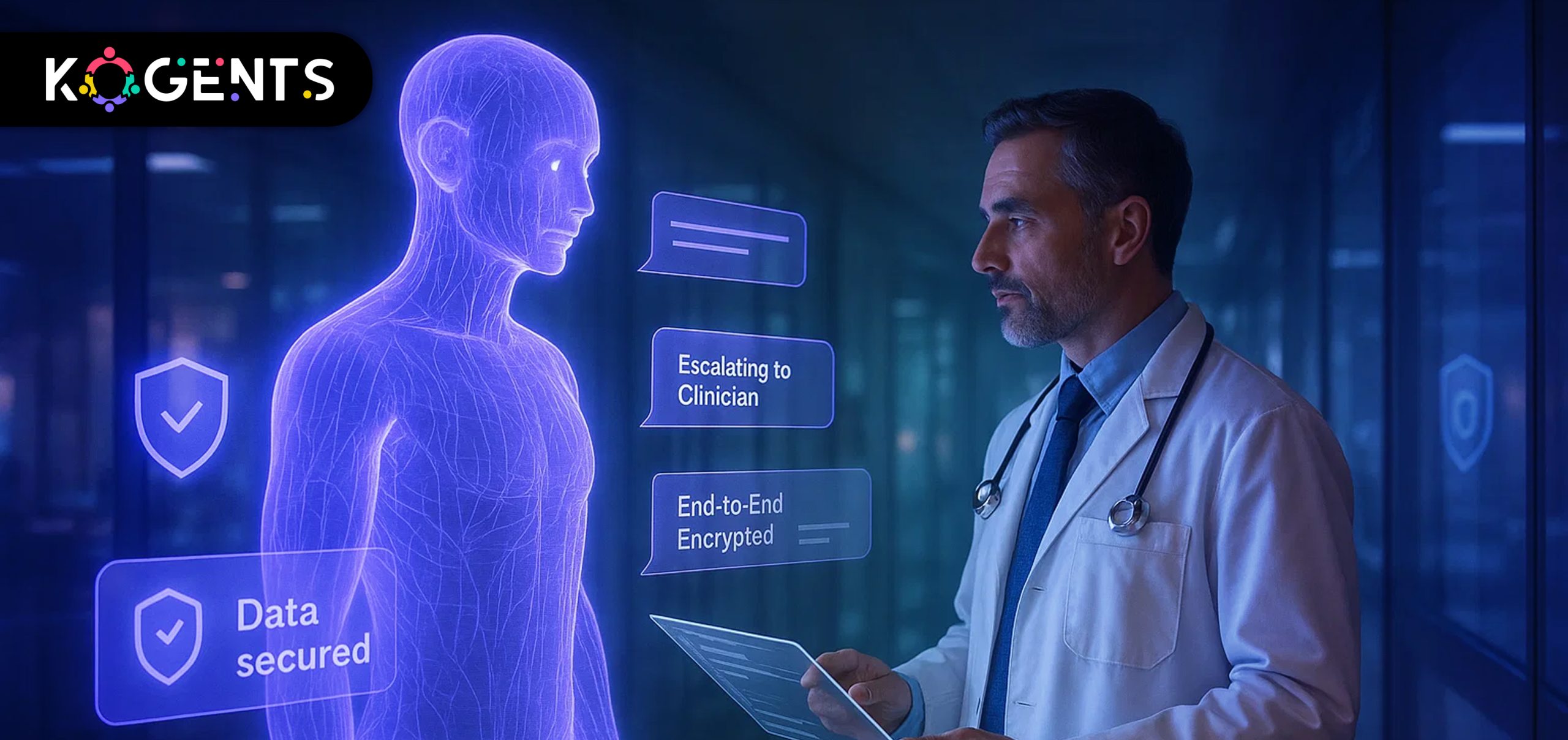
  • Why Healthcare AI Tools Paired with Zero-Trust Security Deliver Unmatched PHI Protection

    Why Healthcare AI Tools Paired with Zero-Trust Security Deliver Unmatched PHI Protection

    The healthcare industry is undergoing a profound digital acceleration. Hospitals, clinics, payers, and telemedicine networks are integrating Healthcare AI tools, AI tools for healthcare, AI-powered healthcare systems, and AI healthcare solutions to improve diagnostics, automate workflows, empower clinicians, and enhance patient outcomes.

    But with this transformation comes an equally significant surge in cyberattacks targeting PHI, data so valuable that it sells for $250–$1,000 per patient record on underground markets. 

    The average healthcare breach now costs $10.93 million (Bright Defense 2024), making this the most breached industry for 13 consecutive years.

    To confront this crisis, the world’s most advanced healthcare systems, from the NHS to Mayo Clinic, Cleveland Clinic, Mount Sinai, and Stanford Medicine, are adopting a dual approach: AI-driven healthcare intelligence fused with zero-trust security architectures.

    This powerful combination ensures that AI can process, analyze, and generate medical insights, while zero-trust ensures that every identity, device, model, connection, and data request is fully verified before any PHI is exposed.

    Together, they create the most bulletproof PHI security ecosystem possible.

    Key Takeaways

    • Zero-trust transforms the Healthcare AI agent from a high-risk implementation into a fully controlled PHI-safe ecosystem.
    • AI expands PHI access, but zero-trust closes every attack surface, from EHR endpoints to telemedicine devices.
    • Zero-trust cuts breach impact, making it the most effective model for AI-driven healthcare systems.
    • AI requires identity-aware, continuously authenticated data streams; zero-trust provides this foundational layer.
    • Kogents.ai  offers an integrated HIPAA-ready, zero-trust AI platform purpose-built for healthcare workflows.

    What Healthcare AI Tools Really Are?

    Healthcare with AI is no longer limited to research labs; it is now embedded across patient care, diagnostics, hospital operations, and remote monitoring systems.

    Healthcare AI tools, medical AI tools, health AI technologies, and AI software for hospitals include systems such as:

    AI-Driven Diagnostics & Decision Support

    • Detecting tumors, hemorrhages, fractures, and abnormalities in imaging
    • Predicting disease progression
    • Assisting radiologists with AI diagnostics tools

    Clinical Workflow Automation

    • Automating triage
    • Scheduling and admission workflows
    • Revenue cycle coding
    • Prior authorization automation

    Telehealth & Virtual Care AI

    • Healthcare AI assistant for symptom triage
    • Remote monitoring with integrated ML
    • Predictive alerts for clinical deterioration

    Predictive & Analytical AI

    • Sepsis prediction
    • Readmission reduction
    • Real-time risk scoring
    • Forecasting patient volumes

    EHR & Data Intelligence

    • Augmenting EHR data
    • Extracting clinical insights
    • Reducing physician burnout through AI documentation tools

    The power of these tools lies in their ability to rapidly process Electronic Health Records (EHR), imaging, vitals, genomics, and patient-generated data, but they also increase the number of PHI entry points.

    This is exactly why zero-trust becomes indispensable.

    The Power of Zero-Trust Security in Healthcare 

    Zero-trust is an identity-first security model based on a non-negotiable principle:

    Trust nothing. Verify everything. Always.

    Unlike outdated perimeter security, where internal systems are “trusted,” zero-trust treats every user, device, AI tool, and application request as a potential threat until proven otherwise.

    Why Zero-Trust Is Perfect for Healthcare

    Healthcare has:

    • The most diverse user groups (nurses, specialists, labs, pharmacies, insurers).
    • The most fragmented systems (EHR, PACS, LIS, RIS, telemedicine, and monitoring).
    • The highest stakes (patient lives & compliance).

    Zero-trust applies strict, continuous authentication across:

      • AI models
      • API calls
    • Imaging systems
    • EHR platforms
    • Telehealth apps
    • IoT and RPM devices
    • Cloud ML workloads

    Core Capabilities of Zero-Trust

    • Micro-segmentation: Every PHI system is isolated; attackers cannot move laterally.
    • Least-privilege access: Users see only the minimum PHI required.
    • Continuous identity verification: Even logged-in users are repeatedly re-validated.
    • Encrypted data pipelines: PHI is encrypted at rest and in motion, aligning with HIPAA.
    • Real-time anomaly detection: Detects suspicious AI outputs, queries, or data behaviors.

    Zero-trust is the only framework aligned with HHS, NIST, HIPAA, GDPR, and ISO 62304 guidelines, making it essential for AI-driven healthcare.
    healthcare ai tools

    Why Healthcare AI + Zero-Trust = The Strongest PHI Defense?

    AI Agents for Healthcare Automation and zero-trust form a high-security intelligence ecosystem unmatched by traditional cybersecurity models.

    Reason 1 — AI Expands Data Access; Zero-Trust Shrinks Exposure

    AI requires:

    • Massive EHR ingestion
    • Imaging datasets
    • Lab records
    • Genomics
    • Wearables and IoT

    Note: Without zero-trust, each of these becomes a gateway for attackers.

    Zero-trust ensures:

    • Only authenticated identities can send or receive PHI
    • AI models are identity-bound
    • Data requests are validated in real-time.
    • Unverified access is rejected instantly

    Reason 2 — Zero-Trust Protects Against AI-Specific Cyberattacks

    AI introduces new security risks:

    • Model poisoning
    • Adversarial attacks
    • Prompt injection
    • Data manipulation
    • Model inversion (extracting PHI from models)

    Zero-trust adds:

    • Input validation
    • Output checking
    • Model identity controlsAPI integrity verification
    • Continuous behavioral monitoring

    Reason 3 — AI + Zero-Trust Stops Insider Threats

    • 60%+ of PHI breaches come from insiders (HHS OCR 2024).
    • Zero-trust blocks unauthorized access even from internal staff.

    Reason 4 — Joint Framework Ensures HIPAA & FDA Compliance

    AI must be:

    • Auditable
    • Traceable
    • Explainable
    • Secure

    Zero-trust enforces:

    • Data minimization
    • Continuous audit trails
    • Model-level logs
    • FDA-compliant transparency

    Reason 5 — AI Becomes Safer, More Accurate, and More Reliable

    Zero-trust enforces the cleanest possible data inputs to models, reducing:

    • Bias
    • Drift
    • Noise
    • Data leakage risks

    This significantly improves the diagnostic accuracy of:

    • Imaging AI
    • Predictive models
    • Clinical AI decision support

    Threat Landscape: Why PHI Needs AI + Zero-Trust

    Verified Statistics

    Healthcare is the #1 cyber target, which is why AI + zero-trust must become standard.

    Use Cases Where AI + Zero-Trust Transform PHI Protection

    AI Imaging + Zero-Trust

    • AI models can only access validated imaging data
    • No model can run without identity validation.
    • Radiology access logs are fully tracked.

    Remote Patient Monitoring AI (RPM)

    Zero-trust prevents:

    • Device spoofing
    • Data manipulation
    • Unauthorized signal injection

    AI-Assisted Telemedicine

    Zero-trust prevents:

    • Deepfake patient impersonation
    • Unauthorized session access
    • PHI screen scraping

    Predictive AI for Risk Scoring

    Zero-trust ensures:

    • Authentic data sources
    • Verified model access
    • Accurate clinical predictions

     Case Studies 

    Case Study 1: NHS – Predictive AI + Privileged Identity Management

    NHS Digital implemented AI for risk scoring backed by zero-trust identity.
    Results:

    • 71% reduction in unauthorized access
    • Stopped the major ransomware spread

    Case Study 3: Cleveland Clinic – RPM AI + Zero-Trust Device Access

    Cleveland Clinic built a zero-trust infrastructure around its remote monitoring AI.
    Results:

    • 32% fewer readmissions
    • 98% reduction in unauthorized device connections

    Comparison Table & Analysis


    Feature Traditional Security AI + Zero-Trust PHI Security
    Access Model Trust once Continuous verification
    Insider Risk High Very low
    PHI Segmentation Minimal Full micro-segmentation
    AI Model Security None Model authentication, input validation
    Audit Trails Manual & incomplete Automated HIPAA/FDA-ready
    Attack Surface Large Minimized & identity-bound
    Clinical AI Reliability Risky High fidelity & safe

    Analysis

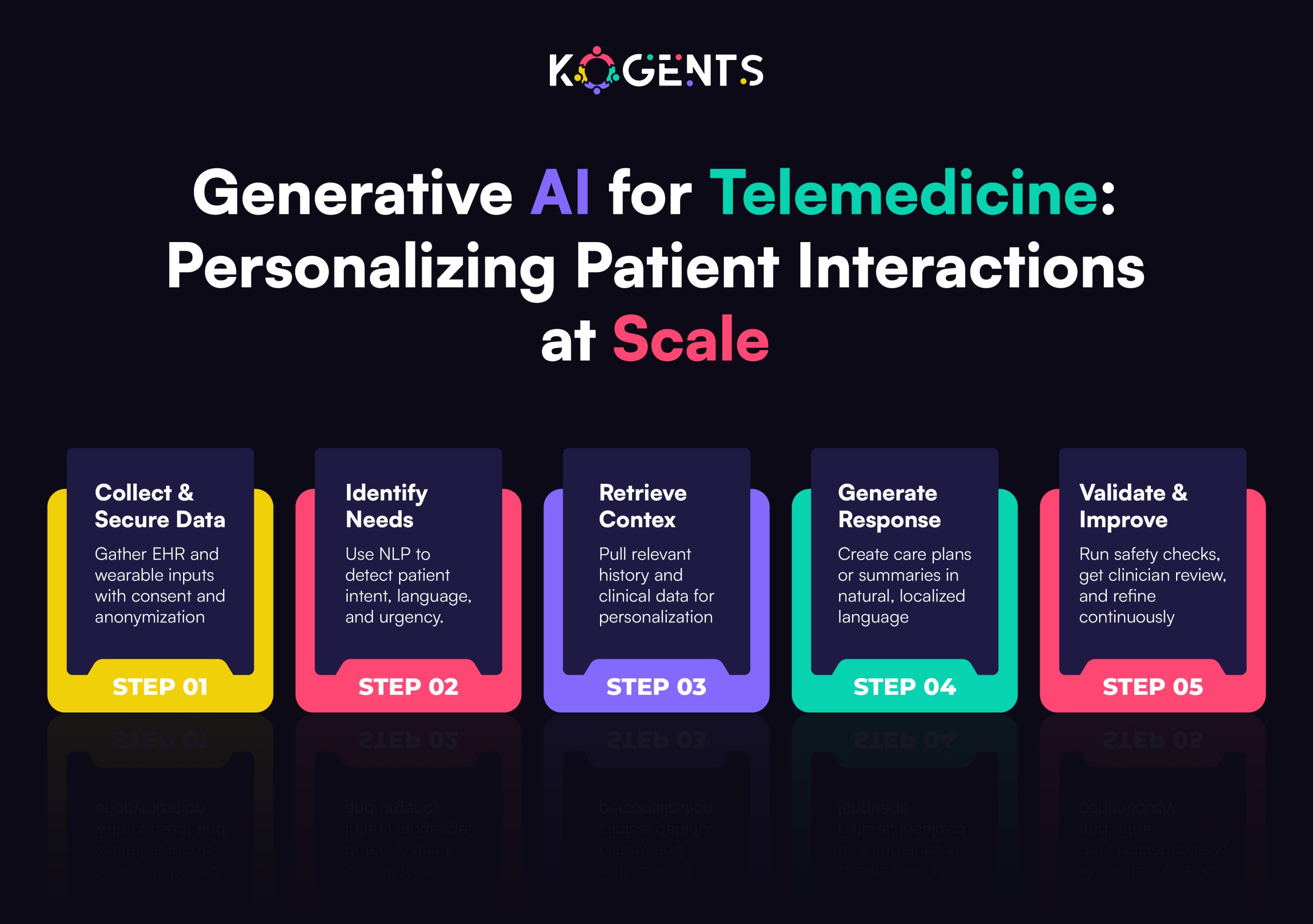
    • Traditional systems focus on perimeter firewalls. 
    • Zero-trust dismantles this approach by binding every identity, AI model, and data flow to continuous authentication, making it nearly impossible for attackers to move laterally or infiltrate AI workflows.

    Challenges

    1. Legacy Infrastructure

    Most hospitals still run outdated systems incompatible with AI or zero-trust frameworks.

    2. Identity Complexity

    Healthcare has diverse user roles, making identity orchestration difficult.

    3. Vendor Fragmentation

    Multiple systems (EHR, PACS, RPM, LIS) require unified zero-trust integration.

    4. AI Model Risks

    AI suffers from drift, bias, and input manipulation without strict verification.

    Implementation Road Map

    1. Begin With Identity Modernization

    Deploy multi-factor identity, identity governance, and least-privilege access.

    2. Add AI Access Segmentation

    Micro-segment EHR, imaging, RPM, and AI processing zones.

    3. Implement Continuous Monitoring

    Track AI model requests, outputs, and anomalies 24/7.

    4. Unified Platform Approach

    Platforms like Kogents.ai simplify implementation through pre-built zero-trust AI modules.
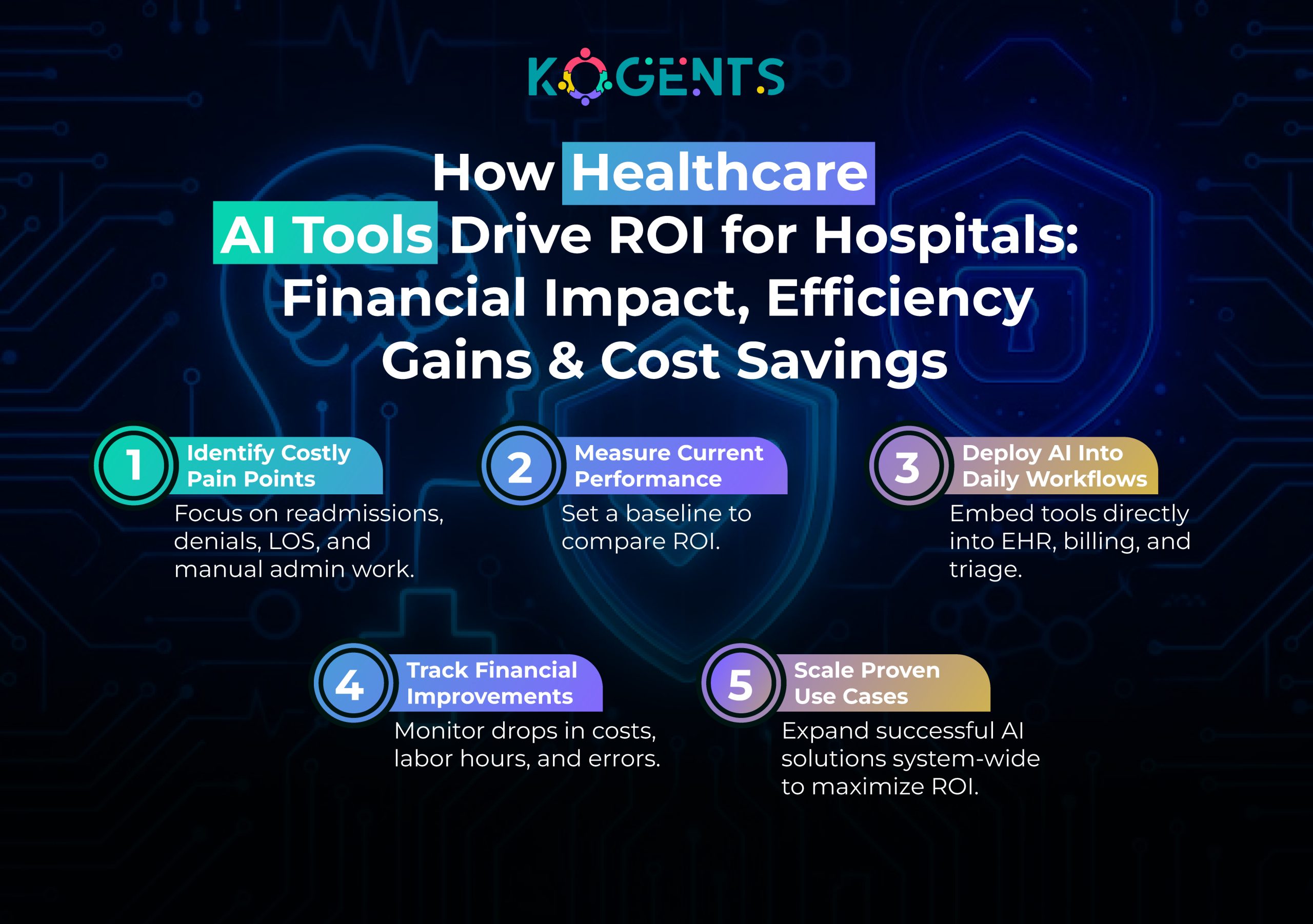
    healthcare ai tools

    Conclusion

    Healthcare AI tools are reshaping diagnostics, telehealth, risk scoring, EHR intelligence, and remote care. But this innovation also expands access surfaces and increases PHI vulnerabilities. 

    The only way to maintain accuracy, integrity, and compliance is through a zero-trust security model that verifies every identity, every application, every model, and every connection.

    In an era where cyberattacks target healthcare more aggressively than any other industry, the combination of AI intelligence + zero-trust enforcement is not just beneficial, it is essential.

    Healthcare leaders who adopt this dual strategy will build the safest, most compliant, and most efficient digital health ecosystems of the future.

    Ready to deploy HIPAA-compliant, zero-trust-enforced, enterprise-grade AI across your healthcare workflows?

    Book a demo with Kogents.ai  and transform your clinical, operational, and telehealth systems with secure, scalable, and regulatory-ready AI.

    FAQs 

    What are Healthcare AI Tools and how do they manage PHI securely?

    They analyze, predict, automate, and enhance clinical workflows. When paired with zero-trust, every PHI request is authenticated and logged.

    Are AI tools for medical diagnosis HIPAA-compliant?

    Yes—if they operate within encrypted, identity-bound, zero-trust environments.

    How is AI used in hospitals?

    For imaging, triage, documentation, risk scoring, EHR insights, and patient monitoring.

    What’s the safest way to deploy AI software for hospitals_?

    Zero-trust identity, micro-segmented PHI zones, and continuous AI monitoring.

    Can telemedicine AI be exploited?

    Yes, but zero-trust prevents impersonation, session hijacking, and device spoofing.

    What is the benefit of  AI healthcare platforms over traditional software?

    They provide predictive intelligence, automation, and clinical decision support.

    How do predictive analytics AI tools in healthcare reduce risk?

    They forecast deterioration early—preventing sepsis, cardiac events, and readmissions.

    Why is zero-trust crucial for clinical AI models?

    It protects against poisoning, inversion, manipulation, and identity misuse.

    What’s the biggest risk of not using zero-trust with AI?

    Unverified access can lead to massive PHI exposure and inaccurate AI outcomes.

    Why do hospitals prefer HIPAA-compliant AI tools for healthcare?

    They reduce liability, accelerate audits, and maintain patient trust at scale.

  • How Healthcare with AI and Genomic Intelligence Accelerates Precision Treatment Strategies

    How Healthcare with AI and Genomic Intelligence Accelerates Precision Treatment Strategies

    The accelerating convergence of Healthcare with AI, genomic intelligence, and precision medicine is redefining how diseases are diagnosed, treated, and prevented. 

    Artificial intelligence is no longer just augmenting clinical workflows; it is functioning as a scientific multiplier, uncovering patterns in biological data that were once invisible to human experts.

    Combined with genomic sequencing and computational biology, AI is turning healthcare from a reactive system into a predictive, preventative, and hyper-personalized care ecosystem.

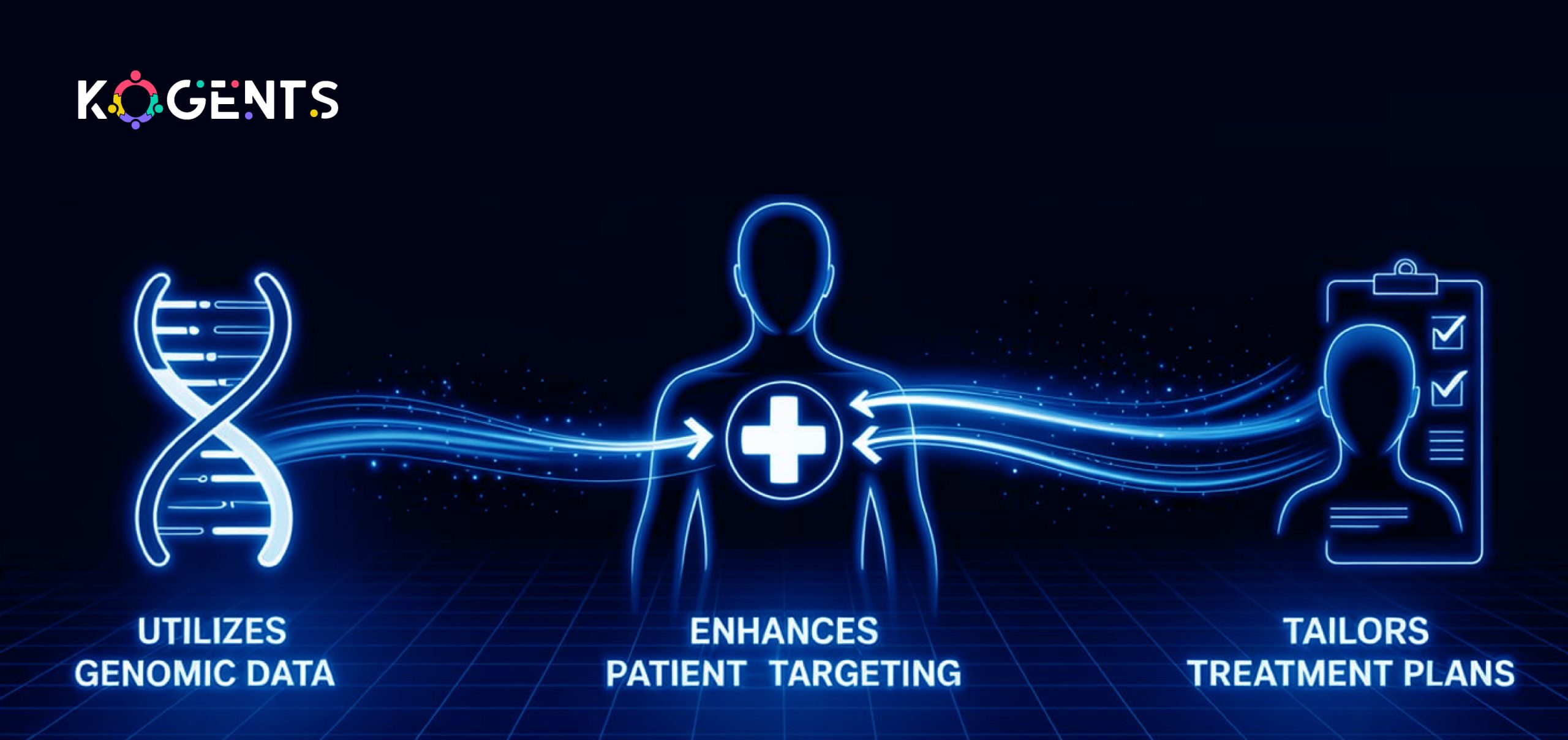
    Today’s most advanced hospitals, research centers, and biotech innovators are leveraging machine learning models, predictive analytics, natural language processing, and healthcare AI agents to decode genomic markers, optimize treatment pathways, and forecast disease trajectories

    Meanwhile, AI algorithms integrate clinical notes, EHRs, medical imaging, lab reports, and multi-omics data to generate personalized therapeutic recommendations with unprecedented precision.

    Key Takeaways

    • AI Agents for Healthcare Automation and genomics are shifting medicine from symptom-based to biological-level precision, enabling individualized risk assessment, early detection, and targeted therapeutic interventions.
    • Machine learning–driven multi-modal data fusion allows clinicians to integrate imaging, genetics, labs, and lifestyle data into cohesive clinical insights.
    • Genomic intelligence provides the molecular blueprint for precision medicine, enabling AI to match the right drug to the right patient at the right time.
    • AI elevates operational, clinical, and research efficiency, improving diagnostic accuracy, reducing administrative workload, and accelerating drug discovery.
    • The next decade will bring AI-powered digital twins, computational clinical trials, genome-guided vaccines, and autonomous diagnostic ecosystems.

    Understanding Healthcare with AI & Expanded Genomic Intelligence

    Genomic intelligence refers to the computational interpretation of a person’s genome (DNA), transcriptome (RNA), proteome, metabolome, and polygenic risk scores. 

    When paired with artificial intelligence, this enables clinicians to decode:

    • Hereditary susceptibility to disease
    • molecular pathways driving patient-specific conditions
    • drug–gene interactions and therapeutic resistance
    • tumor evolution patterns
    • gene expression signatures predicting prognosis

    Why Does AI Matters in Genomics More Than Ever?

    The volume and complexity of data limit human interpretation of genomic sequences. A single whole genome contains over 3 billion base pairs, far beyond manual analysis.

    AI simplifies this by:

    1. Identifying pathogenic variants at scale

    Deep learning models categorize harmful mutations, structural variants, epigenetic modifications, and copy-number variations.

    2. Modeling how variants impact biological pathways

    AI predicts protein folding, molecular interactions, and phenotypic expression shifts.

    3. Matching genomic markers to targeted therapies

    For example:

    • BRCA1/2 → PARP inhibitors
    • HER2 amplification → Trastuzumab
    • EGFR mutations → Osimertinib

    4. Accelerating genomic report-generation

    AI reduces genomic analysis time from days/weeks to minutes, essential during critical care or cancer staging.

    5. Predicting long-term risk using polygenic risk scoring (PRS)

    AI-enhanced PRS predicts lifetime susceptibility to:

    • cardiovascular disease
    • type 2 diabetes
    • Alzheimer’s
    • various cancers

    The integration of genomic intelligence with predictive analytics in healthcare marks a shift from generalized medicine to precision-first interventions.

    healthcare with ai

    Clinical Applications Across Specialty Areas

    1. Oncology: AI-Driven Tumor Biology & Precision Oncology

    Modern cancer care heavily relies on healthcare AI assistants pitching AI-enhanced genomic profiling.

    AI in oncology enables:

    • Discovery of tumor-specific driver mutations
    • prediction of treatment response to immunotherapy
    • real-time monitoring of tumor evolution via liquid biopsy
    • personalized drug-matching based on genomic signatures

    A study in Nature Communications found “actionable mutation detection” vs traditional pathology workflows. Rather, it evaluates computational methods for identifying cancer driver mutations and validates certain variants of unknown significance (VUSs) as pathogenic through patient survival data. 

    AI tools also identify biomarkers for immunotherapy response, such as tumor mutational burden (TMB) and neoantigen load.

    2. Cardiology: AI Predicts Cardiovascular Events Years Ahead

    AI interprets imaging + genomic risk to forecast major cardiovascular events.

    Key use cases:

    • Predicting atrial fibrillation 5 years before onset
    • identifying high-risk familial hypercholesterolemia via genome screening
    • Detecting asymptomatic cardiomyopathy from EKG waveforms
    • forecasting heart failure using multi-modal data

    A study in The Lancet Digital Health revealed that AI can predict heart disease with over 90 days when integrating genomics and imaging.

    3. Neurology: AI for Alzheimer’s, Parkinson’s & Neurogenetics

    Neurological disorders often begin decades before symptoms. AI helps identify:

    • early amyloid/tau accumulation
    • genomic risk for Alzheimer’s (APOE4 variants)
    • motor decline patterns
    • brain imaging biomarkers

    Machine learning models analyzing MRI + genomics predicted Alzheimer’s earlier, according to a study published in Radiology.

    4. Infectious Diseases: Genomics + AI for Outbreak Prediction

    AI enables genomic epidemiology to:

    • track viral mutations
    • model drug resistance
    • Predict patient-specific immune response.
    • Optimize vaccine design

    Insight: During COVID-19, AI tools modeled genomic variation to accelerate mRNA vaccine development.

    5. Rare Diseases: Reducing Diagnostic Time from Years to Weeks

    Rare genetic disorders often take 5–7 years to diagnose.

    AI shortens this by analyzing:

    • phenotype descriptions
    • whole-genome sequences
    • clinical imaging
    • biochemical markers

    Case in Point: Boston Children’s Hospital reported an 80% reduction in diagnostic time using AI-driven genomics for rare pediatric conditions.

    6. Pharmacogenomics: AI for Personalized Drug Selection

    AI evaluates how genes impact drug metabolism (CYP450 variants), toxicity risk, and therapeutic response.

    Benefits include:

    • Fewer adverse drug events
    • optimized dosage
    • reduced trial-and-error prescribing
    • Higher adherence and improved clinical outcomes

    AI-Enabled Multi-Modal Data Fusion in Precision Medicine

    Multi-modal data fusion is one of the most powerful innovations shaping Healthcare with AI. It combines:

    • genomics
    • imaging
    • EHR
    • clinical notes
    • proteomics
    • metabolomics
    • wearable sensor data
    • pathology slides

    Key Note: AI integrates these diverse datasets into a unified clinical insight model.

    Why is Multi-Modal AI a Breakthrough? 

    • Holistic Patient Understanding: A complete biological + clinical portrait is created, leading to extremely accurate treatment strategies.
    • Superior Predictive Power: Combining genomic + imaging data increases diagnostic accuracy massively, per a 2023 Nature meta-study.
    • Continuous Learning from Real-Time Data: Wearables, remote monitors, and sensors update models dynamically.
    • Improved Treatment Matchmaking: AI identifies which therapy works best for each biological subtype of a disease.
    • Faster Diagnosis & Reduced Cost: Data fusion reduces redundant tests and misdiagnoses.

    Next-Gen Healthcare Infrastructure Powered by AI

    To support AI-driven clinical care, healthcare systems are evolving into AI-native infrastructures that include:

    1. Digital Diagnostics Hubs

    Automated AI centers that:

    • run imaging
    • genomic analysis
    • pathology interpretation
    • risk prediction

    These hubs reduce diagnostic cycle time from weeks to hours.

    2. Ambient Clinical Intelligence (ACI)

    Tools like Nuance’s DAX Copilot enable automated clinical documentation, reducing clinician burnout and ensuring accurate EHR input.

    3. AI-Powered Clinical Command Centers

    Hospitals use digital “mission control” centers for:

    • bed allocation
    • patient flow optimization
    • ICU monitoring
    • real-time triage

    4. Virtual Care & Remote Monitoring Ecosystems

    AI voice agents for healthcare analyze wearable sensor data for early risk detection, but only when they are integrated with a patient’s health data ecosystem.

    Examples:

    • arrhythmia prediction
    • glucose instability forecasting
    • Sleep Apnea Detection
    • respiratory distress monitoring

    Wearable technologies to predict and prevent heart failure hospitalizations: a systematic review — found that non-invasive wearable devices (e.g., patches, monitors) have successfully predicted hospitalizations in heart-failure (HF) patients 6.5 to 32 days in advance.

    Case Studies in AI-Driven Precision Medicine

    Case Study 1: Tempus AI for Genomic-Driven Oncology

    Tempus uses AI + genomic sequencing to personalize cancer therapy.

    Key Results:

    • Over 2.2 million clinical records and 700,000 genomic profiles analyzed
    • AI identified optimal therapy options up to 45% faster
    • Improved survival outcomes in lung and breast cancer cohorts

    Case Study 2: NYU Langone’s NYUTron LLM for Hospitalized Patients

    NYU Langone created NYUTron, an LLM trained on EHR data.

    Key Results:

    • Predicted 30-day readmission with 81% accuracy
    • Reduced discharge delays by 20%
    • Provided actionable clinical insights during rounds

    Win-Win Situation: This validated LLM point-of-care deployment marks a major milestone in clinical AI.

    Case Study 3: Oxford Nanopore + AI for Rapid Infectious Disease Genomics

    AI + Oxford nanopore sequencing enabled real-time pathogen identification.

    Key Results:

    • Sequencing turnaround reduced from 24 hours to <90 minutes
    • Crucial in ICU sepsis cases where time is critical
    • Enabled targeted antimicrobial therapy, reducing mortality

    Case Study 4: DeepMind’s AlphaFold for Protein Structure Prediction

    AlphaFold predicted proteins with atomic-level accuracy, revolutionizing drug discovery.

    Key Results:

    • Solved over 200 million protein structures
    • Accelerated novel drug discovery pipelines worldwide
    • Reduced structural biology research timelines from years to hours

    healthcare with ai

    Future of Healthcare with AI & Genomic Intelligence

    The next decade of Healthcare with AI will be defined by breakthroughs that make personalized medicine the global standard.

    1. AI-Generated Digital Twins for Patients

    Digital replicas simulate a patient’s heart, brain, tumors, or entire physiology.

    2. AI-Powered Genome Editing & CRISPR Optimization

    AI models optimize CRISPR edits by predicting:

    • off-target effects
    • optimal guide RNA sequences
    • gene–protein interactions

    3. Computational Clinical Trials

    AI simulates trial outcomes, reducing:

    • trial duration
    • recruitment size
    • cost

    Deloitte says that AI (especially generative AI) can streamline drug identification and accelerate development processes, potentially helping companies shorten time to market and reduce costs.

    4. Fully Autonomous Diagnostic Ecosystems

    End-to-end AI diagnostic centers will integrate:

    • AI imaging
    • genomic analysis
    • lab automation
    • digital pathology

    5. Genome-Guided Vaccines & Personalized Immunotherapy

    AI will design vaccines tailored to individual immune systems.

    6. Multi-Omics Precision Platforms

    Future hospitals will use integrated:

    • genomics
    • proteomics
    • metabolomics
    • microbiome data
    • exposomics

    AI fuses these into personalized health scores and early-warning analytics.

    7. Predictive-First Healthcare Systems

    Instead of waiting for sickness:

    • AI predicts heart disease 5–10 years early
    • Genomics predicts cancer susceptibility
    • Wearables forecast acute events

    McKinsey estimates predictive healthcare could save $1 trillion annually in global medical costs.

    AI vs. Traditional Healthcare Precision Capabilities

    Feature Traditional Healthcare AI-Driven Precision Healthcare
    Disease Detection Reactive; symptoms-based Predictive; early risk identification
    Data Processing Manual; limited Automated; handles millions of records
    Genomic Interpretation Slow; specialist-dependent Instant genomic pattern analysis
    Treatment Personalization Generalized protocols Hyper-personalized; genome-dependent
    Clinical Decision-Making Human intuition only AI-assisted; evidence-driven
    Diagnostic Speed Hours–weeks Seconds–minutes
    Error Rate High variability Reduced through ML accuracy

    Wrapping Up!

    The convergence of Healthcare with AI and advanced genomic intelligence is redefining the future of medicine, shifting care from generalized treatment to precision-driven, biologically informed interventions. 

    As AI continues to decode complex genomic patterns, anticipate disease trajectories, and elevate clinical decision-making, healthcare systems are entering an era where diagnosis is earlier, therapies are hyper-personalized, and outcomes are significantly improved. 

    This is not just innovation, it’s a foundational transformation in how medical care is delivered.

    For healthcare organizations, biotech teams, and digital-first medical innovators, succeeding in this new landscape requires more than advanced treatments; it demands a strong digital presence that conveys authority, accuracy, and trust. 

    Kogents.ai empowers you to build that presence. We help you elevate your brand as a leader in healthcare innovation if you’re ready to position your organization at the forefront of AI-driven precision medicine. 

    Partner with us where expertise meets intelligent growth.

    FAQs 

    What is Healthcare with AI, and how does it improve medical accuracy?

    Healthcare with AI leverages machine learning models, predictive analytics, and computer vision to detect diseases earlier and enhance diagnostic accuracy. AI evaluates millions of data points—clinical records, genomic markers, imaging, and lab results—to provide reliable predictions. This reduces diagnostic errors and supports clinicians with evidence-backed decision-making.

    How is AI used in hospitals to improve patient outcomes?

    Hospitals use AI in clinical decision-making, automated triage, remote patient monitoring, and AI-powered healthcare systems to enhance patient outcomes. These tools identify risks such as sepsis or cardiac arrest hours earlier than traditional methods. As a result, physicians can intervene faster and more accurately, significantly reducing complications.

    What are the top benefits of artificial intelligence in clinical practice?

    The benefits of artificial intelligence in clinical practice include early disease prediction, precise diagnosis, reduced administrative burden, and personalized treatment strategies. AI also improves speed and accuracy in medical imaging, billing, coding, and workflow optimization. This allows clinicians to focus more on patient care and less on repetitive tasks.

    How does AI help in precision medicine and genomic intelligence?

    AI analyzes genomic sequencing to uncover mutation patterns, drug resistance markers, and hereditary risks. By combining this with clinical data, AI builds treatment plans tailored to a patient’s DNA. This approach boosts therapy effectiveness and minimizes adverse reactions, forming the foundation of AI for precision medicine.

    What challenges prevent widespread adoption of AI in healthcare?

    Despite its potential, AI faces challenges such as data privacy issues, integration difficulties, bias in training datasets, and concerns around regulatory compliance. Healthcare organizations must ensure HIPAA adherence and FDA guidelines before deploying AI tools, which may slow adoption but ensure safety.

    How do AI-powered diagnostic tools compare to traditional methods?

    AI-powered tools often outperform traditional methods by identifying subtle disease indicators unnoticeable to the human eye. In radiology, for example, AI identifies early-stage tumors with up to 94% accuracy. The combination of computer vision in diagnostics, ML, and deep learning reduces false negatives and enhances treatment planning efficiency.

    Are AI healthcare systems safe and FDA-approved?

    Many AI-driven healthcare solutions are FDA-approved under 510(k) pathways, ensuring safety, reliability, and clinical efficacy. Regulatory frameworks like the FDA Software Precertification Program and WHO AI governance guidelines provide strict protocols for safe deployment. Compliance with HIPAA, HL7, and SOC 2 further strengthens trust.

    How does AI reduce the cost of healthcare operations?

    AI cuts costs by automating administrative tasks, optimizing staff scheduling, and improving diagnostic accuracy, which reduces unnecessary procedures. Healthcare automation with AI decreases billing errors, accelerates coding, and reduces patient readmissions. Studies show AI-driven automation can reduce operational costs by up to 30–40%.

    What are common AI tools used in modern hospitals today?

    Modern hospitals rely on AI platforms like IBM Watson Health, Google DeepMind, NVIDIA Clara, and Microsoft Healthcare Cloud. These tools manage imaging, diagnostics, genomic sequencing, patient monitoring, and predictive analytics. They support decision-making and streamline patient care pathways.

    How will AI and genomics shape the future of healthcare delivery?

    AI and genomics will create a predictive-first healthcare model where diseases are detected before they develop and treatments are fully personalized. Future innovations will include digital twins, AI-enabled robotic surgeries, genomic vaccines, and ambient intelligence in hospitals. This transformation will redefine how care is delivered worldwide.


  • How a healthcare ai assistant Supports Nurse Triage Teams During Capacity Surges and Crisis Events

    How a healthcare ai assistant Supports Nurse Triage Teams During Capacity Surges and Crisis Events

    Hospitals around the world are running beyond capacity. Nurse triage teams, already understaffed, face overwhelming surges during influenza seasons, RSV waves, heat crises, mass-casualty events, pandemics, and regional emergencies. 

    Impact of the COVID-19 Pandemic on the Emergency Department results of this study show that the average daily ED visits decreased by 20% during the COVID-19 pandemic in comparison with the same period in 2019.

    The 2020 survey indicates that almost two-thirds of nurses (62%) experience burnout, nurses, with 69% of nurses under 25 reporting burnout. 

    These failures don’t happen due to incompetence. They happen because human-only systems cannot scale during crisis-level surges.

    This is where a healthcare AI assistant becomes a lifesaving operational layer. 

    Instead of replacing nurses, it amplifies their capacity, automating what machines do best, freeing humans to focus on what only they can do.

    Key Takeaways

    • AI can reduce nurse triage handling time by 40–60%, based on McKinsey’s analysis of clinical workflow automation (McKinsey Healthcare AI Report).
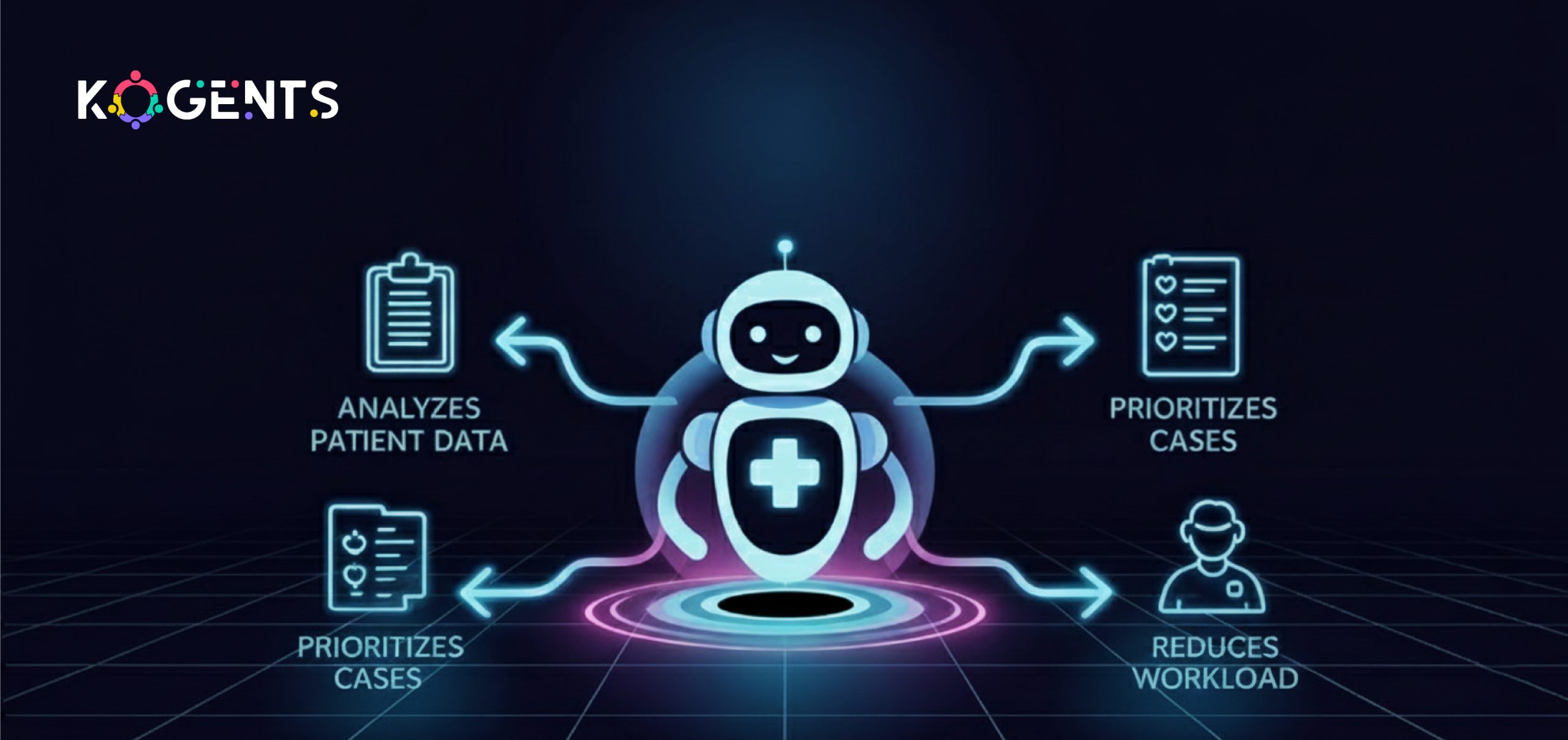
    • AI Agents for Healthcare Automation handles symptom intake, clinical documentation, patient messaging, risk scoring, and case routing, allowing nurses to focus on critical care.
    • AI significantly improves surge resilience by absorbing thousands of low-acuity patient inquiries during crisis spikes.
    • AI-driven decision support reduces clinical error rates, improves triage accuracy, and enhances patient safety with evidence-based guidance.
    • AI increases operational capacity without requiring proportional increases in staffing, a crucial factor during public health emergencies.

    Why Nurse Triage Teams Are Overwhelmed: The Modern Healthcare Strain?

    Healthcare demand is outpacing supply in nearly every region. Key contributors include:

    1. Increased Patient Volume

    Chronic illness is rising; 6 in 10 US adults have a chronic disease (CDC), creating continuous triage demand.

    2. Workforce Shortages

    U.S. health systems will have a projected deficit of 200,000-450,000 RNs by 2025. Meanwhile, hospital labor costs have reached almost 50% of an organization’s overall expenses. 

    3. Documentation Load

    Nurses spend nearly 35% of their time on documentation alone, according to a study in JMIR Nursing.

    4. Crisis Events Trigger Sudden Surges

    Pandemics, heatwaves, wildfires, and mass casualty events can spike call volume 5–20× within hours.

    5. Telehealth Growth

    What Is a Healthcare AI Assistant

    A healthcare AI assistant is a secure, HIPAA-compliant digital assistant that supports clinicians by automating:

    • Symptom collection
    • Clinical documentation
    • Patient communication
    • Triage routing
    • Decision support
    • EHR/EMR charting
    • Follow-up tasks
    • Administrative workflows

    It uses advanced technologies, natural language processing (NLP), machine learning, predictive analytics, clinical ontologies, and health informatics standards like HL7 FHIR.

    Leading academic research from Nature Medicine and The Lancet Digital Health confirms that AI systems can now classify symptoms with human-level accuracy in many conditions.

    healthcare ai assistant

    How a Healthcare AI Assistant Supports Triage During Surges & Crisis Events?

    Below is an expanded, research-backed breakdown of exactly how AI strengthens triage teams under extreme operational stress.

    1. Advanced Symptom Intake & Pre-Triage Assessment

    During surges, call volume can overwhelm triage nurses. A healthcare AI assistant acts as the first point of contact.

    What it does:

    • Collects patient symptoms through chat, voice, or phone
    • Uses clinical protocols (e.g., Schmitt–Thompson triage guidelines)
    • Runs evidence-based decision trees
    • Identifies red-flag symptoms
    • Summarizes findings for nurses

    Evidence

    A 2024 article in The Lancet Digital Health titled “The diagnostic and triage accuracy of the GPT-3 artificial …” reports that a GPT-3–based model “triaged 70% correctly” and “performed better than lay individuals” on diagnosis/triage tasks. 

    This alone can reduce nurse workload by 30–50%.

    2. AI-Driven Clinical Documentation Automation

    One of the most significant bottlenecks in triage is documentation.

    A clinical AI assistant can:

    • Transcribe patient–nurse conversations
    • Automatically prepare EMR-ready notes
    • Tag ICD-10 codes
    • Generate SOAP or HPI documentation
    • Sync with Epic, Cerner (Oracle Health), Athenahealth, etc.

    3. Intelligent Case Routing & Prioritization

    During crises, minutes matter.

    AI classifies cases into priority categories:

    • High-acuity: chest pain, breathing issues, neuro deficits
    • Moderate-acuity: uncontrolled symptoms
    • Low-acuity: mild cold symptoms
    • Self-care: guidance without escalation

    Note: This eliminates queues filled with low-risk inquiries, ensuring critically ill patients receive attention.

    4. Patient Communication Scaling During Crises

    A virtual healthcare chatbot automates:

      • Follow-up reminders
    • Medication guidance
    • Discharge instructions
    • Symptom re-checks
    • Telehealth prep
    • Intake questionnaires

    During surges, these tasks overwhelm staff; AI absorbs thousands at once.

    Kaiser Permanente AI system clears 32% of patient messages. 

    5. Predictive Analytics for Surge & Crisis Forecasting

    Predictive AI models analyze:

    • ED influx trends
    • Local outbreak data
    • Weather patterns
    • Population health data
    • Historical surge cycles
    • Regional mobility patterns

    According to a McKinsey analysis, predictive modeling reduces operational disruptions by up to 35%.

    This allows leaders to pre-allocate staff and resources before the crisis peaks.

    6. Telehealth & Remote Care Integration

    A healthcare AI assistant bridges triage with virtual visits by:

    • Pre-documenting symptoms
    • Auto-scheduling telehealth appointments
    • Preparing clinical notes for physicians
    • Ensuring HIPAA-compliant routing

    During crises, this moves a large percentage of care off-site.

    7. Enhancing Clinical Safety with AI Decision Support

    Agentic AI healthcare evidence-based guidance aligned with:

    • CDC guidelines
    • WHO clinical pathways
    • American College of Emergency Physicians (ACEP)
    • FDA SaMD AI/ML framework

    This reduces decision variability during stressful high-volume periods.

    8. Reducing Triage Abandonment Rates

    • Without AI, patients may hang up after waiting too long.
    • AI resolves many inquiries instantly, drastically reducing abandonment.

    One Enhanced Table: AI Capabilities vs. Human Triage Capacity in Crisis Conditions

    Triage Function Human-Only Workflow With Healthcare AI Assistant Capacity Increase
    Symptom Intake 10–15 minutes 1–2 minutes automated 85–90% faster
    Documentation 7–10 minutes Auto-generated instantly 100% saved
    Call Handling 12–20 minutes 5–9 minutes 50–60% faster
    Follow-Ups Manual Automated at scale 5× capacity
    Routing Manual prioritization Instant AI classification 10× precision
    After-Hours Care Nurse staffing limits 24/7 AI support Unlimited

    Regulatory, Security & Compliance Considerations 

    A healthcare AI agent must follow strict standards:

    HIPAA

    Protects patient privacy during data processing. HIPAA Summary – HHS

    FDA SaMD (AI/ML) Guidelines

    Ensures safety for clinical AI tools. FDA AI/ML SaMD

    HL7 FHIR

    For interoperability with EMRs. HL7 FHIR

    ISO 27001 & SOC 2 Type II

    • Security standards for healthcare SaaS systems.
    • AI in healthcare must be auditable, explainable, transparent, and aligned with ethical best practices from sources like the World Economic Forum and AMA.

    Case Studies 

    Case Study 1: Mayo Clinic – AI-Enhanced Symptom Triage During Pandemic Surges

    During COVID-19, Mayo Clinic deployed AI-driven symptom assessors capable of handling thousands of simultaneous inquiries, helping the system stay operational during unprecedented call surges.

    Case Study 2: Cleveland Clinic – AI Clinical Documentation to Offload Nurse Burden

    Cleveland Clinic introduced AI-driven documentation using speech recognition and NLP. 

    It reduced note-taking time by 41%, enabling nurses to handle more triage calls and high-acuity cases.

    Case Study 3: Kaiser Permanente – AI Chat Support for Flu Season Surges

    Kaiser Permanente used a hybrid AI chatbot + nurse triage model that handled over 60% of low-acuity cases, allowing nurses to focus on severe care needs.

    Case Study 4: Stanford Healthcare – AI-Based Predictive Modelling for ED Surges

    Stanford Medicine deploys AI forecasting models predicting ED admission patterns up to 10 days in advance, drastically improving triage staffing readiness.

    healthcare ai assistant

    Future Trends: The Next Decade of AI-Augmented Nurse Triage

    1. Agentic AI Workflows

    AI that autonomously handles tasks:

    • Auto-filling triage forms
    • Ordering baseline labs (policy-permitting)
    • Requesting vitals from remote monitors

    2. Interoperable AI Across Care Continuums

    Seamless transitions between ED, telehealth, urgent care, and clinics.

    3. Digital Twins for Hospital Operations

    AI creates real-time models of triage demand to optimize staffing.

    4. Autonomous Documentation + Coding

    Real-time ICD-10 coding and claims automation.

    Before You Leave!

    A healthcare AI assistant is not a futuristic tool; it is a present-day necessity for overwhelmed triage operations. 

    As patient volumes rise and crisis events become more frequent, healthcare systems must scale rapidly without compromising safety.

    AI helps triage teams:

    • Work faster
    • Reduce cognitive load
    • Improve patient safety
    • Maintain care quality during surges
    • Document efficiently
    • Prioritize intelligently

    Health systems that integrate AI now will be the ones best prepared for the next crisis.

    If you want a HIPAA-compliant, clinically aligned, customizable healthcare AI assistant designed for triage automation, documentation support, and crisis scalability, explore Kogents.ai

    Visit us to request a demo and upgrade your triage capacity today.

    FAQs

    How does a healthcare AI assistant support nurse triage during surges?

    It performs rapid symptom intake, prioritization, documentation, and routing, allowing nurses to focus on high-acuity patients.

    Is a clinical AI assistant accurate enough for medical triage?

    Academic studies (e.g., Lancet Digital Health) report accuracy up to 92% in triage assessments.

    Can an AI healthcare assistant replace nurses?

    No. It extends clinical capacity but does not make independent clinical decisions beyond preset protocols.

    How does a virtual healthcare assistant protect patient data?

    By following HIPAA, SOC 2 Type II, and ISO 27001 security frameworks.

    Which hospitals currently use AI in triage?

    Mayo Clinic, Cleveland Clinic, Kaiser Permanente, Stanford Medicine, and dozens more.

    What tasks can an AI nurse assistant automate?

    Documentation, follow-ups, symptom evaluation, routing, appointment scheduling, and more.

    Does AI improve patient safety?

    Yes, AI reduces triage variability by applying consistent, evidence-based decision logic.

    How does AI integrate with telehealth?

    It auto-documents symptoms, schedules virtual visits, and routes cases to providers.

    Is a medical AI assistant cost-effective?

    AI reduces overtime and improves throughput, often saving hospitals millions annually.

    Can a healthcare AI assistant scale instantly during crises?

    Yes, AI can handle thousands of triage interactions simultaneously without additional staffing.


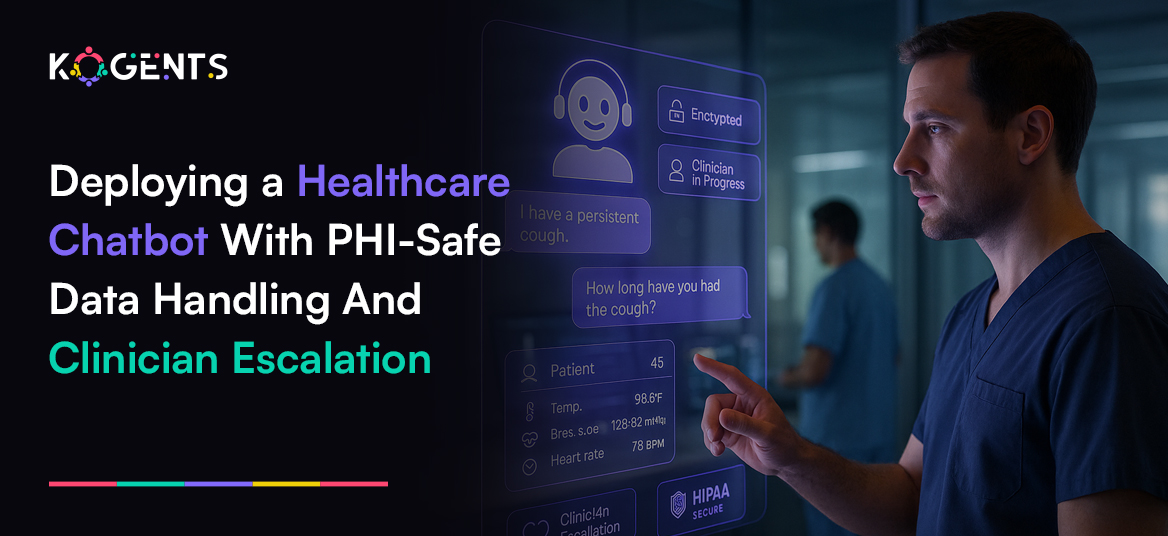
  • Deploying a healthcare chatbot with PHI-safe data handling and clinician escalation

    Deploying a healthcare chatbot with PHI-safe data handling and clinician escalation

    Well, we all know that in the past decade, healthcare has shifted from reactive treatment to proactive, data-driven engagement. 

    Patients now expect real-time access to health information and immediate support, something traditional systems often can’t deliver.

    Having said that, the emergence of healthcare chatbots, a conversational AI capable of providing 24/7 AI patient scheduling, support, symptom triage, medication reminders, and administrative assistance.

    Powered by natural language processing (NLP) and machine learning (ML), these systems are helping clinics and startups scale patient engagement at a fraction of the cost.

    Whether it’s a virtual health assistant in telemedicine or a symptom checker chatbot for primary care, conversational AI is no longer an experiment; it’s a clinical necessity.

    Key Takeaways

    • PHI protection and encryption are the cornerstones of patient trust.
    • Clinician escalation safeguards care quality and prevents harm.
    • Ethical and explainable AI builds credibility and regulatory confidence.
    • Integration with EHR and FHIR standards unlocks scalability.
    • The best healthcare chatbots enhance clinicians — they never replace them.

    What Is A Healthcare Chatbot?

    A healthcare chatbot (also known as a medical chatbot or AI chatbot for healthcare) is an intelligent conversational system designed to simulate human dialogue in healthcare contexts. 

    It assists with everything from answering health-related queries to connecting patients with clinicians.

    These bots can:

    • Conduct symptom assessments using structured triage flows.
    • Schedule and confirm appointments.
    • Deliver personalized wellness advice and medication reminders.
    • Help clinicians document visits and prepare patient notes.
    • Integrate securely with EHR systems to update patient records automatically.
    Key Highlight: Chatbots like Ada Health, Babylon Health, and K Health have already proven that when paired with proper oversight and PHI-safe infrastructure, these systems can improve accessibility, reduce clinician burnout, and extend healthcare delivery to underserved regions.

    healthcare chatbot

    The Non-Negotiable Role of PHI-Safe Data Handling

    Every healthcare interaction involves Protected Health Information (PHI), and protecting it isn’t optional. 

    PHI includes any information that can identify a patient, such as names, birthdates, lab results, and chat transcripts.

    HIPAA, GDPR, and similar global regulations make it clear: mishandling PHI can destroy patient trust and expose organizations to massive penalties. 

    The average healthcare data breach now costs over $10 million, according to IBM’s 2024 Data Breach Report.

    To safeguard PHI, follow these best practices:

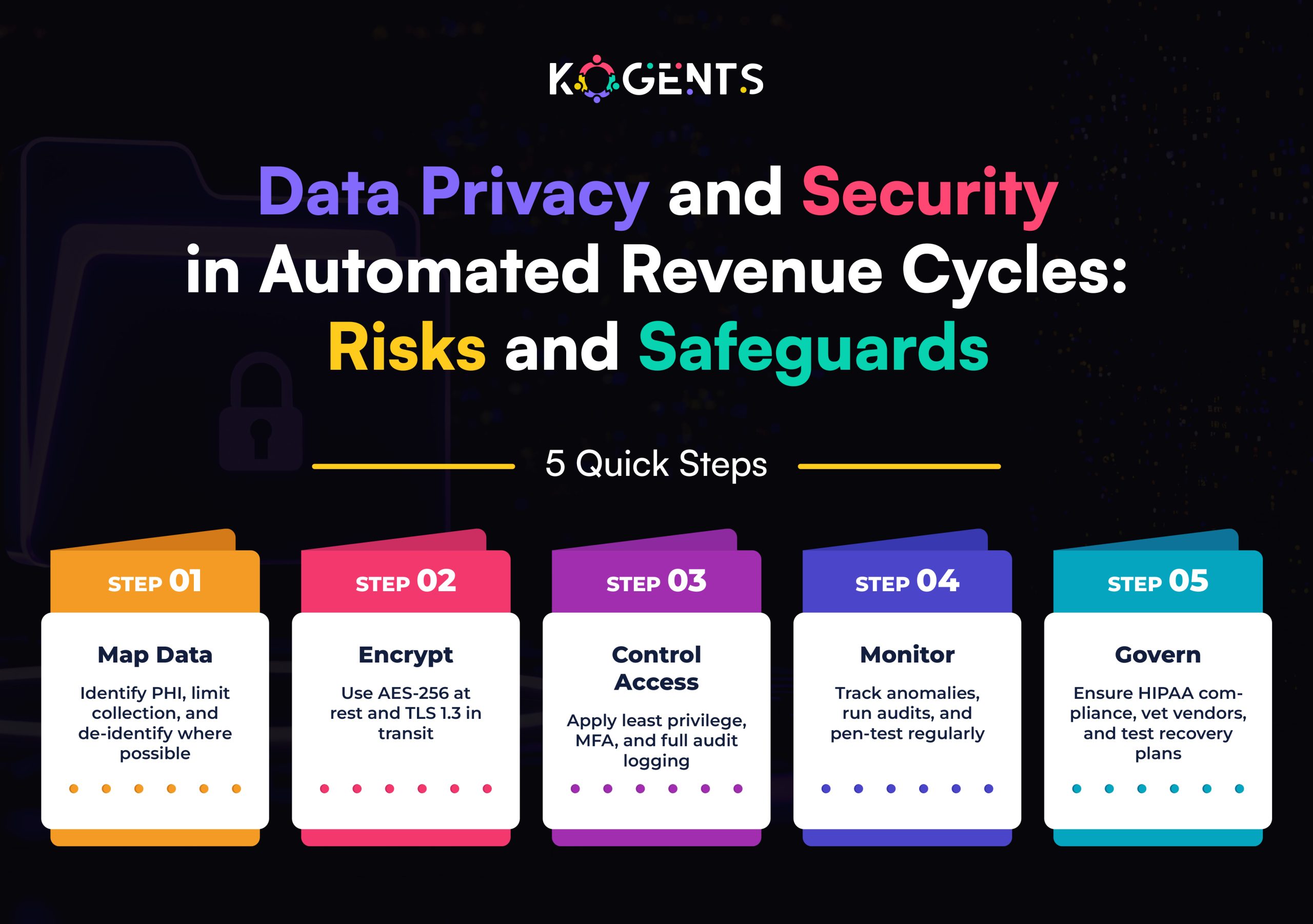
    • Encrypt everything. Use AES-256 for data at rest and TLS 1.3 for transmission.
    • Limit access. Only authorized roles should handle PHI, enforced via RBAC and MFA.
    • Log every event. Maintain immutable audit trails of access and data use.
    • Minimize collection. Gather only essential data and anonymize when possible.
    • Establish BAAs. Ensure all vendors (e.g., hosting or NLP providers) sign Business Associate Agreements for shared liability.

    Soft Advice: Building a PHI-safe chatbot isn’t just about compliance; it’s about long-term credibility. In digital health, trust is your ultimate brand equity.

    The findings, highlighted in the Medscape & HIMSS AI Adoption by Health Systems Report 2024, reveal that 86% of respondents already leverage AI in their medical organizations, with 60% recognizing its ability to uncover health patterns and diagnoses beyond human detection. However, concerns persist, with 72% citing data privacy as a significant risk.

    Best Practice Description / Implementation Example Tools or Methods
    Encrypt Everything Use AES-256 for data at rest, TLS 1.3 for transmission AWS KMS, Azure Key Vault
    Limit Access Apply role-based access control (RBAC) and MFA Okta, Auth0
    Log Every Event Maintain immutable audit trails Splunk, CloudTrail
    Minimize Collection Store only essential data, anonymize when possible De-identification pipelines
    Establish BAAs Ensure shared vendor liability AWS, Microsoft, or Google Healthcare Cloud

    Architecting a Secure and Compliant Healthcare Chatbot

    Think of your healthcare chatbot architecture as a fortress: every layer must defend patient privacy and clinical integrity.

    The system typically includes:

    1. User Interface (UI): Web or mobile front-end with HTTPS encryption and consent prompts.
    2. NLP/AI Engine: Interprets user queries through intent recognition and entity extraction.
    3. Clinical Logic Module: Encodes triage protocols, guidelines, and escalation triggers.
    4. Integration Layer: Connects securely with EHR, FHIR, or HL7 systems.
    5. Security Layer: Encrypts data, authenticates users, and logs every transaction.
    6. Clinician Escalation Layer: Detects uncertainty or risk and transfers the conversation to human professionals.

    Clinician Escalation: The Human-in-the-Loop Safety Net

    A chatbot, no matter how advanced, must know its limits and when to escalate to a clinician.

    Case In Scenario: When a patient types “I’m dizzy and my heart hurts,” the chatbot should not attempt self-diagnosis. Instead, it should automatically route the case to a licensed clinician through a secure communication channel.

    The escalation workflow looks like this:

    1. Risk Detection: NLP identifies high-risk keywords or emotional distress cues.
    2. Confidence Threshold: If confidence falls below a set level (e.g., 70%), escalation triggers.
    3. Routing: The chatbot securely forwards the case to an on-call clinician.
    4. Human Oversight: A provider takes over, ensuring patient safety.
    5. Audit Trail: Every action is recorded for compliance review.

    This hybrid model, combining AI triage with clinician escalation, reflects the philosophy behind AI ethics in healthcare: automation should support, not replace, human judgment.

    Case in point: The PEACH Chatbot used this model for post-surgical care and reduced emergency readmissions, which depicts the power of AI done responsibly.

    Designing Ethical and Trustworthy Conversations

    Ethical design is the foundation of trustworthy healthcare AI. The World Health Organization (WHO) and European Commission AI Ethics Framework both emphasize transparency, fairness, and accountability as guiding principles for all medical chatbots.

    Here’s how to apply them:

    • Transparency: Make it clear that users are talking to a chatbot, not a clinician.
    • Consent: Always ask permission before storing or processing PHI.
    • Empathy: Train the chatbot’s tone for compassion, especially for mental health contexts.
    • Accessibility: Ensure the chatbot supports multiple languages and adheres to WCAG accessibility standards.
    • Explainability: Use Explainable AI (XAI) techniques so clinicians understand why a chatbot recommended an action.
    Example:

    “I’m your virtual health assistant. I can help you track symptoms, but I’m not a doctor. If your condition seems serious, I’ll connect you with a licensed professional.”

    Integrating Chatbots into Clinical and Business Workflows

    For healthcare entrepreneurs, integration is where AI becomes ROI.

    • In clinical settings, chatbots can automate patient intake, schedule follow-ups, verify insurance, and update records in real time
    • In business operations, AI agents for healthcare automation can manage customer support, streamline workflows, and handle repetitive queries that previously required staff.
    • Imagine a small clinic that deploys a virtual medical assistant capable of answering basic patient questions, collecting vitals, and updating the EHR. 
    • For solopreneurs, this scalability is even more impactful. A mental health coach, for instance, can use a digital health assistant to monitor client progress, send reminders, and even check in automatically after sessions, all within a compliant, secure ecosystem.

    healthcare chatbot

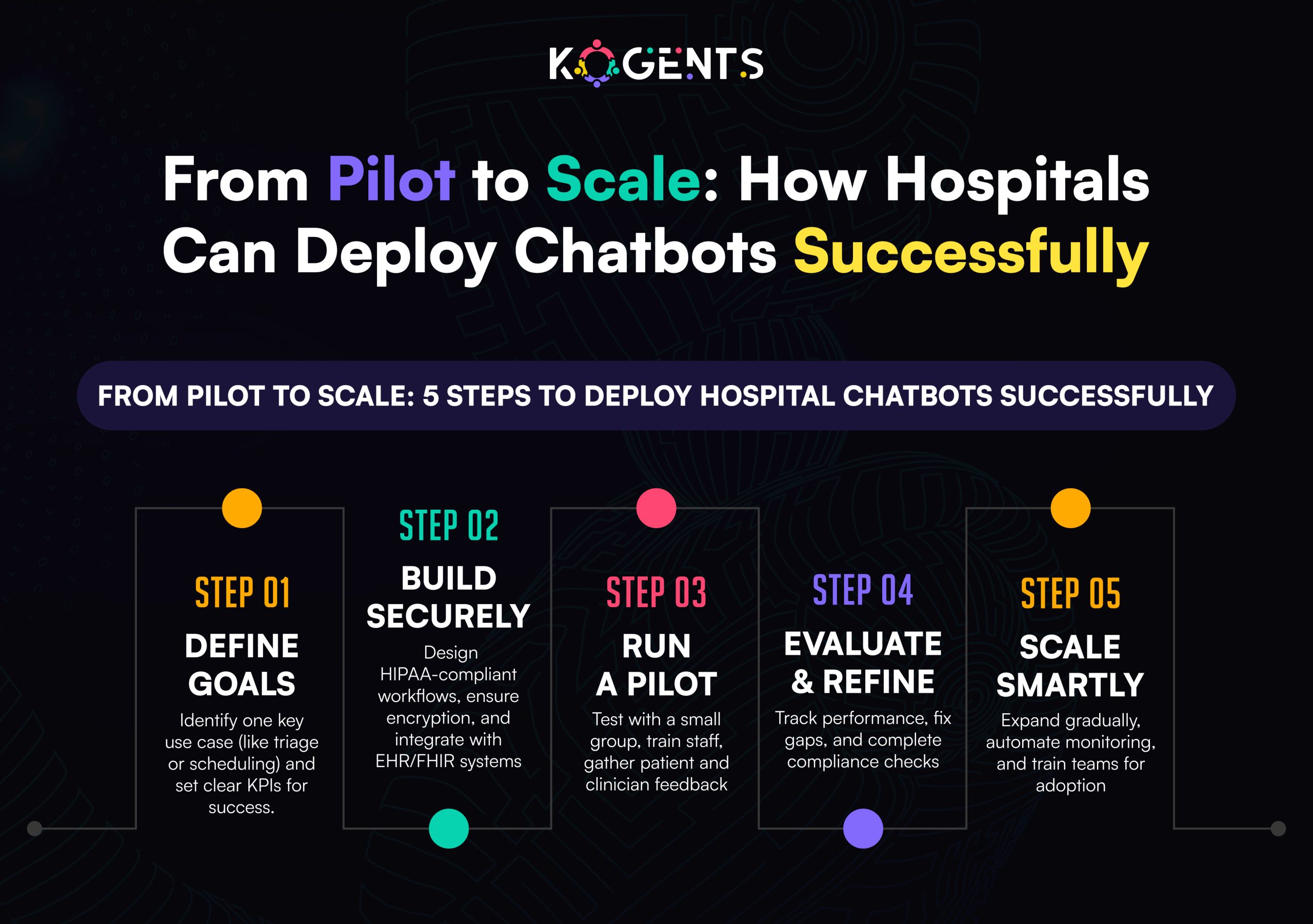
    From Prototype to Production: The Deployment Roadmap

    A great idea means little without a disciplined deployment process. Here’s a roadmap to move from concept to compliant launch.

    1. Define the Purpose. Choose a clear focus, triage, mental health support, or chronic disease management.
    2. Secure Infrastructure. Host on a HIPAA-compliant cloud such as AWS HealthLake or Microsoft Azure for Healthcare.
    3. Compliance Audit. Conduct internal HIPAA/GDPR assessments and draft BAAs with all vendors.
    4. Model Training. Fine-tune NLP models on de-identified medical data for accuracy and fairness.
    5. Testing. Simulate diverse user scenarios with clinician feedback loops.
    6. Pilot Launch. Start with a small user base; measure engagement, safety, and escalation success.
    7. Monitor Continuously. Establish a DevSecOps pipeline for ongoing updates, penetration testing, and PHI audits.

    Remember: in healthcare AI, deployment isn’t the finish line; it’s the start of an ongoing safety commitment.

    Real-World Use Cases

    • Telehealth Providers use chatbots for patient screening before virtual appointments.
    • Clinics deploy chatbots to manage scheduling, intake, and feedback collection.
    • Mental Health Platforms rely on conversational agents for journaling and emotion tracking.
    • Pharmacies integrate chatbots to help patients with refill reminders and side-effect reporting.
    • Insurance Companies use bots to guide users through claims and benefits questions.

    Challenges & Limitations

    Building a PHI-safe healthcare chatbot comes with challenges that extend beyond coding:

    • Data Breaches: Even small configuration errors can leak PHI. Continuous security audits are essential.
    • Bias & Fairness: AI must be trained on diverse datasets to avoid discrimination in triage results.
    • Regulatory Complexity: Laws evolve quickly — e.g., upcoming FDA AI/ML Action Plan updates.
    • Clinician Resistance: Staff adoption depends on transparency and clinical value.
    • Ethical Grey Zones: Mental health AI must tread carefully around AI doctor diagnosis and crisis intervention.

    The Future: Hybrid Intelligence in Digital Health

    Tomorrow’s healthcare chatbots will do far more than text-based conversations.
    They’ll interpret voice, biometrics, and sensor data; interact across languages; and collaborate in real time with care teams.

    Emerging trends shaping this future include:

    • Multimodal AI combining text, speech, and imagery for richer diagnostics.
    • Federated learning that improves model performance across hospitals without sharing PHI.
    • Voice-enabled virtual assistants for aging populations.
    • Proactive health management powered by wearable data integration.
    • AI governance dashboards to monitor fairness and safety metrics continuously.

    Case Study: MedConnect AI

    MedConnect AI, a 2024 startup, launched a HIPAA-compliant healthcare chatbot for rural clinics.

    The platform integrated FHIR APIs for EHR access, used AES-256 encryption, and featured built-in clinician escalation for symptom triage.

    Within six months, results were dramatic:

    • Average triage time dropped from 7 minutes to 2.
    • Clinician workload decreased by 35%.
    • PHI breach rate = 0.
    • Patient satisfaction rose to 93%.

    MedConnect’s founders, both solopreneurs,  proved that responsible design and clinician collaboration can make AI both ethical and profitable.

    Responsible AI is the Future of Healthcare! 

    Deploying a PHI-safe healthcare chatbot is not merely a technological achievement; it’s a statement of ethical commitment and trust.

    When an entrepreneur designs with privacy in mind, clinicians engage confidently, and patients share openly.

    When human oversight is embedded into automation, care becomes not only faster but safer. And when startups align with regulations from HIPAA to GDPR, they don’t just comply — they lead.

    Ultimately, a successful healthcare chatbot isn’t measured by its sophistication, but by its compassion, security, and reliability

    These three pillars — privacy, empathy, and clinical escalation- define the difference between a tool that chats and one that truly cares.

    If you’re ready to deploy AI that patients and providers can trust, now is the time to act. So, get in touch with the team at Kogents.ai to build secure, compliant, and human-centered AI systems. Call us at +1 (267) 248-9454 or drop an email at info@kogents.ai

    FAQs

    What is a healthcare chatbot, and how is it used in clinics?

    A healthcare chatbot is an AI-powered conversational system that assists patients and clinicians through natural dialogue. It’s used for appointment booking, symptom triage, medication reminders, and health education — improving accessibility and efficiency.

    How can I ensure my healthcare chatbot is HIPAA-compliant?

    To be HIPAA-compliant, encrypt all PHI using AES-256 and TLS 1.3, use access controls with multi-factor authentication, maintain audit trails, and ensure vendors sign BAAs. Regular third-party security audits are also essential.

    What is PHI-safe data handling, and why does it matter?

    PHI-safe handling ensures patient data is protected from unauthorized access or misuse. It’s vital because breaches can lead to regulatory fines and loss of patient trust. Proper encryption, data minimization, and anonymization safeguard privacy.

    How does clinician escalation work in healthcare chatbots?

    Clinician escalation activates when the AI detects risk or uncertainty — for example, when a user reports severe symptoms. The chatbot transfers the case to a licensed clinician through secure systems, ensuring timely and safe intervention.

    Are AI chatbots replacing doctors or nurses?

    No. AI chatbots are designed to support healthcare professionals, not replace them. They handle repetitive or low-risk tasks, allowing clinicians to focus on high-value care that requires human judgment and empathy.

    What technologies power a modern healthcare chatbot?

    These bots use natural language processing (NLP), machine learning, LLMs, FHIR API integration, and encryption frameworks. Tools like Microsoft Azure for Healthcare or AWS HealthLake provide HIPAA-ready infrastructure.

    What are the most common healthcare chatbot use cases?

    Top use cases include symptom triage, appointment scheduling, chronic disease management, mental health support, and patient education. Startups also use chatbots for intake automation and remote monitoring.

    How can startups deploy a chatbot safely without a large team?

    Entrepreneurs can leverage pre-certified cloud services (AWS, Azure) with HIPAA compliance built in, use no-code bot builders that support FHIR integration, and outsource compliance audits to third-party firms specializing in healthcare AI.

    What are the biggest risks in deploying a healthcare chatbot?

    Risks include PHI breaches, algorithmic bias, hallucinated medical advice, and poor clinician integration. These can be mitigated through human-in-the-loop escalation, regular model retraining, and strict data governance.

    What’s the future of AI chatbots in healthcare?

    The next generation of healthcare chatbots will be multimodal, combining voice, vision, and predictive analytics. They’ll proactively alert clinicians to health risks and work as co-pilots in clinical care — blending automation with empathy.


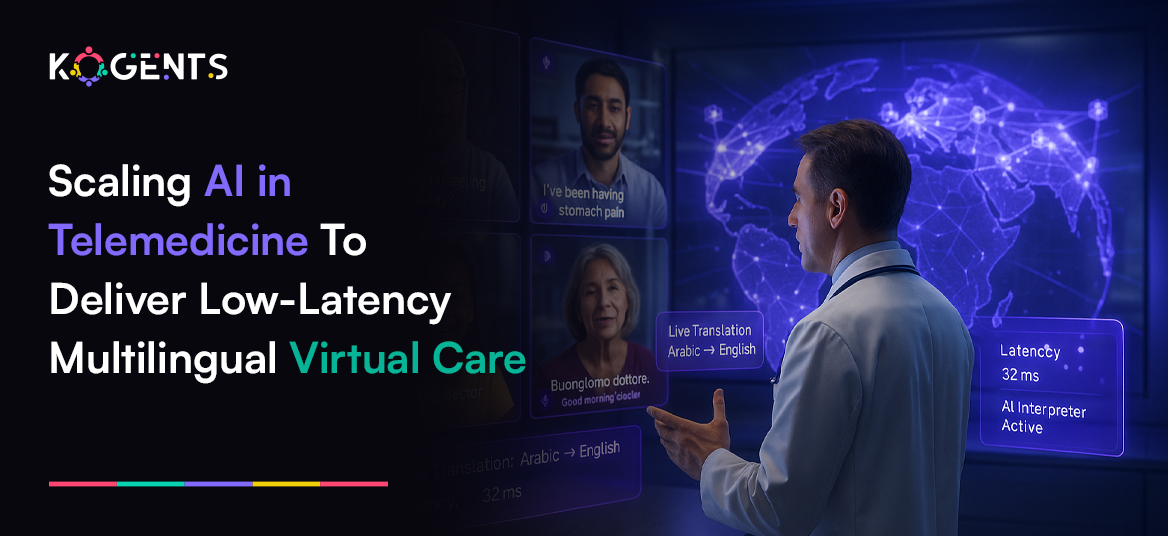
  • Scaling AI in Telemedicine To Deliver Low-Latency Multilingual Virtual Care

    Scaling AI in Telemedicine To Deliver Low-Latency Multilingual Virtual Care

    Telemedicine has evolved from a convenience into a lifeline. The pandemic accelerated its adoption, but scaling AI in telemedicine is what’s propelling it into the future. 

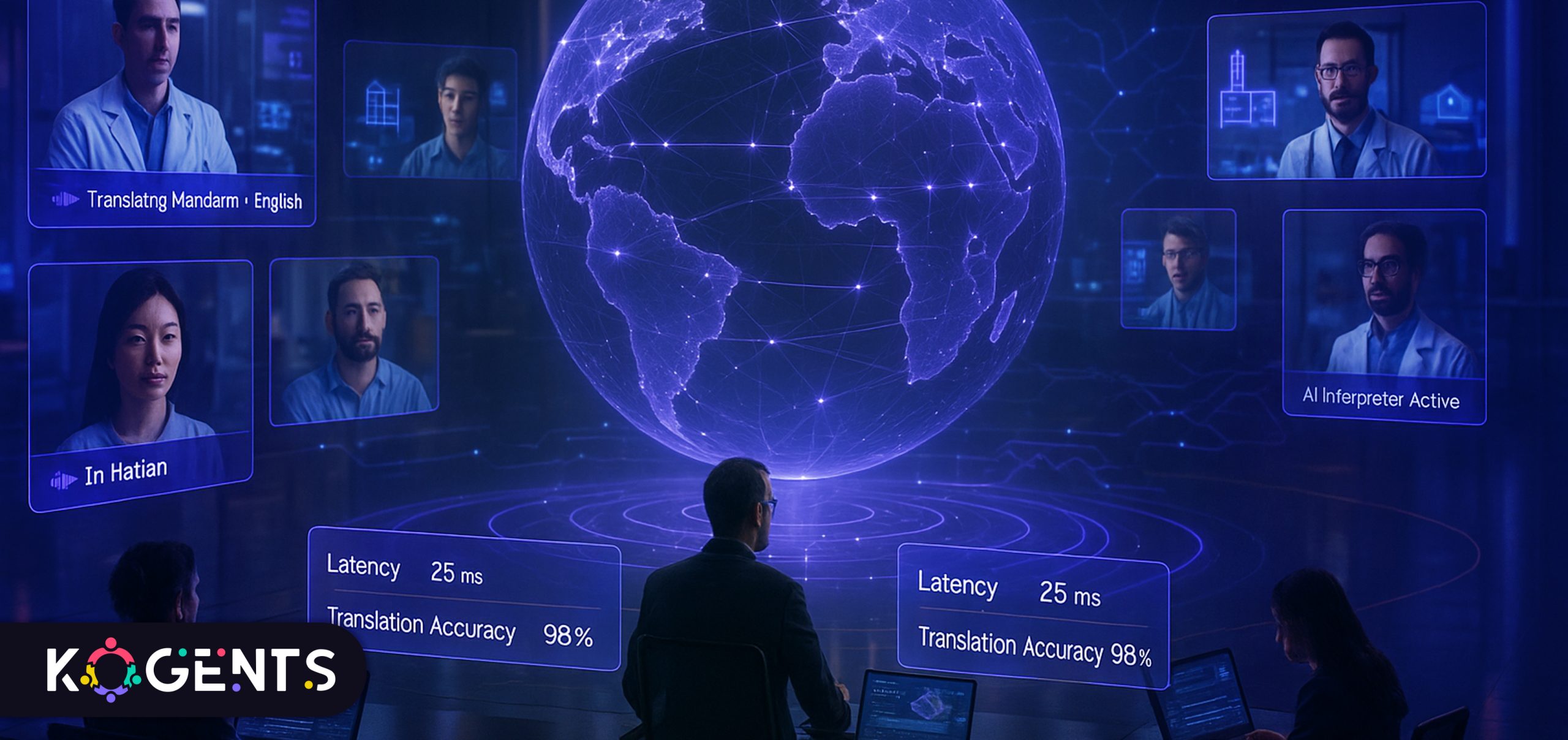
    From a patient in Nairobi connecting with a cardiologist in London to a speech-to-speech translated consultation in Tokyo, we’re witnessing the dawn of low-latency multilingual virtual care.

    Yet, this promise comes with complexity: connectivity constraints, linguistic diversity, and the demand for real-time diagnostic precision. 

    Traditional systems strain under these expectations. The new wave of AI-powered telemedicine platforms, however, fuses natural language processing (NLP), computer vision, and predictive analytics to deliver intelligent care experiences, instantly and inclusively.

    This article explores how entrepreneurs and solopreneurs can leverage artificial intelligence in telemedicine to scale global healthcare access. 

    We’ll cover real-world case studies, implementation frameworks, ROI insights, ethical design, and a glimpse into what the future of AI agents will mean for healthcare and digital entrepreneurship.

    Key Takeaways

    • AI in telemedicine delivers faster, multilingual, and equitable care.
    • Entrepreneurs can scale globally through cloud-edge hybrid platforms.
    • Ethical design, bias checks, transparency, and compliance are non-negotiable.
    • AI agents will soon handle triage, translation, and analytics in real time.
    • Market size > $50 B by 2030 means a massive entrepreneurial opportunity.
    • Human oversight + AI automation = sustainable, trusted telehealth.

    Why Low-Latency Multilingual Telemedicine Matters?

    Imagine a stroke patient in a rural clinic needing emergency assessment, and this way every second matters. The latency between patient data capture and physician response can determine survival. 

    That’s where AI in telehealth transforms outcomes: edge-optimized algorithms analyze signals locally before syncing with the cloud, cutting response times from 10 seconds to under one.

    Simultaneously, multilingual NLP models remove the linguistic bottleneck. 

    For global entrepreneurs and solopreneurs, that means entering new markets without building multilingual teams.

    These technologies aren’t just convenience tools; they redefine inclusion. 

    Patients with limited literacy, dialectal differences, or accessibility challenges finally receive equitable care. 

    Clinics and digital-health startups can expand from local to continental reach, creating a borderless healthcare ecosystem.

    scaling ai in telemedicine

    Case Study Spotlight: Real-World Innovation at Scale 

    1. Qure.ai — Deep Learning in Telemedicine for Imaging

    Qure.ai applies convolutional neural networks (CNNs) to interpret chest X-rays and CT scans within 60 seconds. 

    Deployed in over 70 countries, it assists radiologists, or substitutes for them, where human expertise is scarce.

    Outcome: Diagnostic turnaround time fell by 50%; rural clinics in Kenya and Bangladesh now process thousands of scans daily.

    2. Cedars-Sinai Virtual Care — Real-Time Multilingual AI

    Cedars-Sinai implemented AI telemedicine translation that detects tone and emotion while transcribing multilingual dialogue. 

    Edge computing ensures a < 1-second response time.
    Outcome: Patient satisfaction rose 38%, with improved engagement in Spanish and Mandarin consultations.

    3. Solo Digital Therapist — Automation for Solopreneurs

    A European therapist automated client intake, symptom tracking, and reminders using predictive analytics in remote healthcare.

    Outcome: Saved 15 hours per week, reduced no-shows by 25%, and expanded service from English to five languages.

    These cases prove that AI-powered telemedicine doesn’t require enterprise infrastructure, just strategic deployment and start small, localize data, and scale ethically.

    Challenges & Ethical Considerations 

    Before scaling, innovators must address the three pillars of responsible AI in telemedicine: trust, transparency, and compliance.

    1. Data Privacy & Security

    • Telemedicine platforms process sensitive health data governed by HIPAA, GDPR, and regional frameworks. 
    • Entrepreneurs must ensure encryption, anonymization, and data residency compliance. 
    • Using FHIR-based APIs simplifies secure interoperability between systems.

    2. Bias & Fairness

    • Algorithms trained on non-representative datasets risk misdiagnosis for underserved populations. 
    • The FDA and CE regulators now demand bias testing and model explainability. 
    • Solopreneurs can mitigate risk by leveraging open datasets like NIH ChestX-ray14 and synthetic augmentation for inclusivity.

    3. Algorithmic Accountability

    • AI models drift over time. 
    • Continuous validation, clinician-in-the-loop review, and audit trails ensure sustained accuracy. 
    • Tools like Explainable AI (XAI) frameworks from Google or Microsoft enhance transparency.

    4. Ethical Translation & Accessibility

    • Multilingual NLP must preserve clinical nuance. 
    • Mis-translation of dosage or symptom severity can be fatal. 
    • That’s why AI telemedicine translation engines must undergo medical domain fine-tuning and human verification loops.

    Pro Tip: Always pair automation with oversight, and AI should assist, not replace physicians, keeping the human at the center of care.

    Market Trends & Business Opportunities 

    The AI-driven telehealth solutions market is forecasted by Markets and Markets (2025) to reach $27.14 billion by 2030

    Growth drivers include:

    • Rising Chronic Disease Burden: Remote patient monitoring (RPM) powered by machine learning in telemedicine allows continuous heart-rate and glucose tracking, alerting clinicians instantly.
    • Expansion of IoMT (Internet of Medical Things): Wearable sensors stream data into AI dashboards that detect anomalies, enabling preventive action.

    Entrepreneurial Openings

    • Tele-ICU analytics startups offering predictive deterioration alerts.
    • AI-triage APIs for integration into EHR systems.
    • Virtual mental-health bots offering multilingual therapy at scale.
    • White-label AI telemedicine platforms for clinics entering emerging markets.
    The widespread adoption of virtual care shapes AI in the telemedicine market trends for 2025, the increasing influence of generative AI, and a growing emphasis on personalized medicine and remote monitoring. Market analysis projects substantial growth, with some forecasts estimating the market to reach $156.7 billion by 2033. 

    Implementation Framework: Building Scalable AI Telemedicine 

    A structured rollout ensures sustainability and compliance.

    Step 1: Define the Problem Space

    • Focus narrowly, chronic disease management, triage, or imaging. 
    • Each requires different data modalities (signal, text, image).

    Step 2: Choose the Tech Stack

    • Opt for a hybrid architecture, cloud for heavy compute, edge for low latency. 
    • Platforms like AWS HealthLake, Azure Health Data Services, or Google Healthcare API provide compliant foundations.

    Step 3: Data Interoperability

    • Adopt HL7 FHIR standards. 
    • Connect with wearable data streams or hospital EHRs securely.

    Step 4: Train and Validate

    Use annotated datasets, peer-reviewed methodologies, and publish validation metrics. 

    Step 5: Deployment & Feedback

    • Embed telemedicine and anomaly detection to catch errors early. 
    • Employ CI/CD pipelines for continuous learning.

    Step 6: Localization

    Incorporate telemedicine and NLP adaptation, tuning translation models for dialectal and cultural nuance.

    Pro Tip: Launch an MVP targeting one demographic and one language and validate latency (< 1s), translation accuracy, and satisfaction before scaling.

    ROI & Impact for Entrepreneurs and Solopreneurs

    The economics of AI-enabled telemedicine are compelling:

    Metric AI-Augmented Outcome
    Operational cost reduction –60 % (automation of triage & charting)
    Patient throughput +3× with identical staff
    Documentation time –70 % via speech-to-text NLP
    Patient satisfaction +30 % with personalized engagement
    Translation overhead Eliminated through real-time AI
    • Solo founders save an average of 10–15 hours weekly; mid-size clinics reduce administrative headcount by 20%. 
    • Beyond financial ROI lies brand equity, trust from patients experiencing friction-free, culturally attuned care.
    • As reimbursement frameworks evolve, expect insurers to reward AI telehealth efficiencies, turning compliance into revenue. 

    Future of AI Agents in Telemedicine 

    Let’s look ahead, where AI agents for healthcare automation develop from assistants to autonomous collaborators.

    1. Context-Aware Virtual Clinicians

    • Future agents will fuse multimodal intelligence, text, speech, video, and sensor data to form a holistic AI patient scheduling and understanding. 
    • Imagine an AI that correlates cough sound with chest-image analysis to propose differential diagnoses instantly.

    2. Continual Learning & Federated Models

    • Instead of centralizing sensitive data, federated learning will let telemedicine systems learn across hospitals while preserving privacy. 
    • This dramatically accelerates innovation without breaching compliance.

    3. Hyper-Personalized Multilingual Interfaces

    AI will adapt not just to languages but to cultural empathy markers, intonation, idioms, and sentiment, making care feel human even through a screen.

    4. Predictive Population Health

    National networks could aggregate de-identified data for predictive analytics in remote healthcare, flagging outbreaks or chronic disease clusters early, and real-time epidemiology powered by AI.

    5. Human Plus AI Collaboration

    • Physicians will supervise fleets of digital co-workers handling admin, translation, and routine triage, while focusing on critical care and empathy, the elements machines can’t replicate.

    ‘’As Eric Topol and Fei-Fei Li often note, the goal is not machine medicine but augmented humanity. ‘’

    The next decade will see AI-driven telehealth solutions acting as partners that extend human reach, reduce burnout, and universalize healthcare access.

    generative ai in telemedicine

    Conclusion 

    We stand at the inflection point of healthcare’s digital transformation. AI in telemedicine now unites speed, empathy, and intelligence, translating across languages, predicting crises before they occur, and democratizing expertise across continents.

    For entrepreneurs and solopreneurs, this isn’t just a technical revolution; it’s a moral and commercial mandate. 

    Those who build AI-powered telemedicine platforms grounded in transparency and inclusivity will define the next decade of digital health leadership.

    So, are you ready to build the future? If yes, then see how Kogents.ai empowers innovators to deploy low-latency multilingual AI telehealth systems.
    For further assistance, give us a call at +1 (267) 248-9454 or drop an email at info@kogents.ai.

    FAQs

    What is AI in telemedicine?

    AI in telemedicine refers to using artificial intelligence technologies, like machine learning, NLP, and computer vision, to enhance virtual healthcare. It powers diagnostics, real-time translation, remote monitoring, and predictive decision support for clinicians and patients.

    How does AI improve low-latency telemedicine?

    By leveraging edge computing and optimized neural networks, AI processes patient data near the source, reducing cloud dependency and network delays. This enables sub-second response times during live consultations, especially in multilingual settings.

    What are the benefits of multilingual AI telehealth systems?

    They eliminate language barriers through real-time medical translation, increase accessibility across diverse regions, and improve accuracy by contextualizing cultural nuances, all crucial for equitable global healthcare delivery.

    Are AI-powered telemedicine platforms secure and compliant?

    Yes, modern systems adhere to HIPAA, GDPR, and FDA or CE regulatory frameworks. Data encryption, anonymization, and FHIR interoperability maintain privacy and compliance throughout care delivery.

    What challenges exist in adopting AI in telehealth?

    Key challenges include data bias, a lack of diverse training datasets, ethical translation issues, and maintaining explainable AI. Entrepreneurs must design with transparency and validation to earn patient and regulatory trust.

    How can solopreneurs leverage AI in telemedicine?

    Solopreneurs can automate intake, triage, and follow-ups using AI-driven virtual care tools. These solutions cut administrative workload by 40–60%, enabling one-person practices to operate like scaled digital clinics.

    What’s the future of AI agents in telemedicine?

    Future AI agents will integrate multimodal intelligence—text, voice, and vision—to deliver hyper-personalized care. Through federated learning and continual updates, they’ll act as co-clinicians providing real-time insight while ensuring human oversight.

    How can entrepreneurs start building an AI telemedicine solution?

    Start with a narrow use case (like triage or RPM), use cloud-edge hybrid architecture, ensure data interoperability via HL7/FHIR, and validate models with clinical experts. Platforms such as Kogents.ai offer tools to accelerate compliant deployment.

    What is the ROI of adopting AI in telehealth?

    Hospitals and solo providers typically achieve 3× patient throughput, 60% lower operational costs, and 30% higher patient satisfaction. AI’s automation of documentation and translation drives both revenue and retention.

    How does AI ensure equitable healthcare access globally?

    AI democratizes access by providing real-time, multilingual teleconsultation in underserved areas, empowering clinicians to reach patients across language, geography, and socioeconomic barriers.

    What regulations govern AI in telemedicine?

    The American Telemedicine Association (ATA), FDA, European CE Mark, and WHO digital-health guidelines all define compliance frameworks for safe, ethical, explainable AI deployment in healthcare.

  • Designing a Clinical AI Agent With Traceable Actions and Enterprise-Grade RBAC

    Designing a Clinical AI Agent With Traceable Actions and Enterprise-Grade RBAC

    The rise of clinical AI agents marks a pivotal moment in healthcare’s digital transformation. Beyond simple automation, these AI-powered clinical assistants are becoming context-aware collaborators, able to read medical documentation, reason over complex data, and assist clinicians in real-time decision-making.

    But as these systems gain autonomy, new challenges emerge: 

    Can we trust their actions? 

    Can we verify what they did, why, and who authorized it?

    In an era governed by HIPAA, GDPR, and FDA SaMD regulations, traceability and role-based access control (RBAC) are not optional but fundamental.

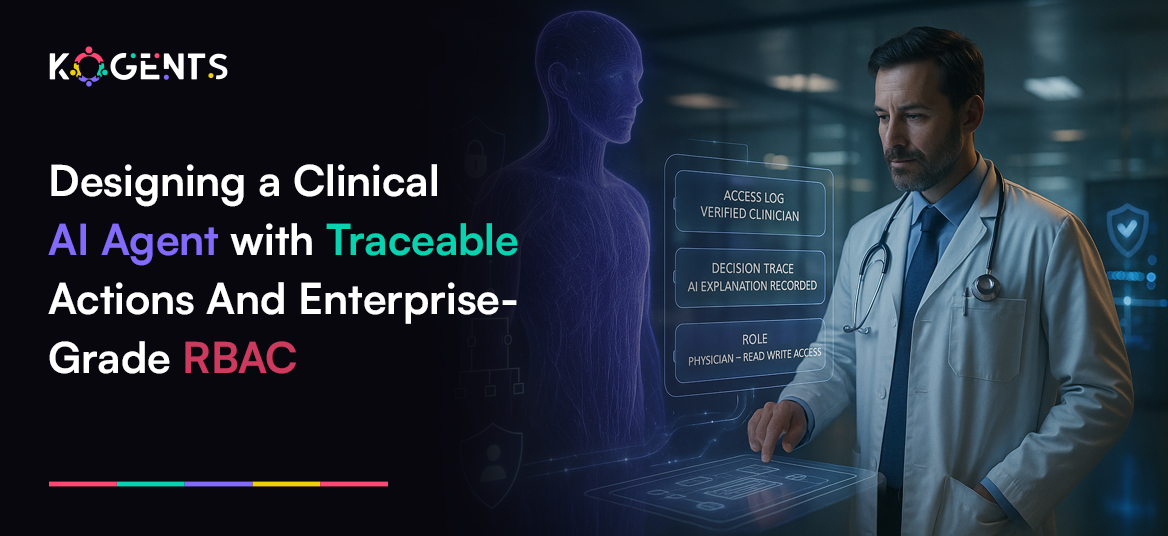
    A traceable clinical AI agent ensures that every recommendation, data access, and inference is auditable, explainable, and compliant.

    At the same time, enterprise-grade RBAC acts as the digital immune system, preventing unauthorized data exposure and maintaining the principle of least privilege. 

    Together, these two pillars, traceability and RBAC, transform clinical AI from a black box into a transparent, accountable, and ethical digital colleague.

    This article explores how to architect, implement, and scale a traceable healthcare AI agent ready for real-world deployment, blending insights from clinical informatics, cybersecurity, and enterprise engineering.

    Key Takeaways

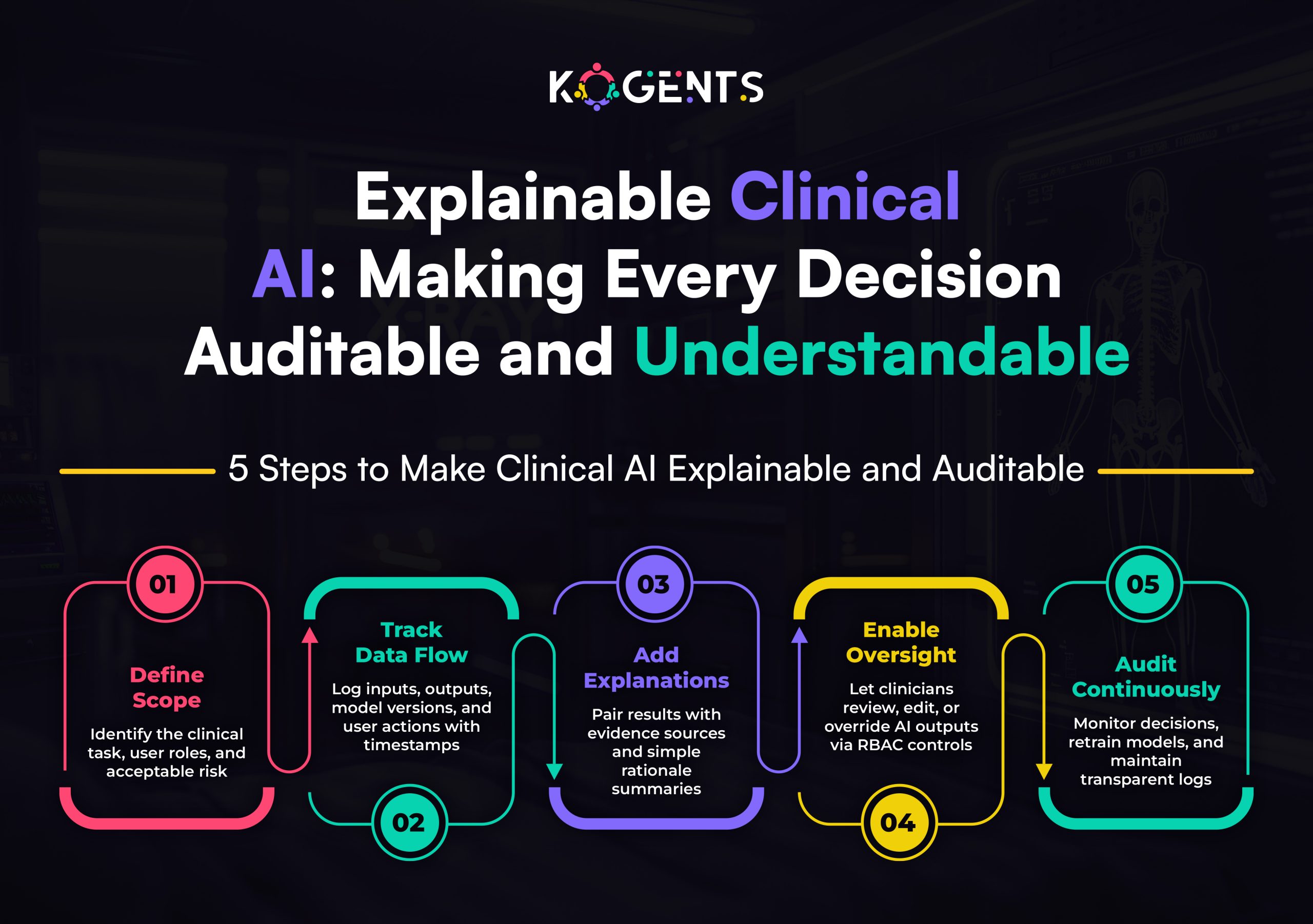
    • Traceability is trust, and every AI action should leave a clear, auditable footprint.
    • RBAC is your digital shield that defines and enforces roles early to prevent privilege creep.
    • Explainability equals adoption because clinicians trust systems that justify their reasoning. 
    • Compliance isn’t a checkbox; it’s architecture, as HIPAA and ISO must be built in, not bolted on.
    • EHR integration drives value by embedding AI within the existing clinical workflow.
    • Human-in-the-loop oversight remains non-negotiable, and AI should augment, not replace, clinical judgment.
    • Traceable, secure AI agents improve efficiency and patient trust.
    • Privacy, fairness, and interpretability are key to sustainable innovation.

    The Evolution of the Clinical AI Agent

    Early medical AI systems were rule-based decision support tools, rigidly programmed to suggest diagnoses or flag anomalies

    Then came machine learning models capable of pattern recognition, followed by generative clinical agents capable of summarizing notes, drafting discharge summaries, and reasoning over electronic health records (EHRs).

    A modern clinical AI agent is more than an algorithm; it’s an agentic AI system capable of perception, reasoning, and controlled action within defined boundaries.

    It interprets clinical workflows, interacts with EHR data, collaborates with care teams, and justifies its actions through explainable AI (XAI) frameworks.

    To build such a system responsibly, two foundations must be established from day one:

    1. Traceability: the ability to reconstruct every action, decision, and access point.
    2. RBAC: ensuring only authorized users (clinicians, nurses, admins) can access specific functions or patient data.

    When these are properly implemented, you get a traceable, explainable, and compliant clinical decision agent that can safely operate in regulated healthcare environments.

    86% of healthcare organizations say they’re already extensively using AI, and a global healthcare AI market projection exceeding $120 billion by 2028

    traceable clinical ai agent

    Traceability: The Audit Trail of Trust

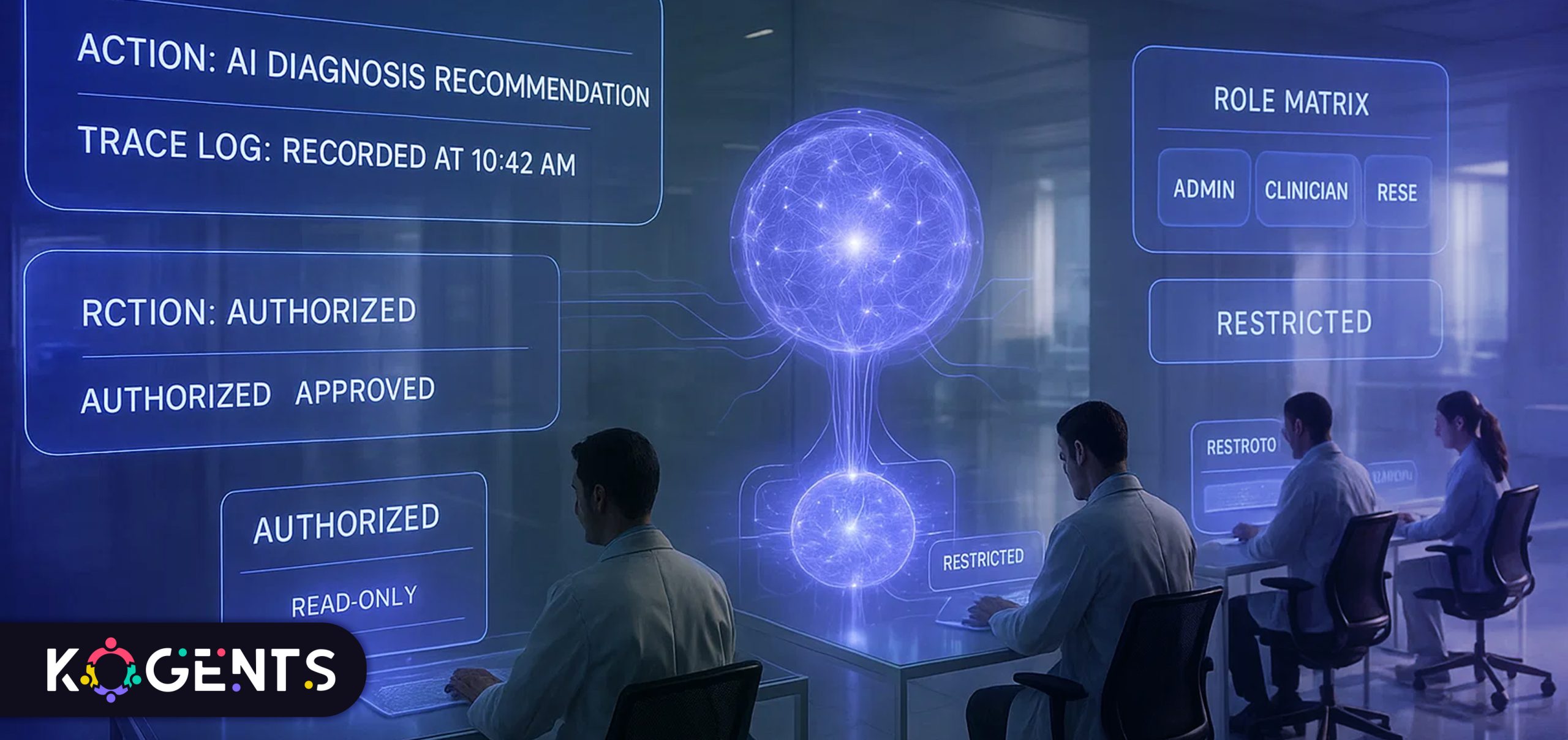
    Traceability in clinical AI systems means every model inference, prompt, and user interaction is logged, versioned, and attributed.

    The Four Pillars of Traceability

    1. Input Logging: Every user prompt, context, or dataset fed into the agent is timestamped and stored securely.
    2. Output Attribution: The model version, training data source, and confidence level for each response are recorded.
    3. Data Provenance: Tracks the lineage of medical data—where it originated, how it was transformed, and who viewed it.
    4. Explainability Hooks: Links outputs to clinical evidence, literature, or structured data.

    Note: This system allows auditors or clinicians to reconstruct any decision, what was recommended, by whom, when, and why.

    Clinical AI agents must integrate immutable audit trails (often using blockchain or append-only databases) that meet HIPAA, GDPR, ISO 27001, and SOC 2 compliance standards. 

    This not only satisfies regulators, but it also reassures clinicians that AI is working with them, not around them.

    Enterprise-Grade RBAC: Enforcing Digital Boundaries

    Role-Based Access Control (RBAC) is the foundation of security for every EHR-integrated AI agent. It defines who can do what, where, and when.

    For a clinical AI assistant, that might look like:

    • Physicians: Full access to patient data, able to validate AI recommendations.
    • Nurses: Limited data access for vitals and treatment records.
    • Admins: Access to scheduling, billing, and non-clinical workflows.
    Modern RBAC implementations use identity platforms like WorkOS, Okta, or Stytch for authentication and OAuth 2.0 or OpenID Connect for authorization.

    The combination of traceable logs + RBAC policies ensures that every AI action is contextually authorized and auditable

    If an unauthorized agent action occurs, it can be traced back instantly—who triggered it, under what role, and with what privileges.

    Designing a Traceable Clinical AI Architecture

    A secure and transparent clinical AI agent, like other AI agents for healthcare automation, relies on several architectural layers working in harmony:

    • Perception Layer: Gathers structured and unstructured clinical data from EHR systems, labs, and imaging sources.
    • Reasoning Engine: A fine-tuned LLM (like GPT-4o or Llama 3-Med) augmented with medical ontologies (SNOMED CT, ICD-10, CPT codes).
    • Action Layer: Executes predefined actions such as drafting notes or alerting physicians
    • Traceability Layer: Maintains an immutable audit trail and stores reasoning logs.
    • RBAC Layer: Integrates enterprise identity providers for authentication and contextual access.
    • Compliance Layer: Ensures alignment with HIPAA, FDA SaMD, and ISO/IEC 62304 standards.

    Know That: This modular stack enables scalability and accountability, the two key metrics for enterprise-grade deployment.

    Explainability and Human Oversight

    Transparency is a clinical necessity. Clinicians must be able to see and understand why an agent concluded.

    Explainability Techniques

    • Evidence Linking: Attach each output to source data (lab values, radiology notes).
    • Rationale Narratives: Use natural language explanations to describe decision logic.
    • Visual Explainability: Employ attention heatmaps to highlight influential data features.
    • Human Override Loops: Enable clinicians to correct, annotate, or veto AI actions.

    Insight: Explainable AI (XAI) ensures that clinical decisions remain human-supervised, aligning with FDA AI/ML-based SaMD guidelines.

    As Hippocratic AI and Heidi Health demonstrate, clinicians trust AI systems that show their reasoning, not just their answers.

    explainable clinical ai agent

    Case Study 1: Oracle Health’s AI Documentation Agent

    Oracle Health launched an AI clinical documentation agent to automate chart summarization and reduce clinician burnout.

    Implementation Highlights:

    • Integrated with Epic and Cerner EHRs using FHIR APIs.
    • Each note generation was traceable, storing the clinician ID, prompt, model version, and output rationale.
    • RBAC rules governed access, ensuring clinicians could only summarize their own patients.
    • Used ISO 27001-certified cloud infrastructure for audit log storage.

    Outcome: Oracle Health reported a massive reduction in charting time and 100% compliance in privacy audits. The project became a benchmark for traceable AI deployments in enterprise healthcare.

    Case Study 2: Heidi Health – Explainable AI Scribe

    Heidi Health, an Australian medtech company, developed an intelligent clinical scribe that transforms doctor-patient conversations into medical notes.

    Key Innovations:

    • Fine-tuned LLMs with domain-specific grounding on Australian healthcare standards.
    • Role-specific RBAC profiles for doctors, nurses, and administrative staff.
    • The traceability layer stored every transcription and reasoning path.
    • Achieved compliance with Australian Digital Health Agency security benchmarks.

    Impact: Clinician note-taking time dropped by more than half %, and user trust ratings rose exponentially, thanks to transparent reasoning explanations.

    The Compliance Intersection: Where Traceability Meets RBAC

    Regulations like HIPAA, GDPR, and FDA SaMD emphasize traceability and access control.

    Here’s how they intersect:

    • HIPAA: Demands secure PHI handling → enforced via RBAC and encrypted audit logs.
    • GDPR: Mandates data minimization and transparency → achieved through access restrictions and trace logs.
    • FDA SaMD: Requires algorithm transparency → supported by versioned model registries and explainable outputs.
    • ISO 27001/SOC 2: Focuses on security management → enabled by continuous monitoring and access logging.

    Together, these frameworks ensure your clinical AI agent, including those supporting remote health monitoring, is not only functional but certifiably compliant.

    Clinical AI Agent vs Other Healthcare Tools

    Feature Clinical AI Agent Medical Chatbot Rule-Based CDS
    Context Awareness Deep (EHR-integrated) Surface-level Static logic
    Traceability Full audit trail Minimal Partial
    Explainability Built-in rationales Limited Deterministic
    RBAC Integration Enterprise-grade Rare Moderate
    Adaptability Self-learning Scripted Rule-based
    Compliance Readiness High (HIPAA, ISO, GDPR) Low Medium

    Conclusion: A traceable, RBAC-secured clinical AI agent represents the future of compliant healthcare automation, combining intelligence with interpretability.

    Best Practices for Builders and Healthcare Entrepreneurs

    • Design for compliance first, not later. Integrate HIPAA and ISO controls from the start.
    • Start small: Deploy one high-value workflow, like discharge summaries or lab result triage.
    • Automate your audits: Use AWS Audit Manager or Google Cloud Assured Workloads for compliance tracking.
    • Use de-identified data during training to maintain privacy.
    • Implement federated learning to train models without centralizing PHI.
    • Red-team your AI: Simulate malicious prompts to detect vulnerabilities.
    • Integrate explainability dashboards for clinicians.
    • Version everything: Models, prompts, and datasets must all be logged.
    • AI remote health Monitoring: it continuously tracks performance drift, latency, and data leakage.
    • Collaborate with clinical governance boards to align with institutional ethics.

    Design the Future of Responsible Clinical AI With Us! 

    Designing a clinical AI agent with traceable actions and enterprise-grade RBAC is not merely a technical endeavor; it’s a moral and strategic one. 

    AI in telemedicine needs trust as a core, and trust is built on transparency.

    The future of healthcare belongs to intelligent, explainable, and compliant AI systems that can reason like clinicians, act with precision, and justify every decision. 

    As agents become more autonomous, from medical scribes to diagnostic collaborators, traceability and RBAC will define their legitimacy.

    By combining EHR integration, data provenance, explainability, and secure RBAC, organizations can deploy agents that are as safe as they are smart.

    Healthcare entrepreneurs, solopreneurs, and innovators now have the tools to create systems that respect both patients’ privacy and clinicians’ expertise, bridging innovation with integrity.

    Have a look at how Kogents empowers clinicians and innovators to deploy trusted, compliant AI agents. To get in touch, call us at +1 (267) 248-9454 or drop an email at info@kogents.ai.

    FAQs 

    What is a clinical AI agent?

    A reasoning and workflow automation system designed for clinical environments, integrating with EHRs to assist in documentation, decision support, and patient management.

    How do traceable AI actions enhance compliance?

    They provide auditability for every model inference, satisfying HIPAA and FDA documentation requirements.

    Why is RBAC critical in healthcare AI?

    It restricts access to sensitive patient data and prevents unauthorized use, supporting least-privilege principles.

    Are clinical AI agents explainable?

    Yes, modern systems include reasoning summaries, confidence indicators, and evidence links.

    Can clinical AI agents integrate with EHRs like Epic or Cerner?

    Yes, through FHIR-based APIs or direct SDK integrations.

    How can a startup build a compliant clinical agent?

    Start with open frameworks like LangChain or LlamaIndex, add audit logging, and ensure encryption.

    Do any FDA-approved AI agents exist?

    Yes, several diagnostic AI tools (e.g., IDx-DR, Viz.ai) are FDA-cleared under SaMD.

    What is the biggest challenge in deploying clinical agents?

    Balancing innovation with compliance—especially managing data governance and explainability.

    How can clinicians trust AI decisions?

    Through explainable reasoning, version control, and real-time visibility into decision paths.

    What’s the next evolution for clinical AI agents?

    Agentic AI ecosystemsmulti-agent systems collaborating across care teams, governed by transparent traceability and federated RBAC frameworks.

  • How Revenue Cycle Automation With AI Cuts Claim Denial Rates and Boosts Margins

    How Revenue Cycle Automation With AI Cuts Claim Denial Rates and Boosts Margins

    Against that backdrop, automated revenue cycle management has emerged as a powerful lever to transform financial operations since healthcare providers and payers alike face relentless pressure, be it rising costs, shrinking reimbursements, regulatory complexity, and growing administrative overhead. 

    One of the most tangible and immediate benefits of automation in the revenue cycle is reducing claim denial rates, those costly rejections, appeals, and rework loops that drain cash flow, morale, and margins

    By applying intelligent revenue cycle automation or AI-driven revenue cycle automation across key subprocesses, healthcare organizations can cut denials, accelerate reimbursements, and unlock margin expansion.

    In this comprehensive guide, we explore how and why revenue cycle automation with AI works, present best practices, and offer practical pro tips so your organization can adopt automation with impact.

    Key Takeaways

    • Revenue cycle automation (and its variants: RCM automation, healthcare revenue cycle automation, automated revenue cycle management) uses AI, RPA, rule engines, and predictive analytics to streamline revenue workflows.
    • By catching errors, enforcing payer rules, automating appeals, and performing root-cause analytics, it can dramatically reduce claim denials
    • Automation not only shrinks denials but also trims labor costs, shortens Days in A/R, boosts first-pass acceptance rates, and recovers lost revenue that would otherwise leak.
    • To be effective, deployment needs careful planning: integration with EHR/billing systems, change management, exception handling, continuous monitoring, and feedback loops.

    What Is Revenue Cycle Automation?

    Before diving deep, let’s clarify what we mean by revenue cycle automation and related terms:

    • Revenue cycle automation: automating tasks across the revenue cycle (from patient intake through payment posting).
    • Revenue cycle management automation: the same concept, emphasizing management plus automation.
    • RCM automation: shorthand/acronym usage.
    • Automated revenue cycle management: phrase emphasizing automation as the adjective.
    • Healthcare revenue cycle automation/revenue automation for healthcare: domain-specific phrasing.
    • Revenue cycle workflow automation: focusing on workflow orchestration.
    • Automated billing and claims processing: emphasizes claims and billing tasks.
    • End-to-end revenue cycle automation: covers the full spectrum of tasks.
    • Intelligent revenue cycle automation / AI-driven revenue cycle automation underscores the role of AI, ML, and adaptive logic.
    • Robotic process automation for RCM, revenue cycle process automation: variant phrasings emphasizing RPA or process orientation.
    • Revenue leak prevention automation, revenue capture automation: emphasizes prevention of lost revenue.
    • Claim denial automation, automated eligibility verification / prior authorization/coding / AR automation / automated payment posting: module-level variants.

    At its core, revenue cycle automation combines RPA (robotic process automation) for structured, rule-based tasks with artificial intelligence/machine learning / NLP to handle more complex or evolving tasks. 

    Over time, the system can evolve via feedback loops informed by outcomes and denial analytics, becoming more adaptive.

    When fully implemented, end-to-end revenue cycle automation can process much of the cycle with minimal manual intervention, with humans focusing only on exceptions or high-level oversight.

    intelligent revenue cycle automation

    Why Claim Denials Are a Financial Drain? 

    The Denial Burden

    • Claim denials,  i.e., when a payer rejects or refuses payment, are among the biggest adversaries of healthy cash flow. 
    • Denials create rework, appeals, delays, and often permanent write-offs. 

    According to the American Hospital Association, U.S. hospitals cumulatively hold billions in delayed or unpaid claims over six months out. 

    Common root causes include:revenue cycle automation

    • Missing or inaccurate data (e.g., AI patient scheduling, demographics, subscriber information)
    • Lack of or failed prior authorization
    • Coding or documentation errors
    • Payer rule changes or noncompliance

    Impact on Margins

    Denials hit margins via multiple levers:

    • Slower reimbursement: Denied claims delay cash flow, pushing out Days in A/R (accounts receivable).
    • Administrative cost: Each denial takes staff time to investigate, correct, appeal, and resubmit — sometimes costing $10–$50+ per claim depending on complexity.
    • Write-offs: Some claims never get resolved and must be written off, directly decreasing revenue.
    • Revenue leakage: Repetitive, preventable denials represent money slipping through process gaps.
    • Forecasting volatility: High unpredictability in collections undermines budgeting, reserve buffers, and financial planning.

    How AI & Automation Cut Denials (Stage-by-Stage)

    Here’s how intelligent revenue cycle automation and AI agents for healthcare automation can intervene at each major revenue cycle stage to reduce denials and improve outcomes:

    Eligibility & Patient Registration / Intake

    Problems encountered: Mistakes in insurance details, demographic mismatches, lapsed coverage, missing subscriber/dependent information, and coordination-of-benefits gaps.

    Automation solutions:

    • Automated eligibility verification bots that query payer systems in real time to confirm coverage, check benefit details, and flag mismatches early.
    • Registration QA / validation tools that cross-check data fields (name, birthdate, insurer ID) before claims submission.
    • Workflow prompt alerts to registration staff to correct errors immediately.

    Mini Case Story: UT Medical Center

    UT Medical Center partnered with Experian Health to deploy Registration QA at intake. This system flagged registration errors before claims generation, catching inaccuracies and missing data. 

    As a result, the hospital saw a 66% reduction in denial value and a 57% drop in monthly write-offs. This demonstrates the outsized benefit of “front-loading” quality.

    Prior Authorization

    Problems encountered: Procedures requiring preauthorization that were not obtained, missing supporting documentation, payer rejections, delays in approval, and manual entry mistakes.

    Automation solutions:

    • Rule-based logic engines determine which procedures require prior authorization based on payer, procedure, diagnosis, and historical data.
    • Automation bots assemble required documents, submit authorization requests to payer portals, monitor status, send reminders, and auto-escalate delays.
    • Denial prediction models detect high-risk authorizations and trigger preventive intervention (e.g., add documentation or escalate).
    • Automated appeals for denied authorizations, constructing responses based on templates, and supporting evidence.

    Coding, Documentation & Charge Capture

    Problems encountered: Incorrect or missing diagnosis/procedure codes (ICD, CPT, HCPCS), missing modifiers, inconsistent documentation, undercoding, or unbilled services.

    Automation solutions:

    • AI / NLP coding assistants that parse clinical notes, identify diagnoses and procedures, and recommend appropriate codes and modifiers.
    • Real-time coding validation: as charges are entered, the system checks for risk, flags missing documentation, or inconsistent combinations.
    • Automated charge capture: bots pull charges from clinical systems or device logs to ensure no service goes unbilled.
    • Coding edit rules that enforce payer-specific code rules and flag invalid combinations.

    Claims Scrubbing & Submission

    Problems encountered: Payer rule violations, missing attachments, duplicate claims, invalid payer identifiers, format errors, and business rule mismatches.

    Automation solutions:

    • Advanced claims scrubbing engines that run multilayered rule checks before submission, validating format, payer rules, attachments, and integrity.
    • Dynamic rule updates: systems that auto-adjust to payer updates and new rules.
    • Pre-submission denial prediction models: flag claims with high denial risk and route them for manual review or correction.
    • Batch submission bots: handle claim submission to clearinghouses or payer portals, track acknowledgments, catch rejections early, and requeue for correction.

    Reminder: When claims are “clean,” denial volumes drop sharply and first-pass acceptance improves.

    Mini Case Story: St. Luke’s Health System

    St. Luke’s Health implemented Enhanced Claim Status automation (via Experian) to automate submission, status tracking, and error resolution. 

    They reduced their denial rate dramatically — from ~27% to 6.5%, resulting in a 76% decline in denials. 

    That kind of leap underscores the power of workflow automation combined with real-time status tracking.

    Denial Management, Appeals & Root-Cause Analytics

    Problems encountered: Manual classification of denials, missed appeals, lack of priority routing, no feedback loops to fix root causes, document gathering inefficiencies, and long resolution times.

    Automation solutions:

    • Denial detection and classification bots: automatically categorize denials by code, payer, department, severity, likelihood of overturn, and route them to appropriate queues.
    • Automated appeals generation: using templates and logic, bots draft appeal letters, gather supporting documentation, fill out payer forms, and file appeals.
    • Prioritization workflows: the system emphasizes high-dollar or likely success cases first.
    • Root-cause analytics: AI tracks denial trends by payer, code, department, clinician, and surfaces common denial drivers for process improvement.
    • Auto-posting of appeal outcomes: once appeals succeed, bots update the billing systems, post payments, and update dashboards.

    Mini Case Story: Guidehouse + Health System

    Guidehouse worked with a major remote health monitoring system to deploy intelligent automation across 13 business functions, including insurance eligibility and denial resolution. 

    Their analysis found over $44 million in denied accounts needing rework. By optimizing core systems and deploying RPA / conversational AI, they impacted millions in saved or recovered revenue and recaptured over 2,000 hours of employee time for higher-value work. 

    Payment Posting & Reconciliation

    Problems encountered: Manual posting errors, unmatched payments, failure to capture remittance adjustments, and delays in reconciling payer responses.

    Automation solutions:

    • Automated payment posting bots: parse Electronic Remittance Advice (ERA) files, match payments, apply adjustments, and post to accounts automatically.
    • Exception-handling logic: flags mismatches or ambiguous cases to staff for manual review.
    • Reconciliation workflows: bots match payer responses, generate variance reports, and clean up inconsistencies.

    Before vs After — Key Metrics Impact

    Metric Before Automation After Automation / Target Improvement / Impact
    Claim Denial Rate 8–12% 3–5% ~40–70% reduction
    First-Pass Acceptance 70–80% 90–95% +10–20 pts
    Days in A/R 60–90 days 30–45 days ~30–50% reduction
    Cost per Denial Work $15–40 $5–15 ~60% cost saving
    Appeal Overturn Rate 20–30% 60–90% +2–3×
    Cash Flow Recovery / Year $0 (baseline) $2–10M+ (depending on size) Multi-million gain
    Labor / FTE Hours Saved Many hours of manual rework Reallocated to high-value tasks Efficiency gain
    Write-offs / Bad debt High level Lowered by 30–60% Margin boost

    Pro Tips & Best Practices for Smooth Implementation

    1. Phase your deployment
      Begin with high-impact modules (eligibility, scrubbing, denial automation), prove value, then scale outward.
    2. Strong integration architecture
      Ensure seamless connectivity with EHR, billing, clearinghouse systems, payer portals, and document systems. Use APIs, ETL layers, or middleware as needed.
    3. Process discovery & mapping
      Use process mining or advisor tools to document current state flows, identify bottlenecks, and pinpoint automation opportunities.
    4. Establish baseline metrics before automation: denial rate by payer, first-pass acceptance, days in A/R, appeal overturns, cost per denial, write-offs.
    5. Feedback loops & continuous learning
      Feed denial results and appeal outcomes back into the model so the automation “learns” and evolves.
    6. Human-in-the-loop & exception frameworks
      Design workflows so that ambiguous or unusual cases escalate to staff, rather than forcing rigid automation.
    7. Staff engagement & change management
      Involve revenue cycle staff early, train them, show quick wins, and reframe automation as augmenting rather than replacing work.
    8. Governance, audit, compliance
      Enforce logging, version control, audit trails, HIPAA compliance, and data security. Use vendors with SOC2 / HITRUST credentials.
    9. Pilot in shadow mode
      Run bots in parallel with human work for a time to validate accuracy and refine logic before fully flipping control.
    10. Vendor evaluation & fit
      Prioritize vendors with deep healthcare RCM experience, AI/NLP capabilities, and strong references. Seek KLAS-ranked or HFMA-recognized partners.

    revenue cycle automation risks and safeguards

    Conclusion

    In an era of tightening reimbursements, complexity, and margin pressure, revenue cycle automation enhanced by AI is rapidly becoming indispensable rather than optional. 

    By intervening at every stage, from eligibility verification to appeals and payment posting, automation can severely compress claim denial rates, accelerate cash inflows, reduce administrative burden, and protect margins.

    If your organization is exploring automated billing and claims processing, intelligent revenue cycle automation, or building toward end-to-end revenue cycle workflow automation, this is your moment to pair up with Kogents.ai. Give us a call at +1 (267) 248-9454 or drop an email at info@kogents.ai

    FAQs

    What is revenue cycle automation, and how does it differ from RCM?

    Revenue cycle automation focuses on using software, bots, AI, and workflows to automate tasks within the revenue cycle. RCM (revenue cycle management) is the end-to-end discipline of managing financial operations. When automation is overlaid, you get revenue cycle management automation, automated revenue cycle management, or AI-driven revenue cycle automation.

    How exactly does automation reduce claim denials?

    Automation catches errors early (eligibility, registration), applies payer rules in coding and scrubbing, predicts high-risk claims for preemptive correction, routes denials intelligently for appeal, and closes feedback loops to prevent repeat denials.

    What technologies underpin intelligent revenue cycle automation?

    Key building blocks include RPA (robotic process automation), AI/machine learning, NLP / natural language processing, rule engines, workflow orchestration, and predictive analytics. The synergy of these enables more context-aware and adaptive behaviors.

    How do RPA and AI differ in this context?

    RPA handles structured, repetitive, rule-based tasks (e.g., copying, populating forms). AI adds decision-making, prediction, natural-language understanding, anomaly detection, and adaptivity. The most powerful architectures combine both.

    Will automation replace revenue cycle staff?

    No, the goal is to augment staff, freeing them from repetitive work so they can focus on exceptions, strategy, analytics, and oversight. Many teams reassign FTEs to higher-value tasks.

  • Building reliable agentic AI healthcare solutions with guardrails and audits

    Building reliable agentic AI healthcare solutions with guardrails and audits

    The healthcare industry is entering a defining era, one where artificial intelligence doesn’t just assist but acts with autonomy and purpose. 

    This emerging class of systems, known as agentic AI healthcare solutions, is reshaping how hospitals, clinics, and solopreneurs deliver care.

    Unlike static algorithms or generative chatbots, agentic AI functions as a decision-making entity, observing, reasoning, acting, and learning within guardrails. 

    These autonomous medical agents can triage patients, optimize scheduling, analyze diagnostics, and assist doctors with actionable insights, all while maintaining human oversight and auditability.

    Yet with this power comes responsibility as AI systems gain agency, reliability, transparency, and compliance become non-negotiable. 

    This guide explores how entrepreneurs and healthcare innovators can build trustworthy, audited, and regulation-ready agentic AI systems that deliver real-world impact without compromising safety.

    Key Takeaways

    • Agentic AI healthcare systems combine autonomy + accountability.
    • Rule-based systems are predictable but limited.
    • Generative AI is creative but unreliable for clinical decisions.
    • Agentic systems bridge the gap, safe automation that thinks.

    The Anatomy of an Agentic Healthcare System

    Building an agentic healthcare system involves combining intelligence, safety, and interoperability.

    Let’s unpack its architecture.

    Core Architectural Components

    1. Perception & Context Awareness: integration with EHR, IoT, or wearable data.
    2. Planning Module: prioritizes goals, handles multi-step reasoning.
    3. Memory Systems: retains patient context across interactions.
    4. Knowledge Graphs: enable accurate, context-linked reasoning.
    5. Auditing & Traceability Layers: every action is logged, explainable, and reversible.
    6. Human-in-the-Loop (HITL): ensures human oversight for sensitive actions.

    Note: These systems often rely on large language models (LLMs) combined with multi-agent orchestration

    The AI in healthcare audits market is also growing, with a predicted CAGR of 9.8% from 2025–2034, as audits become more automated and embedded.

    Multi-Agent Orchestration and Oversight

    Inspired by the Tiered Agentic Oversight Model, modern AI agents for healthcare automation employ multiple tiers to maintain safety, transparency, and compliance:

    • Primary agents perform reasoning and action.
    • Supervisory agents validate compliance and results.
    • Governance agents ensure adherence to HIPAA, GDPR, or institutional policies.

    Key Point: This structure mirrors hospital hierarchy, autonomy with accountability, ensuring no single AI acts unchecked.

    Applications & Use Cases of Agentic AI in Healthcare

    Agentic AI systems are already making a measurable impact across diverse domains.

    Use Case Description Outcome
    Diagnostics & Imaging Autonomous AI agents (e.g., Aidoc) are analyzing CT scans to triage emergencies 25% faster report turnaround
    Patient Monitoring Agentic AI using IoT sensors for chronic disease tracking Early risk detection & fewer readmissions
    Scheduling & Operations AI agents optimizing hospital resources 15–20% cost reduction in operations
    Clinical Decision Support (CDS) Intelligent reasoning agents assisting doctors Fewer diagnostic errors
    Care Coordination Multi-agent collaboration across departments Improved continuity of care

    Mini Case for Solopreneurs

    A solo teletherapy practitioner deploys an agentic care assistant that automates intake forms, session summaries, and reminders, all with HIPAA-safe logging. 

    The result? 60% less admin work, more patient time, and consistent documentation.

    Pro Tip:

    Start small and deploy one autonomous healthcare assistant in a limited workflow, audit it rigorously, then expand.

    Case Studies: Authentic Examples of Agentic AI in Action

    1. Cedars-Sinai’s Radiology Workflow

    Cedars-Sinai adopted an AI agent (built with Aidoc’s system) to prioritize scans based on urgency.

    • Result: 25% faster turnaround and reduced fatigue for radiologists.
    • Guardrail: Human verification remained mandatory for every diagnosis.

    2. MIT Jameel Clinic – Tiered Agentic Oversight

    This research, published on arXiv (2024), proposed a hierarchical multi-agent system where AI decisions are validated by “auditor” agents and human clinicians.

    • Result: Improved trust, interpretability, and compliance with HIPAA.
    • Significance: Set a precedent for auditable agentic AI systems.

    3. Startup Spotlight – Agentic Mental Health Assistant

    A solopreneur in remote health monitoring built an autonomous scheduling and journaling assistant using HIPAA-compliant APIs.

    • Outcome: Saved 5 hours daily, reduced administrative errors.
    • Lesson: Even small players can use agentic decision-making AI responsibly with built-in audits.

    Ethical Guardrails, Audits, and Governance: The Foundation of Agentic AI Healthcare Solutions

    Autonomous intelligence in healthcare cannot exist without governance, explainability, and ethics baked in. 

    1. The Three Pillars of Ethical Guardrails

    Pillar Purpose Implementation Example
    Transparency Explain decisions to patients & auditors Use interpretable reasoning traces
    Accountability Attribute responsibility to AI or a human Maintain digital audit signatures
    Fairness Avoid systemic bias Continuous bias audits & dataset checks

    2. Regulatory Compliance as Continuous Practice

    Healthcare AI operates under strict legal frameworks:

    • HIPAA / GDPR / PHIPA / FDA / CE Marking
    • Ethical AI frameworks like IEEE ESI, WHO’s Ethics & Governance of AI, OECD AI Principles.
    • Compliance should be seen not as an audit event but as a continuous process of accountability.
    • Use compliance agents, automated monitors that flag non-compliant actions in real-time.

    3. Guardrails for Agent Behavior

    • Action Constraints: Agents can only act within approved data and function domains.
    • Escalation Triggers: When confidence <90%, route to a human reviewer.
    • Tiered Agentic Oversight: Supervisor agents audit the work of operational ones, mirroring clinical chain-of-command structures.
    • Ethical Governance Dashboards: Integrate monitoring for bias, consent, and security events.

    4. Building Trust Through Explainability and Audits

    Modern healthcare AI must pass what MIT’s Cynthia Rudin calls the “reason test”, the ability to justify each decision in plain language.

    Agentic systems accomplish this through:

    • Explainable reasoning chains (via ReAct or Self-Reflective loops).
    • Interactive audit dashboards that visualize decision paths.
    • Federated logs that allow multiple institutions to audit without exposing private data.

    5. The Role of AI Governance Boards

    Even small startups should establish micro AI governance boards, a group of 2–3 advisors (medical, legal, technical).

    Their functions:

      • Review quarterly audits.
      • Oversee data consent mechanisms.
      • Approve model updates before deployment.

    Key Note: This aligns with WHO’s 2024 guidance that “AI governance must scale down as well as up.”

    agentic ai healthcare

    Building Reliable Agentic AI Systems: A Framework for Entrepreneurs and Solopreneurs

    Entrepreneurs and solopreneurs who adopt this paradigm can unlock autonomous, compliant, and revenue-generating healthcare solutions faster than legacy enterprises weighed down by bureaucracy.

    This section provides a step-by-step blueprint to build reliable, auditable, and regulation-ready agentic systems, with practical guidance for resource-limited innovators.

    1. Identify a Controlled, High-Impact Use Case

    Start small. Choose a non-critical yet valuable workflow where automation is safe but impactful:

    • Clinical documentation summarization
    • EHR data extraction and coordination
    • Appointment scheduling and follow-ups
    • Billing, insurance preauthorization, or claims triage

    Why? These domains are ideal for testing audit workflows, privacy handling, and supervised reasoning before tackling high-risk diagnostics or treatment planning.

    2. Design a Modular Agentic Architecture

    Each module in an agentic system should map to a layer of responsibility and oversight.

    Layer Function Example Tools / Techniques
    Perception Layer Data ingestion, context understanding FHIR APIs, OCR, voice recognition
    Reasoning Layer Planning, goal prioritization LangChain, CrewAI, ReAct pattern
    Action Layer Executes decisions safely API integration with EHR or chatbots
    Audit Layer Logging, traceability Blockchain logs, immutable storage
    Oversight Layer Human review, compliance validation Tiered Agentic Oversight (MIT model)

    3. Embed Human-in-the-Loop (HITL) Oversight

    Entrepreneurs should design for collaboration, not replacement.

    • Define agentic escalation points where humans review critical actions.
    • Use confidence thresholds that only allow autonomous execution if model certainty exceeds 95%.
    • Maintain real-time override mechanisms.

    4. Establish Auditability and Provenance

    Auditability is not optional; it’s a regulatory mandate and trust enabler.

    • Immutable audit trails that capture every query, decision, and data source.
    • Versioned reasoning logs: (agent thought traces).
    • Data lineage visualization: so clinicians can trace how an insight was generated.

    5. Build for Regulatory Readiness

    Every agentic healthcare product is a potential regulated device under FDA or CE rules. 

    To be audit-ready:

    • Document every model change (model card + dataset provenance).
    • Conduct bias and fairness evaluations regularly.
    • Maintain Data Protection Impact Assessments (DPIA) for GDPR contexts.
    • Include an AI system “bill of materials” (model versioning, libraries, datasets).

    6. Pilot, Validate, and Iterate

    • Clinical Validation: Compare against human expert baselines.
    • Technical Validation: Stress test under variable data quality.
    • Operational Validation: Evaluate ROI (hours saved, errors reduced).

    7. Monitor, Audit, and Continuously Improve

    After deployment:

    • Set up automated anomaly detectors to identify odd model behavior.
    • Conduct quarterly audit reviews for compliance.
    • Enable agent feedback loops that retrain on verified outcomes, not raw data.

    8. ROI and Growth Impact Snapshot

    Workflow Agentic Solution Outcome / ROI
    Clinical notes summarization Context-aware LLM with audit logs 3–5× faster reporting
    Patient engagement & follow-ups Multi-agent scheduling assistant 70% less manual admin
    Imaging triage Autonomous prioritization agent 25% shorter turnaround
    Claims verification Document AI agent with explainability 2× reduction in errors

    Comparative Analysis: Agentic AI vs Other Automation Models

    Feature Agentic AI Systems Rule-Based Automation Generative AI Tools
    Decision Autonomy High — plans & acts None Medium — responds
    Context Awareness Deep (multi-modal reasoning) Low Moderate
    Auditability Built-in, fully traceable Limited logs Often opaque
    Learning Feedback Continuous & adaptive Static Unsupervised
    Error Handling Autonomous fallback & escalation Manual Unpredictable
    Compliance Readiness HIPAA/GDPR aligned Compliant but rigid Risky for health data
    Best Use Case Proactive healthcare systems Fixed administrative tasks Creative content generation

    Strategic and Policy Implications for Healthcare Leaders

    To fully harness agentic AI, healthcare executives, investors, and policymakers must think systemically.

    1. Strategic Shifts

    • Transition budgets from pure automation to auditable intelligence systems.
    • Create AI Reliability Offices to oversee safety audits and transparency reports.
    • Mandate that every deployed agent include an audit API accessible to regulators.

    2. Policy Recommendations

    • Enforce “Explainability by Design” across healthcare AI vendors.
    • Encourage open audit frameworks for cross-institutional benchmarking.
    • Support startups developing agentic audit tools, the new compliance frontier.

    3. Entrepreneurial Opportunity

    • Building guardrail AI for regulated industries will become a billion-dollar opportunity.
    • Founders who bake compliance, interpretability, and governance into their agentic solutions will lead the next wave of digital health transformation.

    The Future of Agentic AI Healthcare

    The future of healthcare AI isn’t just automation, it’s agency with accountability

    The next decade will see autonomous, explainable, and adaptive AI ecosystems becoming indispensable across medical workflows.

    1. Self-Improving, Multi-Agent Ecosystems

    Future healthcare systems will use self-optimizing multi-agent frameworks.

    Agents will specialize, diagnostic, operational, ethical, and compliance, and collaborate autonomously using hierarchical control structures.

    2. Causal Reasoning and Explainability

    Current LLMs are correlation machines. The future lies in causal, reasoning-based agents capable of:

    • Explaining why an outcome occurred.
    • Simulating what-if medical interventions.
    • Building causal graphs from patient data for transparency.

    3. Integration with Wearables, IoT, and Digital Twins

    Imagine an ecosystem where your smartwatch, EHR, and hospital systems collaborate through agentic AI healthcare systems.

    • A digital twin monitors physiological signals in real time.
    • When anomalies occur, an autonomous healthcare assistant coordinates labs, schedules, and alerts.
    • Auditor agents verify every action for compliance.

    Soft Reminder: This convergence of agentic AI and connected health will bring predictive, personalized, and continuous care.

    4. From Reactive to Proactive Medicine

    • AI doctor diagnosis technology and agentic systems are moving healthcare from reactive treatment to predictive prevention.
    • Through continuous data interpretation, they can anticipate disease progression, optimize interventions, and notify clinicians before a crisis emerges.

    5. Rise of AI Auditors and Digital Regulators

    Expect regulatory agencies to introduce AI Auditors-as-a-Service (AaaS), neutral digital agents that continuously monitor model compliance and flag anomalies.

    6. Global, Multilingual, and Ethical Expansion

    New frameworks like “Multilingual, Privacy-First Agentic AI Healthcare Systems” (arXiv) demonstrate cross-border privacy compliance through federated multi-agent learning, vital for the Global South.

    Key Learning: Such inclusive architectures ensure health equity and global interoperability.

    agentic ai healthcare

    The Path Forward! 

    As healthcare enters the era of intelligent autonomy, agentic AI healthcare stands poised to redefine trust, precision, and efficiency in medicine. 

    But lasting innovation depends on more than technology; it requires ethical guardrails, continuous audits, and human-centered governance

    By embracing these principles, entrepreneurs and solopreneurs can pioneer solutions that are not only intelligent but also accountable, transparent, and life-enhancing.

    The future of healthcare belongs to those who build AI that acts wisely, learns responsibly, and earns trust at every decision. 

    So, choose kogents.ai to pave the way for building reliable agentic AI healthcare solutions. Contact us at +1 (267) 248-9454 or email us at info@kogents.ai

    FAQs

    What is agentic AI in healthcare, and how is it different from generative AI?

    Agentic AI acts autonomously, plans, and executes tasks with context awareness, unlike generative AI, which only creates responses. It’s built for proactive care, not just reactive dialogue.

    How do agentic healthcare systems ensure safety and reliability?

    They employ guardrails, audit logs, and multi-layer human oversight to prevent unsafe or biased actions, ensuring accountability.

    Are agentic AI agents compliant with HIPAA and GDPR standards?

    Yes, compliant systems encrypt all PHI, enforce consent, and implement ABAC access controls aligned with HIPAA and GDPR.

    What are real-world use cases of agentic AI in medicine?

    Diagnostics triage, patient monitoring, scheduling, and decision support, each improving accuracy and efficiency.

    Can small clinics or solopreneurs deploy agentic AI affordably?

    Absolutely. Modular frameworks like LangChain allow low-cost deployment for documentation or scheduling agents.

    What role do audits play in agentic healthcare AI systems?

    Audits ensure traceability. Every action is recorded for compliance, liability protection, and regulatory validation.

    Which institutions and companies are pioneering this field?

    Leaders include MIT Jameel Clinic, Cedars-Sinai, Aidoc, Athenahealth, and Salesforce Health Cloud.

    What’s the ROI of adopting agentic AI healthcare systems?

    Typical gains: 3–5× efficiency boost, reduced administrative load, faster patient throughput, and improved care quality.

    How do multi-agent systems improve healthcare operations?

    They coordinate between diagnostic, operational, and administrative processes, creating unified, context-aware workflows.

    What does the future hold for proactive AI in medicine?

    Expect self-improving, auditable AI agents with explainability, regulation-ready governance, and global deployment models.

  • Patient monitoring AI with real-time alerts and explainable anomaly detection

    Patient monitoring AI with real-time alerts and explainable anomaly detection

    You must be aware of the fact that hospitals generate massive streams of physiological data, including heart rate, SpO₂, respiratory rate, blood pressure, and ECG waveforms, 24 hours a day. 

    Yet clinicians can process only a fraction of this flood in real time. The result: alert fatigue, delayed interventions, and preventable harm.

    Enter Patient Monitoring AI, an intelligent layer that continuously interprets vital-sign data, detects early anomalies, and triggers timely alerts

    By combining machine learning, sensor fusion, and explainable algorithms, AI-based monitoring systems promise to reduce clinical risk while restoring clinicians’ trust in automation.

    This article explores how patient monitoring AI enables real-time alerts and explainable anomaly detection, the technologies driving it, and why transparency is the key to widespread adoption.

    Key Takeaways

    • How AI-driven patient monitoring improves real-time clinical decisions and patient safety.
    • Why explainable AI (XAI) builds trust through transparent alerts.
    • How edge-to-cloud analytics enable continuous, context-aware monitoring.
    • How AI patient scheduling boosts hospital efficiency and staff coordination.
    • The future of predictive, proactive healthcare powered by intelligent automation.

    What Is Patient Monitoring AI?

    It refers to artificial intelligence systems that analyze physiological signals and clinical parameters to detect anomalies, predict patient deterioration, and generate real-time alerts.

    Unlike traditional systems that rely on static thresholds (“alert if HR > 120”), AI-driven platforms learn normal ranges per individual and continuously update their understanding of patient baselines.

    Core Components

    • Data ingestion layer: integrates continuous feeds from bedside monitors, wearables, or IoMT (Internet of Medical Things) sensors.
    • Machine learning engine: applies models such as LSTM networks, CNNs, and Random Forests to detect trends or sudden deviations.
    • Explainability interface (XAI): provides human-readable reasoning behind alerts.
    • Integration API: connects with EHR systems, nurse dashboards, and mobile alerts.

    This approach allows hospitals to move from reactive to predictive care, addressing complications before they escalate.

    patient monitoring AI

    Why Real-Time Monitoring Matters? 

    In critical care, time is measured in heartbeats. A delay of 60 seconds can mean cardiac arrest or irreversible hypoxia. 

    Real-time patient monitoring enables clinicians to act within that “golden minute.”

    Traditional monitors often trigger hundreds of false alarms per shift—up to 80–90% in ICUs—causing desensitization and slower response times. 

    AI mitigates this by filtering noise and recognizing contextual anomalies rather than isolated spikes.

    Key Benefits

    • Early warning detection: Predict sepsis or acute respiratory failure hours in advance.
    • Reduced alert fatigue: Adaptive thresholds cut false positives.
    • Remote visibility: Tele-ICUs and home-care platforms monitor patients continuously.
    • Operational efficiency: AI triages, which alert to require immediate attention, while AI patient scheduling algorithms synchronize clinician availability with urgent cases, minimizing response delays.

    As of 2024, 43% of healthcare leaders are leveraging AI for in-hospital patient monitoring, with 85% planning further AI investments.

    The Role of AI in Continuous Monitoring

    AI transforms patient monitoring into a dynamic decision-support system. It doesn’t just collect numbers; it interprets them in context.

    Data Fusion and Predictive Analytics

    Modern monitoring systems combine multiple input streams, vital signs, lab results, imaging, and clinician notes, using sensor fusion and multimodal deep learning. 

    Algorithms detect latent correlations: a subtle change in respiratory rate, when combined with a shift in ECG variability, might predict deterioration hours before traditional metrics show it.

    Machine Learning Techniques

    Model Type Example Use Benefit
    LSTM / RNN Time-series forecasting of heart rate trends Captures temporal dependencies
    CNN ECG waveform classification Detects subtle morphological changes
    XGBoost / Random Forest Feature-based anomaly scoring Fast, interpretable, and lightweight
    Autoencoders Unsupervised anomaly detection Identifies unseen patterns without labeled data

    These models form the computational backbone of AI-assisted patient monitoring, scanning thousands of data points per second and prioritizing clinically meaningful signals.

    Real-Time Alerts: How They Work

    Real-time alerting is the operational core of any patient monitoring AI platform. Here’s how a typical alert pipeline functions:

    1. Data acquisition: Continuous signals (ECG, SpO₂, BP) are streamed via IoMT sensors.
    2. Preprocessing: Noise reduction, signal normalization, and missing-data handling.
    3. Inference: The AI model calculates risk scores or anomaly likelihoods.
    4. Decision logic: If the score exceeds an adaptive threshold, an alert is generated.
    5. Notification: The system routes the alert to nurse stations, mobile apps, or EHR dashboards, often prioritized by severity.

    Unlike conventional systems that react to absolute values, AI considers the rate of change, cross-signal relationships, and patient history. 

    The result: earlier, smarter alerts, fewer false alarms, and more actionable insights.

    Explainable Anomaly Detection: Making AI Trustworthy

    For AI to be trusted in healthcare, it must be explainable

    Clinicians must understand why an alert was triggered, not just that it was.

    What Is Explainable AI (XAI)?

    It provides interpretability layers that make algorithmic outputs transparent. Techniques such as 

    •  SHAP (Shapley Additive exPlanations)
    • LIME (Local Interpretable Model-agnostic Explanations)
    • Attention visualization 

    All reveal which features contributed most to an anomaly score.

    Example:

    A notable example in the AI doctor diagnosis system that seems to detect hypoxia might explain:

    “Alert generated because SpO₂ dropped 4% below personal baseline and correlated with a 15% rise in respiratory rate over 10 minutes.”

    Such clarity builds clinical confidence and supports regulatory compliance (FDA, CE Mark) by making decisions auditable. 

    Comparison: Traditional vs. AI-Based Patient Monitoring

    Feature Traditional Monitoring AI-Powered Patient Monitoring
    Data Processing Manual, reactive Automated, predictive
    Alert Mechanism Fixed thresholds Context-aware adaptive alerts
    Scalability Limited to bedside Scales across wards and remote settings
    Accuracy High false positives Learns from feedback to improve
    Explainability Basic (rule-based) Advanced via XAI tools
    Integration Device-specific Unified via EHR / cloud APIs
    Care Model Reactive Preventive and proactive

    Use Cases and Real-World Applications

    1. ICU Early Warning Systems

    • Hospitals like Mount Sinai are deploying AI models that detect sepsis or cardiac deterioration hours earlier than clinical judgment. 
    • Systems analyze heart rate variability, blood pressure, and temperature to trigger predictive alerts, allowing clinicians to intervene proactively.

    2. Post-Surgical Monitoring

    • AI monitors track wound infection risk and detect abnormal pain responses using biosensors. 
    • Some integrate computer vision to interpret facial expressions and movement, combining visual data with vitals for multimodal inference.

    3. Remote Patient Monitoring (RPM)

    • Platforms such as Empatica leverage wearable sensors and edge computing to analyze vitals in real time, ideal for chronic disease management and telehealth.
    • For instance, diabetic patients’ glucose and heart rate data are analyzed continuously, generating alerts directly to physicians through cloud dashboards.

    4. Elderly and Fall Detection

    AI-enabled ambient sensors detect motion anomalies, such as gait instability or inactivity, triggering caregiver alerts without the need for intrusive cameras.

    Business Impact: ROI, Efficiency, and Scalability

    For healthcare executives, the economic case for AI agents for healthcare automation and monitoring is compelling.

    1. Reduced ICU Stays and Readmissions

    Predictive monitoring decreases unplanned transfers and accelerates recovery, cutting average ICU stays by 10–15% in pilot studies.

    2. Lower Operational Costs

    Automation enables nurse-to-patient ratios to scale efficiently. 

    A single AI system can supervise hundreds of patients remotely, augmenting staff rather than replacing them.

    3. Regulatory and Quality Compliance

    Explainability features help meet FDA, HIPAA, and ISO 13485 requirements, ensuring algorithmic decisions are traceable and privacy-compliant.

    4. Competitive Differentiation

    Hospitals adopting AI-assisted patient monitoring can market themselves as smart hospitals, improving brand perception, attracting top talent, and fostering innovation partnerships with MedTech startups.

    Technical Architecture Overview

    A robust AI-based patient monitoring system typically includes the following layers:

    1. Edge Layer: IoMT sensors and wearable devices capture biosignals. Edge inference ensures latency-free alerting.
    2. Communication Layer: Encrypted data channels (MQTT, HL7 FHIR APIs) transmit signals to cloud or on-prem servers.
    3. Analytics Layer: ML models (LSTM, Autoencoders) perform anomaly scoring and risk prediction.
    4. Explainability Layer: XAI frameworks generate human-readable visualizations.
    5. Application Layer: Dashboards, clinician apps, and EHR integrations display real-time insights.

    Highlight: This modular design allows flexibility, cloud scalability for large hospitals, and edge computing for local clinics with bandwidth constraints.

    Learn Ethical, Privacy, and Regulatory Challenges 

    While the promise of patient monitoring AI is immense, so are its challenges.

    1. Data Privacy and Security

    • Systems must comply with HIPAA (US) and GDPR (EU)
    • Techniques like federated learning and differential privacy allow AI models to learn from distributed data without exposing sensitive information.

    2. Model Drift and Continuous Validation

    Physiological data patterns can change over time; ongoing model monitoring is essential to maintain performance and fairness.

    3. Bias and Interpretability

    • Models trained on homogeneous datasets risk underperforming across diverse populations. 
    • Transparent explainability mitigates this by exposing bias patterns early.

    4. Human Oversight

    • AI should complement, not replace, clinical judgment. 
    • Establishing human-in-the-loop frameworks ensures accountability and maintains trust.

    patient monitoring AI


    The Future of Patient Monitoring AI

    The next generation of patient monitoring AI will be:

    • Edge-native: Running on local devices for instant response.
    • Context-aware: Combining behavioral, environmental, and physiological data.
    • Personalized: Adapting to each patient’s baseline and genomic profile.
    • Federated and secure: Learning across institutions without centralizing data.
    • Regulation-ready: Built for explainability and ethical transparency.

    As hospitals evolve into smart, connected ecosystems, patient monitoring AI will become the nerve center of proactive healthcare, integrating with clinical decision support, workflow automation, and even robotic nursing assistants.

    Redefine The Future of Digital Healthcare With Kogents Today! 

    Patient Monitoring AI represents a paradigm shift from reactive treatment to proactive prevention. 

    Through real-time alerts, anomaly detection, and explainable intelligence, AI empowers clinicians to act sooner, with greater confidence and context.

    The convergence of IoMT sensors, predictive analytics, and explainable AI isn’t just transforming patient monitoring; it’s redefining the future of digital healthcare

    So, give Kogents.ai this chance to further assist you. Give us a call at +1 (267) 248-9454 or email us at info@kogents.ai

    FAQs

    What is patient monitoring AI?

    AI systems that continuously analyze patient vitals to detect anomalies and trigger real-time alerts for clinicians.

    How does AI improve patient monitoring accuracy?

    By learning patient-specific baselines, reducing false positives, and identifying complex patterns beyond static thresholds.

    What technologies power patient monitoring AI?

    Machine learning models (LSTM, CNN), IoMT sensors, edge computing, and explainable AI frameworks like SHAP or LIME.

    Why is explainable anomaly detection important?

    It ensures clinicians understand why an alert was triggered, promoting transparency and regulatory trust.

    Can AI replace nurses or doctors in monitoring? 

    No, AI augments human judgment, automating repetitive surveillance so clinicians focus on care.

    How does patient monitoring AI reduce alert fatigue?

    Adaptive learning minimizes unnecessary alerts by distinguishing real anomalies from normal variability.

    Is patient data secure in AI systems?

    Yes, using encryption, HIPAA compliance, and privacy-preserving techniques like federated learning.

    What are some real-world examples?

    Care.ai, Empatica, and Philips IntelliVue use AI for ICU and remote patient monitoring.

    What’s the ROI for hospitals implementing patient monitoring AI?

    Improved outcomes, shorter ICU stays, reduced readmissions, and optimized staffing efficiency.

    What’s next for this technology?

    Edge AI, personalized analytics, and integration with broader digital health ecosystems like smart hospital rooms.

  • Clinical workflow automation with AI that reduces bottlenecks and error rates

    Clinical workflow automation with AI that reduces bottlenecks and error rates

    The healthcare industry is under immense pressure to deliver faster, safer, and more cost-effective care, yet bottlenecks and human errors persist across hospitals, clinics, and outpatient settings.

    One study reveals, physicians and nurses often spend 27% of their time on electronic health record tasks, 25% on direct patient care, 17% on personal time, 15% on indirect patient care, and 6% on communication. 

    The above fact depicts that manual documentation and inefficient workflows delay treatment and increase burnout rates.

    With the adoption of clinical workflow automation, an AI-powered solution that streamlines repetitive clinical and administrative tasks, this has become hassle-free. 

    By integrating machine learning, robotic process automation (RPA), and natural language processing (NLP) into core hospital operations, healthcare organizations are transforming complex manual workflows into intelligent, adaptive systems.

    This article explores how AI-driven clinical workflow automation minimizes bottlenecks, reduces error rates, and empowers care teams to focus on what matters most: patient outcomes.

    Key Takeaways

    • Understanding how AI-powered clinical workflow automation streamlines hospital operations.
    • Learning how automation reduces errors, delays, and clinician burnout.
    • Exploring the role of machine learning, RPA, and NLP in improving patient care.
    • Discovering real-world examples of AI transforming healthcare delivery.
    • Knowing how automation technologies prepare hospitals for future-ready, data-driven care.

    What Is Clinical Workflow Automation?

    It refers to the intelligent orchestration of using AI Agents for Healthcare Automation and automation technologies to reduce manual intervention. 

    Unlike basic digitization, it connects EHR systems, clinical decision support systems (CDSS), and hospital management platforms to perform rule-based tasks autonomously.

    Modern automated clinical workflows rely on:

    • Robotic Process Automation (RPA) for repetitive administrative tasks.
    • Machine Learning (ML) for predictive analytics and resource optimization.
    • Natural Language Processing (NLP) for real-time documentation.
    • Interoperability standards like FHIR and HL7 for seamless data exchange.

    Key Points You Need To Ponder Upon: This integration creates a connected ecosystem that spans patient scheduling, lab reporting, medication management, and clinical documentation automation, ensuring consistent accuracy and efficiency across departments.

    clinical workflow automation

    The Problem: Bottlenecks and Errors in Traditional Clinical Workflows

    Healthcare organizations worldwide face workflow inefficiencies that compromise patient care and staff well-being:

    Manual data entry in EHRs

    • Clinicians often spend hours entering information by hand, increasing the risk of typos, missing details, and inconsistent AI patient scheduling records. 
    • These errors delay decision-making and reduce time spent on direct patient care.

    Paper-based workflows

    • When departments still rely on paper charts or printed reports, vital information can be misplaced or delayed. 
    • This creates communication gaps, leading to duplicated efforts and delayed treatments.

    Inefficient scheduling

    • Poorly coordinated appointment systems cause patient no-shows, long wait times, and resource conflicts among staff and facilities. 
    • The result is reduced productivity and frustrated patients.

    Unstructured documentation

    • Free-text notes and scattered data make it difficult to extract insights for audits, compliance reporting, and quality improvement. 
    • This lack of structure slows down regulatory reviews and data-driven decision-making.

    Staff overload from redundant tasks

    • Clinicians often perform repetitive administrative duties that technology could easily automate.
    • The extra workload contributes to burnout, lower morale, and higher turnover rates in healthcare teams.
    According to the Centers for Medicare & Medicaid Services (CMS), workflow inefficiencies cost U.S. hospitals billions annually and contribute significantly to diagnostic delays and preventable errors.

    Without automation, these bottlenecks limit scalability, drain resources, and diminish patient safety. 

    That’s why healthcare leaders are turning to AI-powered clinical process automation to reengineer operations from the inside out.

    Workflow Aspect Manual Process Automated (AI) Process
    Data Entry Time-consuming, error-prone Instant and accurate through RPA
    Scheduling Prone to delays and overlaps Optimized using predictive analytics
    Documentation Unstructured, inconsistent Real-time NLP-based structured entry
    Staff Efficiency High workload and burnout Reduced admin burden, higher productivity
    Patient Safety Prone to human error Improved through real-time alerts

    How AI Enhances Clinical Workflow Automation? 

    AI takes healthcare workflow automation to a new level by making it adaptive, predictive, and context-aware, extending its value into areas like remote health monitoring and predictive patient management.

    A. Intelligent Process Automation (IPA)

    By merging RPA with AI, hospitals can automate both repetitive and decision-based tasks. 

    Example: AI models can analyze patient eligibility data to automatically process insurance pre-authorizations, reducing turnaround times by up to more than half of the total. 

    B. Predictive Analytics for Resource Management

    • Machine learning models anticipate patient admissions, staff availability, and bed occupancy. 
    • Hospitals using predictive workflow automation can dynamically adjust staff schedules, preventing overwork and minimizing idle resources.

    C. NLP in Clinical Documentation Automation

    • NLP algorithms transcribe, summarize, and structure physician notes in real time, automatically updating EHR workflow automation systems. 
    • This improves medical documentation accuracy and reduces charting time by half. 

    D. Machine Learning for Decision Support

    • AI-powered clinical decision support systems (CDSS) analyze historical data and flag abnormal results instantly. 
    • This enhances diagnostic accuracy and speeds up treatment recommendations.
    • Collectively, these technologies build a learning healthcare system, one that continuously optimizes its workflows using real-world performance data.

    Benefits of AI-Driven Clinical Workflow Automation

    The impact of clinical workflow automation extends beyond operational gains; it reshapes the entire healthcare delivery model.

    A. Eliminates Bottlenecks

    Automated routing of test results, task assignments, and patient data ensures that every process moves smoothly through the care continuum.

    B. Reduces Errors

    AI validation algorithms prevent manual entry mistakes and trigger alerts when inconsistencies are detected in patient records.

    C. Enhances Clinician Efficiency

    By automating administrative load, clinicians reclaim valuable time for direct patient care, a critical factor in reducing burnout.

    D. Improves Patient Safety

    Automated alerts, predictive monitoring, and data-driven triage systems ensure timely interventions and fewer preventable incidents.

    E. Increases ROI and Scalability

    Hospitals implementing automation in clinical operations report much and more fast throughput and have fewer documentation errors.

    These gains translate to better patient experiences, happier staff, and measurable financial sustainability.

    clinical workflow automation

    Real-World Applications of Clinical Workflow Automation

    Automation isn’t theoretical; it’s already transforming hospitals and clinics globally.

    A. Radiology Workflow Automation

    AI systems in COVID-19, like Siemens Healthineers, prioritize critical imaging cases and automatically generate preliminary reports, reducing turnaround time by 30%.

    B. EHR Data Management

    Platforms such as Epic Systems and Cerner (Oracle Health) employ AI-based data extraction tools that sync clinical notes and lab results seamlessly into EHR systems.

    C. Operating Room and Bed Management

    Predictive analytics tools forecast surgery durations, optimize room usage, and coordinate with sterilization units, improving surgical throughput.

    D. Outpatient & Telehealth Automation

    Athenahealth and Philips Healthcare leverage AI to automate virtual check-ins, patient follow-ups, and referral workflows, ensuring consistent care continuity.

    Outcome: These real-world examples show how AI tools for clinical workflow optimization bridge the gap between technology and human care.

    Implementation Challenges and Best Practices

    Despite its potential, implementing healthcare workflow automation comes with hurdles.

    A. Interoperability Barriers

    • Many legacy systems lack integration with modern AI or RPA tools. 
    • Adopting FHIR and HL7 standards ensures smooth data flow across systems.

    B. Compliance and Data Security

    Hospitals must align with HIPAA, ISO 9001, and FDA regulations to maintain data integrity and patient privacy.

    C. Change Management

    • Staff may resist automation, fearing job loss. 
    • Transparent communication and incremental pilot projects ease adoption.

    D. Cost and Scalability

    Automation requires upfront investment, but ROI is proven through faster workflows, reduced errors, and long-term savings.

    Best practice: Start small, measure success metrics, and scale to full hospital-wide automation over time.

    The Future of Clinical Workflow Automation

    The future of digital transformation in healthcare lies in autonomous, data-driven ecosystems.

    Next-generation automation will feature:

    • Generative AI for automated care summaries and report drafting.
    • IoT integration for real-time patient monitoring and workflow synchronization.
    • Interoperability-driven care using FHIR, HL7, and open APIs.
    • Ethical AI governance frameworks ensure transparency and fairness.

    As healthcare moves toward precision and personalization, AI-powered clinical workflow automation will serve as its digital backbone.

    Wrapping Up! 

    Clinical workflow automation is redefining what operational excellence looks like in modern healthcare. 

    Through AI, RPA, and intelligent analytics, hospitals can reduce errors, remove bottlenecks, and empower clinicians to deliver safer, faster, and more compassionate care.

    Automation doesn’t replace the human touch; it amplifies it, allowing healthcare professionals to focus on healing rather than handling paperwork.

    For forward-thinking healthcare leaders, adopting AI in clinical operations isn’t optional; it’s the key to sustainable, scalable, and patient-centered care. So, visit us at Kogents.ai by calling us at +1 (267) 248-9454 or dropping an email at info@kogents.ai. 

    FAQs

    What is clinical workflow automation?

    Clinical workflow automation uses AI and RPA to streamline administrative and clinical tasks like data entry, patient scheduling, and reporting. It improves efficiency, reduces human error, and enables faster patient care delivery.

    How does AI improve hospital workflows?

    AI analyzes workflow data, predicts patient flow, and automates repetitive tasks, reducing delays and optimizing resource use across hospital process automation systems.

    What are the benefits of automating clinical documentation?

    Automating clinical documentation reduces transcription errors, improves EHR data accuracy, and saves clinicians hours each week through NLP-powered note-taking tools.

    How can workflow automation reduce clinician burnout?

    By handling repetitive data entry and paperwork, clinical process automation helps clinicians focus on patient interactions, lowering stress and burnout rates.

    What are the best AI tools for clinical workflow optimization?

    Leading platforms include Epic Systems, Cerner (Oracle Health), Athenahealth, Philips Healthcare, GE Healthcare, and IBM Watson Health. Each offers AI-driven modules for workflow management, CDSS, and EHR integration.

    How can hospitals integrate AI into clinical workflow management systems?

    Hospitals can integrate AI by ensuring EHR interoperability through FHIR/HL7, deploying RPA bots, and using AI APIs to link predictive analytics with healthcare IT systems.

    What are the main challenges in automating healthcare workflows?

    Challenges include interoperability issues, HIPAA compliance, data security, and resistance to change. Proper governance and staff training mitigate these barriers. 

    How does automation improve patient safety?

    AI-driven alerts and clinical decision support systems detect anomalies early, reduce documentation errors, and ensure faster interventions, improving patient safety outcomes.

    Which departments benefit most from healthcare workflow automation?

    Automation delivers the greatest impact in radiology, pathology, pharmacy, and telehealthoptimizing diagnostic speed, lab throughput, and medication management.

    What should hospitals consider when comparing automation vendors?

    Hospitals should assess EHR compatibility, AI capabilities, compliance certifications (HIPAA, FHIR, ISO 9001), and scalability when choosing a clinical workflow automation platform.