Category: education ai agents

  • How AI for Teachers Defines the Future of Faculty Support

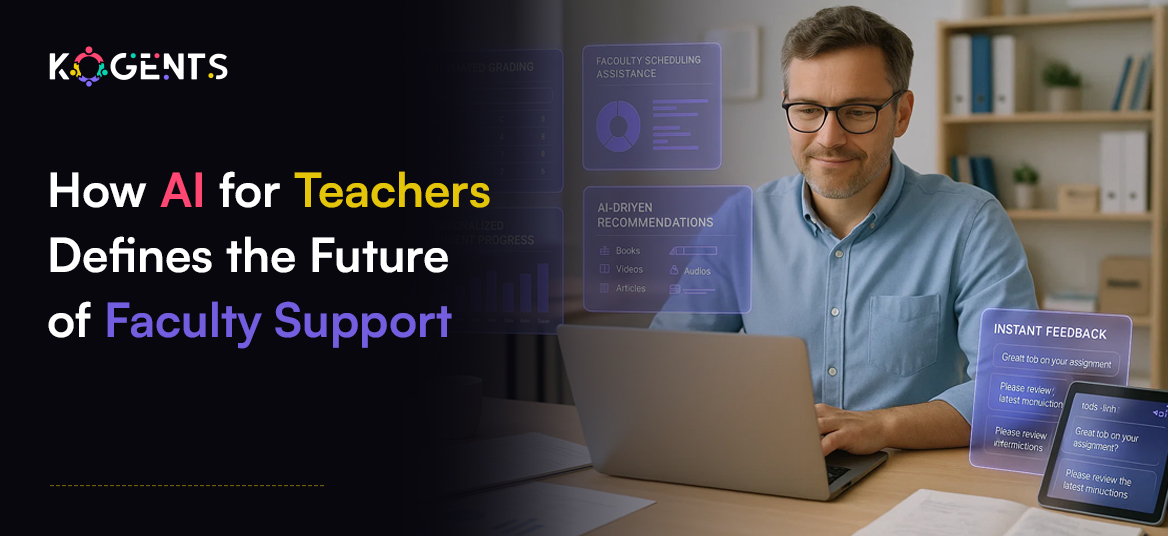
    How AI for Teachers Defines the Future of Faculty Support

    From lesson planning and classroom management to grading automation and personalized learning, artificial intelligence is transforming how teachers, faculty members, and even education entrepreneurs operate.

    For entrepreneurs and solopreneurs exploring the education market, AI-powered teacher tools represent both a massive business opportunity and a way to address long-standing challenges in the teaching profession. 

    Faculty around the world are seeking solutions that reduce administrative load, improve teaching outcomes, and create more engaging student experiences. With educational technology (EdTech) advancing rapidly, AI has emerged as the most powerful driver of faculty efficiency, creativity, and resilience.

    This article dives deep into how AI for teachers defines the future of faculty support, why it matters to education entrepreneurs, and how it will shape learning ecosystems in higher education and lifelong learning.

    Key Takeaways

    • Understanding how AI tools transform lesson planning, grading, and classroom management.
    • Discovering the time-saving benefits that allow teachers to focus on students.
    • Learning how adaptive AI systems personalize learning for every student.
    • Exploring new opportunities for entrepreneurs in the growing EdTech market.
    • Recognizing the importance of ethical, teacher-centered AI adoption.

    Learn First: What Is AI for Teachers?

    At its core, AI for teachers refers to the use of artificial intelligence in education to augment, support, and enhance the teaching process. 

    Unlike traditional digital learning tools, AI uses adaptive learning systems, machine learning models, and natural language processing to create intelligent, responsive solutions for faculty.

    Examples include:

    Why Entrepreneurs & Solopreneurs Need AI for Teachers? 

    Education is one of the world’s largest industries, and entrepreneurs who understand the growing demand for AI tools for teachers can position themselves at the heart of this transformation.

    Key Opportunities for Entrepreneurs:

    Faculty Productivity Solutions
    Teachers spend nearly 50% of their time on non-teaching tasks. AI systems that handle automated grading, attendance, and curriculum design open a multi-billion-dollar efficiency market.

    Scalable Platforms for Schools
    AI for schools, especially in K–12 education, creates scalable opportunities to design tools that districts and governments can deploy widely.

    Personalized Learning Ventures
    AI enables smart learning platforms and AI tutoring systems that adapt to student needs, appealing to solopreneurs building specialized EdTech products.

    Bridging Academia and Business
    Higher education faculty require sophisticated curriculum planning software and AI for higher education teachers

    Note: Entrepreneurs can deliver platforms that improve both pedagogy and research.

    How AI Agents Work in Business & Faculty Support?

    AI agents are autonomous systems powered by machine learning that act as intelligent co-pilots for teachers. 

    They analyze large sets of educational data, identify patterns, and execute tasks without constant human supervision.

    How They Support Faculty:

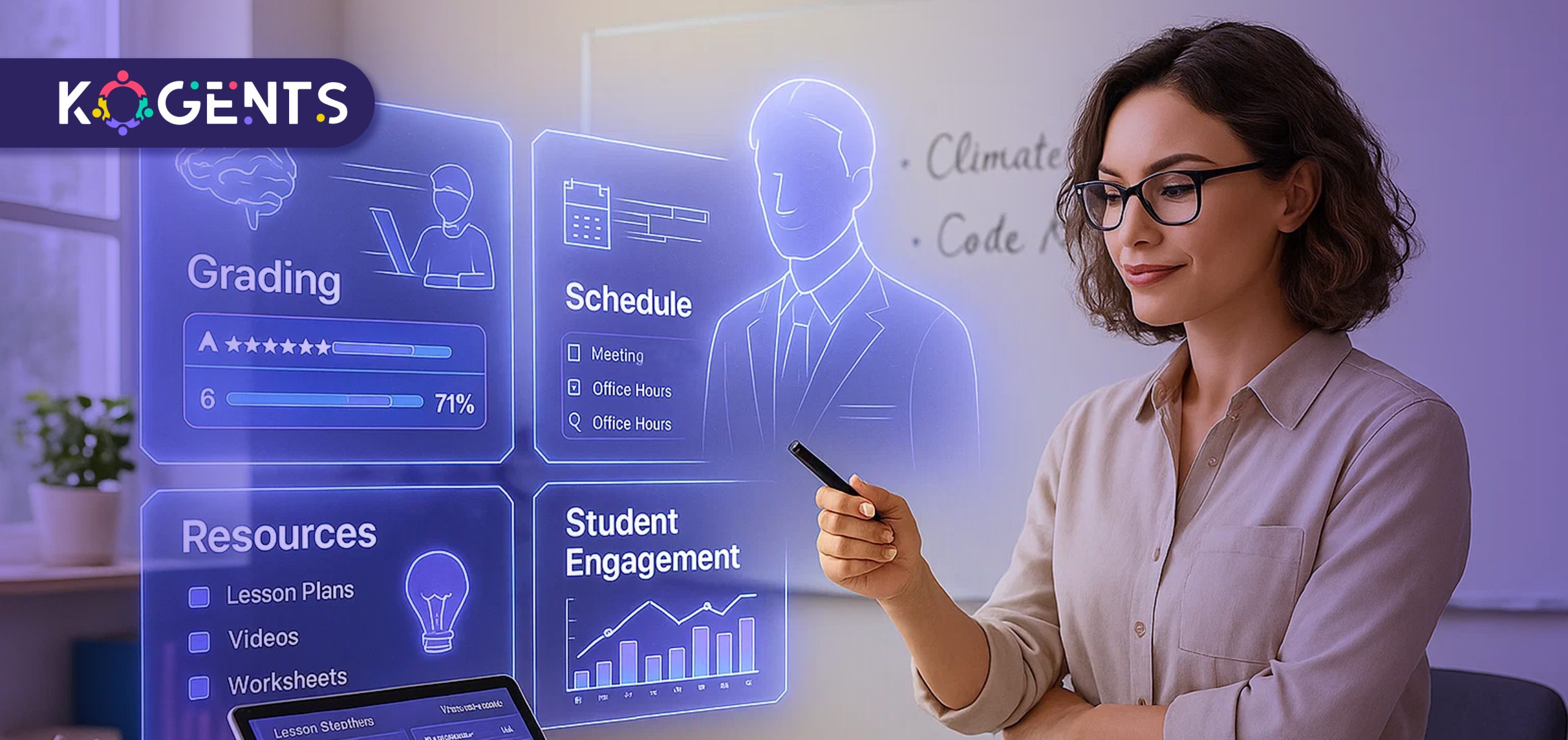
    • Lesson Planning: AI agents curate resources, recommend teaching strategies, and create adaptive lesson structures.
    • Classroom Analytics: Using learning analytics, AI agents provide insights into student performance and flag at-risk learners.
    • Administrative Relief: By automating scheduling, grading, and communication, teachers reclaim valuable teaching time.
    • Professional Development: Faculty can use AI to access tailored upskilling programs and generate research summaries.

    Catch Point! The parallel between faculty support and business productivity means entrepreneurs can design AI solutions that work seamlessly across both domains.
    ai for teachers

    What Modern AI Agents Bring to the Classroom

    1. Adaptive Learning Technology
    Adjusts teaching pace and style to individual student needs.

    2. Natural Language AI Chatbots
    Provides real-time student support and faculty Q&A systems.

    3. Automated Grading & Feedback
    Saves hours of teacher time while ensuring consistency.

    4. Curriculum Alignment
    AI ensures lesson plans meet local, national, or international education standards.

    5. Smart Learning Platforms
    Integrates with Google Classroom, Microsoft Teams for Education, and other classroom technology.

    6. Faculty Productivity Tools
    AI streamlines tasks like scheduling, report generation, and content curation.

    Use Cases for Entrepreneurs, Solopreneurs & Educators

    • AI in K–12 Education: Automating attendance, grading homework, and customizing lessons for diverse learners.
    • AI for Higher Education Teachers: Supporting research, creating adaptive course modules, and managing large student groups.
    • AI Tutoring Systems: Building direct-to-student platforms that provide affordable, 24/7 academic support.
    • Faculty Training Programs: Solopreneurs can design EdTech AI platforms that teach teachers how to use AI effectively.
    • Classroom Management: AI tools track student engagement and help educators design interventions.

    Case Study: 

    A U.S. school district implemented AI grading tools that reduced teacher grading hours by 60%. 

    Teachers used the extra time for small-group interventions, improving student literacy rates by 15% in one academic year.
    ai for teachers

    Why Teachers Need AI Agents Now: Key Advantages

    The adoption of AI for teachers brings a transformative range of benefits that extend beyond simple convenience. 

    These advantages touch on efficiency, instructional quality, student engagement, and even the long-term sustainability of the teaching profession.

    1. Time Savings

    One of the most significant impacts of an AI agent for education is its ability to free teachers from repetitive, time-consuming tasks.

    • AI grading tools can evaluate essays, assignments, and multiple-choice tests in seconds, offering constructive feedback aligned with rubrics. 
    • Similarly, AI lesson planning software generates curriculum-aligned materials in minutes, helping teachers prepare faster without sacrificing quality. 
    • Studies show that teachers can reclaim 5–10 hours per week, time they can reinvest into personalized instruction, mentoring, or professional development.

    2. Adaptive Learning For Students 

    • AI’s ability to adapt to individual student needs is reshaping classrooms. Adaptive learning systems analyze performance in real time, identifying strengths, weaknesses, and knowledge gaps. 
    • Instead of a one-size-fits-all approach, students receive tailored resources, additional practice, or advanced challenges depending on their progress. 
    • This ensures that no student is left behind while allowing high-achievers to accelerate. 
    • Teachers can then use AI insights to design targeted interventions, making learning more equitable and effective.

    3. Consistency in Grading and Feedback

    • Traditional grading often suffers from human subjectivity, fatigue, or unconscious bias. 
    • AI grading tools bring objectivity and consistency by applying the same criteria uniformly across hundreds of student submissions. 
    • While human oversight remains essential, this consistency builds fairness and transparency into the evaluation process. 
    • Additionally, AI can provide students with instant feedback, closing the gap between learning an idea and understanding what needs improvement.

    4. Scalable Impact Across Classrooms

    • AI is not limited by class size. 
    • Whether a teacher has 20 students or 200, AI-powered platforms can scale seamlessly to manage assignments, analyze learning data, and suggest differentiated pathways. 
    • This scalability is especially powerful in higher education, where faculty often manage large cohorts. 
    • For schools and districts, scaling AI solutions can create a multiplier effect, improving outcomes across entire education systems without proportionally increasing teacher workload.

    5. Faculty Well-being and Retention

    • Teacher burnout is one of education’s most pressing challenges, contributing to high turnover rates worldwide. 
    • By reducing administrative burden and streamlining classroom management, AI tools enable teachers to focus on the creative and relational aspects of teaching, the very reasons most choose the profession. 
    • Improved work-life balance leads to higher faculty satisfaction, stronger retention rates, and ultimately, better continuity for students.

    Challenges & Limitations

    While the promise of AI in education is undeniable, its implementation comes with real-world challenges that must be carefully addressed.

    1. Equity Gaps in Access

    • Not all schools have equal access to resources, funding, or infrastructure.
    • Wealthier districts can adopt advanced AI tools for teachers, while underfunded schools risk being left behind. 
    • To ensure equitable adoption, policymakers and EdTech entrepreneurs must prioritize accessibility and affordability.

    Note: This creates a “digital divide” where students in low-resource environments may not benefit from innovations in AI for schools. 

    2. Ethical Compliance, Data Privacy, and Security

    • AI systems process vast amounts of sensitive student data—from academic performance to behavioral patterns. 
    • Ensuring compliance with FERPA, GDPR, and UNESCO’s AI ethics guidelines is critical. 
    • Schools and developers must establish transparent data policies, safeguard against misuse, and involve parents and teachers in understanding how student data is handled. 
    • Failure to address privacy could erode trust in AI-based education tools.

    3. Teacher Resistance and Adoption Barriers

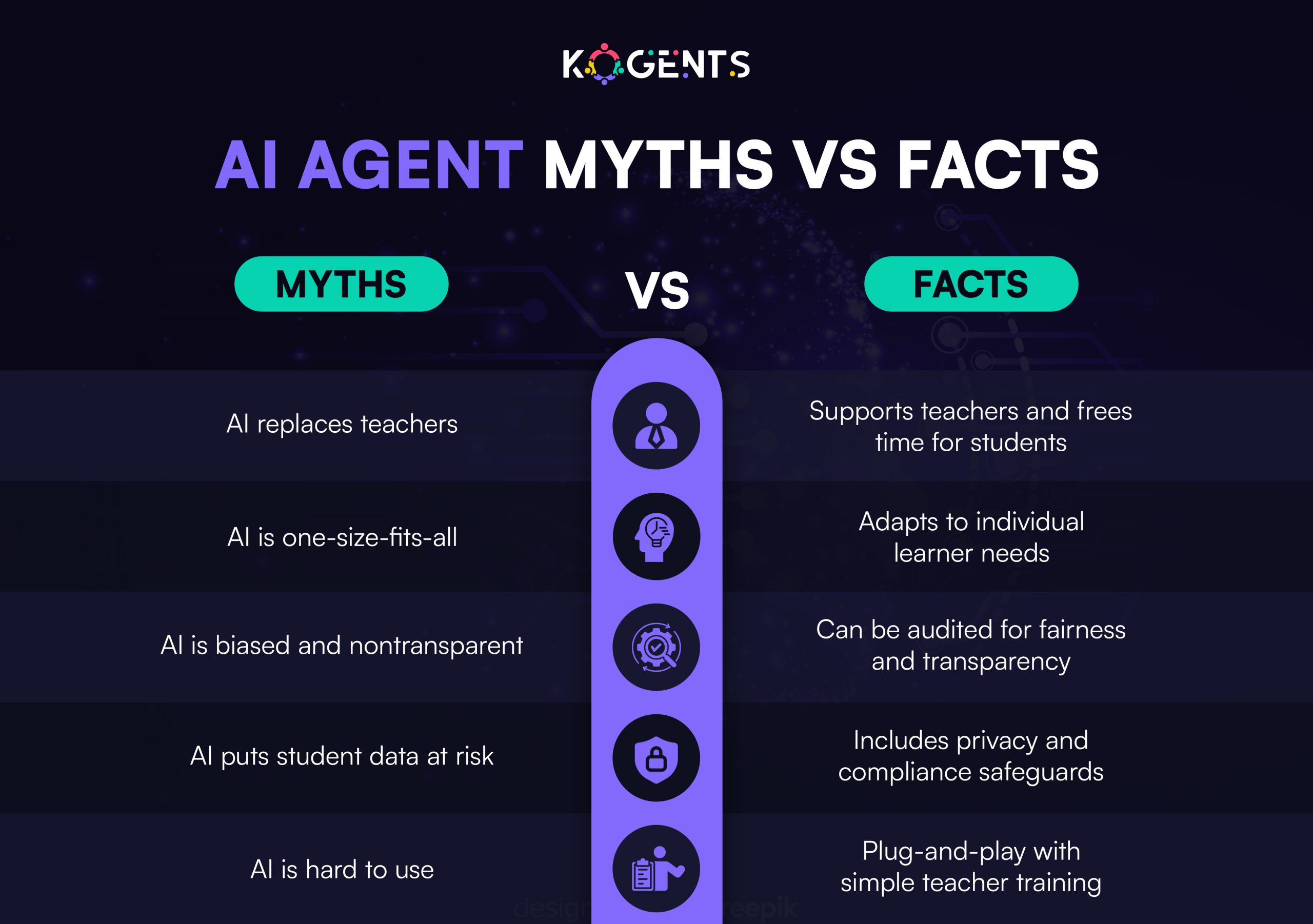
    • Some educators fear that AI may replace teachers or diminish their role in the classroom. Others are concerned about steep learning curves and a lack of training. 
    • For AI adoption to succeed, faculty must be positioned as collaborators, not competitors, with AI systems. 

    4. Algorithmic Bias and Ethical Risks

    • AI systems are only as unbiased as the data they’re trained on. Poorly designed algorithms can perpetuate inequities, disproportionately affecting students from marginalized backgrounds. 
    • For example, predictive analytics may mislabel students as “at risk” based on skewed historical data. 
    • Developers must implement transparent AI models, conduct audits, and involve diverse stakeholders to reduce bias and ensure fair outcomes.

    Case Study Spotlight: Khan Academy’s AI Tutor “Khanmigo”

    One of the most influential examples of AI tutoring systems in action is Khan Academy’s “Khanmigo,” launched under the leadership of Sal Khan. 

    This initiative highlights both the potential and practicality of AI in real classrooms.

    Key Results from Early Trials:

    • Reduced Teacher Workload: Teachers reported spending 30% less time preparing lessons, as Khanmigo generated outlines, practice problems, and discussion prompts aligned with curriculum standards.
    • Deeper Student Engagement: Students interacted with the AI tutor to explore concepts at their own pace, asking clarifying questions without hesitation. This encouraged more problem-solving, inquiry, and curiosity-driven learning.
    • Improved Faculty Satisfaction: With routine tasks delegated to AI, teachers were able to dedicate more energy to one-on-one mentoring and small-group facilitation. Faculty reported feeling less overwhelmed and more effective in their teaching roles.

    Why It Matters? 

    Khanmigo demonstrates how AI teaching assistants can operate as supportive partners in the classroom. 

    Instead of replacing teachers, AI tools amplify their ability to personalize instruction, manage diverse learning needs, and focus on higher-order educational goals. 

    As more platforms adopt similar approaches, this model could redefine global best practices for AI in education.

    AI for Teachers vs Other Tools

    Feature AI for Teachers Traditional Tools General Productivity Software
    Lesson Planning AI-driven, adaptive to curriculum Manual, time-intensive Limited templates
    Grading Automated & scalable Manual, slow, subjective Not designed for grading
    Classroom Management Real-time analytics & tracking Manual observation Limited scheduling tools
    Personalized Learning Adaptive pathways per student One-size-fits-all Minimal customization
    Faculty Productivity Automates admin, reporting Manual paperwork General task management

    Future of AI Agents for Teachers

    The future of AI for teachers is not about replacing human educators but about augmenting their expertise with intelligent support systems. Several innovations are already shaping what’s next:

    1. Immersive AR/VR Integration

    • Imagine a history teacher guiding students through ancient Rome using VR headsets, while an AI system adjusts the difficulty and pacing for each learner. 
    • AI combined with AR/VR will create deeply immersive, interactive lessons that go far beyond textbooks and lectures.

    2. Voice-Powered AI Assistants

    • Just as smart speakers have transformed homes, voice-enabled AI assistants are poised to enter classrooms. 
    • Teachers could issue verbal commands like, “Show me the class’s progress on algebra skills this week. This hands-free interaction makes classroom AI tools more natural and efficient.

    3. Predictive Learning Analytics

    • AI will increasingly provide long-term insights into student development. 
    • By analyzing years of performance data, advanced learning analytics can predict future challenges, such as identifying students who are likely to struggle in higher-level math or are at risk of dropping out. 
    • Early interventions could dramatically improve student success rates.

    4. Professional Certification and Training

    • Organizations like ISTE are already rolling out AI certifications for educators, signaling a future where proficiency in AI-powered tools is a core competency for teachers. 
    • Professional development programs will standardize AI literacy, ensuring that faculty can confidently integrate technology into pedagogy.

    5. Global Policy and Ethical Frameworks

    • International bodies like UNESCO and the OECD Education Directorate are shaping global policy frameworks to ensure AI adoption is safe, equitable, and ethical
    • These guidelines will continue influencing how schools worldwide deploy AI, protecting both students and teachers.

    Final Thoughts! 

    The future of education is being shaped right now, and at the heart of this transformation lies AI for teachers

    By combining the power of artificial intelligence in education with the creativity and empathy of human educators, we are building classrooms that are more efficient, more personalized, and more inspiring. 

    From AI lesson planning and automated grading to adaptive learning systems and AI tutoring platforms, these technologies are redefining how faculty teach and how students learn. The next decade won’t be about replacing teachers, but about amplifying them through smart learning platforms, AI classroom assistants, and teacher productivity tools that create lasting impact. 

    See how Kogents AI can help you in this regard. So, drop an email at info@portal.kogents.ai or give us a call at (267) 248-9454.

    FAQs 

    What is AI for teachers?

    AI for teachers refers to the use of artificial intelligence in education to support tasks like lesson planning, grading, and classroom management so teachers can focus more on student engagement.

    How can teachers use AI tools in the classroom?

    Teachers can integrate AI teaching assistants, AI grading tools, and AI chatbots for education to automate repetitive tasks, provide real-time feedback, and personalize student learning experiences.

    What are the main benefits of AI for teachers?

    The benefits include time savings, personalized learning, consistency in grading, teacher productivity, and reduced burnout—all while enhancing student outcomes.

    What challenges do schools face when adopting AI in education?

    Common challenges include equity gaps, data privacy concerns, potential algorithmic bias, and teacher resistance to adopting new classroom technology.

    What is the future of AI in K–12 and higher education?

    The future includes adaptive learning systems, AI tutoring platforms, voice-powered classroom assistants, and AI certification programs for teachers, guided by ethical frameworks from UNESCO and OECD.
     

  • What AI vs Machine Learning Means for Adaptive Education

    What AI vs Machine Learning Means for Adaptive Education

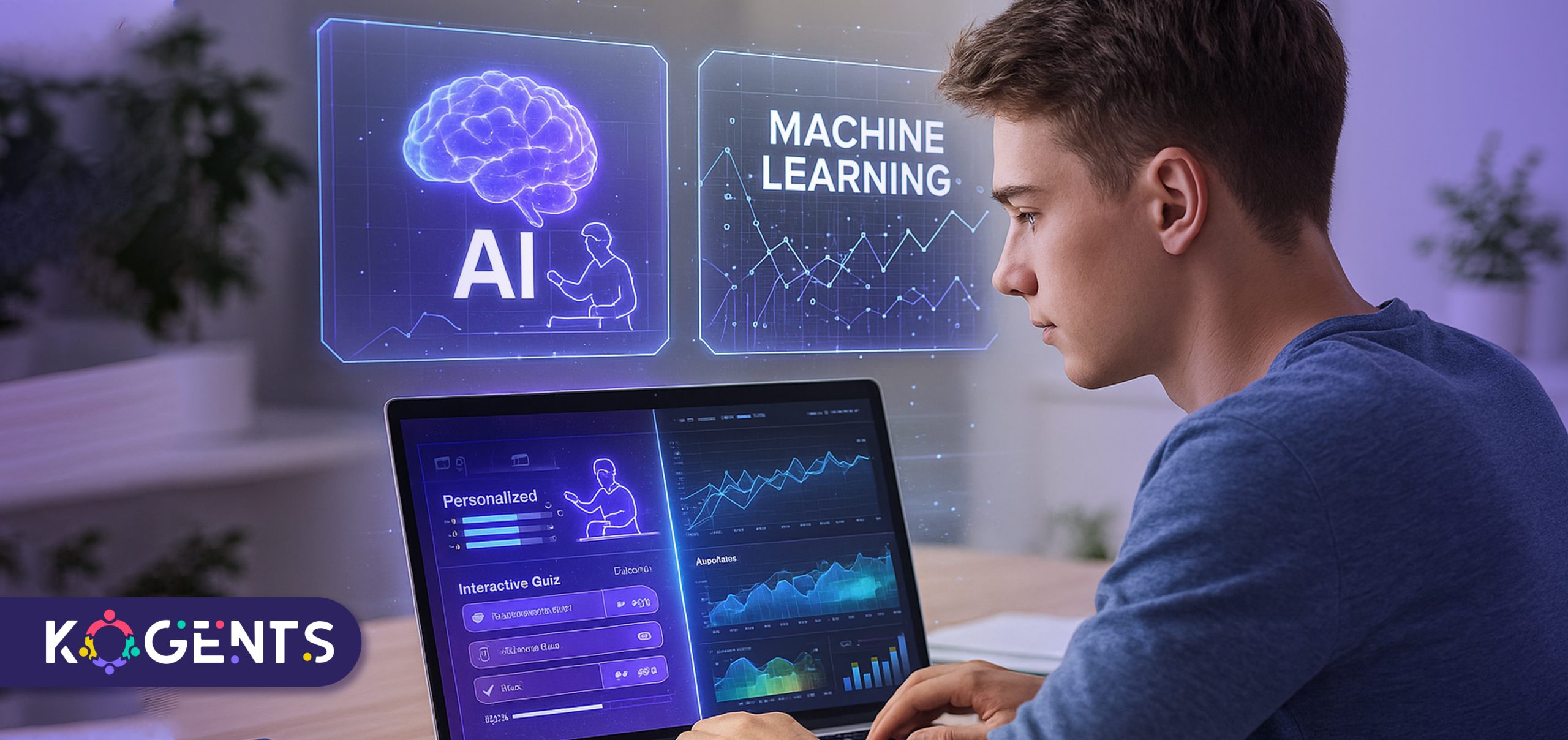
    The difference between AI vs Machine Learning is shaping the next era of learning. 

    Adaptive education, systems that modify content in real time based on learner behavior, is now central to how students, professionals, and businesses acquire skills. A report from McKinsey notes that companies implementing AI in education see up to a 30% improvement in efficiency

    Universities like Stanford AI Lab are pioneering adaptive systems that promise highly personalized learning. For entrepreneurs and solopreneurs, adaptive education opens doors to scalable products, efficient employee training, and customer onboarding platforms.

    This article unpacks AI vs ML in adaptive education: their features, benefits, limitations, future outlook, and case studies, all designed to give entrepreneurs and educators a roadmap. So, give it a read! 

    Key Takeaways

    • AI vs Machine Learning drives adaptive education, offering personalized pathways and predictive learning.
    • Features include personalization, automation, predictive insights, real-time feedback, and scalability.
    • Benefits include improved engagement, efficiency, and ROI for learners, educators, and entrepreneurs.
    • Challenges that can be witnessed are data privacy, algorithmic bias, and high infrastructure costs.
    • The future includes generative AI classrooms, immersive VR learning, and new EdTech careers.
    • Real-world case studies prove adaptive education improves retention, reduces costs, and scales globally.

    Defining the Basics: AI vs Machine Learning

    • Artificial Intelligence (AI): The overarching field that builds systems capable of replicating or augmenting human intelligence
    • AI spans areas like robotics, natural language processing (NLP), cognitive computing, and automation.
    • Machine Learning (ML): A subset of AI where algorithms improve automatically through data-driven learning.

    ai vs machine learning

    Key Algorithms in Adaptive Education

    • Supervised Learning: Models trained on labeled datasets (e.g., predicting exam results).
    • Unsupervised Learning: Finds hidden patterns (e.g., clustering students with similar study habits).
    • Reinforcement Learning: Improves via trial and error, like an AI tutor rewarding correct answers.

    Neural Networks, Deep Learning & NLP

    • Neural Networks simulate brain functions to track learning behavior.
    • Deep Learning, pioneered by experts like Geoffrey Hinton and Yann LeCun, powers speech recognition and automated grading.
    • NLP allows adaptive systems to converse naturally with students, think like chatbots and virtual tutors like IBM Watson Education.

    How Adaptive Education Works with AI vs ML?

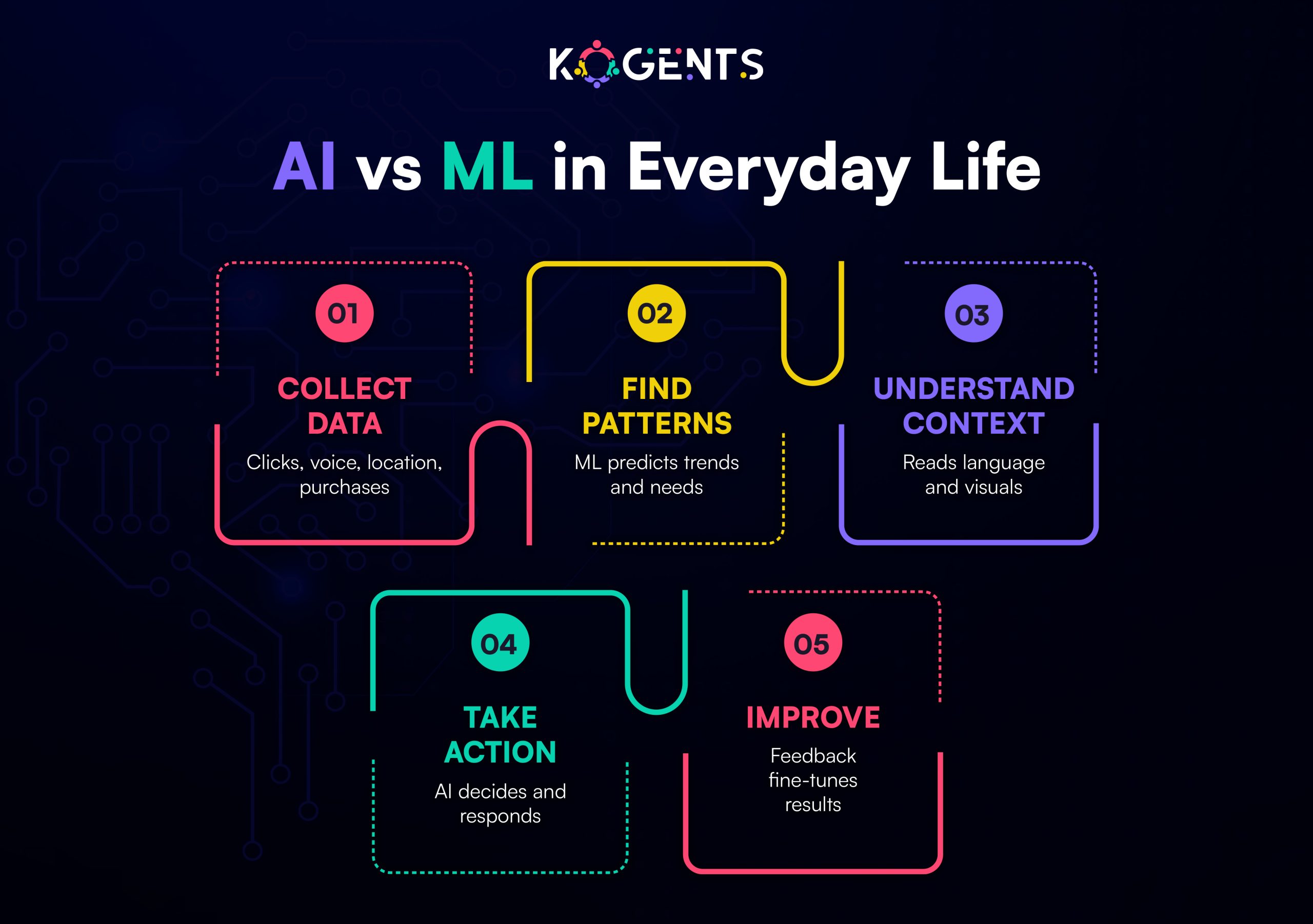
    Adaptive education systems follow a structured workflow powered by AI and ML:

    1. Input (Data Collection): Collects learner activity, quiz responses, reading time, and clicks.
    2. Reasoning (Pattern Recognition): ML algorithms analyze performance and detect gaps.
    3. Action (Adaptive Adjustment): AI dynamically adjusts lesson content, simplifying, accelerating, or diversifying materials.
    4. Feedback (Continuous Loop): Learner outcomes are re-evaluated, refining personalization.

    Example: A Coursera adaptive module, influenced by Andrew Ng’s ML course, might detect a learner struggling with linear regression. 

    The platform shifts to additional resources, quizzes, and explainer videos before advancing.

    Core Features of AI vs Machine Learning in Adaptive Education

    1. Intelligent Personalization

    AI vs ML tailors learning at the individual level. AI agents for education ensure every quiz, lesson, and recommendation adapts in real time to the learner’s performance.

    Example: Duolingo modifies grammar exercises instantly based on mistakes.

    2. Real-Time Assessment & Feedback

    Unlike traditional models, adaptive systems give instant evaluations, crucial for building confidence and correcting errors before they compound.

    3. Predictive Insights

    ML anticipates when learners might disengage or fail, enabling proactive interventions.

    • Used in platforms like Knewton, predicting student dropouts weeks in advance.

    4. Automation of Routine Tasks

    • AI grading tools free teachers from repetitive marking.
    • Automated scheduling personalizes pacing for each student.

    5. Multi-Modal Learning Adaptation

    AI supports diverse formats: video, VR simulations, gamified exercises, and text. Learners get content aligned with their preferences.

    6. Scalable Support Systems

    Entrepreneurs can serve thousands of learners with consistent quality. Coursera’s ML engine, for example, supports millions worldwide.

    ai vs machine learning

    AI vs Machine Learning: What They Mean for Modern Learning

    By technology, machine learning and deep learning are expected to have the biggest market share by 2032, accounting for more than two-thirds of the overall global AI in education market. Natural language processing (NLP) has a forecasted CAGR of +46.6% during this period as the communication and interaction between people and machines continue to develop.

    For Learners

    • Engagement Boost: Personalized, gamified learning keeps motivation high.
    • Learning Efficiency: Time spent focuses only on weak areas.
    • Equity: NLP-based platforms support learners with disabilities or different native languages.

    For Educators

    • Reduced Burnout: Automation handles grading, tracking, and repetitive support.
    • Actionable Data: Analytics reveal patterns in learning behaviors.
    • Scalability: A single instructor can effectively manage large cohorts with AI assistants.

    For Entrepreneurs & Solopreneurs

    • ROI Gains: Adaptive platforms reduce training costs while increasing adoption.
    • Market Differentiation: Offering adaptive features creates a competitive edge.
    • Monetization Opportunities: Launching niche adaptive solutions (e.g., compliance training for SMEs).

    Challenges & Limitations For Adaptive Education

    1. Data Privacy & Ethics

    Adaptive platforms depend on vast datasets, raising risks around GDPR, FERPA, and HIPAA compliance. Mishandling erodes trust.

    2. Bias in Algorithms

    ML models reflect their training data. If biased, they can perpetuate inequity, an issue flagged by IEEE Transactions on Neural Networks research.

    3. Technical & Cost Barriers

    • Developing adaptive systems requires high-cost infrastructure like AWS AI or Google Cloud AI.
    • Smaller businesses face barriers without partnerships.

    4. Balance Between Automation & Human Input

    While automation boosts efficiency, over-reliance risks reducing human mentorship and emotional connection in learning.

    AI vs Machine Learning vs Other Tools: Comparison Table

    Feature AI Machine Learning Deep Learning Data Science
    Definition Intelligent systems simulating humans Subset of AI learning from data Neural network-based ML subset Broad field analyzing data
    Focus Decision-making & automation Pattern recognition & adaptation Complex computations Extracting insights
    Education Use Virtual tutors, automation Personalized pathways Speech & vision grading Predictive analytics
    Complexity High Medium Very High Variable

    Future of AI vs Machine Learning in Education

    Generative AI Classrooms

    OpenAI’s ChatGPT and Google Gemini will create real-time adaptive lesson plans, changing the teacher’s role from content creator to mentor.

    Immersive VR & AR

    Companies like NVIDIA are experimenting with adaptive VR simulations—ideal for medicine, engineering, and language training.

    Expanded Career Opportunities

    Adaptive education will demand new expertise:

    • AI curriculum designers blending pedagogy and technology.
    • Data scientists specializing in education analytics.
    • AI ethics consultants ensure fair systems.

    Global Reach & Inclusion

    Adaptive platforms will democratize education globally, reaching learners in underserved communities where teachers are scarce.

    Case Study Highlights

    Case Study 1: SME Training Startup

    A European EdTech startup developed an adaptive learning platform for SMEs. 

    Employees received dynamic training modules customized to their job roles.

    Results: Training time fell 40%, retention rose 65%, and SMEs reported 25% savings in L&D costs.

    Case Study 2: Healthcare Adaptive Tutor

    A U.S. hospital integrated AI-driven adaptive simulators into continuing medical education. Doctors received personalized training scenarios.

    Results: Knowledge retention improved 45%, diagnostic accuracy increased 30%, and patient outcomes saw measurable improvements.

    Case Study 3: Solopreneur Tutor Platform

    A solopreneur launched an AI-powered language-learning platform

    The system adapted lessons based on pronunciation accuracy using speech recognition ML models.

    Results: Engagement doubled compared to static apps, and subscription renewals increased by 50%.

    Unlock the Power of AI vs Machine Learning in Adaptive Education!

    As we’ve explored, the conversation around AI vs Machine Learning goes far beyond technical definitions. 

    In the context of adaptive education, these technologies are not abstract buzzwords; they are practical tools shaping how individuals, organizations, and entire industries learn and grow. Artificial Intelligence provides the overarching intelligence framework, while Machine Learning powers the ability to adapt and evolve through data. 

    Together, they enable adaptive systems to deliver personalized, predictive, and scalable learning experiences that traditional education models simply cannot match. For learners, this means more efficient progress and higher engagement. 

    For educators, it means reduced workload and actionable insights. And for entrepreneurs and solopreneurs, it opens new avenues to build, monetize, and scale innovative learning solutions.

    The future is clear: adaptive education, driven by AI and ML, will redefine not just classrooms but businesses, healthcare, and professional training worldwide.

    So, discover how Kogents AI empowers entrepreneurs, solopreneurs, and healthcare providers with adaptive AI solutions. 

    Give us a call at (267) 248-9454 or drop an email at info@portal.kogents.ai for further information. 

    FAQs

    What is the difference between AI and Machine Learning?

    Artificial Intelligence (AI) is the broad field of creating intelligent systems, while Machine Learning (ML) is a subset of AI that uses data and algorithms to improve automatically. In adaptive education, AI defines the overall intelligence, while ML powers real-time personalization.

    Can you give examples of AI vs Machine Learning in real life?

    Yes. Examples include Netflix’s recommendation system (ML predicting what you’ll watch) and IBM Watson Education (AI offering virtual tutoring). In adaptive classrooms, ML adjusts difficulty levels, while AI manages the holistic learning experience.

    How is AI vs Machine Learning used in healthcare education?

    Hospitals use AI-driven simulators to train surgeons, while ML algorithms personalize modules for nurses based on past performance. A U.S. hospital reported 45% higher knowledge retention using adaptive AI vs traditional training.

    Which is better: AI vs ML for data analysis?

    ML is generally better for data analysis since it specializes in finding patterns, making predictions, and classifying large datasets. AI adds decision-making and automation, making them most powerful when used together.

    What are the best AI software vs Machine Learning platforms for education?

    Popular platforms include Google AI, Microsoft Azure ML, AWS Machine Learning, Knewton, and DreamBox Learning. These tools power adaptive education systems used by schools and businesses alike.

    Are there AI vs Machine Learning courses online with certification?

    Yes. Top certifications include:

    • Stanford Machine Learning by Andrew Ng (Coursera)
    • MIT AI Professional Certificate
    • Google AI/ML Certification
    • AWS Machine Learning Specialty

    AI vs ML for small businesses, what’s more useful

    For small businesses, ML tools are usually the entry point, enabling predictive analytics, adaptive customer training, and automation. AI adds value later with chatbots, virtual tutors, and intelligent automation.

    AI vs ML jobs and salaries, what’s the outlook? 

    According to Glassdoor and LinkedIn reports, demand for AI and ML roles is booming.

    • ML Engineers: $110K–$150K annually.
    • AI Specialists: $120K–$160K annually.
    • EdTech AI roles (curriculum designers, adaptive system developers) are rapidly growing.
  • How AI Tutoring for Students Cuts Costs for School Districts

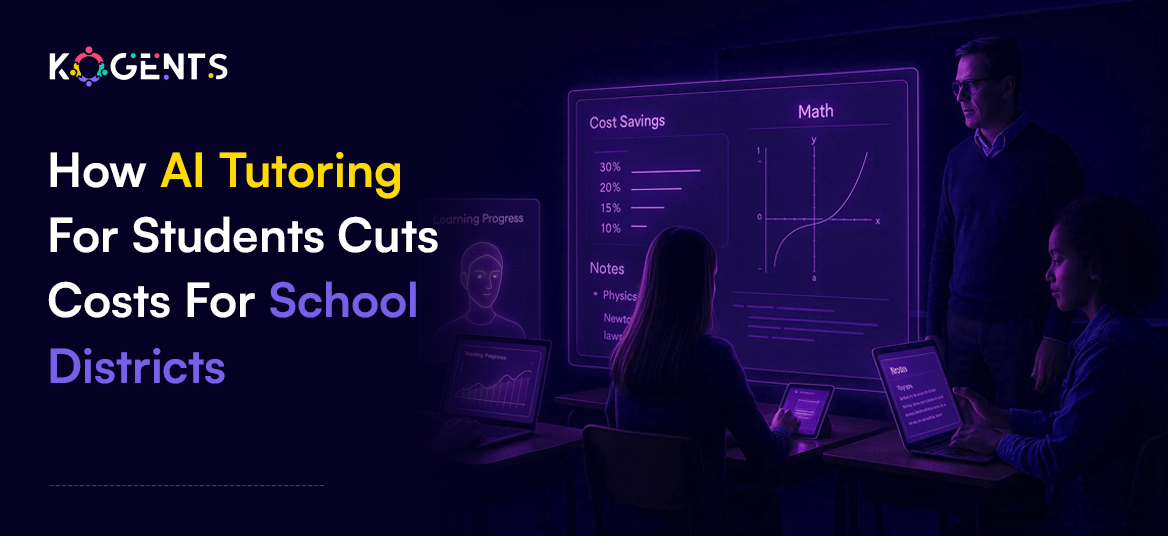
    How AI Tutoring for Students Cuts Costs for School Districts


    Do you know that school districts worldwide are under immense trouble and pressure? Due to the
    shrinking budgets, rising costs, and teacher shortages, teachers are being stretched to the limit. 

    On the contrary, traditional tutoring may help, but it’s expensive, hard to scale, and leaves too many students behind. 

    The question is no longer if schools should adopt AI tutoring systems, but how fast they can integrate them to save money while driving better results.

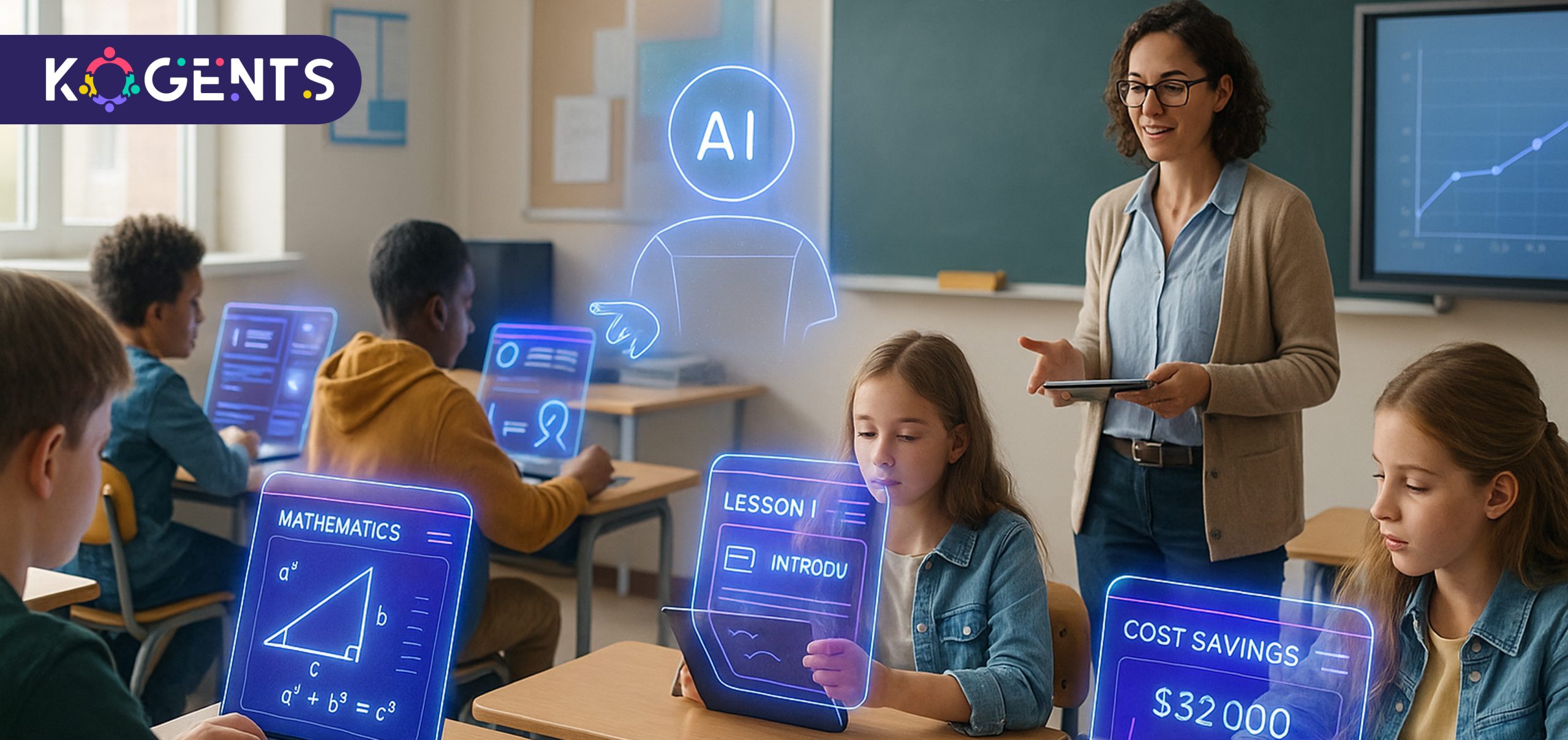
    This is why many districts are now turning to AI tutoring for students, a groundbreaking innovation in educational technology (EdTech) that is transforming how academic support is delivered.

    At its core, AI tutoring for students leverages intelligent tutoring systems (ITS), adaptive AI learning assistants, and AI-powered tutoring platforms to provide scalable, personalized learning experiences. 

    Unlike generic digital learning assistants or static online resources, these tools use natural language processing, tutoring, and learning analytics in education to give students instant feedback, tailor lessons to their progress, and improve student academic performance at a fraction of the cost of human tutoring.

    Districts that adopt AI academic support tools gain more than savings; they unlock equity. 

    Every student, regardless of background, can access a personalized AI tutor app or virtual AI tutor for learning, leveling the playing field across classrooms.

    What Is AI Tutoring for Students?

    It is the use of artificial intelligence systems to deliver one-on-one or group learning experiences in a digital environment. 

    Unlike generic EdTech tools that provide static content, AI tutors or an AI agent for education adapt in real time to each student’s strengths and weaknesses.

    Key concepts include:

    • Virtual AI Tutor for Learning: Chatbot-style assistants that answer questions and guide students through exercises.
    • AI-Powered Tutoring Platforms: Comprehensive apps that deliver lessons, quizzes, and practice exercises tailored to each student.
    • Intelligent Tutoring Systems (ITS): AI programs that mimic human tutors, offering hints, explanations, and scaffolding.
    • Personalized AI Tutor Apps: Mobile and web-based apps that provide continuous learning support beyond the classroom.

    Why Do School Districts Need AI Tutoring Agents? 

    1. Rising Costs of Traditional Tutoring

    • Hiring human tutors is costly, ranging from $50 to $100 per hour per student. 
    • When scaled to hundreds or thousands of students, these costs are simply unsustainable for most districts.

    2. Teacher Shortages

    • Across the U.S. and many other countries, schools are facing teacher and tutor shortages. 
    • Even when budgets allow for additional tutoring, there often aren’t enough qualified educators to fill the roles.

    3. Demand for Personalized Learning

    • Students learn at different paces, yet traditional classrooms often take a one-size-fits-all approach. 
    • Parents and educators are increasingly demanding individualized support, which AI tutors provide affordably at scale.

    How AI Tutoring Systems Work? 

    AI tutoring systems use advanced technologies to deliver customized academic support:

    • Natural Language Processing (NLP): Enables AI tutors to understand student questions in plain language.
    • Adaptive AI Learning Assistant: Adjusts content difficulty based on student performance.
    • Smart Tutoring Systems: Mimic real human tutors by giving hints, explanations, and practice exercises.
    • AI-Powered Assessments: Provide instant grading and insights into learning gaps.

    Example: intelligent tutoring systems in education can track student behavior (time spent per problem, incorrect answers, etc.) and generate personalized AI tutor app recommendations.

    The global AI in education market was worth £2.5 billion in 2022 and is expected to reach $6 billion by 2025.

    Core Features of AI-Powered Tutoring Platforms

    Modern AI tutoring platforms come equipped with advanced features designed to maximize student learning and minimize costs for districts:

    1. Real-Time Feedback

    Students receive instant corrections and hints. 

    Unlike delayed grading, AI ensures errors are addressed immediately, preventing misconceptions from solidifying.

    2. Personalized Learning Paths

    Each student follows a unique journey. 

    AI analyzes past performance and adjusts the curriculum in real time, ensuring lessons are neither too easy nor too hard.

    3. Intelligent Questioning & Socratic Dialogue

    Some AI tutors engage students with guided questions rather than giving direct answers, fostering critical thinking skills rather than rote memorization.

    4. AI-Powered Assessments

    Quizzes, assignments, and tests are auto-graded. AI not only marks right or wrong but also explains errors, providing students with actionable learning insights.

    5. Learning Analytics Dashboards

    Teachers and administrators access data-rich dashboards that highlight patterns in student performance, enabling targeted interventions.

    6. Accessibility & 24/7 Availability

    AI tutors are device-friendly and available anytime, offering consistent academic support far beyond classroom hours.

    Together, these features transform AI tutors from simple study tools into full-fledged intelligent tutoring ecosystems.

    ai tutoring for students

    Key Advantages of AI Tutoring for School Districts

    The benefits of AI tutoring extend across cost savings, learning outcomes, and systemic equity:

    1. Dramatic Cost Reduction

    Traditional tutoring programs are financially draining. 

    AI reduces costs by up to 80% through affordable subscriptions that scale across thousands of students.

    2. Scalable Access

    Unlike human tutors limited by schedules, AI can support an entire district simultaneously, ensuring no student is left behind.

    3. Improved Academic Performance

    Research shows students using AI tutors achieve 20–40% better performance on standardized assessments thanks to adaptive, personalized support.

    4. Greater Educational Equity

    AI ensures that underserved students, who often lack access to private tutors, receive the same level of academic help as wealthier peers.

    5. Teacher Empowerment

    Instead of replacing educators, AI assists them by:

    • Reducing grading workloads.
    • Highlighting students needing extra help.
    • Providing real-time insights for lesson adjustments.

    6. Flexibility for Students

    Students learn at their own pace, revisit concepts on demand, and access AI tutors anytime, anywhere.

    By delivering these benefits, AI tutoring becomes both an economic necessity and an educational innovation.

    The most common AI tools used in primary education (K-12) are virtual learning platforms, such as Google Classroom, used by 80% of teachers at least once a week.

    Use Cases in Education

    AI tutoring is not a futuristic concept anymore; it’s actively reshaping how students learn. Let’s look at some practical use cases inside school districts:

    • Homework AI Chatbot: Students can get AI homework help for math, science, and language arts through conversational tutoring bots.
    • Online AI Tutoring Services: Districts can provide AI-powered support platforms to supplement classroom teaching.
    • Personalized AI Tutor Apps: Each student can carry a digital learning assistant on their phone or tablet, offering 24/7 study help.
    • Virtual AI Tutors for Learning: Language learners, for instance, benefit from Duolingo’s AI tutor that simulates real-life conversations.
    • AI Academic Support Tools for Teachers: Educators use AI-powered assessments and learning analytics to spot at-risk students early.

    Soft-Reminder: By integrating these systems, school districts give every student the individualized attention once reserved for expensive private tutoring.

    Case Studies of AI Tutoring in Schools

    1. Khan Academy & GPT-4 Integration

    In 2023, Khan Academy partnered with OpenAI’s GPT-4 to launch Khanmigo, an AI tutor that engages students in Socratic-style dialogue.

    • Teachers reported students were more engaged in math practice.
    • The district saved thousands in supplemental tutoring costs by replacing external tutoring contracts.

    2. Duolingo’s AI Tutor for Languages

    Duolingo introduced AI-driven lessons that personalize challenges.

    • Students showed 20% faster retention of new vocabulary.
    • Districts could cut back on external ESL (English as a Second Language) tutors while providing scalable support.

    3. Carnegie Learning

    Carnegie’s intelligent tutoring system has been studied in multiple districts.

    • Results show a 1.5x improvement in math test scores compared to traditional methods.
    • Lowered reliance on costly after-school tutoring programs.

    What Do You Get? These case studies highlight how AI tutoring systems cut costs while improving student learning outcomes.

    Cost Savings Breakdown

    Tutoring Model Cost per Student (Annual) Scalability Accessibility
    Traditional Human Tutoring $1,500–$3,000 Limited Budget-restricted
    Online Human Tutors $800–$1,200 Moderate Flexible but costly
    AI Tutoring Platforms $50–$200 High 24/7, scalable
    Hybrid (AI + Teacher Oversight) $300–$500 Very High Balanced

    Key Fun Fact: A district of 10,000 students could save millions annually by switching to AI tutoring.

    Challenges & Limitations For AI Tutoring for Students 

    Despite its strengths, AI tutoring has challenges:

    1. Data Privacy & Compliance

    Districts must verify platforms comply with FERPA (US), GDPR (EU), and other local data protection regulations. Student data safety is non-negotiable.

    2. Teacher & Parent Acceptance and Concerns 

    Some teachers fear being replaced, while some parents worry about “robots teaching their kids.” Training and transparent communication are crucial for adoption.

    3. Equity of Access

    Without internet and device access, students risk being left behind. Districts must consider device-lending programs and subsidized internet access.

    4. Over-Reliance on AI

    AI tutors excel at structured learning but cannot provide emotional support or mentorship. A hybrid AI + teacher model ensures balance.

    5. Accuracy & Bias

    AI systems can sometimes provide inaccurate answers or biased responses. Continuous monitoring and vendor accountability are critical.

    AI Tutoring vs Other EdTech Tools

    Feature AI Tutoring Traditional Tutoring Generic EdTech Tools
    Cost Low High Medium
    Personalization High High Low
    Availability 24/7 Limited Always, but static
    Scalability Very High Low High
    Feedback Speed Instant Delayed None
    Teacher Role Supportive Direct Supplemental

    Future of AI Tutoring in Education

    The future of AI tutoring looks even more transformative:

    • AI-Driven Personalized Learning: Each student’s curriculum will be auto-adjusted daily.
    • AR/VR Integration: Imagine virtual classrooms with AI tutors guiding students through 3D simulations.
    • Learning Analytics Dashboards: District administrators will get predictive insights into student success rates.
    • AI-Powered Assessments: Fully automated grading that reduces teacher workload.

    Know It! Within the next decade, AI tutoring may become as common as textbooks in classrooms.

    ai tutoring for students

    Why AI Tutoring for Students Is the Smartest Choice!

    The future of education belongs to districts that embrace technology designed for efficiency and impact. 

    By integrating AI tutoring systems, students and administrators not only lower costs but also ensure that every student, regardless of background, has access to individualized learning support. 

    This shift strengthens teachers, elevates classrooms, and prepares schools for the demands of modern education.

    Kogents AI adopts AI tutoring for students with scalable, compliant, and results-driven solutions. 

    to see how you can save money while unlocking better outcomes for every learner. Call us at (267) 248-9454. Today, or drop an email at info@portal.kogents.ai

    FAQs 

    How effective are AI tutors for improving grades?

    Studies show AI tutors can improve student performance by 20–40% compared to traditional methods.

    How much does AI tutoring cost for schools?

    Typically $50–$200 per student annually, far cheaper than human tutoring.

    Which are the best AI tutoring platforms in 2025?

    Khan Academy (Khanmigo), Carnegie Learning, Duolingo AI tutor, and ChatGPT-powered tutoring services.

    Is AI tutoring safe for students’ data?

    Yes, reputable platforms comply with FERPA, GDPR, and ISO 21001 standards.

    Will AI tutors replace teachers?

    No, AI supplements teachers by handling routine tutoring, freeing educators for higher-level instruction.

    Can AI tutors help with homework?

     Yes, AI homework help for students is one of the most common applications, especially in math and science.