Category: customer service ai agent

  • How Customer Experience Automation Transforms AI Solutions for Enterprise Growth

    How Customer Experience Automation Transforms AI Solutions for Enterprise Growth

    Every customer touchpoint tells a story. But what if that story could write itself, intelligently, intuitively, and in real time? 

    That’s the potential of customer experience automation (CXA), where AI, data, and human empathy converge to create journeys that don’t just satisfy customers but anticipate their needs before they even speak.

    Modern enterprises aren’t competing on products alone anymore. They’re competing on how seamlessly they deliver value, how quickly they adapt to signals, and how personally they connect at scale

    This is where CX automation becomes the invisible engine of enterprise growth, turning fragmented customer interactions into orchestrated and outcome-driven experiences.

    Picture this: A customer encounters an issue. Within seconds, an AI-powered chatbot understands the context, accesses a 360-degree customer view, and resolves the query,  while a machine-learning model predicts churn risk and triggers a personalised retention journey.

    No hand-offs. No friction. Just orchestration supported by intelligent automation.

    This is not a distant vision; it’s happening right now. Leading enterprises are fusing predictive analytics, generative AI, and omnichannel engagement to build end-to-end customer experience automation ecosystems that fuel loyalty, accelerate growth, and redefine what “service” means.

    In this article, we’ll discover how customer support automation transforms AI solutions into growth accelerators, not just efficiency tools.

    Key Takeaways

    • CX automation enables personalisation at scale, seamlessly adapting across channels and touchpoints.
    • A strong unified customer view and journey orchestration are foundational to success; without them, automation falls flat.
    • Metrics matter: organisations that excel in CX and automation see significantly faster revenue and profit growth.
    • Successful implementation depends as much on change management, culture, and governance as on technology.
    • The future is AI-driven end-to-end automation, from acquisition to retention, and enterprises that get there first will gain a competitive edge.

    Why Customer Experience Automation Matters for Enterprise Growth? 

    The strategic value of CXA

    Customer expectations have radically evolved. According to research:

    Key Note: These figures highlight two things: first, customer experience is a competitive differentiator; second, delivering a consistent, personalised, efficient experience is hard unless you move beyond manual, reactive service to automated, proactive orchestration across channels. That’s where CX automation comes in.

    Decode The Term And Scope

    Customer experience automation (CXA) refers to the use of AI-powered workflows and decision engines to streamline, personalise, and orchestrate interactions across channels at scale.

    It goes beyond simple chatbots or ticket routing, it’s about journey orchestration, automated workflows, real-time decisioning, self-service portals, and a seamless cross-channel experience from onboarding to retention.

    Why Enterprise Growth Has A Connection?

    When CXA is implemented well, enterprises unlock:

    • Higher retention & loyalty: smoother journeys mean fewer friction points and lower churn.
    • Increased CLV: personalised engagements deepen relationships and extend lifetime value.
    • Operational efficiency: automation of routine tasks frees agents for high-value work, boosting productivity. 
    Key Fact: Forrester found that companies excelling in CX saw ~41% faster revenue growth.
    • Scalability: automation and AI allow consistent experiences globally, across touchpoints, without linearly scaling headcount.
    • Better insights & innovation: machine-learning customer insights and sentiment analysis enable proactive engagement and new business models.
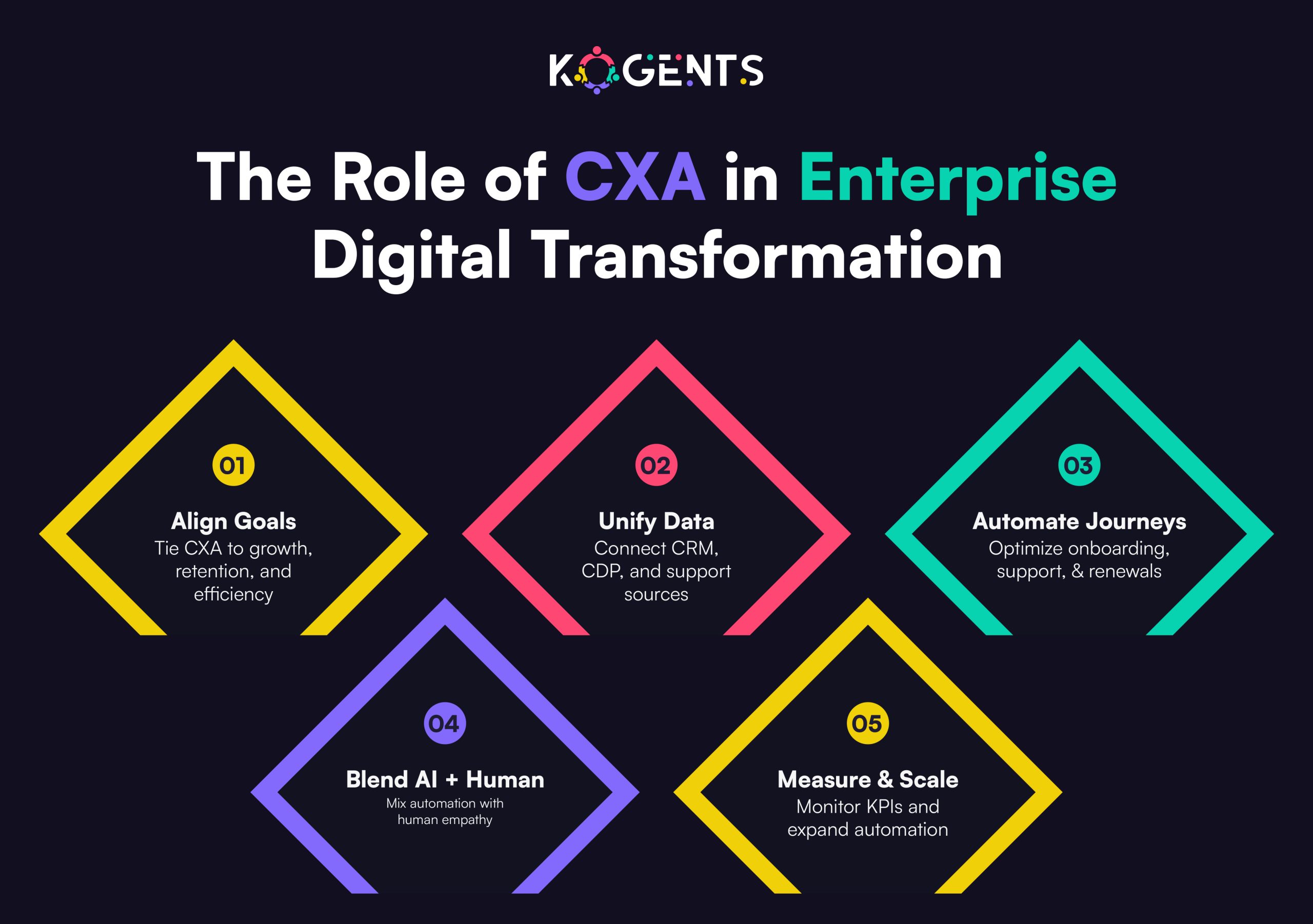
    cxa in enterprise digital transformation

    The role of AI, Machine learning, and Automation

    The core technologies behind CXA include:

    • AI-powered chatbots / virtual assistants that handle routine tasks and free human agents for complex ones.
    • Predictive analytics and machine-learning customer support AI insights that anticipate needs.
    • Journey orchestration engines that trigger next best actions across channels.
    • Robotic process automation (RPA) that automates backend workflows (billing, provisioning, etc.).
    • Generative AI and agent assist technologies that help agents respond faster, with context and knowledge-base automation. 

    Learning For You: These technologies collectively raise the bar for personalisation at scale, intelligent routing, first-contact resolution, and a 360-degree customer view.

    How Customer Experience Automation Works? 

    Core architecture & components

    Here are the key building blocks of an effective CXA platform:

    • Customer data integration: unify data from CRM, CDP, support, marketing, and sales to build that 360-degree customer view.
    • Touchpoint orchestration / omnichannel engagement: make every channel (web, mobile, social, voice, chat) part of a continuous journey.
    • Automated workflows: trigger tasks or handoffs automatically—e.g., post-purchase follow-up, cross-sell invites, renewal reminders.
    • AI decision engine/personalization engine: analyse behaviour, sentiment, interaction, history, and predict next best action.
    • Self-service portals + chatbots: allow customers to resolve issues anytime, automating common queries and deferring to humans only when needed.
    • Agent assist + intelligent routing: automation assigns tickets to the right agent, surfaces context & recommends next steps.
    • Measurement & analytics layer: real-time dashboards of CSAT, NPS, CLV, resolution time, and agent productivity.
    • Governance & continuous improvement: feedback loops, machine-learning model training, process refinement.

    Example workflow: From acquisition to retention

    1. A new lead on the website data captured in CDP → triggers a welcome chatbot message (customer-communication automation).
    2. The lead engages, gets a personalised product recommendation via AI-powered chat (personalisation engine).
    3. The user purchases → post-purchase self-service portal provides onboarding guidance (self-service automation).
    4. At the sage milestone, predictive analytics identifies the risk of churn → journey orchestration triggers proactive outreach (proactive customer engagement.
    5. Customer contacts via chat → intelligent routing assigns best-fit agent, agent assist surfaces previous interactions (first-contact resolution).
    6. After resolution, automated follow-up email solicits CSAT feedback; machine-learning sentiment analysis detects satisfaction drop → triggers deeper review (sentiment analysis + workflow).
    7. Data fed back into the CDP, the model learns and optimises next best actions.

    Integration with enterprise systems

    • For an enterprise, CXA must integrate with existing CRM (e.g., Salesforce), ERP, contact centre systems, marketing automation platforms, and back-end workflows. 
    • Automation flows often leverage RPA to handle routine tasks (billing, provisioning) while AI adds decision-making intelligence.

    Key metrics & ROI

    Here are metrics enterprises should track:

    Metric Why it matters Typical improvement
    CSAT / NPS Direct measure of experience Industry leading see +10-20 pts
    First-Contact Resolution (FCR) Reduces costs, increases satisfaction Up to +15-30%
    Agent Productivity Less time spent on routine, more on high-value ~40% improvement in some cases 
    Customer Lifetime Value (CLV) Ties CX to revenue growth +10-30% in CX-obsessed firms
    Cost to Serve Automation reduces manual labour Up to 30-50% deflection via self-service

    Key Statistics worth noting:

    Case Study Highlight

    Case Study 1: Verint (Portugal Telecom)

    Verint’s case study highlights how a telco leveraged the Verint platform’s AI-powered CXA capabilities: agent productivity increased by ~40 %. 

    Verint’s Additional claims include improved NPS, higher self-service containment, and lower cost-to-serve.

    Case Study 2: Agentic AI – “Minerva CQ”

    From an academic paper presenting a real-world depagent-assist product: By deploying Agentic AI (real-time transcription, intent/sentiment detection, dynamic, IC workflows), they achieved measurable improvements in efficiency and customer experience.

    This illustrates advanced end-to-end automation of customer experience supported by generative AI.

    Challenges & Pitfalls to Watch

    • Siloed systems: Without unified customer data, automation won’t deliver seamless experiences. 

    Example: broken omnichannel deployments persist: only 16% of organizations have fully implemented omnichannel models.

    • Poor adoption culture: Tools fail if employees don’t adopt; lack of training and change management derail automation.
    • Over-automation risk: Automation with human touch or context can degrade experience; balance is key (human + machine).
    • Data privacy & ethics: With deep customer data and AI, compliance and trust are vital.
    • ROI pressure & complexity: 66% of respondents said pressure to prove ROI is increasing. 

    CX Automation Maturity Ladder

    Stage Focus Technology / Capabilities Business Impact
    Stage 1: Reactive Manual workflows; siloed support Basic chatbots, ticket routing Cost-to-serve reduction
    Stage 2: Proactive Some automation; multiple channels Workflow automation, self-service portals Improved CSAT, FCR
    Stage 3: Orchestrated Unified data, omnichannel journeys Journey orchestration, predictive analytics, and a personalization engine Increased CLV, retention
    Stage 4: Autonomous End-to-end automation, AI-driven decisions Generative AI, agent assist, real-time decisioning, 360-degree view Scalable growth, competitive differentiation

    customer experience automation transformation

    Summing Up!

    In summary, embracing customer experience automation is no longer an optional step; it’s a strategic imperative for any enterprise seeking growth, loyalty, and operational excellence in the AI era. 

    From initial automation of routine tasks to fully orchestrated, AI-driven end-to-end customer journeys, the evolution of CXA unlocks measurable gains: higher revenue, greater CLV, l, lower costs, and stronger differentiation.

    By building the right architecture, unified data, omnichannel orchestration, AI decisioning, self-service capabilities, and coupling it with proactive change management and measurement, organisations can transform AI solutions into growth engines rather than simply cost centres.

    At Kogents.ai, we specialise in empowering enterprises to scale with the best AI agents for customer support automation and experience-automation engines designed for the modern customer. 

    Whether you’re looking to deploy end-to-end customer experience automation, enable self-service portals, optimise your journey orchestration, or embed predictive analytics into your CX stack, our team will help you map the strategy, select the platform, and drive measurable outcomes.

    FAQs

    What is customer experience automation?

    Customer experience automation (also called CX automation) refers to the use of AI-powered workflows and decision engines to streamline, pe, and orchestrate customer interactions across channels at scale.

    How does customer experience automation work?

    It works by integrating customer data into a 360-degree view, triggering automated workflows (billing, onboarding, follow-up), deploying AI decision engines (personalisation, routing, predictive analytics), and orchestrating omnichannel touchpoints (web, mobile, chat, voice).

    What are the benefits of customer experience automation?

    Benefits include improved CSAT/NPS, higher retention, increased CLV, lower cost-to-serve, higher agent productivity, faster first-contact resolution (FCR), enhanced omnichannel, and scalability for growth.

    What is the difference between customer experience automation and customer service automation?

    While customer service automation focuses on automating support tasks (like ticket routing or FAQ bots), customer experience automation (CXA) covers the broader journey, not just support but acquisition, onboarding, engagement, and retention, across all touchpoints and channels.

    What metrics matter for measuring CX automation success?

    Track CSAT/NPS, first-contact resolution, customer lifetime value (CLV), retention rate, agent productivity, cost-to-serve, self-service containment rate, resolution time, personalization success, ss rate, and omnichannel adoption.

    What challenges do enterprises face when implementing CX automation?

    Common challenges: data silos, lack of integration, cultural resistance, insufficient training, over-automation (losing human touch), regulatory/compliance issues, proving ROI, and choosing the wrong vendor/technology.

    Is CX automation suitable for both enterprise and SMB?

    Yes, but scale and complexity differ. Enterprises require more integration, global scaling, complex workflow, and omnichannel orchestration; SMBs may start with self-service bots and gradually evolve. Choose a platform that can scale.

    What trends in 2025 and beyond should I be aware of in CX automation?

    Trends: generative AI in customer service, autonomous customer engagement (human + machine), deeper personalization at scale, intelligent routing with sentiment and intent, seamless omnichannel experiences, self-service portals as standard, proactive engagement, and using analytics to drive growth.
  • Transforming Customer Journey with Agentic AI in Customer Experience

    Transforming Customer Journey with Agentic AI in Customer Experience

    Imagine a world where your customer experience is not just responsive, but proactive. Where your needs are anticipated, and solutions are delivered before you even realize you need them. 

    Well, this is no longer a futuristic dream, but a reality being shaped by agentic AI in customer experience.

    Agentic AI systems can handle complex tasks, combine processes, and navigate problems without supervision, revolutionizing the way businesses interact with their customers. 

    By enabling autonomous problem-solving and proactive service delivery, companies can now create seamless customer journeys that adapt in real-time to changing circumstances and individual preferences. 

    So, if you are looking for something like that, then this blog is for you! 

    Key Takeaways

    • Discover how agentic AI enables proactive customer service, anticipating needs before they arise.
    • Explore the potential of AI systems that independently connect multiple processes and take action across various platforms.
    • Learn how leading organizations leverage agentic AI for seamless customer journeys that adapt to changing circumstances.
    • Understand the shift from reactive to proactive customer service AI agent models.
    • Gain insights into how agentic AI differs from traditional AI solutions and its impact on customer experience.

    Agentic AI: All Beyond Traditional AI Solutions! 

    You’re probably familiar with traditional AI solutions, but agentic AI represents a new frontier in AI technology, designed to transform customer interactions

    The moment you step into the world of agentic AI, you’ll discover how it’s revolutionizing the way businesses approach customer experience, making it more personalized and proactive.

    Additionally, it is not just about processing data or generating responses, but:

    • creating systems that can act autonomously
    • making decisions based on context and 
    • past interactions 
    Note: This autonomy is what sets agentic AI apart from its more traditional counterparts.

    What Is Agentic AI? 

    It refers to systems that are capable of independent action, driven by advanced machine learning models and significant data processing capabilities. 

    • These systems can interpret context, learn from past interactions, and adjust their responses accordingly, all without requiring constant human intervention.
    • The capabilities of agentic AI are vast, ranging from controlling complex systems to communicating with third parties.
    • This enables businesses to provide a more seamless and efficient customer experience, as agentic AI can handle a wide range of tasks, from simple queries to complex problem-solving.

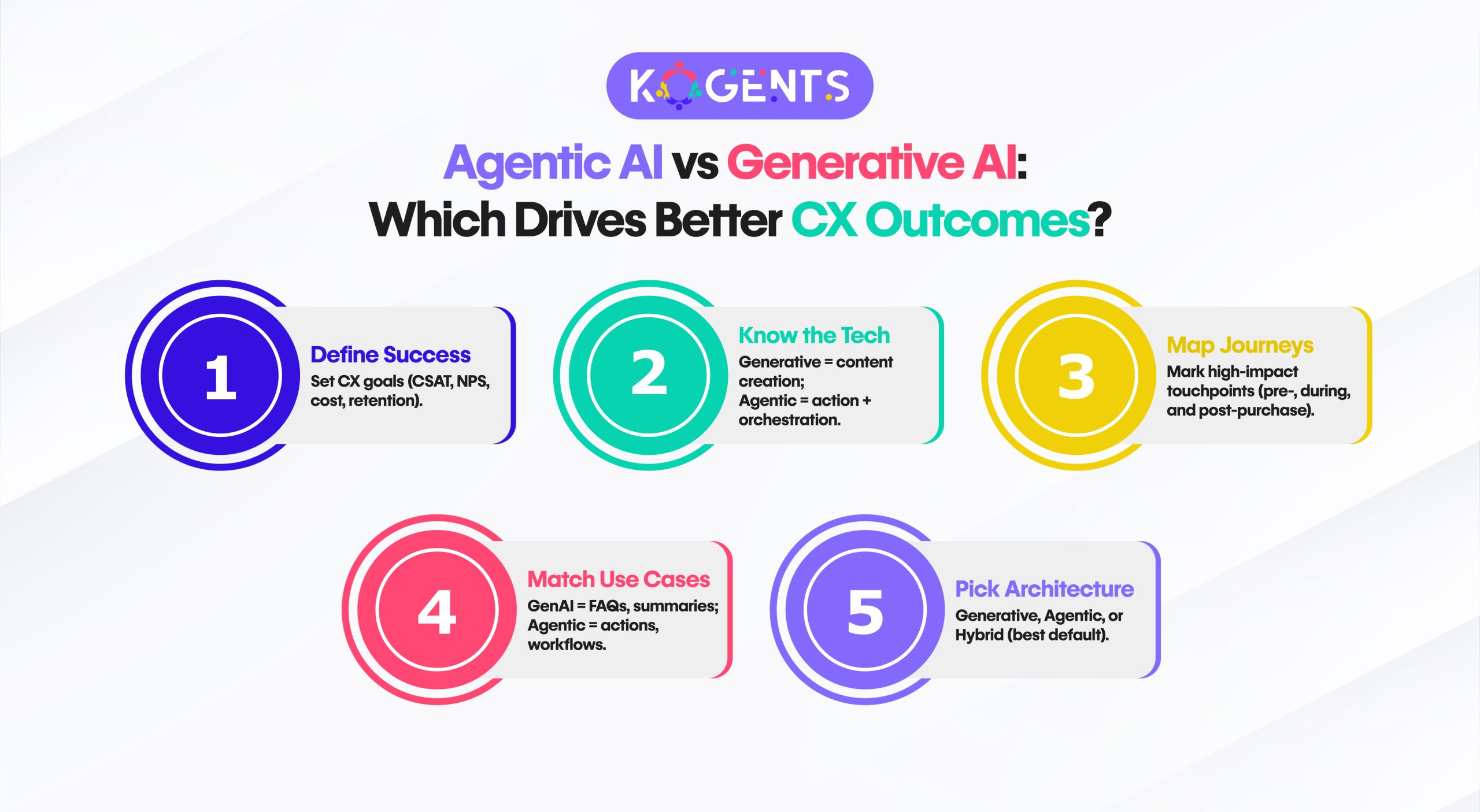
    Agentic vs. Generative AI: Key Differences

    While generative AI is focused on creating new content based on prompts, agentic AI takes a more holistic approach. 

    It uses generative capabilities as just one tool among many, combining them with contextual understanding and machine learning to achieve autonomous action. 

    A report by McKinsey suggests that nearly eight in ten companies have deployed gen AI in some form, but roughly the same percentage report no material impact on earnings.1 We call this the “gen AI paradox.”

    Characteristics Agentic AI Generative AI
    Primary Function Autonomous action and decision-making Content generation based on prompts
    Contextual Understanding Interprets context and adjusts actions accordingly Limited to generating content based on input
    Learning and Adaptation Learns from past interactions to improve future actions Improves based on the data it’s trained on

    agentic ai in customer experience

    The Impact of Agentic AI in Customer Experience

    Agentic AI’s capabilities are enabling businesses to shift from a reactive to a proactive customer service model. 

    By leveraging this technology, companies can now anticipate and resolve customer issues before they become major problems, significantly enhancing the overall customer experience.

    When deployed intelligently, agentic AI allows brands to proactively; 

    • Solve problems
    • Deliver hyper-personalized interactions
    • Create seamless experiences at scale, 
    • Build trust and loyalty with deeper emotional connections. 

    Our research showed that 72% of executives believe AI will transform their approach to customer experience, while 69% expect it to significantly or completely change the way their industry operates over the next three years.

    From Reactive to Proactive Customer Service

    The traditional customer service model is reactive, responding to customer complaints and issues as they arise. 

    Agentic AI is transforming this model by enabling businesses to anticipate and address potential problems before they impact customers.

    This proactive approach not only improves customer satisfaction but also reduces the workload for customer support agents, allowing them to focus on more complex issues.

    By detecting potential issues in real-time and initiating resolution processes autonomously, agentic AI systems can significantly reduce the need for customers to report problems. 

    Need for it? This proactive service is revolutionizing the customer experience by providing timely and relevant support, thereby enhancing customer trust and loyalty.

    Autonomous Problem-Solving Capabilities

    It enables it to navigate complex customer issues by connecting information across multiple systems and data sources. 

    This allows businesses to deliver hyper-personalized interactions tailored to individual customer preferences, behaviors, and history. 

    As a result, companies can create seamless, human-centric experiences at scale that would be impossible to deliver through traditional service models.

    Leading organizations are using agentic AI to build deeper customer trust and loyalty by demonstrating that they truly understand and value their customers. 

    agentic AI in customer experience

    How Agentic AI in Customer Experience Transforms the Customer Journey

    The integration of agentic AI in customer experience is transforming how businesses interact with their customers. 

    By leveraging AI agents that can act autonomously, companies can now provide more personalized and proactive customer service.

    Pre-Purchase: Personalized Recommendations and Assistance

    Agentic AI revolutionizes the pre-purchase phase by delivering highly personalized recommendations based on individual preferences, browsing history, and similar customer profiles

    This not only enhances the customer experience but also increases the likelihood of conversion.

    Example:  AI can analyze customer data to suggest relevant products or services, making the shopping experience more intuitive and engaging. 
    Benefits Description
    Personalized Recommendations AI analyzes customer data to suggest relevant products or services.
    Enhanced Customer Experience Tailored experiences increase customer satisfaction and engagement.

    The Purchase Phase: Streamlining Transactions and Decisions

    During the purchase phase, agentic AI streamlines transactions and simplifies complex decisions

    By providing real-time assistance that adapts to customer needs, AI helps remove friction points, making the purchase process smoother.

    Exemplary Reminder: AI-powered chatbots can answer customer queries instantly, reducing the time spent on resolving issues and improving overall service quality.

    Post-Purchase: Proactive Support and Issue Resolution

    Here, agentic AI enables proactive support and issue resolution. AI can identify potential problems before they affect customers, allowing for timely intervention.

    This proactive approach not only resolves issues quickly but also enhances customer experiences by demonstrating a company’s commitment to their satisfaction.

    • Proactive issue detection and resolution
    • Enhanced customer satisfaction through timely support
    • Improved overall customer experience
    In-depth Analysis: As companies continue to adopt AI-driven solutions, the future of customer experience looks increasingly promising.

    Real-World Applications of Agentic AI in Customer Experience

    In e-commerce and retail, agentic AI is being used to recover abandoned carts, personalize product recommendations, and manage inventory in real-time. 

    For instance, agentic AI systems can automatically send reminder emails or offer personalized discounts to customers who have left their carts unattended. 

    Additionally, these systems can analyze real-time supply data to automatically reorder stock and notify customers about new inventory arrivals.

    • Personalized product recommendations based on customer behavior and preferences
    • Automated inventory management to prevent stockouts and overstocking
    • Proactive customer support through timely reminders and notifications

    Financial Services Applications

    In financial services, agentic AI is being used for:

    • fraud detection
    • personalized financial advice
    • streamlined application processes
    • analyze customer data to identify potential security threats and prevent fraudulent activities. 
    • Personalized financial planning and advice for customers
    • Streamlined application processes for loans and credit cards

    Additional Key benefits: Moreover, these systems can offer customized financial recommendations based on a customer’s financial history and goals.

    Travel and Hospitality Implementations

    In this scenario, agentic AI systems can make bookings across multiple websites and systems, bundle up detailed itineraries, and even update customers about flight delays or cancellations.

    • Seamless booking experiences across multiple platforms
    • Proactive itinerary management to minimize disruptions
    • Personalized travel recommendations based on customer preferences

    Implement Agentic AI in Your Customer Experience Strategy

    Implementing agentic AI requires a thoughtful approach that aligns with your customer experience goals. 

    As you proceed further on this journey, it’s essential to consider several key factors that will influence the success of your agentic AI implementation.

    Assessing Your Organization’s AI Readiness

    Before diving into agentic AI, you need to assess your organization’s readiness. This involves examining your existing data infrastructure, technical capabilities, and organizational culture. 

    Your organization’s AI readiness is crucial in determining how effectively you can implement and benefit from agentic AI. Consider the following factors:

    • Data quality and availability
    • Technical infrastructure and scalability
    • Employee skills and training needs
    • Organizational culture and adaptability

    Building the Right Data Infrastructure

    Agentic AI is only as powerful as the data it consumes. To deliver value, agentic AI needs access to high-quality, relevant customer and operational data. Building the right data infrastructure is critical. This may involve:

    • Data integration across silos and platforms
    • Data quality improvement initiatives
    • Establishing data governance policies

    One of the key advantages of using a platform like Genesys Cloud AI is its pre-built, contextualized data systems. 

    Key point: These systems can eliminate the heavy lifting typically required for AI readiness, allowing you to rely on the provider to do the hard work for you.

    Integration with Existing Customer Service Systems

    Seamless integration with your existing customer service systems is vital to avoid disruption to current processes. 

    This includes integrating agentic AI with your CRM, ticketing systems, and other customer touchpoints. 

    A well-planned integration strategy ensures that agentic AI enhances your customer experience without causing operational disruptions.

    Integration Considerations Benefits
    API connectivity Enables seamless data exchange between systems
    Workflow automation Streamlines customer service processes
    Data synchronization Ensures consistency across all customer touchpoints

    Balance Automation and Human Touch Simultaneously

    As you integrate agentic AI into your customer experience strategy, finding the right balance between automation and human touch becomes crucial. 

    The goal is to leverage AI for efficiency while maintaining the emotional connection that human agents provide.

    Deploying AI agents can actually bolster human connection by handling mundane, day-to-day tasks involved in customer support. 

    This frees up human agents to focus on complex, emotionally nuanced interactions where the human touch is necessary.

    The Human-AI Collaboration Model

    In this model, AI handles routine, data-intensive tasks, while humans focus on tasks that require empathy and complex problem-solving. 

    For instance, AI can manage initial customer inquiries, providing quick responses to common questions. 

    Meanwhile, human agents can step in to resolve more intricate issues, offering personalized support.

    By dividing tasks in this manner, companies can create a seamless customer experience that combines the strengths of both AI and human agents. 

    Ethical Considerations and Trust Building

    As agentic AI becomes more embedded in customer service, ethical concerns around data privacy and transparency come to the forefront. 

    To build trust, businesses must be transparent about AI use, protect customer data diligently, and clearly inform users how their data is being used.

    By prioritizing these ethical considerations, companies can create AI-powered experiences that customers trust. 

    This involves maintaining options for human interaction when preferred and ensuring consistent performance.

    Key Considerations Benefits Implementation Strategies
    Balancing AI and Human Touch Enhanced Customer Experience Divide tasks between AI and humans based on complexity and emotional nuance.
    Ethical AI Use Building Customer Trust Ensure transparency, protect customer data, and maintain human interaction options.
    Data Privacy Compliance and Trust Implement robust data protection measures and clearly communicate data use.

    Transform Your Customer Experience with Agentic AI Today! 

    As businesses look to transform their customer journeys, the role of agentic AI in customer experience has been enhanced and cannot be overstated. 

    As agentic AI continues to evolve, it will orchestrate entire customer journeys across multiple touchpoints and systems, enhancing customer interactions and driving business growth. 

    To capitalize on this transformative potential, businesses must prepare for the integration of agentic AI into their customer experience strategies, ensuring they can deliver exceptional customer experiences that drive long-term success. 

    So, for a secure future, collaborate with Kogent AI now. Please call us at (267) 248-9454 or email us at info@portal.kogents.ai

    FAQs

    What is the primary benefit of using agentic systems for customer service?

    The primary benefit is the ability to provide autonomous problem-solving capabilities, allowing for faster and more efficient issue resolution.

    How do agentic AI systems handle complex customer queries?

    Agentic AI systems use natural language processing to understand and respond to complex customer queries, providing accurate and relevant solutions.

    Can agentic AI be integrated with existing customer service systems?

    Yes, agentic AI can be integrated with existing customer service systems, enabling a seamless and efficient customer experience.

    How does agentic AI impact inventory management and order fulfillment?

    Agentic AI can help optimize inventory management and order fulfillment by providing real-time updates and automating routine tasks.

    What are some common use cases for agentic AI in e-commerce?

    Common use cases include personalized recommendations, proactive support, and streamlining transactions.

    How can businesses ensure trust and transparency when implementing agentic AI?

    Businesses can ensure trust and transparency by being open about their use of agentic AI, providing clear explanations of how it works, and ensuring that human agents are available to handle complex issues.

  • Scaling Customer Support With AI Agents in Customer Support Challenges

    Scaling Customer Support With AI Agents in Customer Support Challenges

    Ever imagined how scaling your customer support operations without sacrificing quality or personalization in every interaction would be done? 

    With the rise of AI-powered support agents, this is possible as routine tasks can now be automated, giving human teams the freedom to focus on complex issues and deliver optimum results. 

    Additionally, delivering outstanding customer experience has become a paramount factor for business growth and long-term loyalty.

    Yet, traditional methods often fall short, bogged down by repetitive work and slow response times.

    This is where AI agents in customer support challenges make a real difference, helping businesses improve efficiency, resolve queries faster, and stay ahead in a demanding market.

    Key Takeaways

    • Understand the current state of customer support and its challenges.
    • Learn about the different types of AI agents that can support your customers.
    • Discover effective strategies for implementing AI agents in your customer support operations.
    • Explore real-world success stories of businesses that have transformed their customer support with AI agents.
    • Gain insights into maintaining quality and personalization in customer interactions with AI agents.

    What Is the Role of AI Agents in Customer Support 

    Challenges

    As you explore the potential of AI in customer support, it’s essential to understand the role of AI agents. 

    AI agents function like employees with specific skill sets, leveraging knowledge about an organization’s products, customers, and people to autonomously complete tasks and save humans time.

    What Are AI Agents and How Do They Work?

    Customer service AI agents are designed to effectively understand and respond to customer inquiries. They use advanced natural language processing to comprehend customer queries in context, regardless of how they’re phrased.

    By 2028, 33% of enterprise software applications will include agentic AI, up from less than 1% in 2024, enabling 15% of day-to-day work decisions to be made autonomously.

    This ability allows AI agents to provide personalized responses based on customer history, enhancing the overall customer experience.

    A Technological Leap: From Basic Chatbots to Intelligent AI Agents

    This growth has been significant, moving from simple chatbots that relied on keyword matching to sophisticated agents that can understand nuanced requests and detect sentiment. 

    Modern AI agents can maintain conversation context and remember previous interactions, providing a more human-like experience, though AI support agent limitations still exist in areas such as empathy and complex problem-solving. 

    Studies such as the Harvard Business School research emphasize that while AI systems can mimic empathy, customers still strongly value genuine human connection.

    Key Impact: It represents a fundamental shift from programmed responses to intelligent conversation management.

    Feature Basic Chatbots Intelligent AI Agents
    Understanding Customer Queries Rely on keyword matching Use advanced natural language processing.
    Response Capability Limited to predetermined scripts Can provide personalized responses based on customer history.
    Conversation Management Programmed responses Intelligent conversation management

    What Types of AI Agents Are Reshaping Customer Support

    Customer support is being redefined by the introduction of various AI agents that cater to different business needs. 

    These AI-powered solutions are designed to:

    • Customer experience
    • Improve operational efficiency, 
    • Provide valuable insights to businesses.

    Autonomous Agents Or Independent Problem Solvers? 

    They are AI-driven systems that can independently resolve customer issues without human intervention.

    These agents use advanced algorithms to understand customer queries and provide accurate solutions. 

    By leveraging natural language processing (NLP), autonomous agents can effectively address a wide range of customer concerns, reducing the workload on human support teams and enabling them to focus on more complex issues.

    Augmented Agents: AI Copilots for Human Support Teams

    They serve as AI copilots for human support teams, enhancing their capabilities and improving response times. 

    Key point: These agents provide real-time suggestions and insights to support agents, enabling them to resolve customer issues more efficiently. 

    By analyzing customer interaction data, augmented agents can identify common issues and offer proactive solutions, thereby improving customer satisfaction.

    Analyst Agents: Turn Data into Actionable Insights

    They specialize in data analysis, deriving actionable business insights from vast amounts of customer interaction data. 

    These AI agents in customer support challenges can monitor sentiment in customer conversations, proactively alert teams about potential SLA breaches, and provide valuable insights with simple natural language prompts. 

    Some key benefits of analyst agents include:

    • Processing vast amounts of customer interaction data to identify patterns, trends, and insights that would be impossible to detect manually.
    • Performing sentiment analysis across customer conversations to gauge satisfaction levels and identify potential churn risks.
    • Automatically categorizing and clustering similar customer issues, helping your team identify common problems that need product or process improvements.
    • Transforming raw support data into actionable business intelligence, enabling data-driven decision-making across your organization.

    Soft Reminder:  The integration of data from an organization’s existing tech stack, analyst agents offer a comprehensive Customer360, enabling businesses to make informed decisions and generate reports in seconds using natural language queries.

    ai agents in customer support challenges

    Key Benefits of Implementing AI Agents

    The integration of AI agents into customer support operations brings significant advantages, transforming the way businesses interact with their customers.

    Enhancing Efficiency and Response Times

    AI agents significantly enhance the efficiency of customer support operations by providing immediate responses to customer inquiries. 

    This reduces wait times, allowing your customers to get the help they need quickly. 

    With AI handling initial inquiries, your human support team can focus on more complex issues, thereby improving overall response times and enhancing the customer experience.

    Reducing Operational Costs

    • Implementing AI agents can lead to substantial cost savings for your business. 
    • By automating routine support tasks, you can reduce the workload on your human support agents, allowing you to allocate resources more effectively. 

    Cost Saving Tip: This cost-effective approach to customer support enables you to maintain high service levels while minimizing operational expenses.

    Improving Customer Satisfaction and Loyalty

    AI agents contribute to improved customer satisfaction by offering 24/7 support availability, consistent information, and personalized experiences. 

    Customers appreciate the immediate responses and the ability to get help on their schedule. 

    Moreover, AI agents can identify potential issues before they become major problems, demonstrating your commitment to customer success. 

    This proactive approach not only enhances customer satisfaction but also fosters customer loyalty, leading to higher retention rates and increased customer lifetime value.

    • Customers benefit from immediate responses and reduced wait times, improving overall satisfaction.
    • The consistency of information provided by AI agents builds trust in your service quality.
    • Personalized experiences, thanks to AI remembering past interactions, make customers feel valued.
    • Proactive support identifies potential issues before they escalate, demonstrating your commitment to customer success.

    Navigate Implementation Challenges

    As you integrate AI into your customer support operations, you’ll need to address several key implementation challenges. 

    The successful deployment of AI agents can significantly enhance your customer support capabilities, but it requires careful planning and execution.

    Balancing Automation with the Human Touch

    One of the primary challenges is striking the right balance between automation and human interaction, as automation issues in customer service often arise when systems replace empathy with efficiency.

    • While AI can efficiently handle routine inquiries, complex issues often require a human touch. 
    • Ensuring that your AI system can seamlessly escalate issues to human representatives when necessary is crucial. 

    Pro-Pro Tip: Balance is key to maintaining high levels of customer satisfaction while leveraging the efficiency of AI.

    Data Security and Privacy Concerns

    They are significant concerns when implementing AI agents. These systems often require access to sensitive customer data to function effectively. 

    Compliance with U.S. frameworks such as the CCPA and the NIST AI Risk Management Framework is critical to maintaining trust and ensuring responsible AI deployment.

    • Soft Reminders: Implementing robust security measures to protect this data is essential. 
    • Ensure compliance with relevant data protection regulations, such as GDPR or CCPA, depending on your region and customer base.

    Technical Integration with Existing Systems

    Integrating AI agents with your existing CRM, ticketing systems, and knowledge bases requires careful planning and technical expertise. 

    API compatibility and data standardization across platforms are critical challenges that must be addressed during implementation. 

    You may need to evaluate whether to build custom integrations or use middleware solutions that connect AI capabilities with existing infrastructure.

    To overcome these technical hurdles, consider; 

    • leveraging API-based integrations 
    • and middleware solutions that facilitate seamless data exchange between systems. 

    Best Practices for AI Agent Deployment

    The AI-agent integration in customer service hinges on a well-planned strategy that considers both customer needs and operational requirements. 

    To ensure the effective integration of AI into customer support, several best practices should be adopted.

    Creating a Comprehensive Implementation Strategy

    Developing a comprehensive implementation strategy is crucial for the successful deployment of AI agents, especially when implementing AI support agents in the U.S.

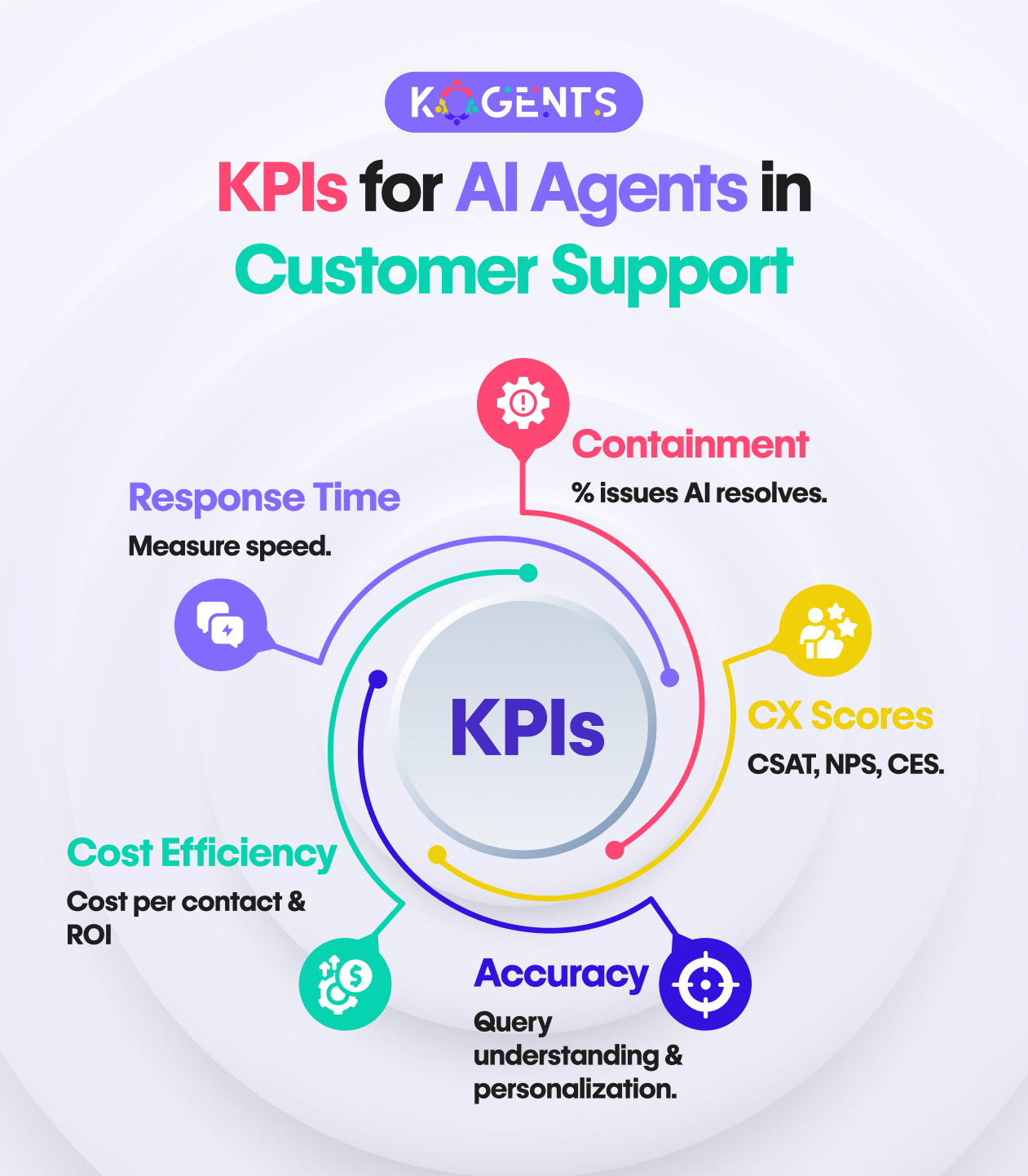
    This involves establishing clear objectives, defining the scope of AI deployment, and identifying key performance indicators (KPIs) to measure success. 

    By doing so, you can ensure that AI agents are aligned with your customer support goals and that their impact is accurately assessed.

    Training Your Team to Work Alongside AI

    To maximize the benefits of AI agents, it’s essential to train your support team to work effectively alongside them. 

    This includes providing training on AI capabilities, understanding AI-driven insights, and learning how to seamlessly hand off customer issues between AI and human agents. 

    Measuring Success and Continuous Improvement

    Assessing the success of AI agents requires a data-driven approach. Key metrics to evaluate include accuracy, resolution rates, and customer satisfaction scores. To continuously improve AI performance, you should:

    • Establish comprehensive metrics that measure both operational efficiency and customer experience.
    • Implement regular review cycles to analyze AI performance data and identify areas for improvement.
    • Create feedback loops that incorporate input from customers and support agents to refine AI capabilities.
    • Monitor containment rates and successful handoffs to human agents.
    • Use A/B testing to evaluate different AI approaches and determine the best strategies for your service AI agent base. 

    ai agents in customer support challenges

    Real-World Success Scenario

    A notable company implemented AI copilots to assist their 500+ support agents, resulting in a 42% increase in first-contact resolution rates. 

    Large-scale deployments are evident in enterprises like Salesforce, where its AI platform Agentforce has demonstrated how copilots can enhance agent efficiency and customer satisfaction at scale.

    This not only enhanced agent productivity but also improved customer satisfaction by 18% as agents could focus on building rapport while the AI handled information retrieval and procedural guidance.

    • A telecommunications provider saw a 42% increase in first-contact resolution rates after deploying AI copilots to assist their support agents.
    • Their augmented agents now handle 30% more customer inquiries per day, reporting higher job satisfaction due to reduced repetitive tasks.
    • The AI copilot provides real-time guidance, leveraging customer history to suggest solutions and mitigate conversational AI challenges in support. 

    Redefine Customer Experience with AI Agents in Support Challenges! 

    As AI evolves, the future of customer support is set for a major transformation. AI agents in customer support challenges will become more widespread, helping businesses deliver exceptional experiences. 

    With advances in natural language processing, they’ll handle complex inquiries with near-human understanding, while sentiment analysis and emotion recognition will enable empathetic, adaptive responses. 

    Support ecosystems will shift toward human-AI collaboration, blending efficiency with empathy. 

    By leveraging customer data, AI agents will drive personalized support at scale. Hence, redefine your business to connect with customers by having Kogent AI by your side. Call us at (267) 248-9454 or email us at info@portal.kogents.ai before it’s too late! 

    FAQs

    What are the primary benefits of integrating AI into customer service AI agent operations?

    Integrating AI into customer service operations can significantly enhance efficiency and response times, reduce operational costs, and improve overall customer satisfaction and loyalty.

    How do AI agents handle complex customer issues?

    AI agents are designed to handle a range of customer issues, from simple queries to more complex problems, by leveraging natural language processing and sentiment analysis to provide accurate and empathetic responses.

    Can AI agents replace human customer support agents entirely?

    While AI agents can automate many tasks and provide 24/7 support, human customer support agents are still essential for handling complex issues that require a human touch and empathy, making Hybrid human-AI workflows often the most effective.

    What are some common concerns when implementing AI agents in customer support?

    Common concerns include data security and privacy, ensuring a balance between automation and human interaction, and Integration with legacy systems and processes.

    How can businesses measure the success of AI agent deployment in customer support?

    Businesses can measure success by tracking key performance indicators such as response times, customer satisfaction ratings, and operational cost savings, and continually refining their AI strategy based on these insights.

    What is the role of human agents when AI is introduced to customer support?

    Human agents focus on complex issues that require empathy in AI  and a human touch, while AI agents handle more routine tasks, allowing human agents to provide more personalized and effective support.

    What challenges do AI agents face in U.S. customer support?

    AI agents often struggle with personalization, complex queries, and integration with legacy systems, making What challenges do AI agents face in U.S. customer support? A key consideration for businesses.

    What are the limitations of AI chatbots in American support services?

    Chatbots may lack empathy, context understanding, and explainability, highlighting the relevance of the Limitations of AI chatbots in American support services.

    Are there examples of AI agent failures in U.S. support systems?

    Yes, cases like the Social Security Administration’s AI rollout illustrate real-world challenges, answering the Case study of AI agent failures in U.S. support.

    Which AI customer support tools can help overcome integration issues in the U.S.?

    Platforms with advanced APIs and legacy system compatibility address common bottlenecks, relevant to Best AI customer support tools to overcome integration issues U.S.

    How do AI customer support platforms ensure compliance with U.S. regulations?

    Tools that follow frameworks like California Consumer Privacy Act (CCPA) and Explainable AI (XAI) maintain Data privacy (CCPA, GDPR) and AI transparency, reflecting searches like AI customer support platforms with compliance features.

  • Improving Efficiency in Debt Collection with AI Agents for Customer Support

    Improving Efficiency in Debt Collection with AI Agents for Customer Support

    Are outdated methods holding back your debt recovery processes

    The industry’s reliance on obsolete techniques has hampered progress for years.

    But now, AI agents are rewriting the rules, revamping the debt market, and proving to be game changers in recovery success. 

    Therefore, by leveraging AI agents for customer support in debt collection, financial institutions can transform their approach in this domain, making it smarter and more efficient.

    This not only improves efficiency but also enhances debtor engagement and compliance. 

    With advanced features like automated communication, multilingual support, and built-in compliance checks, AI ensures faster, fairer, and more accurate recovery outcomes

    Ultimately, it aids organizations to reduce costs, improve recovery rates, and build stronger relationships with customers.

    Key Takeaways

    • Discover how AI-powered customer support can dramatically improve collection rates.
    • Learn about the benefits of automating routine tasks in debt collection.
    • Understand how AI creates more personalized and compliant debt recovery strategies.
    • Discover the tangible benefits of increased efficiency and enhanced customer satisfaction.
    • Find out how AI agents can reduce operational costs in debt collection.

    The Current State of Debt Collection in the Financial Industry

    As the financial industry grows, the need for modernizing debt recovery processes becomes increasingly evident. 

    One fact depicts that ‘’the global debt collection software market size was estimated at $4 billion in 2022 and is expected to reach $7.4 billion by 2028, exhibiting a CAGR of 10.91%.’’

    The industry is undergoing a significant transformation, driven by technological advancements and changing consumer expectations.

    This shift necessitates a re-evaluation of traditional debt collection methods.

    Why Traditional Debt Collection Methods Fall Short? 

    They are often manual, time-intensive, and lack personalization. They struggle to handle the increasing volume of accounts and complex debt portfolios effectively.

    Moreover, these methods often fail to meet the growing regulatory requirements and changing customer expectations, leading to inefficiencies in the debt recovery process.

    AI Agents for Customer Support in debt collection

    Innovation in Debt Recovery Process: A Need Of the Hour?

    As Vlad Yatsenko, Co-founder of Revolut, rightly says, 

    “We’re not trying to replace bankers, we’re trying to make them more efficient,” 

    This clearly depicts the need for change in debt recovery.  

    Therefore, to remain competitive, you need innovative solutions that can efficiently manage increasing volumes of accounts while maintaining personalized approaches. 

    Key drivers for this innovation include:

    • The financial industry’s digital transformation necessitates modernized debt recovery processes. 
    • The requirement for sophisticated compliance monitoring and management is due to the development of regulatory requirements.
    • Shifted customer expectations demanding more flexible, understanding, and digitally accessible payment options.
    • A need for advanced analytical capabilities to handle the increasing complexity of debt portfolios.

    Key point: Adopting innovation in debt recovery is crucial for improving efficiency and achieving better outcomes in the financial industry.

    Key Challenges Facing Traditional Debt Collection Approaches

    AI agents for customer support in debt collection face several challenges that directly affect both recovery rates and customer relationships. These challenges can be broadly categorized into several key areas.

    Manual and Time-Intensive Processes

    Manual processes in debt collection are not only time-consuming but also prone to errors, reducing overall efficiency. This can lead to delayed recoveries and increased operational costs.

    Low Debtor Engagement Rates

    Low engagement rates among debtors can significantly hinder the debt recovery process. Effective interaction is crucial for successful debt collection.

    Compliance Risks and Regulatory Hurdles

    The debt collection industry is heavily regulated, and non-compliance can result in severe penalties. 

    Key Rule: Navigating these regulations is a significant challenge.

    Customer Relationship Strain

    A negative experience during the debt collection process can strain customer relationships, potentially leading to long-term losses for businesses. 

    It’s essential to balance recovery efforts with customer sensitivity.

    To address these issues, AI debt collection agents are transforming the industry by offering personalized, efficient, and compliant support. 

    With advanced self-learning capabilities, they continuously improve performance, enhancing debtor engagement and overall satisfaction.

    AI Agents for Customer Support in debt collection

    How AI Agents Transform Customer Support in Debt Collection

    AI-powered systems address these challenges by automating communication, monitoring compliance, and delivering personalized debtor interactions. 

    Much like a commercial real estate website design company builds modern, intuitive property listing website design platforms, AI agents streamline debt recovery with:

    • IDX integration and MLS data feeds, style automation that ensures real-time accuracy in communication.
    • Real estate CRM integration, like workflows that centralize debtor data for better insights.
    • Mobile-friendly property websites’ logic applied to omnichannel support, giving debtors access anytime, anywhere.

    This results in smarter, faster, and more compliant debt collection.

    AI Debt Collection Agent

    They are revolutionizing customer support in debt collection by providing personalized and efficient interactions. 

    This transformation is largely due to the advanced capabilities of AI agents, including their ability to learn and improve continuously.

    Self-Learning Capabilities and Continuous Improvement

    AI agents in debt collection utilize self-learning capabilities to enhance their performance over time. 

    This means that as they interact with more debtors, they become more effective at resolving issues and improving customer satisfaction.

    Smart Model Switching for Optimal Performance

    AI agents utilize technologies such as ModelMesh for smart model switching. This ensures the right model is applied for each task, balancing speed, accuracy, and cost.

    It’s the same principle applied by top CRE (commercial real estate) website design services, where scalable solutions are customized to client needs.

    The benefits of this approach include:

    • AI agents utilize smart model switching technology to select the optimal approach for each specific collection scenario and debtor interaction.
    • You’ll experience improved efficiency as agents automatically balance speed, accuracy, and cost considerations in real-time during the collection process.
    • The ModelMesh technology ensures that simple queries are handled with lightweight models for speed, while complex negotiations utilize more sophisticated models for accuracy.
    • Just as a commercial real estate web design company in the USA leverages technology to deliver seamless property listing websites and IDX integration, modern AI agents apply intelligent automation to streamline debt collection. 
    • The same principles of real estate web development, like scalability, user experience, and real estate CRM integration, can be seen in how AI agents optimize interactions for efficiency and customer care.
    • By adopting this approach, businesses can move beyond outdated, manual systems and embrace solutions as innovative as those offered by a professional real estate marketing and website design company, balancing compliance, efficiency, and debtor relationships for measurable gains.

    Aligning with Modern Digital Standards

    To remain competitive, AI-powered debt collection systems should follow standards that mirror the credibility practices of the web design industry. 

    Just as a U.S. commercial real estate website development agency ensures ADA compliance and IDX/MLS integration, AI agents maintain regulatory compliance with FDCPA, TCPA, and other financial regulations.

    Like a professional real estate marketing and website design company, they focus on delivering consistent communication, strong branding in debtor interactions, and measurable improvements in engagement.

    Core Features of AI-Powered Debt Collection Systems

    AI-powered debt collection systems are revolutionizing the industry with their advanced features. 

    These systems offer a range of benefits, including improved efficiency, enhanced customer experience, and increased compliance.

    Automated Communication and Follow-ups

    AI agents automate communication and follow-ups, ensuring timely interactions with debtors.

    Personalized Debtor Engagement Strategies

    AI-driven systems create personalized engagement strategies, enhancing the customer experience.

    Regulatory Compliance Monitoring

    These systems continuously monitor collection activities to ensure regulatory compliance.

    Multi-language Support and 24/7 Availability

    AI-powered debt collection systems offer 24/7 availability and support in multiple languages, catering to diverse debtor populations.

    The benefits of these features include:

    • Round-the-clock availability for debtor interactions.
    • Support in over 150 languages, removing communication barriers.
    • Immediate payment processing and arrangements.
    • Consistent messaging and tone across languages.
    • Continuous operation, capturing payment opportunities outside business hours.

    Addressing Compliance in Debt Collection with AI Agents

    In the complex landscape of debt collection, ensuring compliance with regulatory requirements is paramount. 

    The use of AI agents has revolutionized the way debt collection agencies approach compliance, making it more efficient and effective.

    Built-in Compliance with FDCPA, TCPA, and Other Regulations

    Traditional debt collection methods often rely on manual checks, which can be time-consuming and prone to errors. 

    In contrast, AI-powered systems like LEXI offer built-in, real-time compliance checks. 

    This means that all outgoing communications are scrutinized for potential violations before they occur, significantly reducing the risk of non-compliance.

    Real-time Compliance Checks and Risk Mitigation

    AI systems perform real-time compliance checks on all outgoing communications, preventing potential violations. Some key features include:

    • Automated risk scoring to identify high-risk collection scenarios
    • Comprehensive documentation of all compliance checks for audit trails
    • Detection of potentially problematic language or approaches with suggestions for compliant alternatives
    • Real-time monitoring for immediate adaptation to new regulations or court rulings
    • Regular compliance reports highlighting potential risk areas and suggesting process improvements. 
    Feature Traditional Collections Powered by LEXI
    Compliance Checks Manual Built-in, Real-time
    Risk Mitigation Limited Automated Risk Scoring
    Documentation Inconsistent Comprehensive Audit Trails

    By leveraging AI agents, debt collection agencies can not only ensure compliance with regulations like FDCPA and TCPA but also mitigate risk and improve overall debt collection efficiency.

    Keynote: The integration of such technology represents a significant step forward in managing information and enhancing compliance posture.

    The Multi-Agent Framework for Comprehensive Debt Recovery

    The multi-agent framework revolutionizes debt recovery by integrating various AI-powered agents. 

    This comprehensive system ensures that all aspects of debt collection are addressed efficiently and effectively.

    Sales Operations Agent

    It is designed for payment agreement management and streamlines the negotiation process, ensuring that payment plans are feasible and compliant with regulatory requirements.

    Customer Service Agent

    The Customer Service AI agent focuses on debtor query resolution. 

    It provides prompt and accurate responses to debtor inquiries, improving overall customer satisfaction.

    KYC and Compliance Agents

    They are crucial for regulatory adherence. They verify debtor identities and maintain accurate records, ensuring that all collection activities meet regulatory requirements.

    Agent Type Primary Function Key Benefits
    Sales Operations Agent Payment Agreement Management Efficient negotiation process, compliant payment plans.
    Customer Service Agent Debtor Query Resolution Prompt and accurate responses improve customer satisfaction.
    KYC and Compliance Agents Regulatory Adherence Verified debtor identities, accurate records, and regulatory compliance.

    Measurable ROI From Implementing AI Agents for Customer Support in Debt Collection

    AI agents are revolutionizing debt collection by providing measurable ROI. By automating routine tasks and enhancing collector capabilities, organizations can achieve significant financial benefits.

    Reduction in Operational Costs

    The integration of AI agents leads to a substantial reduction in operational costs. With AI handling routine tasks, human collectors can focus on complex cases, resulting in more efficient use of resources.

    Improved Recovery Rates and Collection Efficiency

    AI-powered debt collection systems improve recovery rates and collection efficiency. By analyzing debtor data and behavior, AI agents can develop targeted strategies that increase the likelihood of successful collections.

    Enhanced Agent Productivity and Reduced Handling Time

    The use of AI agents leads to increased collector productivity and decreased handling time. With AI support, human collectors experience more than half of the total reduction in average handling time for collection cases, allowing them to manage larger portfolios effectively.

    Metric Improvement
    Average Handling Time (AHT) Up to 70% reduction
    Collector Productivity 45% increase
    Accounts-to-Collector Ratio Increased without sacrificing quality

    Seamless Integration with Existing Collection Systems

    You can expect a streamlined integration experience with AI-driven debt collection solutions that enhance your current infrastructure without disrupting existing workflows.

    Pre-built Integrations with Major Contact Centers

    Our AI debt collection platform offers pre-built integrations with major contact centers, ensuring compatibility and ease of use. 

    This allows you to leverage your existing infrastructure while benefiting from advanced AI capabilities.

    Implementation Timeline and Process

    • The implementation process typically ranges from 4 to 12 weeks, depending on the complexity of your existing infrastructure. 
    • You’ll experience a phased implementation approach, starting with core functionality and expanding to advanced capabilities as the system learns your collection patterns.
    • The implementation includes configuration of compliance parameters specific to your regulatory environment and collection policies. 
    • Integration testing ensures seamless data flow between AI agents and your existing collection management systems before full deployment.

    Human-AI Collaboration: Redefining Debt Collection Workflows

    AI-powered solutions are transforming traditional debt collection methods by augmenting human capabilities. This synergy not only improves productivity but also makes the debt collection process more solution-focused.

    The integration of AI agents into your debt collection workflows enables a more efficient allocation of resources

    By automating routine tasks, AI agents allow human collectors to focus on complex cases that require empathy, negotiation, and personalized attention.

    Augmenting Human Collectors’ Capabilities

    AI agents enhance the capabilities of your team by handling preliminary information gathering and verification. 

    This enables human collectors to maximize their time on high-value activities, thereby improving overall recovery outcomes.

    • AI-powered triage routes complex or sensitive cases to specialized human collectors.
    • Skill-based routing matches specific case types with the most qualified human collectors.
    • The system identifies accounts requiring human empathy or negotiation expertise.

    Focusing Human Resources on Complex Cases

    By leveraging AI agents, your debt collection processes become more efficient. Human resources are allocated to cases that require a personal touch, enhancing job satisfaction and productivity.

    Task AI Agent Role Human Collector Role
    Routine Information Gathering Handles preliminary data collection and verification Reviews and validates AI-collected data
    Complex Case Handling Routes complex cases to human collectors Manages complex cases requiring empathy and negotiation

    Case Study: Transforming Debt Collection Performance with AI Agents

    Consider implementing AI agents in debt collection to transform the customer experience. A notable case study illustrates the significant benefits of integrating AI-powered systems into debt recovery processes.

    Before and After Implementation Metrics

    The introduction of AI agents led to a substantial improvement in key performance indicators. The following table summarizes the before and after implementation metrics:

    Metric Before Implementation After Implementation
    Debtor Satisfaction Score 40% 64%
    Voluntary Payment Rate 20% 35%
    Complaint Rate 15% 7%

    Customer Satisfaction and Debtor Experience Improvements

    The AI agents use sentiment analysis to gauge a debtor’s tone and respond accordingly, fostering trust and maintaining customer loyalty

    As a result, debtor satisfaction scores typically increase by 40-60% after implementing AI collection systems with personalized approaches. 

    You’ll see measurable improvements in voluntary payment rates as debtors respond positively to more respectful and flexible collection experiences.

    Some key benefits of AI-powered debt collection include:

    • Increased debtor satisfaction through personalized communication
    • Improved voluntary payment rates due to more respectful interactions
    • Reduced complaint rates through consistent, compliant communication

    Embrace the Future of Debt Collection with Efficiency!

    With AI agents for customer support in debt collection, the process is becoming more efficient, personalized, and effective. 

    These intelligent solutions represent the future of debt recovery, delivering transformative improvements in both recovery rates and operational efficiency. 

    By adopting AI-powered collection strategies, your organization can revolutionize its approach, achieving stronger results while maintaining positive customer relationships. 

    This integration not only reduces costs but also creates a competitive advantage through superior recovery performance. 

    Transform your debt collection into a streamlined, customer-friendly process and position your organization at the forefront of industry innovation with Kogents ai 

    Give us a call at (267) 248-9454 or drop an email at info@portal.kogents.ai

    FAQs

    How do AI agents improve the debt recovery process?

    AI agents automate communication and follow-ups, personalize debtor engagement strategies, and monitor regulatory compliance, resulting in improved recovery rates and reduced operational costs.

    What are the benefits of using AI-powered debt recovery systems?

    AI-powered debt recovery systems offer automated workflows, enhanced efficiency, and improved compliance with regulations such as FDCPA and TCPA, leading to reduced handling time and increased productivity.

    How do AI agents ensure compliance with debt collection regulations?

    AI agents are designed with built-in compliance features, including real-time compliance checks and risk mitigation, to ensure adherence to relevant regulations and laws.

    Can AI agents integrate with existing collection systems?

    Yes, AI agents can be seamlessly integrated with existing collection systems, including major contact centers, to augment human collectors’ capabilities and improve overall performance.

    How do AI agents impact debtor engagement and customer satisfaction?

    AI agents personalize debtor engagement strategies, leading to improved debtor experience and customer satisfaction, while also reducing the strain on customer relationships.

    What is the expected ROI from implementing AI agents in debt collection?

    Implementing AI agents in debt collection can result in measurable ROI, including reduction in operational costs, improved recovery rates, and enhanced agent productivity.

    What makes a good commercial real estate website design?

    A good commercial real estate website combines IDX/MLS integration, mobile-friendly layouts, intuitive navigation, and professional branding to deliver a seamless property search experience.

    What are the key features of a U.S. commercial real estate website design company?

    A leading U.S. commercial real estate website design company provides custom property listing solutions, SEO optimization, ADA compliance, fast load speeds, and CRM or IDX/MLS-enabled integrations.

    What are the benefits of IDX/MLS integration for commercial real estate websites?

    The benefits of IDX/MLS integration include real-time property updates, advanced search functionality, better lead generation, and improved user experience for buyers and investors.

    How can I hire the best commercial real estate website design company in the USA?

    To hire a commercial real estate website design company in the USA, compare agencies, review client portfolios, check IDX/MLS expertise, and request a tailored quote for your project.

    Who are the top commercial real estate website design firms in the U.S.?

    Some of the best commercial real estate website design companies in the U.S. specialize in CRE-focused solutions with proven ROI. Always review top U.S. real estate design firm reviews before choosing.

    How can I compare prices and reviews of CRE website developers?

    If you’re searching for commercial real estate website developers near me or want to compare prices for real estate website design services in the USA, request multiple quotes and check verified platforms like Clutch, G2, and Google Reviews.

    What services does Kogent AI offer as a commercial real estate website design company?

    Kogent AI commercial real estate website design services include custom web development, IDX/MLS integration, digital marketing, and lead generation tools tailored for brokers, investors, and developers.

  • Measuring the ROI of AI conversational agents for dealership customer service

    Measuring the ROI of AI conversational agents for dealership customer service

    Is your dealership losing leads because customers can’t get answers quickly?

    Buyers today expect fast responses, personalized support, and easy online interactions every time they connect with a brand.

    The challenge is that traditional service models can no longer keep up with this demand, which is why more dealerships are adopting AI conversational agents as a solution.

    These intelligent virtual assistants do more than answer routine questions. They qualify leads, schedule test drives, handle service bookings, and provide 24/7 support across multiple channels.

    That all sounds promising, but the real question is what kind of return on investment they deliver.

    This guide on AI conversational agents for dealership customer service will help you evaluate their impact. 

    You will learn how they influence sales growth, customer satisfaction, and operational efficiency, and whether they can give your dealership the competitive edge it needs in 2025 and beyond.

    Key Takeaways

    • Understand how AI conversational agents work for car dealerships.
    • Discover the key benefits of AI-powered customer service.
    • Learn how to measure the effectiveness of AI conversational agents.
    • Explore top AI conversational agents available in 2025.
    • Discover how to implement AI solutions for your dealership effectively.

    How Conversational Agents Are Transforming the Automotive Industry?

    As the automotive industry continues to evolve, AI chatbots for car dealerships and virtual assistants for automotive customer service are becoming crucial components in enhancing customer service.

    These intelligent systems are designed to provide instant support across websites, messaging apps, and even automotive CRM platforms. 

    By delivering consistent information, they directly improve customer satisfaction and strengthen the overall customer experience. 

    What Are AI Conversational Agents for Car Dealerships?

    They are sophisticated software solutions that use natural language processing to understand and respond to customer inquiries. 

    They can be integrated into dealership websites, social media, and messaging platforms to provide 24/7 customer support. 

    As highlighted by JD Power customer satisfaction studies and NADA (National Automobile Dealers Association)reports, such tools are increasingly vital in modern dealerships.

    Note: They are pro at handling customer interactions, from simple queries about vehicle specifications to complex requests for customized price quotes-making them a vital part of dealership customer service automation.

    How AI Agents Transform Dealership Customer Service

    They do it by providing instant assistance and improving customer satisfaction. Some key benefits include:

      • Handling routine inquiries about vehicle specifications, pricing, and availability, freeing up sales teams to focus on high-value activities.
      • Analyzing customer data and interaction history to deliver personalized recommendations and follow-ups, powered by AI-powered CRM solutions for automotive.
    • Streamlining appointment scheduling for test drives and service visits, reducing no-shows through automated reminders, is a strong example of automotive AI customer support solutions.
    • Qualifying leads more effectively by asking relevant questions and gathering important information before transferring prospects to sales teams enhances customer acquisition metrics. 
    Need for Implementation?: Car dealerships can significantly enhance their customer service capabilities, resulting in improved customer engagement and potentially increased sales.


    Benefits of AI Conversational Agents Impact on Dealerships
    24/7 Customer Support Improved customer satisfaction and reduced wait times.
    Personalized Recommendations Increased customer engagement and potential sales.
    Streamlined Appointment Scheduling Reduced no-shows and improved operational efficiency.

    The Business Case for AI Conversational Agents in Dealerships

    The customer service AI agent has substantially redefined the automotive industry. As dealerships strive to improve customer experience and streamline operations, the adoption of AI-powered tools becomes increasingly vital. 

    Industry leaders like CDK Global, Reynolds & Reynolds, and Tekion already integrate conversational AI to optimize dealership performance, adding credibility to its adoption.

    Note (Body Image): Use a robot instead of the human character.

    What Current Challenges Are There in Dealership Customer Service

    Dealerships face numerous challenges in providing effective customer service, including 

    • Limited hours of operation
    • Inconsistent information dissemination
    • The inability to handle a high volume of inquiries simultaneously. 
    Point of Consideration: These challenges often result in lead leakage, decreased customer satisfaction, and reduced sales.

    How AI Solves These Pain Points

    One study reveals that, ‘’70% of car owners would use an AI agent if it meant being able to diagnose and address car issues in real time.’’ indicating that AI conversational agents offer a robust solution to the challenges faced by dealerships. 

    By providing round-the-clock availability, AI tools ensure that customer inquiries are addressed promptly, reducing lead leakage and improving conversion rates. 

    Additionally, AI agents deliver consistent and accurate information about inventory, pricing, and promotions, building greater customer trust.

    • AI-powered voice assistants handle customer inquiries, schedule appointments, and qualify leads automatically.
    • Smart call routing and automated lead qualification streamline customer handling by directing inquiries to the right department and prioritizing high-intent buyers. This reduces transfer delays and ensures sales teams focus on the most promising opportunities.

    AI conversational agents in dealerships

    • By automating routine inquiries and tasks, AI tools free up sales and service teams to focus on high-value activities that require human expertise and emotional intelligence. 
    • The scalability of AI solutions also enables dealerships to handle fluctuating inquiry volumes without staffing challenges, maintaining service quality during peak periods.

    ai conversational agents for dealership customer service

    Key ROI Metrics for AI Conversational Agents for Dealership Customer Service

    To understand the true value of AI conversational agents in dealership customer service, you need to track the right ROI metrics. 

    These metrics not only help in evaluating the current performance but also in making informed decisions to enhance customer service.

    Customer Acquisition Metrics

    They are crucial for understanding how AI conversational agents contribute to attracting new customers.

    These include metrics such as lead generation rates and conversion improvements due to AI-driven interactions.

    Operational Efficiency Metrics

    It measures how AI agents streamline customer service operations. Key metrics include:

    • Response time improvements 
    • Reduction in human intervention required for customer inquiries.

    Customer Satisfaction Metrics

    A very critical ROI metric for AI conversational agents. Key indicators include:

    • Net Promoter Score (NPS) and CSAT for loyalty insights.
    • Response time satisfaction
    • Issue resolution rates
    • Customer effort scores
    • After-hours engagement metrics
    Metric Description Impact
    CSAT & NPS Direct feedback on customer experience. Improves customer loyalty
    Response Time Satisfaction Measures how quickly inquiries are addressed. Enhances customer experience.
    Issue Resolution Rates Percentage of inquiries resolved by AI. Increases operational efficiency.

    Cost Considerations When Implementing AI Agents

    When integrating AI-powered customer service tools and auto dealership software, understanding the associated costs is crucial for maximizing ROI in your dealership operations.

    As McKinsey & Company research on AI adoption highlights, continuous optimization ensures strong ROI in digital transformation.

    Moreover, the financial implications of adopting AI conversational agents for car dealerships are multifaceted, involving both initial investments and ongoing expenses.

    Initial Investment Requirements

    It usually includes the setup and integration of the technology with your existing dealership management systems. This involves expenses related to:

    • Software licensing or subscription fees.
    • Integration services to connect the AI system with your CRM and other relevant data management tools.
    • Customization to personalize the AI’s knowledge base and conversation flows to your specific car service offerings and policies.
    Key Note: These upfront costs can vary significantly depending on the complexity of the integration and the specific requirements of your dealership.

    Ongoing Maintenance and Optimization Costs

    Beyond the initial investment, there are several ongoing costs to consider when maintaining AI conversational agents for your dealership:

    • Subscription or usage-based fees, which can fluctuate based on conversation volume and the pricing model of your chosen vendor.
    • Content updates and knowledge base maintenance to keep the AI informed about the latest inventory, promotions, and service policies.
    • Performance monitoring and optimization efforts, including reviewing AI interactions and refining conversation flows.
    • Staff training expenses to ensure employees can effectively work alongside the AI system.
    • System upgrades and expansion costs as your dealership’s needs evolve and AI technology advances.

    The following table summarizes the key cost considerations for implementing and maintaining AI conversational agents in your dealership:

    Cost Category Description Factors Influencing Cost
    Initial Investment Set up, integration, and customization of AI technology Complexity of integration, customization requirements
    Ongoing Maintenance Subscription fees, content updates, and performance monitoring Conversation volume, vendor pricing model, frequency of updates
    Optimization Costs Reviewing AI interactions, refining conversation flows Resources dedicated to optimization, frequency of analysis

    Top AI Conversational Agents for Car Dealerships in 2025

    As you look to enhance your dealership’s customer experience, it’s crucial to consider the leading AI solutions. Have a look below:

    Convin AI

    Overview

    It offers a sophisticated AI voice assistant for 24/7 support, ensuring that your dealership never misses a sales opportunity. 

    Its dynamic conversation AI adapts responses based on customer intent and interaction history.

    Key Features

    AI Voice Assistant for continuous support, Dynamic Conversation AI for personalized interactions, and Automated Lead Nurturing to boost conversion rates.

    Pros

    Convin AI’s advanced features can significantly enhance customer satisfaction. Its ability to understand and respond to customer inquiries effectively can lead to increased sales.

    Cons

    Some users may find the implementation complexity higher than expected, and the premium pricing may be a challenge for budget-conscious dealerships.

    Balto

    Overview

    Balto is another leading AI conversational agent designed to improve customer service in car dealerships. It offers a range of features tailored to the automotive industry.

    Key Features

    Balto’s intelligent conversation management and real-time analytics provide valuable insights into customer interactions, helping you optimize your sales strategies.

    Pros

    Balto’s capabilities can lead to improved customer satisfaction and operational efficiency. Its analytics features are particularly beneficial for data-driven decision-making.

    Cons

    Integration with older systems may require custom development, and some users might find the advanced features underutilized if not properly trained.

    Replicant

    Overview

    Replicant is a cutting-edge AI solution that offers advanced natural language capabilities, making it an ideal choice for car dealerships aiming to deliver exceptional customer service.

    Key Features

    Replicant’s AI is designed to understand and respond to a wide range of customer inquiries, providing a seamless experience. Its automated follow-up feature ensures that leads are nurtured effectively.

    Pros

    The advanced natural language capabilities of Replicant can significantly enhance the customer experience, leading to increased loyalty and repeat business.

    Cons

    Replicant’s sophisticated features come with a premium price, and some regional accents or specialized terminology may require additional training for optimal performance.

    As you consider implementing an AI conversational agent, it’s essential to evaluate these top solutions based on your dealership’s specific needs and goals. 

    Know How To Execute Strategies for Maximum ROI

    To maximize ROI on AI conversational agents, dealerships must focus on effective implementation strategies. 

    This involves a comprehensive approach that includes integrating AI with existing systems and training staff to work effectively with the new technology.

    Integration with Existing Dealership Systems

    Successful integration of AI conversational agents with your dealership’s existing systems is crucial for maximizing ROI.

    This includes ensuring seamless data flow between the AI system and your customer relationship management (CRM) software, inventory management systems, and other relevant tools.

    Staff Training and Adoption Best Practices

    Effective staff training is vital for the successful adoption of AI conversational agents in your dealership. To achieve this, consider the following best practices:

    • Begin training well before AI implementation to address concerns about job security and clearly communicate how the technology will support the team.
    • Identify internal champions across departments to demonstrate the value of AI tools and provide peer-to-peer support.
    • Develop role-specific training that focuses on how each team member will interact with the AI system, including reviewing AI-customer conversations and knowing when to take over.
    • Create clear escalation protocols for smooth handoffs from AI to human staff, maintaining high customer satisfaction.
    • Implement ongoing performance feedback loops to report AI limitations or errors, contributing to system improvements.

    ai conversational agents for dealership customer service

    Case Study of Automotive Group 

    AI conversational agents have proven effective in enhancing lead generation and conversion rates for car dealerships. 

    A regional automotive group with 12 locations saw a substantial improvement in its customer interaction handling after implementing AI for service scheduling and basic inquiries.

    • A 28% increase in total customer interactions was recorded, alongside a 35% reduction in call center staffing requirements.
    • The AI-powered appointment system led to a 47% reduction in scheduling-related phone calls and a 23% decrease in no-show rates through automated reminders.

    The case studies highlight the potential of AI conversational agents to transform dealership customer service operations, leading to improved customer satisfaction, reduced costs, and increased revenue.

    Overcoming Implementation Challenges

    The successful adoption of AI conversational agents in dealerships depends on addressing the challenges that come with implementation. 

    To deliver seamless AI customer service, dealers must tackle both technology and human factors.

    Data Security and Privacy Concerns

    One of the primary concerns when implementing AI conversational agents is data security and privacy. To address this, you should:

    • Implement encryption, follow GDPR & CCPA compliance, and update protocols regularly.
    • Ensure compliance with relevant data protection regulations
    • Regularly update your AI system’s security protocols to stay ahead of potential threats

    Soft Reminder: Protecting data security is not only about compliance; it’s about strengthening customer experience and long-term loyalty.

    Balancing Automation with Human Touch

    Another crucial challenge is striking the right balance between automation and human interaction. To achieve this balance:

    • Design your AI implementation with clear handoff points where complex or high-value conversations transition smoothly to human team members.
    • Develop a hybrid approach where AI handles initial qualification, appointment scheduling, and information gathering before connecting promising prospects with sales specialists.
    • Train your team to review AI conversation histories before engaging with transferred customers to maintain high customer satisfaction and strong Net Promoter Score (NPS) outcomes.

    Future Trends in AI for Dealership Customer Service

    Emerging technologies such as advanced NLP, predictive analytics, and behavioral modeling will define the future of AI in dealership customer support

    As the automotive industry continues to adopt AI solutions, we can expect significant improvements in customer experience and overall operational efficiency.

    Emerging Technologies and Capabilities

    Several emerging technologies are set to transform the car dealership market. These include advanced natural language processing, predictive analytics, and machine learning algorithms that can analyze customer behavior and preferences.

    To prepare, dealerships should:

    • Develop a modular technology infrastructure to easily incorporate new AI capabilities.
    • Invest in staff development programs that focus on human skills that complement AI.
    • Establish an innovation committee to monitor emerging AI technologies and their impact on customer satisfaction.

    Preparing Your Dealership for AI Evolution

    To stay ahead of the curve, dealerships must begin building a comprehensive data strategy that consolidates information across systems such as automotive CRM and sales platforms. 

    This will create the foundation needed for increasingly sophisticated AI applications and solutions.

    • Create customer feedback mechanisms specifically focused on AI interactions.
    • Begin building a comprehensive data strategy that improves visibility into customer acquisition metrics, lead conversion, and service performance.

    By embracing these trends and preparing for the future, your dealership can maximize the benefits of AI and stay competitive in the automotive market.

    Maximize Your AI Investment in Dealership Operations With Us! 

    By adopting AI conversational agents, your dealership can stay ahead of the competition and achieve substantial business benefits. 

    AI conversational agents for dealership customer service represent a significant opportunity for dealerships to transform their customer service operations, improving efficiency while enhancing the customer experience.

    To achieve maximum return on investment, focus on measurable ROI metrics across customer acquisition, operational efficiency, and satisfaction. 

    Successful implementation requires careful planning, system integration, staff training, and ongoing optimization. 

    The most successful dealership approaches AI as a complement to human expertise rather than a replacement. So, partner up with Kogents ai now. Please call us at (267) 248-9454 or email us at info@portal.kogents.ai

    FAQs

    How do AI conversational agents improve customer interactions at car dealerships?

    AI-powered chatbots and virtual assistants enable car dealerships to provide 24/7 support, answering frequent questions and helping customers schedule test drives and appointments, thus enhancing overall customer engagement. 

    What are the benefits of using AI in lead management for car dealerships?

    AI-driven solutions help car dealerships streamline lead nurturing by automatically responding to inquiries, qualifying leads, and assigning them to the sales team, resulting in improved conversion rates and reduced response times. 

    How can AI help car dealerships with customer support?

    AI-powered tools analyze customer data and behavior, enabling car dealerships to offer personalized support, anticipate customer needs, and provide timely solutions, ultimately leading to increased customer satisfaction.

    What are the key metrics to measure the ROI of AI conversational agents in car dealerships?

    To measure ROI, car dealerships should track customer acquisition costs, operational efficiency gains, and customer satisfaction scores, as these metrics provide insights into the effectiveness of AI-powered solutions.

    How can car dealerships ensure a smooth implementation of AI solutions?

    Successful implementation requires integrating AI tools with existing dealership systems, providing comprehensive staff training, and monitoring performance to optimize results and achieve maximum ROI.

    What are AI conversational agents for car dealerships?

    They are AI-powered tools that provide 24/7 customer support, qualify leads, and schedule test drives, answering the query What are AI conversational agents for car dealerships directly.

    How do AI chatbots improve dealership customer service?

    They reduce wait times, deliver consistent answers, and automate tasks like appointment booking, showing how AI chatbots improve leadership customer service in practice.

    What are the best conversational AI platforms for dealerships?

    Leading 2025 options include Convin AI, Balto, and Replicant, often searched as the best conversational AI platforms for car dealerships. 

    How much does AI customer service software cost?

    Costs vary by features and usage, with many dealers comparing pricing of AI customer service solutions for dealerships to weigh ROI. 

    What is the future of AI in dealership customer support?

    The future of AI in dealership customer support includes predictive analytics, deeper personalization, and CRM integration for proactive service.