Author: admin

  • Developing AI software as a medical device with compliant MLOps and monitoring

    Developing AI software as a medical device with compliant MLOps and monitoring

    The number of AI-enabled medical devices approved by the FDA has grown exponentially in recent years, and half of all devices (467 devices [51.7%]) were submitted by North American–based applicants, with most being registered in the US. 

    This statistical fact clearly depicts that the future of medicine is digital, and at its core lies Software as a Medical Device (SaMD), an emerging category of regulated software that performs medical functions without being part of a physical device. 

    From AI-powered imaging diagnostics to digital stethoscopes and mental health monitoring apps, SaMD is transforming how clinicians diagnose, predict, and personalize treatment.

    For entrepreneurs and solopreneurs in health tech, the opportunity is massive, but so is the regulatory responsibility. 

    Developing AI SaMD requires mastering compliance, building trust with regulators like the FDA and European Commission, and maintaining consistent performance post-deployment. 

    The foundation for achieving this is compliant MLOps, a framework that unites machine learning development, regulatory governance, and post-market monitoring into a single, auditable lifecycle.

    This guide breaks down everything you need to know about developing AI Software as a Medical Device, how to implement compliant MLOps pipelines, and how to ensure your solution meets global regulatory standards while remaining agile and innovative.

    Key Takeaways

    • Software as a Medical Device (SaMD) is revolutionizing healthcare through AI and digital innovation.
    • Compliance and quality management aren’t optional; they’re the backbone of trust.
    • MLOps for AI SaMD ensures traceability, validation, and continuous monitoring.
    • Post-market vigilance guarantees patient safety and regulatory confidence.
    • For entrepreneurs, early adoption of compliance frameworks translates into faster approvals and sustainable growth.

    Decode The Term: Software as a Medical Device (SaMD)?

    The International Medical Device Regulators Forum (IMDRF) defines Software as a Medical Device (SaMD) as “software intended to be used for one or more medical purposes that perform these purposes without being part of a hardware medical device.”

    SaMD vs. SiMD

    It’s important to distinguish between:

    • SaMD (Software as a Medical Device): Standalone software like an AI radiology model, remote health monitoring tool, or mental health app.
    • SiMD (Software in a Medical Device): Embedded software inside a device, such as firmware in an insulin pump.

    Regulatory Frameworks

    Different regions define and regulate SaMD differently:

    • United States (FDA): Overseen by the Center for Devices and Radiological Health (CDRH). Submissions fall under 510(k), De Novo, or PMA pathways.
    • European Union (EU MDR): Defines “Medical Device Software (MDSW)” under MDR Article 2. Classification is risk-based (Class I–III) depending on intended use.
    • IMDRF: Provides global harmonization through risk-based frameworks and clinical evaluation guidance.

    Examples of SaMD

    • Aidoc – AI imaging triage tool cleared by FDA.
    • Eko Health – Digital stethoscope with AI for cardiac analysis.
    • Caption Health – AI for ultrasound guidance.

    Note: These examples prove that software alone, when properly validated and regulated, can truly become a clinical-grade medical device.
    software as a medical device

    The Rise of AI in SaMD Development

    Artificial Intelligence (AI) has accelerated the SaMD landscape, enabling predictive AI doctor diagnosis and real-time patient insights. 

    AI and Machine Learning (ML) models can detect subtle patterns invisible to human eyes, powering clinical decision support (CDS) tools and automated diagnostics.

    However, AI also introduces complexity. Unlike static rule-based software, AI models learn and evolve.

    A model that performs well today might degrade tomorrow if data distributions change, a phenomenon known as data drift.

    That’s why regulators require strong governance over every step of the AI lifecycle.

    To manage this, the FDA, IMDRF, and WHO are promoting Good Machine Learning Practice (GMLP) principles for data quality, transparency, reproducibility, and monitoring.

    GMLP bridges AI innovation and regulatory reliability.

    In essence, AI SaMD = Software + AI Model + Medical Purpose + Regulation.
    The secret to sustaining this equilibrium lies in compliant MLOps, the operational discipline that ensures ML systems are built, deployed, and maintained under quality management and regulatory control.

    Regulatory Foundations for SaMD

    • Developing SaMD is not just about writing code; it’s about engineering trust. 
    • Regulators demand that every software component be traceable, validated, and risk-managed. 

    Let’s explore the foundational standards that guide this process.

    Core SaMD Standards

    Standard Purpose
    IEC 62304 Defines the software life-cycle processes for medical device software. Covers design, implementation, verification, and maintenance.
    ISO 14971 Focuses on risk management for medical devices — identifying, evaluating, and mitigating hazards.
    ISO 13485 Defines quality management systems (QMS) specific to medical device organizations.
    IEC 82304-1 Addresses health software product safety and security.
    ISO/IEC 27001 Manages data security and integrity, critical for clinical datasets.

    Key Regulatory Elements

    1. Intended Use – Clearly define the medical purpose.
    2. Risk Classification – Based on AI patient scheduling impact.
    3. Design Controls – Traceability from requirements → implementation → verification.
    4. Validation & Verification (V&V) – Ensures that the software meets its intended use.
    5. Clinical Evaluation – Demonstrate safety and performance through evidence.
    6. Post-Market Surveillance (PMS) – Monitor and report performance post-deployment.

    Pro Tip: Start with IEC 62304 mapping early, as even small startups can embed traceability and risk management into their Git workflows with tools like Greenlight Guru or Orcanos QMS.

    Building Compliant MLOps Pipelines for AI SaMD

    MLOps (Machine Learning Operations) applies DevOps principles to ML development, but in regulated environments, it also embeds compliance, validation, and quality management.

    A compliant MLOps pipeline ensures every dataset, model version, and metric powering AI agents for healthcare automation is traceable, validated, and reproducible.

    Key Components of Compliant MLOps

    1. Data Governance & Lineage
      • Maintain detailed records of dataset sources, preprocessing steps, and labeling methods.
      • Use data versioning tools (like DVC or MLflow) integrated with QMS for audit readiness.
    2. Model Version Control & Traceability
      • Every model iteration must link back to specific training data, hyperparameters, and validation results.
      • Maintain a Model Card summarizing performance, limitations, and clinical use conditions.
    3. Validation & Verification Automation
      • Automate unit, integration, and regression testing.
      • Integrate automated pipelines with Design Review and Risk Management checkpoints.
    4. Change Management
      • Document every change affecting safety or performance.
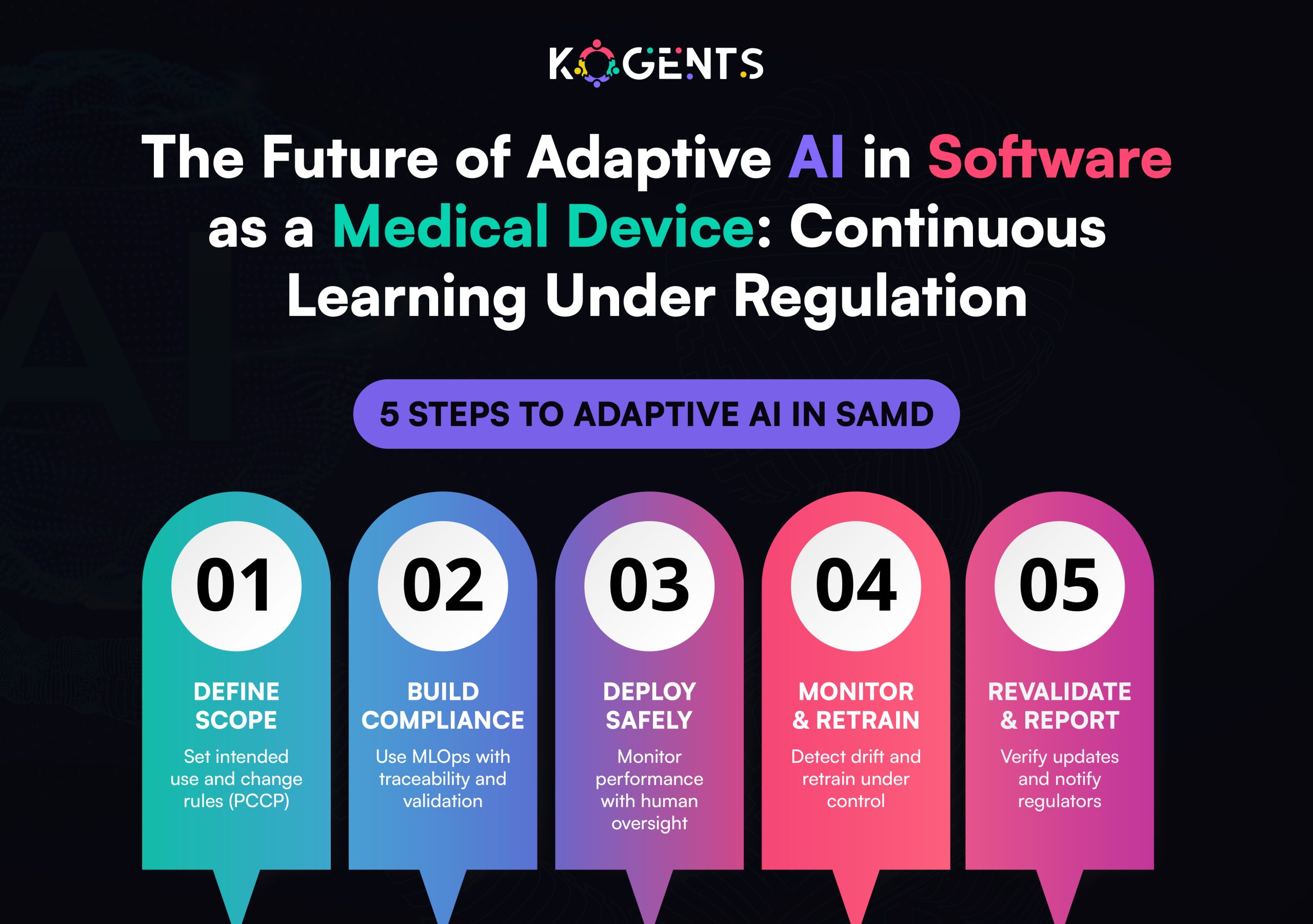
      • Follow the FDA’s Predetermined Change Control Plan (PCCP) for AI models that evolve post-approval.
    5. Auditability & Reproducibility
      • Store logs, metrics, and artifacts to enable end-to-end audit trails for regulators.

    Compliant MLOps Tools

    • MLflow / Kubeflow for experiment tracking.
    • Greenlight Guru for medical QMS integration.
    • Azure ML, AWS SageMaker, or GCP Vertex AI with compliance configurations.

    Continuous Monitoring and Post-Market Surveillance

    Once your AI SaMD is deployed, your compliance journey doesn’t end; it begins. Regulators expect post-market surveillance (PMS) to ensure continued safety, performance, and real-world accuracy.

    Post-Market Monitoring in Practice

    • Performance Drift Monitoring: Track accuracy, precision, sensitivity/specificity over time.
    • Data Drift Detection: Monitor input data for shifts in distribution or quality.
    • Bias Detection: Evaluate demographic fairness continuously.
    • Adverse Event Reporting: Log and report incidents as per regulatory timelines.
    • Explainability Tracking: Ensure clinicians understand AI outputs.

    Automation Opportunities

    Integrate monitoring into MLOps dashboards:

    • Trigger alerts when metrics drop below thresholds.
    • Automate retraining workflows under a controlled, validated process.
    • Generate Regulatory PMS Reports periodically.

    Global Best Practices

    Both the FDA and EU MDR emphasize continuous oversight, not one-time approval. The FDA’s Total Product Lifecycle (TPLC) framework aligns perfectly with this model, blending pre-market validation with post-market vigilance.

    Challenges and Pitfalls in AI SaMD Development

    Even the best teams face challenges in balancing innovation with compliance.

    Common Challenges

    1. Data Scarcity and Privacy Constraints
      • Medical datasets are limited and often fragmented.
      • Compliance with HIPAA (US) and GDPR (EU) is mandatory.
    2. Algorithmic Bias and Explainability
      • Black-box models risk clinical mistrust. Regulators demand transparency.
    3. Validation Across Environments
      • Models must generalize across clinical settings, devices, and populations.
    4. Interoperability Barriers
      • Integration with hospital EHRs (Epic, Cerner, FHIR APIs) can be complex.
    5. High Regulatory Costs
      • Verification, documentation, and QMS setup require upfront investment.

    Avoid These Compliance Mistakes

    • Skipping early risk classification.
    • Missing traceability between requirements and tests.
    • Ignoring usability engineering (human factors).
    • Deploying unvalidated updates to production models.

    Soft Reminder: Adopt a “compliance-by-design” approach, embed validation gates within your CI/CD pipelines rather than adding them later.

    AI SaMD vs. Traditional Medical Software

    Aspect Traditional Medical Software AI-Enabled SaMD
    Decision Logic Rule-based, deterministic Data-driven, adaptive
    Regulation Model Fixed function validation Continuous oversight required
    Validation Process One-time premarket validation Continuous validation & monitoring
    Risk Management Stable Dynamic (requires active reclassification for updates)
    Maintenance Periodic updates Continuous learning and retraining
    Oversight Manual Automated through MLOps & audit trails
    Transparency Clear logic flow Requires model explainability tools

    Case Study Spotlight: From Startup to FDA Clearance

    Case: Aidoc — AI Imaging Diagnostics

    Aidoc, founded in Israel, built an AI-based diagnostic platform that helps radiologists detect critical findings in CT scans. Its journey offers a masterclass in AI SaMD lifecycle excellence.

    1. Intended Use: Assist radiologists by prioritizing scans with potential abnormalities.
    2. Risk Classification: Moderate risk (FDA Class II).
    3. Clinical Data Pipeline: Trained on millions of de-identified medical images under HIPAA compliance.
    4. Model Validation: Conducted multi-site clinical trials to prove sensitivity/specificity.
    5. Regulatory Submission: Submitted through the FDA’s 510(k) pathway.
    6. Post-Market Surveillance: Continuous model performance tracking with real-time dashboards.

    Result: Aidoc became one of the first AI radiology SaMDs cleared by the FDA, setting a precedent for AI-enabled diagnostics worldwide.

    Takeaway for Entrepreneurs: Invest early in compliance infrastructure. Aidoc didn’t treat validation as an afterthought; it built compliance into its product DNA.

    Best Practices & ROI for Entrepreneurs and Solopreneurs

    For founders entering the medical AI space, compliance can seem overwhelming. But early adherence to SaMD best practices can save time, money, and regulatory pain later.

    Top Best Practices

    • Start with intended use clarity:  Your regulatory pathway depends on it.
    • Build a minimal QMS early: Even small startups can use templates aligned to ISO 13485.
    • Implement traceability from day one: Link code commits to design controls and risk items.
    • Use validated tools: Only deploy AI models in qualified cloud environments.
    • Engage regulatory consultants: They can shorten approval cycles dramatically.

    Mini Case Example: A digital pathology startup using compliant MLOps reduced its FDA submission cycle from 18 months to 12 months, saving over $500,000 in development delays.

    The Future of AI Software as a Medical Device

    The next generation of SaMD will be adaptive, interoperable, and context-aware. Regulators are already preparing for this evolution.

    Emerging Trends

    1. Adaptive AI Regulation: FDA’s forthcoming framework for continuously learning models.
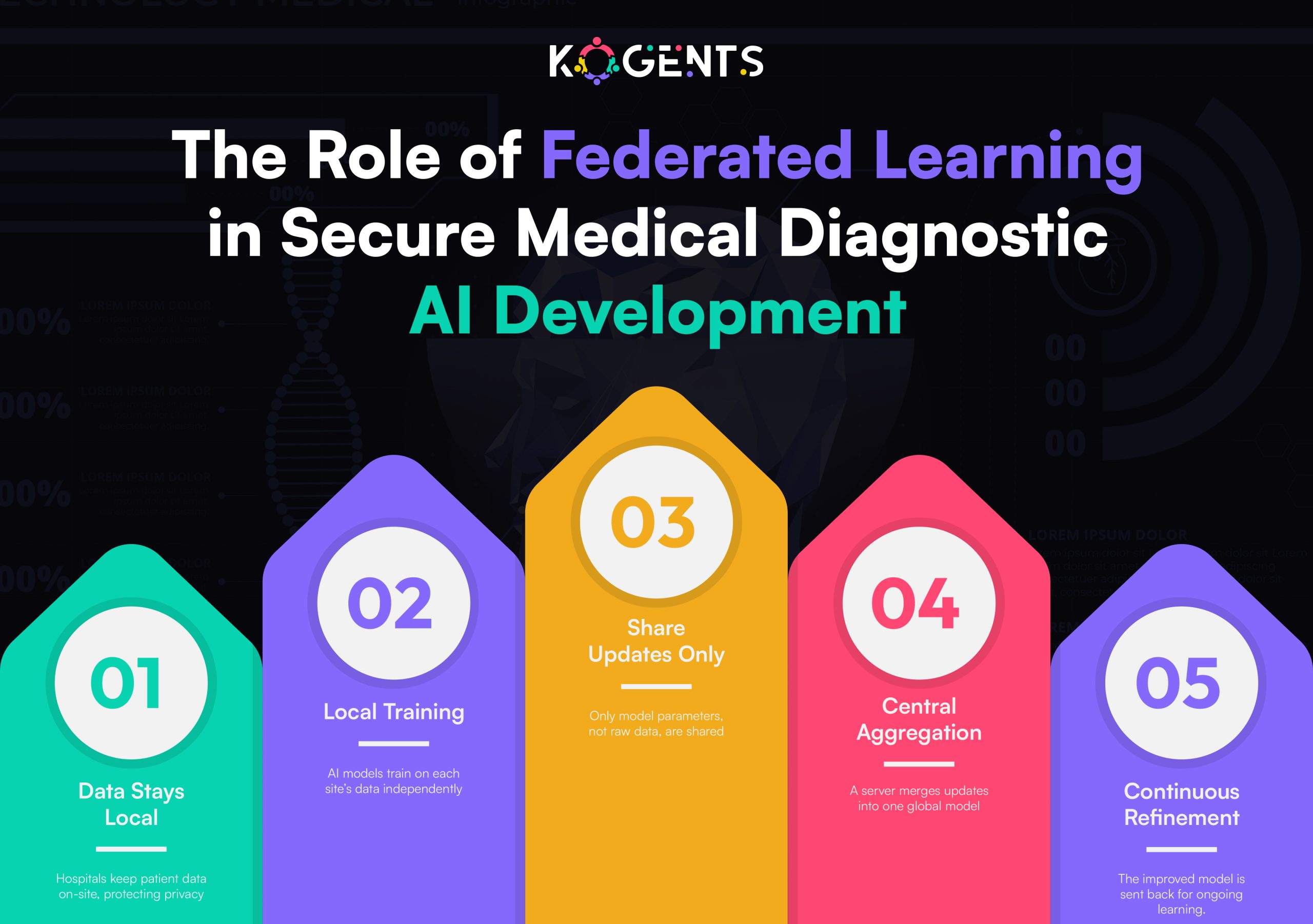
    2. Federated Learning: Privacy-preserving model training across hospitals.
    3. Real-World Evidence (RWE): Using real-world performance data for post-market validation.
    4. FHIR & HL7 Integration: Seamless exchange between SaMD and EHR systems.
    5. Global Harmonization: IMDRF, WHO, and regional bodies aligning AI medical device standards.

    Pro Tip: Compliance is not bureaucracy; it’s a competitive advantage in winning trust, funding, and regulatory approval.
    software as a medical device

     Before You Leave! 

    The line between software and medical device has blurred, and for good reason. As AI Software as a Medical Device becomes central to modern medicine, entrepreneurs who embrace compliant MLOps and continuous monitoring will define the future of digital health.

    Building SaMD isn’t just about compliance; it’s about saving lives with software that’s safe, effective, and transparent. 

    Whether you’re a solopreneur developing a diagnostic app or a startup founder scaling AI in healthcare, regulatory alignment will amplify your innovation, not hinder it.

    Look how Kogents.ai empowers entrepreneurs, solopreneurs, and healthcare providers to build compliant AI medical devices. 

    FAQs

    How do you ensure continuous monitoring after SaMD deployment?

    Post-market surveillance (PMS) includes monitoring data and performance drift, detecting bias, logging adverse events, and generating periodic regulatory reports. Automation in MLOps pipelines enables real-time alerts and retraining workflows.

    What are the common challenges in developing AI-based SaMD?

    Challenges include limited clinical datasets, data privacy (HIPAA, GDPR), algorithmic bias, validation across multiple environments, interoperability with EHRs, and high regulatory costs.

    What is the difference between traditional medical software and AI-enabled SaMD?

    Traditional software uses fixed, rule-based logic and requires one-time validation.
    AI-enabled SaMD is adaptive, requiring continuous validation, risk reassessment, and ongoing monitoring for fairness and reliability.

    What is Software as a Medical Device (SaMD)?

    SaMD refers to software that performs medical functions — such as diagnosis, monitoring, or treatment — without being part of a physical medical device. Examples include AI imaging tools, digital stethoscopes, and mental health monitoring apps.

    How is SaMD different from Software in a Medical Device (SiMD)?

    SaMD operates independently of hardware, like an AI-based radiology model. SiMD, on the other hand, is embedded in a physical device, such as firmware in an insulin pump.

  • Enterprise AI Development that Reduces Integration Risk for Global Teams

    Enterprise AI Development that Reduces Integration Risk for Global Teams

    Do you know that the new era of enterprise AI development is not defined by who can build the smartest model, but by who can integrate AI securely, seamlessly, and globally?

    For entrepreneurs, solopreneurs, and enterprise leaders managing distributed teams, the challenge is no longer whether AI works; it’s whether it works everywhere, across multiple systems, time zones, and compliance frameworks.

    AI pilots often thrive in isolation but stumble when integrated across ERP systems, CRMs, or regional data infrastructures.

    This is where the true craft of AI development for enterprises begins: reducing integration risk without slowing innovation.

    In this comprehensive guide, we’ll explore how custom enterprise AI development empowers organizations to scale across borders safely, ethically, and efficiently. So, let’s delve into this guide.

    Key Takeaways

    • Understand the true nature of integration risk in enterprise AI projects.
    • Learn the complete enterprise AI development lifecycle, from discovery to global deployment.
    • Explore actionable methods to mitigate integration risk across regions and tech stacks.
      Compare in-house vs vendor-led approaches in one concise table. 
    • Study credible enterprise AI solutions development case studies with measurable ROI.
    • End with strategic imperatives to future-proof your AI roadmap.

    The Hidden Bottleneck: Integration Risk in Enterprise AI 

    Integration risk is the silent killer of enterprise AI success. While teams often celebrate model accuracy or training speed, the true battlefield lies in how well AI integrates with existing systems, finance, HR, supply chain, customer service, or compliance databases.

    For enterprise-level AI development, even a minor schema mismatch or version conflict between APIs can lead to cascading failures. 

    This is a challenge the best agentic AI company models anticipate and mitigate through modular orchestration and adaptive governance.

    Consider global rollouts where teams use different data standards, privacy laws, or latency thresholds; these variations multiply integration risk exponentially.

    Large enterprise AI development projects often fail not because models are poor, but because integration pipelines break under real-world complexity. 

    As systems evolve, dependencies drift, and governance frameworks tighten, AI must adapt continuously. 

    This is why modern AI integration for legacy systems demands modular architecture, strict governance, and resilient orchestration layers, the backbone of reliable global AI deployment.

    Generative AI has moved beyond buzz to become an essential tool across content creation, software development, and product design. In 2025, 65% of organizations report active use of generative AI, up from around 32% the previous year.

    custom enterprise ai development

    The Enterprise AI Development Lifecycle

    A well-structured enterprise AI development lifecycle ensures AI systems progress from concept to global scalability with minimal friction. 

    Below is a narrative walkthrough of each stage and how integration risk can be mitigated throughout the process.

    Stage 1: Discovery and Strategy

    • This phase involves defining business objectives, identifying AI opportunities, and evaluating system readiness. 
    • Entrepreneurs should perform a data and systems audit to assess integration touchpoints. 
    • Understanding where APIs, databases, and workflows intersect reveals early risk zones.

    Stage 2: Data Architecture and Preparation

    • Once objectives are clear, teams build the data pipelines and architectures to fuel AI. 
    • Integration risk emerges when data originates from multiple global systems. 
    • To mitigate this, adopt standardized data schemas, establish ETL consistency (e.g., Apache Airflow, Kafka), and create metadata catalogs for traceability.

    Stage 3: Model Development and Experimentation

    • Here, machine learning (ML) and deep learning models are built, tested, and refined.
    • While technical accuracy is key, integration foresight matters equally. 
    • Define consistent model input-output schemas, set up feature stores, and ensure models remain modular, capable of integrating with multiple business functions.

    Stage 4: Testing and Validation

    • AI must be validated both technically and operationally. 
    • Conduct integration sandbox tests simulating real-world environments: regional data rules, latency, and system load. 
    • This stage also validates AI governance and compliance, security, and explainability (XAI) requirements to ensure compliance across jurisdictions.

    Stage 5: Enterprise AI Deployment

    • The deployment phase is where many teams encounter friction. 
    • Using a microservices architecture and containerization (Docker, Kubernetes) reduces dependency conflicts. 
    • Each AI service can be updated independently, supporting scalable enterprise AI development across global teams. 
    • Incorporate CI/CD pipelines and blue-green or canary deployments for safe rollouts.

    Stage 6: Integration and Scaling Across Regions

    • After successful deployment, scaling AI globally introduces new integration risks: latency, localization, and cross-region compliance. 
    • Adopt federated learning for sensitive data, regional caching for latency reduction, and cloud-agnostic orchestration to ensure resilience in hybrid or multi-cloud setups.

    Stage 7: Monitoring, Governance, and Continuous Improvement

    • AI never “ends.” Models drift, data evolves, and systems change. 
    • Set up monitoring pipelines, AIOps dashboards, and feedback loops. 
    • Monitor data drift, bias, and performance. 
    • Integration risk decreases when governance becomes continuous, not reactive.
    • Each stage feeds into the next, reinforcing an iterative ecosystem, one where integration readiness is designed, tested, and matured before global scaling begins.

    Integration Risk Mitigation Strategies Explained

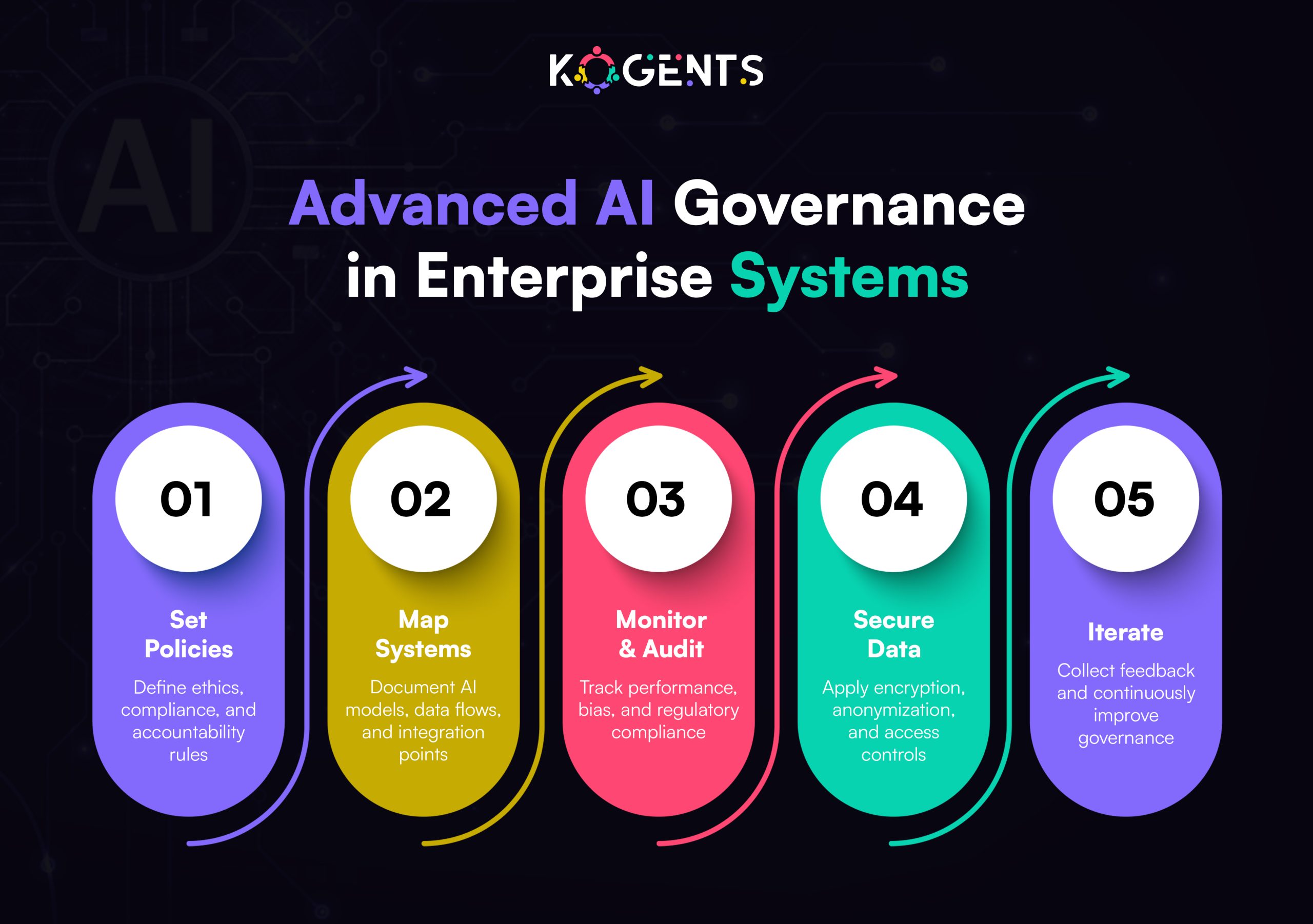
    Integration risk mitigation is not a checklist; it’s a mindset. 

    To design resilient enterprise AI, entrepreneurs and solopreneurs must embed mitigation practices across people, process, and technology layers.

    1. Design for Modularity

    • Adopt API-first design principles. 
    • Every AI module, whether NLP, computer vision, or predictive analytics, should communicate through well-documented APIs. 
    • This allows teams in different regions to build independently while maintaining interoperability.

    2. Implement Version Control Across Systems

    • Version drift can cripple integration.
    • Use schema versioning, feature store registries, and backward-compatible APIs. 
    • This ensures older systems continue functioning even as new models roll out.

    3. Build with Compliance in Mind

    • Global teams face varying data privacy laws (GDPR, HIPAA, CCPA).
    • Integrate data masking, encryption, and access control at the architecture level. 
    • Secure enterprise AI development is not optional; it’s a compliance mandate.

    4. Use Federated or Hybrid Learning

    For highly regulated industries, federated learning enables AI model training across distributed datasets without moving data across borders, a crucial practice for enterprise AI platform development in healthcare and finance.

    5. Embrace Continuous Monitoring

    • Integration success depends on ongoing observability. 
    • Tools like Prometheus, Grafana, and MLflow allow teams to detect anomalies, drift, or bottlenecks in real-time.

    6. Design for Failure

    • Global AI systems should fail gracefully. 
    • Use fallback mechanisms, circuit breakers, and redundancy protocols. 
    • When a regional system fails, others must continue operating.

    Key Note: By embedding these strategies throughout the lifecycle, teams reduce integration incidents, maintain consistent performance, and ensure system longevity,  transforming AI from an experimental tool into a global operational advantage.

    advanced enterprise ai development

    Vendor vs In-House: The Strategic Decision 

    Choosing between in-house custom enterprise AI development and enterprise AI consulting & development vendors determines not just cost, but control, scalability, and long-term risk.

    Decision Factor In-House / Custom Enterprise AI Development Vendor / Third-Party Enterprise AI Consulting & Development
    Control & Customization Full control over architecture, data, and IP. Ideal for proprietary systems. Prebuilt modules reduce setup time but limit deep customization.
    Integration Risk Higher initially; managed internally via CI/CD, testing, and documentation. Lower short-term risk but potential long-term vendor dependency.
    Cost Profile High upfront investment (CapEx) but lower recurring cost. Lower startup cost (OpEx) but possible recurring licensing fees.
    Time to Market Slower initially; faster for future iterations. Rapid deployment with existing frameworks and tools.
    Compliance & Security Complete ownership of compliance implementation. Vendor must align with your governance frameworks.
    Scalability Scales deeply if infrastructure is modular. Scales faster but depends on the vendor’s tech stack.
    Maintenance Internal teams manage updates and bug fixes. Vendor-driven; governed by SLAs and support terms.

    For entrepreneurs and solopreneurs, a hybrid approach often works best, using vendors for foundational infrastructure (like MLOps platforms) while building proprietary models in-house to retain control and innovation.

    Real-World Case Studies

    Case Study 1: Guardian Life Insurance — Reducing Integration Friction

    Guardian Life modernized its analytics stack using enterprise AI software development practices. 

    By containerizing all models and enforcing strict API contracts, the company reduced integration failures by 35% across global branches and cut deployment time from weeks to days.

    Case Study 2: Italgas — AI-Powered Predictive Maintenance

    Italgas adopted a scalable enterprise AI development approach with edge inference for real-time monitoring of pipelines. 

    Using federated learning, the company minimized cross-border data transfer while complying with EU privacy mandates, saving €4.5M annually through predictive maintenance.

    Strategic Imperatives for Global AI Success

    As AI adoption matures, entrepreneurs must evolve from experimentation to strategic execution. Here are the strategic imperatives shaping the next wave of enterprise AI automation development:

    • Adopt Compound AI Architectures: Blend LLMs, predictive analytics, and agentic AI frameworks like LangChain to create flexible, compound systems that integrate easily across functions.
    • Prioritize Governance and Transparency: Build governance APIs that monitor bias, explainability, and compliance at runtime, not after deployment.
    • Invest in Interoperability: Use open standards (ONNX, MLflow, Apache Kafka) to ensure future compatibility.
    • Foster AI Maturity Culture: Encourage teams to document lessons, share integration templates, and track adoption metrics.
    • Think Globally, Act Modularly: Every new region should plug into a predefined architecture template, minimizing reinvention and ensuring uniform quality.

    Wrapping Up!

    In the interconnected global landscape, enterprise AI development is both a technological and organizational discipline. 

    Reducing integration risk isn’t just about protecting systems; it’s about empowering innovation, ensuring reliability, and uniting global teams under a shared digital framework.

    Whether you’re a solopreneur exploring AI-driven automation or an enterprise leader scaling across continents, the path to sustainable AI success begins with intelligent integration.

    Know that Kogents.ai is here to make your experience risk-free and an enterprise-grade AI deployment. Give us a call at +1 (267) 248-9454 or drop an email at info@kogents.ai.

    FAQs

    What is enterprise AI development?

    It’s the process of creating scalable, secure AI systems designed to integrate into complex enterprise ecosystems.

    How does enterprise AI differ from consumer AI?

    Enterprise AI development emphasizes governance, integration, and compliance across distributed systems — unlike consumer AI, which focuses on individual user experience.

    What are the main phases of enterprise AI development?

    Discovery, data architecture, model development, testing, deployment, scaling, and continuous governance.

    Why is integration risk so critical?

    Integration failures lead to downtime, compliance breaches, and lost trust — even if the AI model itself performs well.

    What tools help manage enterprise AI integration?

    Apache Airflow, MLflow, Kubernetes, TensorFlow Serving, and MLOps tools like Kubeflow.

    How can solopreneurs apply enterprise AI strategies?

    By adopting modular design, cloud-based AI services, and using prebuilt APIs for faster scaling.

    What is federated learning, and why is it useful?

    It’s a privacy-preserving method that trains models on distributed data sources without moving the data, ideal for regulated industries.

    What role does AI governance play?

    Governance ensures accountability, fairness, and compliance, critical for secure enterprise AI development.

    What is the ROI of enterprise AI deployment?

    Returns include reduced manual workload, lower integration costs, improved compliance, and faster innovation cycles.

    What’s the future of enterprise AI?

    The future lies in enterprise generative AI development, where intelligent agents autonomously coordinate workflows, guided by strong governance frameworks.

  • Scaling AI in Telemedicine To Deliver Low-Latency Multilingual Virtual Care

    Scaling AI in Telemedicine To Deliver Low-Latency Multilingual Virtual Care

    Telemedicine has evolved from a convenience into a lifeline. The pandemic accelerated its adoption, but scaling AI in telemedicine is what’s propelling it into the future. 

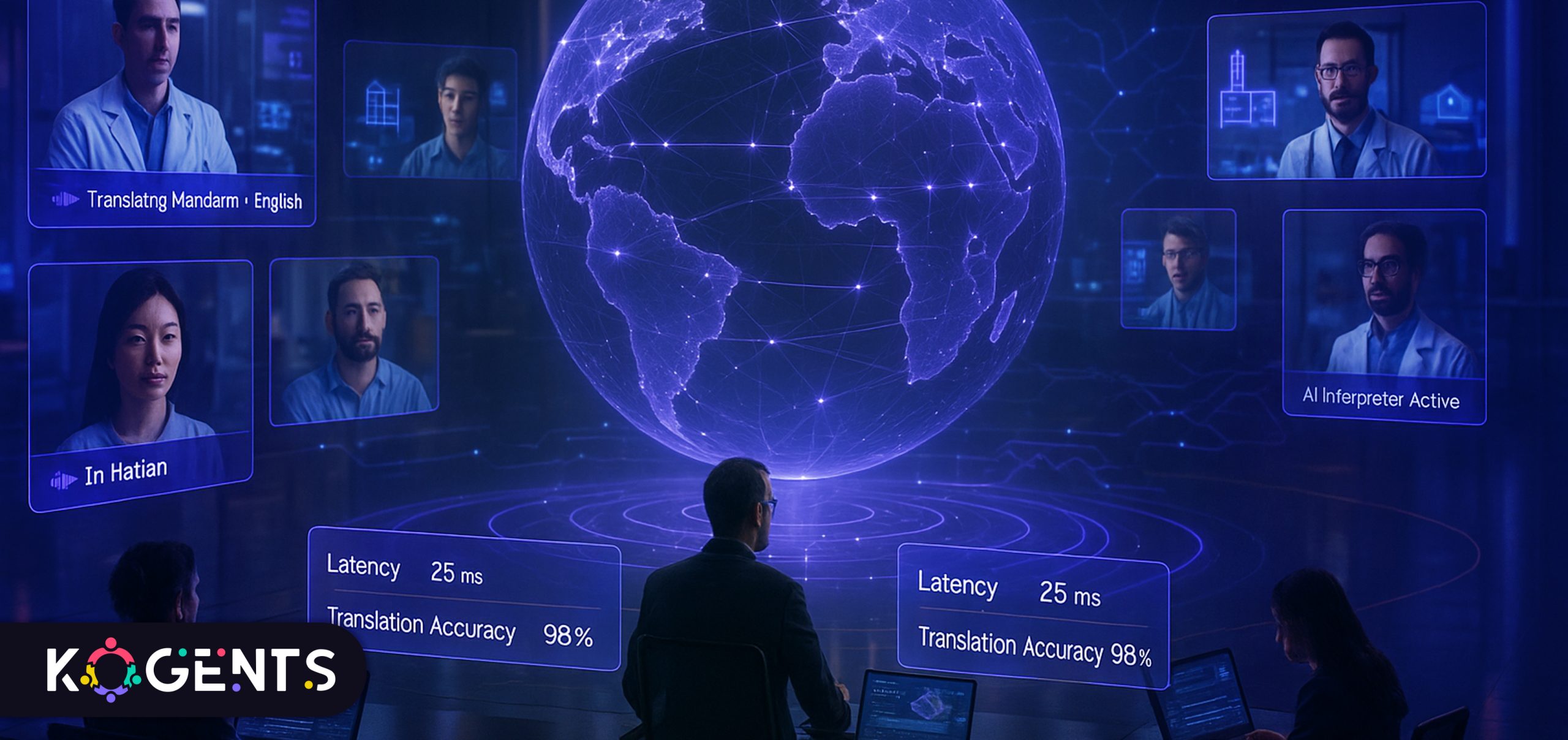
    From a patient in Nairobi connecting with a cardiologist in London to a speech-to-speech translated consultation in Tokyo, we’re witnessing the dawn of low-latency multilingual virtual care.

    Yet, this promise comes with complexity: connectivity constraints, linguistic diversity, and the demand for real-time diagnostic precision. 

    Traditional systems strain under these expectations. The new wave of AI-powered telemedicine platforms, however, fuses natural language processing (NLP), computer vision, and predictive analytics to deliver intelligent care experiences, instantly and inclusively.

    This article explores how entrepreneurs and solopreneurs can leverage artificial intelligence in telemedicine to scale global healthcare access. 

    We’ll cover real-world case studies, implementation frameworks, ROI insights, ethical design, and a glimpse into what the future of AI agents will mean for healthcare and digital entrepreneurship.

    Key Takeaways

    • AI in telemedicine delivers faster, multilingual, and equitable care.
    • Entrepreneurs can scale globally through cloud-edge hybrid platforms.
    • Ethical design, bias checks, transparency, and compliance are non-negotiable.
    • AI agents will soon handle triage, translation, and analytics in real time.
    • Market size > $50 B by 2030 means a massive entrepreneurial opportunity.
    • Human oversight + AI automation = sustainable, trusted telehealth.

    Why Low-Latency Multilingual Telemedicine Matters?

    Imagine a stroke patient in a rural clinic needing emergency assessment, and this way every second matters. The latency between patient data capture and physician response can determine survival. 

    That’s where AI in telehealth transforms outcomes: edge-optimized algorithms analyze signals locally before syncing with the cloud, cutting response times from 10 seconds to under one.

    Simultaneously, multilingual NLP models remove the linguistic bottleneck. 

    For global entrepreneurs and solopreneurs, that means entering new markets without building multilingual teams.

    These technologies aren’t just convenience tools; they redefine inclusion. 

    Patients with limited literacy, dialectal differences, or accessibility challenges finally receive equitable care. 

    Clinics and digital-health startups can expand from local to continental reach, creating a borderless healthcare ecosystem.

    scaling ai in telemedicine

    Case Study Spotlight: Real-World Innovation at Scale 

    1. Qure.ai — Deep Learning in Telemedicine for Imaging

    Qure.ai applies convolutional neural networks (CNNs) to interpret chest X-rays and CT scans within 60 seconds. 

    Deployed in over 70 countries, it assists radiologists, or substitutes for them, where human expertise is scarce.

    Outcome: Diagnostic turnaround time fell by 50%; rural clinics in Kenya and Bangladesh now process thousands of scans daily.

    2. Cedars-Sinai Virtual Care — Real-Time Multilingual AI

    Cedars-Sinai implemented AI telemedicine translation that detects tone and emotion while transcribing multilingual dialogue. 

    Edge computing ensures a < 1-second response time.
    Outcome: Patient satisfaction rose 38%, with improved engagement in Spanish and Mandarin consultations.

    3. Solo Digital Therapist — Automation for Solopreneurs

    A European therapist automated client intake, symptom tracking, and reminders using predictive analytics in remote healthcare.

    Outcome: Saved 15 hours per week, reduced no-shows by 25%, and expanded service from English to five languages.

    These cases prove that AI-powered telemedicine doesn’t require enterprise infrastructure, just strategic deployment and start small, localize data, and scale ethically.

    Challenges & Ethical Considerations 

    Before scaling, innovators must address the three pillars of responsible AI in telemedicine: trust, transparency, and compliance.

    1. Data Privacy & Security

    • Telemedicine platforms process sensitive health data governed by HIPAA, GDPR, and regional frameworks. 
    • Entrepreneurs must ensure encryption, anonymization, and data residency compliance. 
    • Using FHIR-based APIs simplifies secure interoperability between systems.

    2. Bias & Fairness

    • Algorithms trained on non-representative datasets risk misdiagnosis for underserved populations. 
    • The FDA and CE regulators now demand bias testing and model explainability. 
    • Solopreneurs can mitigate risk by leveraging open datasets like NIH ChestX-ray14 and synthetic augmentation for inclusivity.

    3. Algorithmic Accountability

    • AI models drift over time. 
    • Continuous validation, clinician-in-the-loop review, and audit trails ensure sustained accuracy. 
    • Tools like Explainable AI (XAI) frameworks from Google or Microsoft enhance transparency.

    4. Ethical Translation & Accessibility

    • Multilingual NLP must preserve clinical nuance. 
    • Mis-translation of dosage or symptom severity can be fatal. 
    • That’s why AI telemedicine translation engines must undergo medical domain fine-tuning and human verification loops.

    Pro Tip: Always pair automation with oversight, and AI should assist, not replace physicians, keeping the human at the center of care.

    Market Trends & Business Opportunities 

    The AI-driven telehealth solutions market is forecasted by Markets and Markets (2025) to reach $27.14 billion by 2030

    Growth drivers include:

    • Rising Chronic Disease Burden: Remote patient monitoring (RPM) powered by machine learning in telemedicine allows continuous heart-rate and glucose tracking, alerting clinicians instantly.
    • Expansion of IoMT (Internet of Medical Things): Wearable sensors stream data into AI dashboards that detect anomalies, enabling preventive action.

    Entrepreneurial Openings

    • Tele-ICU analytics startups offering predictive deterioration alerts.
    • AI-triage APIs for integration into EHR systems.
    • Virtual mental-health bots offering multilingual therapy at scale.
    • White-label AI telemedicine platforms for clinics entering emerging markets.
    The widespread adoption of virtual care shapes AI in the telemedicine market trends for 2025, the increasing influence of generative AI, and a growing emphasis on personalized medicine and remote monitoring. Market analysis projects substantial growth, with some forecasts estimating the market to reach $156.7 billion by 2033. 

    Implementation Framework: Building Scalable AI Telemedicine 

    A structured rollout ensures sustainability and compliance.

    Step 1: Define the Problem Space

    • Focus narrowly, chronic disease management, triage, or imaging. 
    • Each requires different data modalities (signal, text, image).

    Step 2: Choose the Tech Stack

    • Opt for a hybrid architecture, cloud for heavy compute, edge for low latency. 
    • Platforms like AWS HealthLake, Azure Health Data Services, or Google Healthcare API provide compliant foundations.

    Step 3: Data Interoperability

    • Adopt HL7 FHIR standards. 
    • Connect with wearable data streams or hospital EHRs securely.

    Step 4: Train and Validate

    Use annotated datasets, peer-reviewed methodologies, and publish validation metrics. 

    Step 5: Deployment & Feedback

    • Embed telemedicine and anomaly detection to catch errors early. 
    • Employ CI/CD pipelines for continuous learning.

    Step 6: Localization

    Incorporate telemedicine and NLP adaptation, tuning translation models for dialectal and cultural nuance.

    Pro Tip: Launch an MVP targeting one demographic and one language and validate latency (< 1s), translation accuracy, and satisfaction before scaling.

    ROI & Impact for Entrepreneurs and Solopreneurs

    The economics of AI-enabled telemedicine are compelling:

    Metric AI-Augmented Outcome
    Operational cost reduction –60 % (automation of triage & charting)
    Patient throughput +3× with identical staff
    Documentation time –70 % via speech-to-text NLP
    Patient satisfaction +30 % with personalized engagement
    Translation overhead Eliminated through real-time AI
    • Solo founders save an average of 10–15 hours weekly; mid-size clinics reduce administrative headcount by 20%. 
    • Beyond financial ROI lies brand equity, trust from patients experiencing friction-free, culturally attuned care.
    • As reimbursement frameworks evolve, expect insurers to reward AI telehealth efficiencies, turning compliance into revenue. 

    Future of AI Agents in Telemedicine 

    Let’s look ahead, where AI agents for healthcare automation develop from assistants to autonomous collaborators.

    1. Context-Aware Virtual Clinicians

    • Future agents will fuse multimodal intelligence, text, speech, video, and sensor data to form a holistic AI patient scheduling and understanding. 
    • Imagine an AI that correlates cough sound with chest-image analysis to propose differential diagnoses instantly.

    2. Continual Learning & Federated Models

    • Instead of centralizing sensitive data, federated learning will let telemedicine systems learn across hospitals while preserving privacy. 
    • This dramatically accelerates innovation without breaching compliance.

    3. Hyper-Personalized Multilingual Interfaces

    AI will adapt not just to languages but to cultural empathy markers, intonation, idioms, and sentiment, making care feel human even through a screen.

    4. Predictive Population Health

    National networks could aggregate de-identified data for predictive analytics in remote healthcare, flagging outbreaks or chronic disease clusters early, and real-time epidemiology powered by AI.

    5. Human Plus AI Collaboration

    • Physicians will supervise fleets of digital co-workers handling admin, translation, and routine triage, while focusing on critical care and empathy, the elements machines can’t replicate.

    ‘’As Eric Topol and Fei-Fei Li often note, the goal is not machine medicine but augmented humanity. ‘’

    The next decade will see AI-driven telehealth solutions acting as partners that extend human reach, reduce burnout, and universalize healthcare access.

    generative ai in telemedicine

    Conclusion 

    We stand at the inflection point of healthcare’s digital transformation. AI in telemedicine now unites speed, empathy, and intelligence, translating across languages, predicting crises before they occur, and democratizing expertise across continents.

    For entrepreneurs and solopreneurs, this isn’t just a technical revolution; it’s a moral and commercial mandate. 

    Those who build AI-powered telemedicine platforms grounded in transparency and inclusivity will define the next decade of digital health leadership.

    So, are you ready to build the future? If yes, then see how Kogents.ai empowers innovators to deploy low-latency multilingual AI telehealth systems.
    For further assistance, give us a call at +1 (267) 248-9454 or drop an email at info@kogents.ai.

    FAQs

    What is AI in telemedicine?

    AI in telemedicine refers to using artificial intelligence technologies, like machine learning, NLP, and computer vision, to enhance virtual healthcare. It powers diagnostics, real-time translation, remote monitoring, and predictive decision support for clinicians and patients.

    How does AI improve low-latency telemedicine?

    By leveraging edge computing and optimized neural networks, AI processes patient data near the source, reducing cloud dependency and network delays. This enables sub-second response times during live consultations, especially in multilingual settings.

    What are the benefits of multilingual AI telehealth systems?

    They eliminate language barriers through real-time medical translation, increase accessibility across diverse regions, and improve accuracy by contextualizing cultural nuances, all crucial for equitable global healthcare delivery.

    Are AI-powered telemedicine platforms secure and compliant?

    Yes, modern systems adhere to HIPAA, GDPR, and FDA or CE regulatory frameworks. Data encryption, anonymization, and FHIR interoperability maintain privacy and compliance throughout care delivery.

    What challenges exist in adopting AI in telehealth?

    Key challenges include data bias, a lack of diverse training datasets, ethical translation issues, and maintaining explainable AI. Entrepreneurs must design with transparency and validation to earn patient and regulatory trust.

    How can solopreneurs leverage AI in telemedicine?

    Solopreneurs can automate intake, triage, and follow-ups using AI-driven virtual care tools. These solutions cut administrative workload by 40–60%, enabling one-person practices to operate like scaled digital clinics.

    What’s the future of AI agents in telemedicine?

    Future AI agents will integrate multimodal intelligence—text, voice, and vision—to deliver hyper-personalized care. Through federated learning and continual updates, they’ll act as co-clinicians providing real-time insight while ensuring human oversight.

    How can entrepreneurs start building an AI telemedicine solution?

    Start with a narrow use case (like triage or RPM), use cloud-edge hybrid architecture, ensure data interoperability via HL7/FHIR, and validate models with clinical experts. Platforms such as Kogents.ai offer tools to accelerate compliant deployment.

    What is the ROI of adopting AI in telehealth?

    Hospitals and solo providers typically achieve 3× patient throughput, 60% lower operational costs, and 30% higher patient satisfaction. AI’s automation of documentation and translation drives both revenue and retention.

    How does AI ensure equitable healthcare access globally?

    AI democratizes access by providing real-time, multilingual teleconsultation in underserved areas, empowering clinicians to reach patients across language, geography, and socioeconomic barriers.

    What regulations govern AI in telemedicine?

    The American Telemedicine Association (ATA), FDA, European CE Mark, and WHO digital-health guidelines all define compliance frameworks for safe, ethical, explainable AI deployment in healthcare.

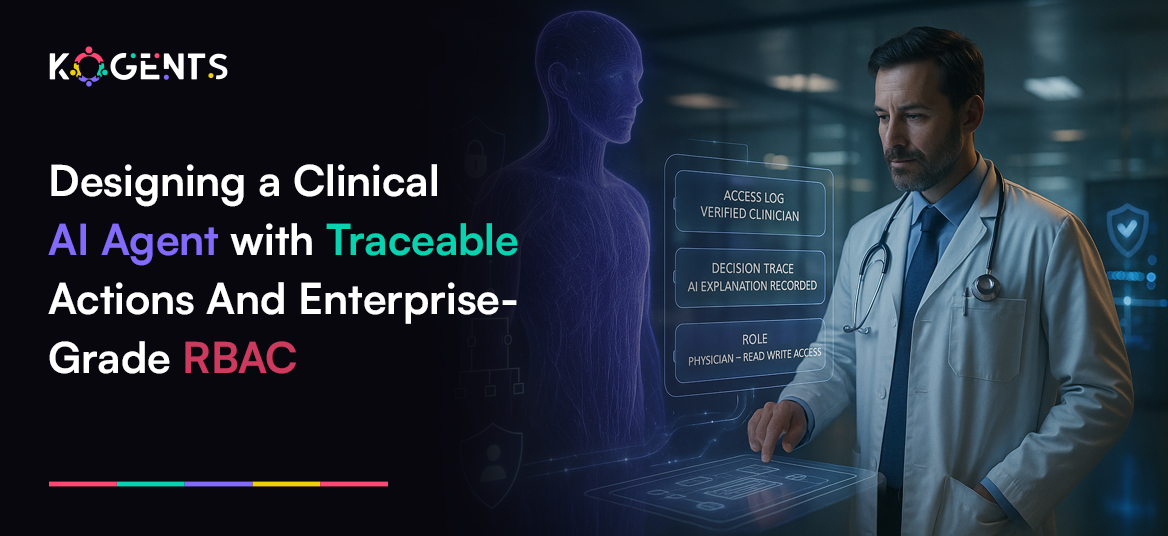
  • Designing a Clinical AI Agent With Traceable Actions and Enterprise-Grade RBAC

    Designing a Clinical AI Agent With Traceable Actions and Enterprise-Grade RBAC

    The rise of clinical AI agents marks a pivotal moment in healthcare’s digital transformation. Beyond simple automation, these AI-powered clinical assistants are becoming context-aware collaborators, able to read medical documentation, reason over complex data, and assist clinicians in real-time decision-making.

    But as these systems gain autonomy, new challenges emerge: 

    Can we trust their actions? 

    Can we verify what they did, why, and who authorized it?

    In an era governed by HIPAA, GDPR, and FDA SaMD regulations, traceability and role-based access control (RBAC) are not optional but fundamental.

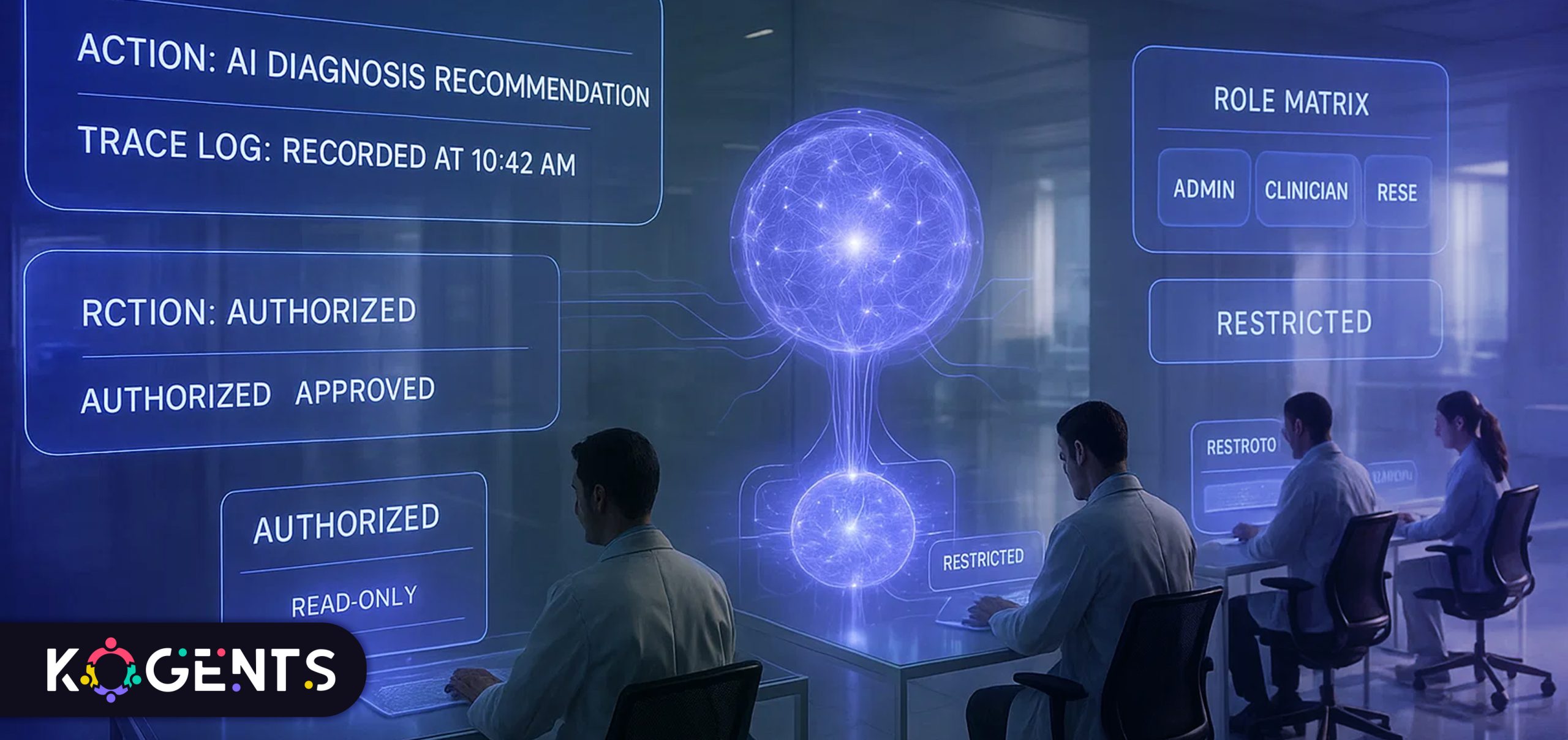
    A traceable clinical AI agent ensures that every recommendation, data access, and inference is auditable, explainable, and compliant.

    At the same time, enterprise-grade RBAC acts as the digital immune system, preventing unauthorized data exposure and maintaining the principle of least privilege. 

    Together, these two pillars, traceability and RBAC, transform clinical AI from a black box into a transparent, accountable, and ethical digital colleague.

    This article explores how to architect, implement, and scale a traceable healthcare AI agent ready for real-world deployment, blending insights from clinical informatics, cybersecurity, and enterprise engineering.

    Key Takeaways

    • Traceability is trust, and every AI action should leave a clear, auditable footprint.
    • RBAC is your digital shield that defines and enforces roles early to prevent privilege creep.
    • Explainability equals adoption because clinicians trust systems that justify their reasoning. 
    • Compliance isn’t a checkbox; it’s architecture, as HIPAA and ISO must be built in, not bolted on.
    • EHR integration drives value by embedding AI within the existing clinical workflow.
    • Human-in-the-loop oversight remains non-negotiable, and AI should augment, not replace, clinical judgment.
    • Traceable, secure AI agents improve efficiency and patient trust.
    • Privacy, fairness, and interpretability are key to sustainable innovation.

    The Evolution of the Clinical AI Agent

    Early medical AI systems were rule-based decision support tools, rigidly programmed to suggest diagnoses or flag anomalies

    Then came machine learning models capable of pattern recognition, followed by generative clinical agents capable of summarizing notes, drafting discharge summaries, and reasoning over electronic health records (EHRs).

    A modern clinical AI agent is more than an algorithm; it’s an agentic AI system capable of perception, reasoning, and controlled action within defined boundaries.

    It interprets clinical workflows, interacts with EHR data, collaborates with care teams, and justifies its actions through explainable AI (XAI) frameworks.

    To build such a system responsibly, two foundations must be established from day one:

    1. Traceability: the ability to reconstruct every action, decision, and access point.
    2. RBAC: ensuring only authorized users (clinicians, nurses, admins) can access specific functions or patient data.

    When these are properly implemented, you get a traceable, explainable, and compliant clinical decision agent that can safely operate in regulated healthcare environments.

    86% of healthcare organizations say they’re already extensively using AI, and a global healthcare AI market projection exceeding $120 billion by 2028

    traceable clinical ai agent

    Traceability: The Audit Trail of Trust

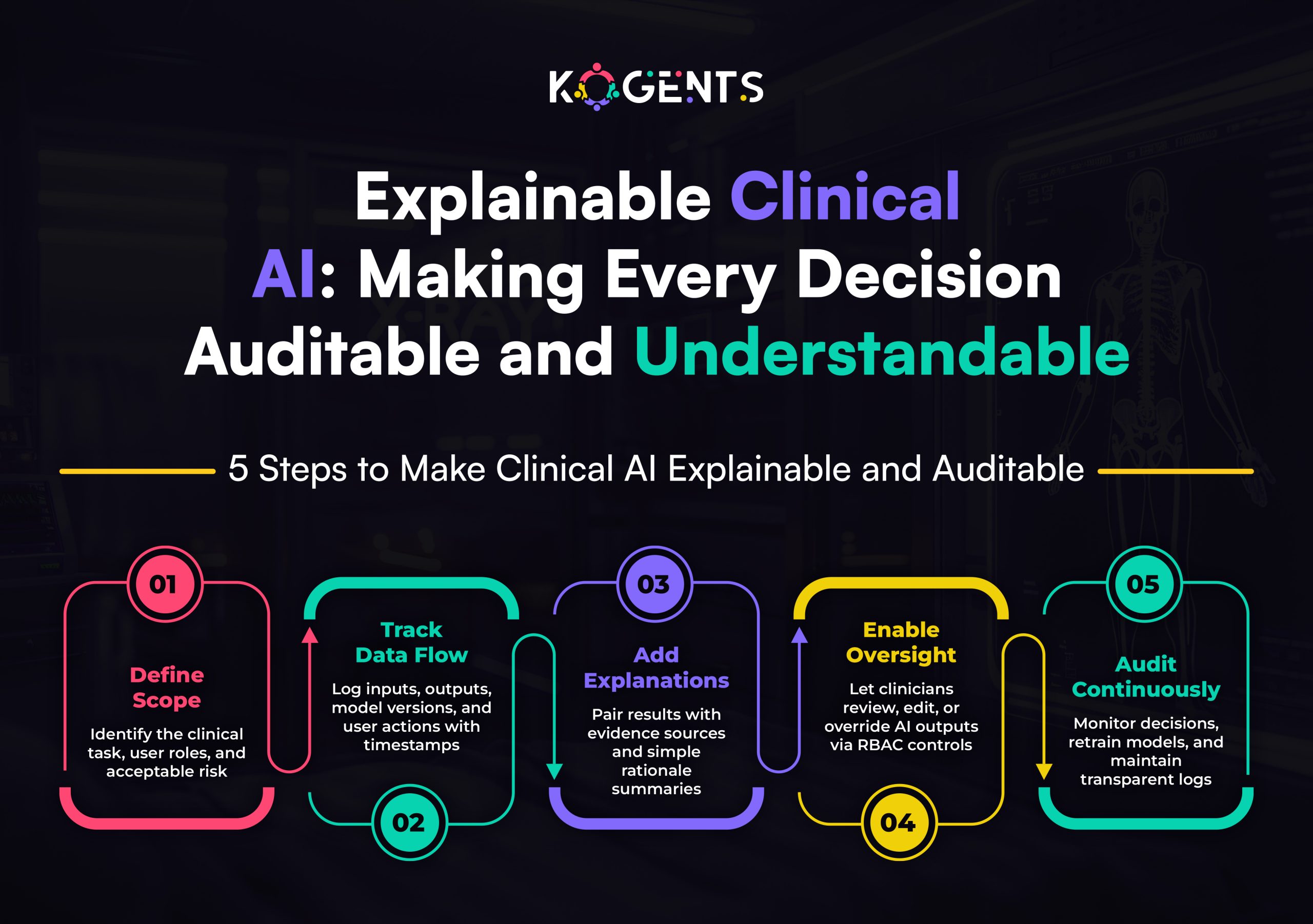
    Traceability in clinical AI systems means every model inference, prompt, and user interaction is logged, versioned, and attributed.

    The Four Pillars of Traceability

    1. Input Logging: Every user prompt, context, or dataset fed into the agent is timestamped and stored securely.
    2. Output Attribution: The model version, training data source, and confidence level for each response are recorded.
    3. Data Provenance: Tracks the lineage of medical data—where it originated, how it was transformed, and who viewed it.
    4. Explainability Hooks: Links outputs to clinical evidence, literature, or structured data.

    Note: This system allows auditors or clinicians to reconstruct any decision, what was recommended, by whom, when, and why.

    Clinical AI agents must integrate immutable audit trails (often using blockchain or append-only databases) that meet HIPAA, GDPR, ISO 27001, and SOC 2 compliance standards. 

    This not only satisfies regulators, but it also reassures clinicians that AI is working with them, not around them.

    Enterprise-Grade RBAC: Enforcing Digital Boundaries

    Role-Based Access Control (RBAC) is the foundation of security for every EHR-integrated AI agent. It defines who can do what, where, and when.

    For a clinical AI assistant, that might look like:

    • Physicians: Full access to patient data, able to validate AI recommendations.
    • Nurses: Limited data access for vitals and treatment records.
    • Admins: Access to scheduling, billing, and non-clinical workflows.
    Modern RBAC implementations use identity platforms like WorkOS, Okta, or Stytch for authentication and OAuth 2.0 or OpenID Connect for authorization.

    The combination of traceable logs + RBAC policies ensures that every AI action is contextually authorized and auditable

    If an unauthorized agent action occurs, it can be traced back instantly—who triggered it, under what role, and with what privileges.

    Designing a Traceable Clinical AI Architecture

    A secure and transparent clinical AI agent, like other AI agents for healthcare automation, relies on several architectural layers working in harmony:

    • Perception Layer: Gathers structured and unstructured clinical data from EHR systems, labs, and imaging sources.
    • Reasoning Engine: A fine-tuned LLM (like GPT-4o or Llama 3-Med) augmented with medical ontologies (SNOMED CT, ICD-10, CPT codes).
    • Action Layer: Executes predefined actions such as drafting notes or alerting physicians
    • Traceability Layer: Maintains an immutable audit trail and stores reasoning logs.
    • RBAC Layer: Integrates enterprise identity providers for authentication and contextual access.
    • Compliance Layer: Ensures alignment with HIPAA, FDA SaMD, and ISO/IEC 62304 standards.

    Know That: This modular stack enables scalability and accountability, the two key metrics for enterprise-grade deployment.

    Explainability and Human Oversight

    Transparency is a clinical necessity. Clinicians must be able to see and understand why an agent concluded.

    Explainability Techniques

    • Evidence Linking: Attach each output to source data (lab values, radiology notes).
    • Rationale Narratives: Use natural language explanations to describe decision logic.
    • Visual Explainability: Employ attention heatmaps to highlight influential data features.
    • Human Override Loops: Enable clinicians to correct, annotate, or veto AI actions.

    Insight: Explainable AI (XAI) ensures that clinical decisions remain human-supervised, aligning with FDA AI/ML-based SaMD guidelines.

    As Hippocratic AI and Heidi Health demonstrate, clinicians trust AI systems that show their reasoning, not just their answers.

    explainable clinical ai agent

    Case Study 1: Oracle Health’s AI Documentation Agent

    Oracle Health launched an AI clinical documentation agent to automate chart summarization and reduce clinician burnout.

    Implementation Highlights:

    • Integrated with Epic and Cerner EHRs using FHIR APIs.
    • Each note generation was traceable, storing the clinician ID, prompt, model version, and output rationale.
    • RBAC rules governed access, ensuring clinicians could only summarize their own patients.
    • Used ISO 27001-certified cloud infrastructure for audit log storage.

    Outcome: Oracle Health reported a massive reduction in charting time and 100% compliance in privacy audits. The project became a benchmark for traceable AI deployments in enterprise healthcare.

    Case Study 2: Heidi Health – Explainable AI Scribe

    Heidi Health, an Australian medtech company, developed an intelligent clinical scribe that transforms doctor-patient conversations into medical notes.

    Key Innovations:

    • Fine-tuned LLMs with domain-specific grounding on Australian healthcare standards.
    • Role-specific RBAC profiles for doctors, nurses, and administrative staff.
    • The traceability layer stored every transcription and reasoning path.
    • Achieved compliance with Australian Digital Health Agency security benchmarks.

    Impact: Clinician note-taking time dropped by more than half %, and user trust ratings rose exponentially, thanks to transparent reasoning explanations.

    The Compliance Intersection: Where Traceability Meets RBAC

    Regulations like HIPAA, GDPR, and FDA SaMD emphasize traceability and access control.

    Here’s how they intersect:

    • HIPAA: Demands secure PHI handling → enforced via RBAC and encrypted audit logs.
    • GDPR: Mandates data minimization and transparency → achieved through access restrictions and trace logs.
    • FDA SaMD: Requires algorithm transparency → supported by versioned model registries and explainable outputs.
    • ISO 27001/SOC 2: Focuses on security management → enabled by continuous monitoring and access logging.

    Together, these frameworks ensure your clinical AI agent, including those supporting remote health monitoring, is not only functional but certifiably compliant.

    Clinical AI Agent vs Other Healthcare Tools

    Feature Clinical AI Agent Medical Chatbot Rule-Based CDS
    Context Awareness Deep (EHR-integrated) Surface-level Static logic
    Traceability Full audit trail Minimal Partial
    Explainability Built-in rationales Limited Deterministic
    RBAC Integration Enterprise-grade Rare Moderate
    Adaptability Self-learning Scripted Rule-based
    Compliance Readiness High (HIPAA, ISO, GDPR) Low Medium

    Conclusion: A traceable, RBAC-secured clinical AI agent represents the future of compliant healthcare automation, combining intelligence with interpretability.

    Best Practices for Builders and Healthcare Entrepreneurs

    • Design for compliance first, not later. Integrate HIPAA and ISO controls from the start.
    • Start small: Deploy one high-value workflow, like discharge summaries or lab result triage.
    • Automate your audits: Use AWS Audit Manager or Google Cloud Assured Workloads for compliance tracking.
    • Use de-identified data during training to maintain privacy.
    • Implement federated learning to train models without centralizing PHI.
    • Red-team your AI: Simulate malicious prompts to detect vulnerabilities.
    • Integrate explainability dashboards for clinicians.
    • Version everything: Models, prompts, and datasets must all be logged.
    • AI remote health Monitoring: it continuously tracks performance drift, latency, and data leakage.
    • Collaborate with clinical governance boards to align with institutional ethics.

    Design the Future of Responsible Clinical AI With Us! 

    Designing a clinical AI agent with traceable actions and enterprise-grade RBAC is not merely a technical endeavor; it’s a moral and strategic one. 

    AI in telemedicine needs trust as a core, and trust is built on transparency.

    The future of healthcare belongs to intelligent, explainable, and compliant AI systems that can reason like clinicians, act with precision, and justify every decision. 

    As agents become more autonomous, from medical scribes to diagnostic collaborators, traceability and RBAC will define their legitimacy.

    By combining EHR integration, data provenance, explainability, and secure RBAC, organizations can deploy agents that are as safe as they are smart.

    Healthcare entrepreneurs, solopreneurs, and innovators now have the tools to create systems that respect both patients’ privacy and clinicians’ expertise, bridging innovation with integrity.

    Have a look at how Kogents empowers clinicians and innovators to deploy trusted, compliant AI agents. To get in touch, call us at +1 (267) 248-9454 or drop an email at info@kogents.ai.

    FAQs 

    What is a clinical AI agent?

    A reasoning and workflow automation system designed for clinical environments, integrating with EHRs to assist in documentation, decision support, and patient management.

    How do traceable AI actions enhance compliance?

    They provide auditability for every model inference, satisfying HIPAA and FDA documentation requirements.

    Why is RBAC critical in healthcare AI?

    It restricts access to sensitive patient data and prevents unauthorized use, supporting least-privilege principles.

    Are clinical AI agents explainable?

    Yes, modern systems include reasoning summaries, confidence indicators, and evidence links.

    Can clinical AI agents integrate with EHRs like Epic or Cerner?

    Yes, through FHIR-based APIs or direct SDK integrations.

    How can a startup build a compliant clinical agent?

    Start with open frameworks like LangChain or LlamaIndex, add audit logging, and ensure encryption.

    Do any FDA-approved AI agents exist?

    Yes, several diagnostic AI tools (e.g., IDx-DR, Viz.ai) are FDA-cleared under SaMD.

    What is the biggest challenge in deploying clinical agents?

    Balancing innovation with compliance—especially managing data governance and explainability.

    How can clinicians trust AI decisions?

    Through explainable reasoning, version control, and real-time visibility into decision paths.

    What’s the next evolution for clinical AI agents?

    Agentic AI ecosystemsmulti-agent systems collaborating across care teams, governed by transparent traceability and federated RBAC frameworks.

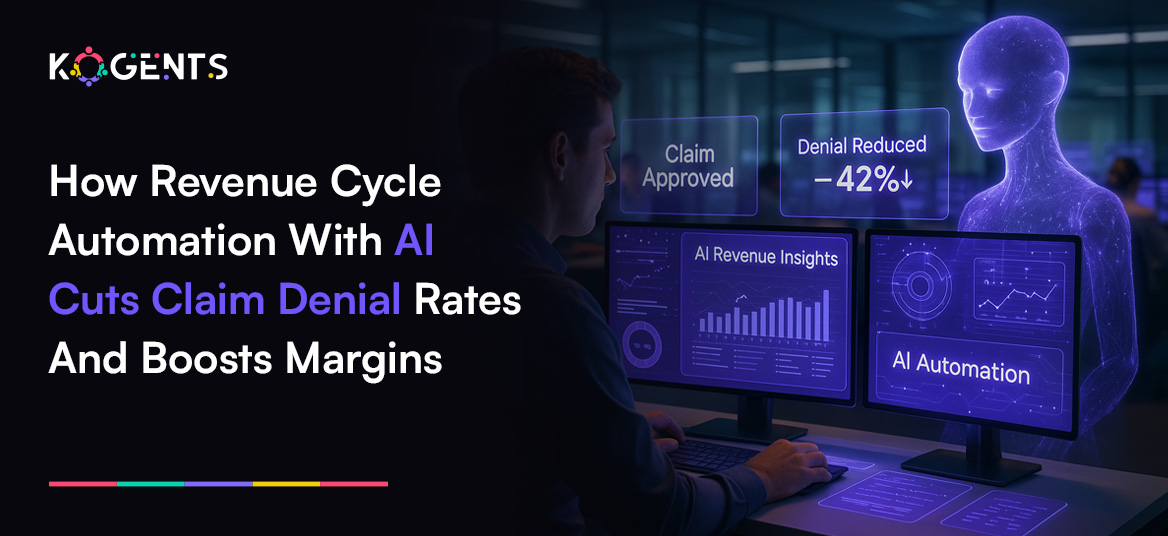
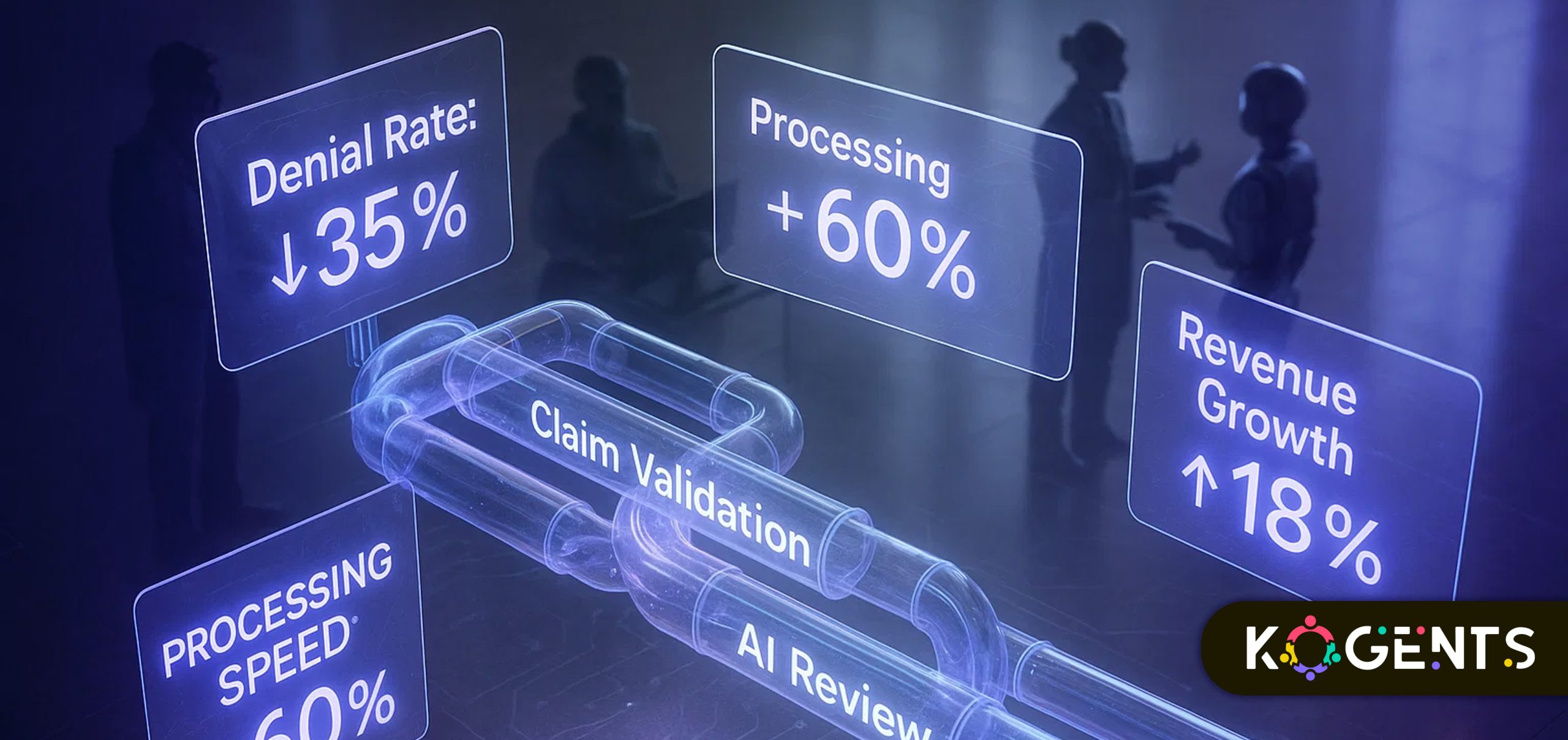
  • How Revenue Cycle Automation With AI Cuts Claim Denial Rates and Boosts Margins

    How Revenue Cycle Automation With AI Cuts Claim Denial Rates and Boosts Margins

    Against that backdrop, automated revenue cycle management has emerged as a powerful lever to transform financial operations since healthcare providers and payers alike face relentless pressure, be it rising costs, shrinking reimbursements, regulatory complexity, and growing administrative overhead. 

    One of the most tangible and immediate benefits of automation in the revenue cycle is reducing claim denial rates, those costly rejections, appeals, and rework loops that drain cash flow, morale, and margins

    By applying intelligent revenue cycle automation or AI-driven revenue cycle automation across key subprocesses, healthcare organizations can cut denials, accelerate reimbursements, and unlock margin expansion.

    In this comprehensive guide, we explore how and why revenue cycle automation with AI works, present best practices, and offer practical pro tips so your organization can adopt automation with impact.

    Key Takeaways

    • Revenue cycle automation (and its variants: RCM automation, healthcare revenue cycle automation, automated revenue cycle management) uses AI, RPA, rule engines, and predictive analytics to streamline revenue workflows.
    • By catching errors, enforcing payer rules, automating appeals, and performing root-cause analytics, it can dramatically reduce claim denials
    • Automation not only shrinks denials but also trims labor costs, shortens Days in A/R, boosts first-pass acceptance rates, and recovers lost revenue that would otherwise leak.
    • To be effective, deployment needs careful planning: integration with EHR/billing systems, change management, exception handling, continuous monitoring, and feedback loops.

    What Is Revenue Cycle Automation?

    Before diving deep, let’s clarify what we mean by revenue cycle automation and related terms:

    • Revenue cycle automation: automating tasks across the revenue cycle (from patient intake through payment posting).
    • Revenue cycle management automation: the same concept, emphasizing management plus automation.
    • RCM automation: shorthand/acronym usage.
    • Automated revenue cycle management: phrase emphasizing automation as the adjective.
    • Healthcare revenue cycle automation/revenue automation for healthcare: domain-specific phrasing.
    • Revenue cycle workflow automation: focusing on workflow orchestration.
    • Automated billing and claims processing: emphasizes claims and billing tasks.
    • End-to-end revenue cycle automation: covers the full spectrum of tasks.
    • Intelligent revenue cycle automation / AI-driven revenue cycle automation underscores the role of AI, ML, and adaptive logic.
    • Robotic process automation for RCM, revenue cycle process automation: variant phrasings emphasizing RPA or process orientation.
    • Revenue leak prevention automation, revenue capture automation: emphasizes prevention of lost revenue.
    • Claim denial automation, automated eligibility verification / prior authorization/coding / AR automation / automated payment posting: module-level variants.

    At its core, revenue cycle automation combines RPA (robotic process automation) for structured, rule-based tasks with artificial intelligence/machine learning / NLP to handle more complex or evolving tasks. 

    Over time, the system can evolve via feedback loops informed by outcomes and denial analytics, becoming more adaptive.

    When fully implemented, end-to-end revenue cycle automation can process much of the cycle with minimal manual intervention, with humans focusing only on exceptions or high-level oversight.

    intelligent revenue cycle automation

    Why Claim Denials Are a Financial Drain? 

    The Denial Burden

    • Claim denials,  i.e., when a payer rejects or refuses payment, are among the biggest adversaries of healthy cash flow. 
    • Denials create rework, appeals, delays, and often permanent write-offs. 

    According to the American Hospital Association, U.S. hospitals cumulatively hold billions in delayed or unpaid claims over six months out. 

    Common root causes include:revenue cycle automation

    • Missing or inaccurate data (e.g., AI patient scheduling, demographics, subscriber information)
    • Lack of or failed prior authorization
    • Coding or documentation errors
    • Payer rule changes or noncompliance

    Impact on Margins

    Denials hit margins via multiple levers:

    • Slower reimbursement: Denied claims delay cash flow, pushing out Days in A/R (accounts receivable).
    • Administrative cost: Each denial takes staff time to investigate, correct, appeal, and resubmit — sometimes costing $10–$50+ per claim depending on complexity.
    • Write-offs: Some claims never get resolved and must be written off, directly decreasing revenue.
    • Revenue leakage: Repetitive, preventable denials represent money slipping through process gaps.
    • Forecasting volatility: High unpredictability in collections undermines budgeting, reserve buffers, and financial planning.

    How AI & Automation Cut Denials (Stage-by-Stage)

    Here’s how intelligent revenue cycle automation and AI agents for healthcare automation can intervene at each major revenue cycle stage to reduce denials and improve outcomes:

    Eligibility & Patient Registration / Intake

    Problems encountered: Mistakes in insurance details, demographic mismatches, lapsed coverage, missing subscriber/dependent information, and coordination-of-benefits gaps.

    Automation solutions:

    • Automated eligibility verification bots that query payer systems in real time to confirm coverage, check benefit details, and flag mismatches early.
    • Registration QA / validation tools that cross-check data fields (name, birthdate, insurer ID) before claims submission.
    • Workflow prompt alerts to registration staff to correct errors immediately.

    Mini Case Story: UT Medical Center

    UT Medical Center partnered with Experian Health to deploy Registration QA at intake. This system flagged registration errors before claims generation, catching inaccuracies and missing data. 

    As a result, the hospital saw a 66% reduction in denial value and a 57% drop in monthly write-offs. This demonstrates the outsized benefit of “front-loading” quality.

    Prior Authorization

    Problems encountered: Procedures requiring preauthorization that were not obtained, missing supporting documentation, payer rejections, delays in approval, and manual entry mistakes.

    Automation solutions:

    • Rule-based logic engines determine which procedures require prior authorization based on payer, procedure, diagnosis, and historical data.
    • Automation bots assemble required documents, submit authorization requests to payer portals, monitor status, send reminders, and auto-escalate delays.
    • Denial prediction models detect high-risk authorizations and trigger preventive intervention (e.g., add documentation or escalate).
    • Automated appeals for denied authorizations, constructing responses based on templates, and supporting evidence.

    Coding, Documentation & Charge Capture

    Problems encountered: Incorrect or missing diagnosis/procedure codes (ICD, CPT, HCPCS), missing modifiers, inconsistent documentation, undercoding, or unbilled services.

    Automation solutions:

    • AI / NLP coding assistants that parse clinical notes, identify diagnoses and procedures, and recommend appropriate codes and modifiers.
    • Real-time coding validation: as charges are entered, the system checks for risk, flags missing documentation, or inconsistent combinations.
    • Automated charge capture: bots pull charges from clinical systems or device logs to ensure no service goes unbilled.
    • Coding edit rules that enforce payer-specific code rules and flag invalid combinations.

    Claims Scrubbing & Submission

    Problems encountered: Payer rule violations, missing attachments, duplicate claims, invalid payer identifiers, format errors, and business rule mismatches.

    Automation solutions:

    • Advanced claims scrubbing engines that run multilayered rule checks before submission, validating format, payer rules, attachments, and integrity.
    • Dynamic rule updates: systems that auto-adjust to payer updates and new rules.
    • Pre-submission denial prediction models: flag claims with high denial risk and route them for manual review or correction.
    • Batch submission bots: handle claim submission to clearinghouses or payer portals, track acknowledgments, catch rejections early, and requeue for correction.

    Reminder: When claims are “clean,” denial volumes drop sharply and first-pass acceptance improves.

    Mini Case Story: St. Luke’s Health System

    St. Luke’s Health implemented Enhanced Claim Status automation (via Experian) to automate submission, status tracking, and error resolution. 

    They reduced their denial rate dramatically — from ~27% to 6.5%, resulting in a 76% decline in denials. 

    That kind of leap underscores the power of workflow automation combined with real-time status tracking.

    Denial Management, Appeals & Root-Cause Analytics

    Problems encountered: Manual classification of denials, missed appeals, lack of priority routing, no feedback loops to fix root causes, document gathering inefficiencies, and long resolution times.

    Automation solutions:

    • Denial detection and classification bots: automatically categorize denials by code, payer, department, severity, likelihood of overturn, and route them to appropriate queues.
    • Automated appeals generation: using templates and logic, bots draft appeal letters, gather supporting documentation, fill out payer forms, and file appeals.
    • Prioritization workflows: the system emphasizes high-dollar or likely success cases first.
    • Root-cause analytics: AI tracks denial trends by payer, code, department, clinician, and surfaces common denial drivers for process improvement.
    • Auto-posting of appeal outcomes: once appeals succeed, bots update the billing systems, post payments, and update dashboards.

    Mini Case Story: Guidehouse + Health System

    Guidehouse worked with a major remote health monitoring system to deploy intelligent automation across 13 business functions, including insurance eligibility and denial resolution. 

    Their analysis found over $44 million in denied accounts needing rework. By optimizing core systems and deploying RPA / conversational AI, they impacted millions in saved or recovered revenue and recaptured over 2,000 hours of employee time for higher-value work. 

    Payment Posting & Reconciliation

    Problems encountered: Manual posting errors, unmatched payments, failure to capture remittance adjustments, and delays in reconciling payer responses.

    Automation solutions:

    • Automated payment posting bots: parse Electronic Remittance Advice (ERA) files, match payments, apply adjustments, and post to accounts automatically.
    • Exception-handling logic: flags mismatches or ambiguous cases to staff for manual review.
    • Reconciliation workflows: bots match payer responses, generate variance reports, and clean up inconsistencies.

    Before vs After — Key Metrics Impact

    Metric Before Automation After Automation / Target Improvement / Impact
    Claim Denial Rate 8–12% 3–5% ~40–70% reduction
    First-Pass Acceptance 70–80% 90–95% +10–20 pts
    Days in A/R 60–90 days 30–45 days ~30–50% reduction
    Cost per Denial Work $15–40 $5–15 ~60% cost saving
    Appeal Overturn Rate 20–30% 60–90% +2–3×
    Cash Flow Recovery / Year $0 (baseline) $2–10M+ (depending on size) Multi-million gain
    Labor / FTE Hours Saved Many hours of manual rework Reallocated to high-value tasks Efficiency gain
    Write-offs / Bad debt High level Lowered by 30–60% Margin boost

    Pro Tips & Best Practices for Smooth Implementation

    1. Phase your deployment
      Begin with high-impact modules (eligibility, scrubbing, denial automation), prove value, then scale outward.
    2. Strong integration architecture
      Ensure seamless connectivity with EHR, billing, clearinghouse systems, payer portals, and document systems. Use APIs, ETL layers, or middleware as needed.
    3. Process discovery & mapping
      Use process mining or advisor tools to document current state flows, identify bottlenecks, and pinpoint automation opportunities.
    4. Establish baseline metrics before automation: denial rate by payer, first-pass acceptance, days in A/R, appeal overturns, cost per denial, write-offs.
    5. Feedback loops & continuous learning
      Feed denial results and appeal outcomes back into the model so the automation “learns” and evolves.
    6. Human-in-the-loop & exception frameworks
      Design workflows so that ambiguous or unusual cases escalate to staff, rather than forcing rigid automation.
    7. Staff engagement & change management
      Involve revenue cycle staff early, train them, show quick wins, and reframe automation as augmenting rather than replacing work.
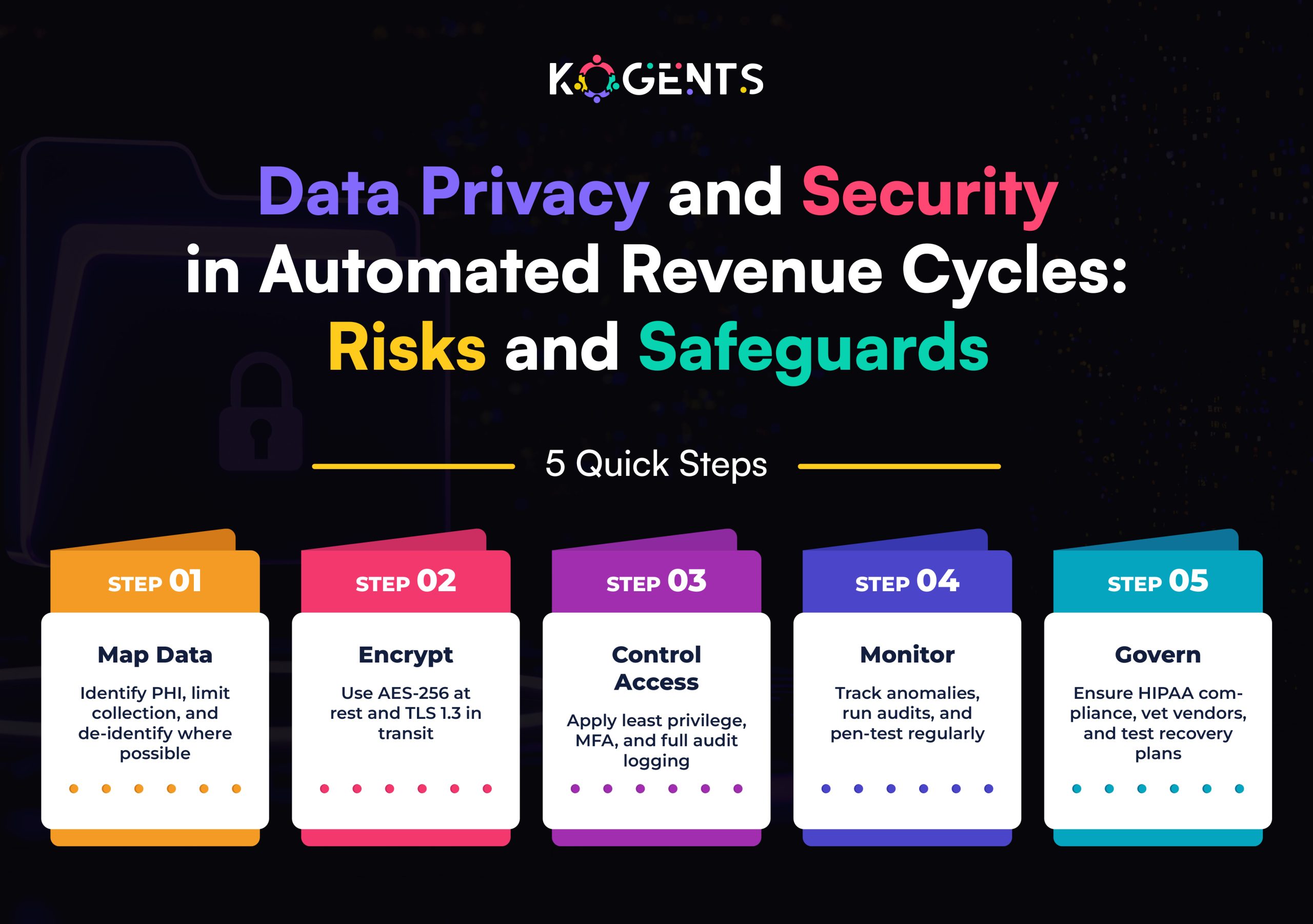
    8. Governance, audit, compliance
      Enforce logging, version control, audit trails, HIPAA compliance, and data security. Use vendors with SOC2 / HITRUST credentials.
    9. Pilot in shadow mode
      Run bots in parallel with human work for a time to validate accuracy and refine logic before fully flipping control.
    10. Vendor evaluation & fit
      Prioritize vendors with deep healthcare RCM experience, AI/NLP capabilities, and strong references. Seek KLAS-ranked or HFMA-recognized partners.

    revenue cycle automation risks and safeguards

    Conclusion

    In an era of tightening reimbursements, complexity, and margin pressure, revenue cycle automation enhanced by AI is rapidly becoming indispensable rather than optional. 

    By intervening at every stage, from eligibility verification to appeals and payment posting, automation can severely compress claim denial rates, accelerate cash inflows, reduce administrative burden, and protect margins.

    If your organization is exploring automated billing and claims processing, intelligent revenue cycle automation, or building toward end-to-end revenue cycle workflow automation, this is your moment to pair up with Kogents.ai. Give us a call at +1 (267) 248-9454 or drop an email at info@kogents.ai

    FAQs

    What is revenue cycle automation, and how does it differ from RCM?

    Revenue cycle automation focuses on using software, bots, AI, and workflows to automate tasks within the revenue cycle. RCM (revenue cycle management) is the end-to-end discipline of managing financial operations. When automation is overlaid, you get revenue cycle management automation, automated revenue cycle management, or AI-driven revenue cycle automation.

    How exactly does automation reduce claim denials?

    Automation catches errors early (eligibility, registration), applies payer rules in coding and scrubbing, predicts high-risk claims for preemptive correction, routes denials intelligently for appeal, and closes feedback loops to prevent repeat denials.

    What technologies underpin intelligent revenue cycle automation?

    Key building blocks include RPA (robotic process automation), AI/machine learning, NLP / natural language processing, rule engines, workflow orchestration, and predictive analytics. The synergy of these enables more context-aware and adaptive behaviors.

    How do RPA and AI differ in this context?

    RPA handles structured, repetitive, rule-based tasks (e.g., copying, populating forms). AI adds decision-making, prediction, natural-language understanding, anomaly detection, and adaptivity. The most powerful architectures combine both.

    Will automation replace revenue cycle staff?

    No, the goal is to augment staff, freeing them from repetitive work so they can focus on exceptions, strategy, analytics, and oversight. Many teams reassign FTEs to higher-value tasks.

  • Building reliable agentic AI healthcare solutions with guardrails and audits

    Building reliable agentic AI healthcare solutions with guardrails and audits

    The healthcare industry is entering a defining era, one where artificial intelligence doesn’t just assist but acts with autonomy and purpose. 

    This emerging class of systems, known as agentic AI healthcare solutions, is reshaping how hospitals, clinics, and solopreneurs deliver care.

    Unlike static algorithms or generative chatbots, agentic AI functions as a decision-making entity, observing, reasoning, acting, and learning within guardrails. 

    These autonomous medical agents can triage patients, optimize scheduling, analyze diagnostics, and assist doctors with actionable insights, all while maintaining human oversight and auditability.

    Yet with this power comes responsibility as AI systems gain agency, reliability, transparency, and compliance become non-negotiable. 

    This guide explores how entrepreneurs and healthcare innovators can build trustworthy, audited, and regulation-ready agentic AI systems that deliver real-world impact without compromising safety.

    Key Takeaways

    • Agentic AI healthcare systems combine autonomy + accountability.
    • Rule-based systems are predictable but limited.
    • Generative AI is creative but unreliable for clinical decisions.
    • Agentic systems bridge the gap, safe automation that thinks.

    The Anatomy of an Agentic Healthcare System

    Building an agentic healthcare system involves combining intelligence, safety, and interoperability.

    Let’s unpack its architecture.

    Core Architectural Components

    1. Perception & Context Awareness: integration with EHR, IoT, or wearable data.
    2. Planning Module: prioritizes goals, handles multi-step reasoning.
    3. Memory Systems: retains patient context across interactions.
    4. Knowledge Graphs: enable accurate, context-linked reasoning.
    5. Auditing & Traceability Layers: every action is logged, explainable, and reversible.
    6. Human-in-the-Loop (HITL): ensures human oversight for sensitive actions.

    Note: These systems often rely on large language models (LLMs) combined with multi-agent orchestration

    The AI in healthcare audits market is also growing, with a predicted CAGR of 9.8% from 2025–2034, as audits become more automated and embedded.

    Multi-Agent Orchestration and Oversight

    Inspired by the Tiered Agentic Oversight Model, modern AI agents for healthcare automation employ multiple tiers to maintain safety, transparency, and compliance:

    • Primary agents perform reasoning and action.
    • Supervisory agents validate compliance and results.
    • Governance agents ensure adherence to HIPAA, GDPR, or institutional policies.

    Key Point: This structure mirrors hospital hierarchy, autonomy with accountability, ensuring no single AI acts unchecked.

    Applications & Use Cases of Agentic AI in Healthcare

    Agentic AI systems are already making a measurable impact across diverse domains.

    Use Case Description Outcome
    Diagnostics & Imaging Autonomous AI agents (e.g., Aidoc) are analyzing CT scans to triage emergencies 25% faster report turnaround
    Patient Monitoring Agentic AI using IoT sensors for chronic disease tracking Early risk detection & fewer readmissions
    Scheduling & Operations AI agents optimizing hospital resources 15–20% cost reduction in operations
    Clinical Decision Support (CDS) Intelligent reasoning agents assisting doctors Fewer diagnostic errors
    Care Coordination Multi-agent collaboration across departments Improved continuity of care

    Mini Case for Solopreneurs

    A solo teletherapy practitioner deploys an agentic care assistant that automates intake forms, session summaries, and reminders, all with HIPAA-safe logging. 

    The result? 60% less admin work, more patient time, and consistent documentation.

    Pro Tip:

    Start small and deploy one autonomous healthcare assistant in a limited workflow, audit it rigorously, then expand.

    Case Studies: Authentic Examples of Agentic AI in Action

    1. Cedars-Sinai’s Radiology Workflow

    Cedars-Sinai adopted an AI agent (built with Aidoc’s system) to prioritize scans based on urgency.

    • Result: 25% faster turnaround and reduced fatigue for radiologists.
    • Guardrail: Human verification remained mandatory for every diagnosis.

    2. MIT Jameel Clinic – Tiered Agentic Oversight

    This research, published on arXiv (2024), proposed a hierarchical multi-agent system where AI decisions are validated by “auditor” agents and human clinicians.

    • Result: Improved trust, interpretability, and compliance with HIPAA.
    • Significance: Set a precedent for auditable agentic AI systems.

    3. Startup Spotlight – Agentic Mental Health Assistant

    A solopreneur in remote health monitoring built an autonomous scheduling and journaling assistant using HIPAA-compliant APIs.

    • Outcome: Saved 5 hours daily, reduced administrative errors.
    • Lesson: Even small players can use agentic decision-making AI responsibly with built-in audits.

    Ethical Guardrails, Audits, and Governance: The Foundation of Agentic AI Healthcare Solutions

    Autonomous intelligence in healthcare cannot exist without governance, explainability, and ethics baked in. 

    1. The Three Pillars of Ethical Guardrails

    Pillar Purpose Implementation Example
    Transparency Explain decisions to patients & auditors Use interpretable reasoning traces
    Accountability Attribute responsibility to AI or a human Maintain digital audit signatures
    Fairness Avoid systemic bias Continuous bias audits & dataset checks

    2. Regulatory Compliance as Continuous Practice

    Healthcare AI operates under strict legal frameworks:

    • HIPAA / GDPR / PHIPA / FDA / CE Marking
    • Ethical AI frameworks like IEEE ESI, WHO’s Ethics & Governance of AI, OECD AI Principles.
    • Compliance should be seen not as an audit event but as a continuous process of accountability.
    • Use compliance agents, automated monitors that flag non-compliant actions in real-time.

    3. Guardrails for Agent Behavior

    • Action Constraints: Agents can only act within approved data and function domains.
    • Escalation Triggers: When confidence <90%, route to a human reviewer.
    • Tiered Agentic Oversight: Supervisor agents audit the work of operational ones, mirroring clinical chain-of-command structures.
    • Ethical Governance Dashboards: Integrate monitoring for bias, consent, and security events.

    4. Building Trust Through Explainability and Audits

    Modern healthcare AI must pass what MIT’s Cynthia Rudin calls the “reason test”, the ability to justify each decision in plain language.

    Agentic systems accomplish this through:

    • Explainable reasoning chains (via ReAct or Self-Reflective loops).
    • Interactive audit dashboards that visualize decision paths.
    • Federated logs that allow multiple institutions to audit without exposing private data.

    5. The Role of AI Governance Boards

    Even small startups should establish micro AI governance boards, a group of 2–3 advisors (medical, legal, technical).

    Their functions:

      • Review quarterly audits.
      • Oversee data consent mechanisms.
      • Approve model updates before deployment.

    Key Note: This aligns with WHO’s 2024 guidance that “AI governance must scale down as well as up.”

    agentic ai healthcare

    Building Reliable Agentic AI Systems: A Framework for Entrepreneurs and Solopreneurs

    Entrepreneurs and solopreneurs who adopt this paradigm can unlock autonomous, compliant, and revenue-generating healthcare solutions faster than legacy enterprises weighed down by bureaucracy.

    This section provides a step-by-step blueprint to build reliable, auditable, and regulation-ready agentic systems, with practical guidance for resource-limited innovators.

    1. Identify a Controlled, High-Impact Use Case

    Start small. Choose a non-critical yet valuable workflow where automation is safe but impactful:

    • Clinical documentation summarization
    • EHR data extraction and coordination
    • Appointment scheduling and follow-ups
    • Billing, insurance preauthorization, or claims triage

    Why? These domains are ideal for testing audit workflows, privacy handling, and supervised reasoning before tackling high-risk diagnostics or treatment planning.

    2. Design a Modular Agentic Architecture

    Each module in an agentic system should map to a layer of responsibility and oversight.

    Layer Function Example Tools / Techniques
    Perception Layer Data ingestion, context understanding FHIR APIs, OCR, voice recognition
    Reasoning Layer Planning, goal prioritization LangChain, CrewAI, ReAct pattern
    Action Layer Executes decisions safely API integration with EHR or chatbots
    Audit Layer Logging, traceability Blockchain logs, immutable storage
    Oversight Layer Human review, compliance validation Tiered Agentic Oversight (MIT model)

    3. Embed Human-in-the-Loop (HITL) Oversight

    Entrepreneurs should design for collaboration, not replacement.

    • Define agentic escalation points where humans review critical actions.
    • Use confidence thresholds that only allow autonomous execution if model certainty exceeds 95%.
    • Maintain real-time override mechanisms.

    4. Establish Auditability and Provenance

    Auditability is not optional; it’s a regulatory mandate and trust enabler.

    • Immutable audit trails that capture every query, decision, and data source.
    • Versioned reasoning logs: (agent thought traces).
    • Data lineage visualization: so clinicians can trace how an insight was generated.

    5. Build for Regulatory Readiness

    Every agentic healthcare product is a potential regulated device under FDA or CE rules. 

    To be audit-ready:

    • Document every model change (model card + dataset provenance).
    • Conduct bias and fairness evaluations regularly.
    • Maintain Data Protection Impact Assessments (DPIA) for GDPR contexts.
    • Include an AI system “bill of materials” (model versioning, libraries, datasets).

    6. Pilot, Validate, and Iterate

    • Clinical Validation: Compare against human expert baselines.
    • Technical Validation: Stress test under variable data quality.
    • Operational Validation: Evaluate ROI (hours saved, errors reduced).

    7. Monitor, Audit, and Continuously Improve

    After deployment:

    • Set up automated anomaly detectors to identify odd model behavior.
    • Conduct quarterly audit reviews for compliance.
    • Enable agent feedback loops that retrain on verified outcomes, not raw data.

    8. ROI and Growth Impact Snapshot

    Workflow Agentic Solution Outcome / ROI
    Clinical notes summarization Context-aware LLM with audit logs 3–5× faster reporting
    Patient engagement & follow-ups Multi-agent scheduling assistant 70% less manual admin
    Imaging triage Autonomous prioritization agent 25% shorter turnaround
    Claims verification Document AI agent with explainability 2× reduction in errors

    Comparative Analysis: Agentic AI vs Other Automation Models

    Feature Agentic AI Systems Rule-Based Automation Generative AI Tools
    Decision Autonomy High — plans & acts None Medium — responds
    Context Awareness Deep (multi-modal reasoning) Low Moderate
    Auditability Built-in, fully traceable Limited logs Often opaque
    Learning Feedback Continuous & adaptive Static Unsupervised
    Error Handling Autonomous fallback & escalation Manual Unpredictable
    Compliance Readiness HIPAA/GDPR aligned Compliant but rigid Risky for health data
    Best Use Case Proactive healthcare systems Fixed administrative tasks Creative content generation

    Strategic and Policy Implications for Healthcare Leaders

    To fully harness agentic AI, healthcare executives, investors, and policymakers must think systemically.

    1. Strategic Shifts

    • Transition budgets from pure automation to auditable intelligence systems.
    • Create AI Reliability Offices to oversee safety audits and transparency reports.
    • Mandate that every deployed agent include an audit API accessible to regulators.

    2. Policy Recommendations

    • Enforce “Explainability by Design” across healthcare AI vendors.
    • Encourage open audit frameworks for cross-institutional benchmarking.
    • Support startups developing agentic audit tools, the new compliance frontier.

    3. Entrepreneurial Opportunity

    • Building guardrail AI for regulated industries will become a billion-dollar opportunity.
    • Founders who bake compliance, interpretability, and governance into their agentic solutions will lead the next wave of digital health transformation.

    The Future of Agentic AI Healthcare

    The future of healthcare AI isn’t just automation, it’s agency with accountability

    The next decade will see autonomous, explainable, and adaptive AI ecosystems becoming indispensable across medical workflows.

    1. Self-Improving, Multi-Agent Ecosystems

    Future healthcare systems will use self-optimizing multi-agent frameworks.

    Agents will specialize, diagnostic, operational, ethical, and compliance, and collaborate autonomously using hierarchical control structures.

    2. Causal Reasoning and Explainability

    Current LLMs are correlation machines. The future lies in causal, reasoning-based agents capable of:

    • Explaining why an outcome occurred.
    • Simulating what-if medical interventions.
    • Building causal graphs from patient data for transparency.

    3. Integration with Wearables, IoT, and Digital Twins

    Imagine an ecosystem where your smartwatch, EHR, and hospital systems collaborate through agentic AI healthcare systems.

    • A digital twin monitors physiological signals in real time.
    • When anomalies occur, an autonomous healthcare assistant coordinates labs, schedules, and alerts.
    • Auditor agents verify every action for compliance.

    Soft Reminder: This convergence of agentic AI and connected health will bring predictive, personalized, and continuous care.

    4. From Reactive to Proactive Medicine

    • AI doctor diagnosis technology and agentic systems are moving healthcare from reactive treatment to predictive prevention.
    • Through continuous data interpretation, they can anticipate disease progression, optimize interventions, and notify clinicians before a crisis emerges.

    5. Rise of AI Auditors and Digital Regulators

    Expect regulatory agencies to introduce AI Auditors-as-a-Service (AaaS), neutral digital agents that continuously monitor model compliance and flag anomalies.

    6. Global, Multilingual, and Ethical Expansion

    New frameworks like “Multilingual, Privacy-First Agentic AI Healthcare Systems” (arXiv) demonstrate cross-border privacy compliance through federated multi-agent learning, vital for the Global South.

    Key Learning: Such inclusive architectures ensure health equity and global interoperability.

    agentic ai healthcare

    The Path Forward! 

    As healthcare enters the era of intelligent autonomy, agentic AI healthcare stands poised to redefine trust, precision, and efficiency in medicine. 

    But lasting innovation depends on more than technology; it requires ethical guardrails, continuous audits, and human-centered governance

    By embracing these principles, entrepreneurs and solopreneurs can pioneer solutions that are not only intelligent but also accountable, transparent, and life-enhancing.

    The future of healthcare belongs to those who build AI that acts wisely, learns responsibly, and earns trust at every decision. 

    So, choose kogents.ai to pave the way for building reliable agentic AI healthcare solutions. Contact us at +1 (267) 248-9454 or email us at info@kogents.ai

    FAQs

    What is agentic AI in healthcare, and how is it different from generative AI?

    Agentic AI acts autonomously, plans, and executes tasks with context awareness, unlike generative AI, which only creates responses. It’s built for proactive care, not just reactive dialogue.

    How do agentic healthcare systems ensure safety and reliability?

    They employ guardrails, audit logs, and multi-layer human oversight to prevent unsafe or biased actions, ensuring accountability.

    Are agentic AI agents compliant with HIPAA and GDPR standards?

    Yes, compliant systems encrypt all PHI, enforce consent, and implement ABAC access controls aligned with HIPAA and GDPR.

    What are real-world use cases of agentic AI in medicine?

    Diagnostics triage, patient monitoring, scheduling, and decision support, each improving accuracy and efficiency.

    Can small clinics or solopreneurs deploy agentic AI affordably?

    Absolutely. Modular frameworks like LangChain allow low-cost deployment for documentation or scheduling agents.

    What role do audits play in agentic healthcare AI systems?

    Audits ensure traceability. Every action is recorded for compliance, liability protection, and regulatory validation.

    Which institutions and companies are pioneering this field?

    Leaders include MIT Jameel Clinic, Cedars-Sinai, Aidoc, Athenahealth, and Salesforce Health Cloud.

    What’s the ROI of adopting agentic AI healthcare systems?

    Typical gains: 3–5× efficiency boost, reduced administrative load, faster patient throughput, and improved care quality.

    How do multi-agent systems improve healthcare operations?

    They coordinate between diagnostic, operational, and administrative processes, creating unified, context-aware workflows.

    What does the future hold for proactive AI in medicine?

    Expect self-improving, auditable AI agents with explainability, regulation-ready governance, and global deployment models.

  • Patient monitoring AI with real-time alerts and explainable anomaly detection

    Patient monitoring AI with real-time alerts and explainable anomaly detection

    You must be aware of the fact that hospitals generate massive streams of physiological data, including heart rate, SpO₂, respiratory rate, blood pressure, and ECG waveforms, 24 hours a day. 

    Yet clinicians can process only a fraction of this flood in real time. The result: alert fatigue, delayed interventions, and preventable harm.

    Enter Patient Monitoring AI, an intelligent layer that continuously interprets vital-sign data, detects early anomalies, and triggers timely alerts

    By combining machine learning, sensor fusion, and explainable algorithms, AI-based monitoring systems promise to reduce clinical risk while restoring clinicians’ trust in automation.

    This article explores how patient monitoring AI enables real-time alerts and explainable anomaly detection, the technologies driving it, and why transparency is the key to widespread adoption.

    Key Takeaways

    • How AI-driven patient monitoring improves real-time clinical decisions and patient safety.
    • Why explainable AI (XAI) builds trust through transparent alerts.
    • How edge-to-cloud analytics enable continuous, context-aware monitoring.
    • How AI patient scheduling boosts hospital efficiency and staff coordination.
    • The future of predictive, proactive healthcare powered by intelligent automation.

    What Is Patient Monitoring AI?

    It refers to artificial intelligence systems that analyze physiological signals and clinical parameters to detect anomalies, predict patient deterioration, and generate real-time alerts.

    Unlike traditional systems that rely on static thresholds (“alert if HR > 120”), AI-driven platforms learn normal ranges per individual and continuously update their understanding of patient baselines.

    Core Components

    • Data ingestion layer: integrates continuous feeds from bedside monitors, wearables, or IoMT (Internet of Medical Things) sensors.
    • Machine learning engine: applies models such as LSTM networks, CNNs, and Random Forests to detect trends or sudden deviations.
    • Explainability interface (XAI): provides human-readable reasoning behind alerts.
    • Integration API: connects with EHR systems, nurse dashboards, and mobile alerts.

    This approach allows hospitals to move from reactive to predictive care, addressing complications before they escalate.

    patient monitoring AI

    Why Real-Time Monitoring Matters? 

    In critical care, time is measured in heartbeats. A delay of 60 seconds can mean cardiac arrest or irreversible hypoxia. 

    Real-time patient monitoring enables clinicians to act within that “golden minute.”

    Traditional monitors often trigger hundreds of false alarms per shift—up to 80–90% in ICUs—causing desensitization and slower response times. 

    AI mitigates this by filtering noise and recognizing contextual anomalies rather than isolated spikes.

    Key Benefits

    • Early warning detection: Predict sepsis or acute respiratory failure hours in advance.
    • Reduced alert fatigue: Adaptive thresholds cut false positives.
    • Remote visibility: Tele-ICUs and home-care platforms monitor patients continuously.
    • Operational efficiency: AI triages, which alert to require immediate attention, while AI patient scheduling algorithms synchronize clinician availability with urgent cases, minimizing response delays.

    As of 2024, 43% of healthcare leaders are leveraging AI for in-hospital patient monitoring, with 85% planning further AI investments.

    The Role of AI in Continuous Monitoring

    AI transforms patient monitoring into a dynamic decision-support system. It doesn’t just collect numbers; it interprets them in context.

    Data Fusion and Predictive Analytics

    Modern monitoring systems combine multiple input streams, vital signs, lab results, imaging, and clinician notes, using sensor fusion and multimodal deep learning. 

    Algorithms detect latent correlations: a subtle change in respiratory rate, when combined with a shift in ECG variability, might predict deterioration hours before traditional metrics show it.

    Machine Learning Techniques

    Model Type Example Use Benefit
    LSTM / RNN Time-series forecasting of heart rate trends Captures temporal dependencies
    CNN ECG waveform classification Detects subtle morphological changes
    XGBoost / Random Forest Feature-based anomaly scoring Fast, interpretable, and lightweight
    Autoencoders Unsupervised anomaly detection Identifies unseen patterns without labeled data

    These models form the computational backbone of AI-assisted patient monitoring, scanning thousands of data points per second and prioritizing clinically meaningful signals.

    Real-Time Alerts: How They Work

    Real-time alerting is the operational core of any patient monitoring AI platform. Here’s how a typical alert pipeline functions:

    1. Data acquisition: Continuous signals (ECG, SpO₂, BP) are streamed via IoMT sensors.
    2. Preprocessing: Noise reduction, signal normalization, and missing-data handling.
    3. Inference: The AI model calculates risk scores or anomaly likelihoods.
    4. Decision logic: If the score exceeds an adaptive threshold, an alert is generated.
    5. Notification: The system routes the alert to nurse stations, mobile apps, or EHR dashboards, often prioritized by severity.

    Unlike conventional systems that react to absolute values, AI considers the rate of change, cross-signal relationships, and patient history. 

    The result: earlier, smarter alerts, fewer false alarms, and more actionable insights.

    Explainable Anomaly Detection: Making AI Trustworthy

    For AI to be trusted in healthcare, it must be explainable

    Clinicians must understand why an alert was triggered, not just that it was.

    What Is Explainable AI (XAI)?

    It provides interpretability layers that make algorithmic outputs transparent. Techniques such as 

    •  SHAP (Shapley Additive exPlanations)
    • LIME (Local Interpretable Model-agnostic Explanations)
    • Attention visualization 

    All reveal which features contributed most to an anomaly score.

    Example:

    A notable example in the AI doctor diagnosis system that seems to detect hypoxia might explain:

    “Alert generated because SpO₂ dropped 4% below personal baseline and correlated with a 15% rise in respiratory rate over 10 minutes.”

    Such clarity builds clinical confidence and supports regulatory compliance (FDA, CE Mark) by making decisions auditable. 

    Comparison: Traditional vs. AI-Based Patient Monitoring

    Feature Traditional Monitoring AI-Powered Patient Monitoring
    Data Processing Manual, reactive Automated, predictive
    Alert Mechanism Fixed thresholds Context-aware adaptive alerts
    Scalability Limited to bedside Scales across wards and remote settings
    Accuracy High false positives Learns from feedback to improve
    Explainability Basic (rule-based) Advanced via XAI tools
    Integration Device-specific Unified via EHR / cloud APIs
    Care Model Reactive Preventive and proactive

    Use Cases and Real-World Applications

    1. ICU Early Warning Systems

    • Hospitals like Mount Sinai are deploying AI models that detect sepsis or cardiac deterioration hours earlier than clinical judgment. 
    • Systems analyze heart rate variability, blood pressure, and temperature to trigger predictive alerts, allowing clinicians to intervene proactively.

    2. Post-Surgical Monitoring

    • AI monitors track wound infection risk and detect abnormal pain responses using biosensors. 
    • Some integrate computer vision to interpret facial expressions and movement, combining visual data with vitals for multimodal inference.

    3. Remote Patient Monitoring (RPM)

    • Platforms such as Empatica leverage wearable sensors and edge computing to analyze vitals in real time, ideal for chronic disease management and telehealth.
    • For instance, diabetic patients’ glucose and heart rate data are analyzed continuously, generating alerts directly to physicians through cloud dashboards.

    4. Elderly and Fall Detection

    AI-enabled ambient sensors detect motion anomalies, such as gait instability or inactivity, triggering caregiver alerts without the need for intrusive cameras.

    Business Impact: ROI, Efficiency, and Scalability

    For healthcare executives, the economic case for AI agents for healthcare automation and monitoring is compelling.

    1. Reduced ICU Stays and Readmissions

    Predictive monitoring decreases unplanned transfers and accelerates recovery, cutting average ICU stays by 10–15% in pilot studies.

    2. Lower Operational Costs

    Automation enables nurse-to-patient ratios to scale efficiently. 

    A single AI system can supervise hundreds of patients remotely, augmenting staff rather than replacing them.

    3. Regulatory and Quality Compliance

    Explainability features help meet FDA, HIPAA, and ISO 13485 requirements, ensuring algorithmic decisions are traceable and privacy-compliant.

    4. Competitive Differentiation

    Hospitals adopting AI-assisted patient monitoring can market themselves as smart hospitals, improving brand perception, attracting top talent, and fostering innovation partnerships with MedTech startups.

    Technical Architecture Overview

    A robust AI-based patient monitoring system typically includes the following layers:

    1. Edge Layer: IoMT sensors and wearable devices capture biosignals. Edge inference ensures latency-free alerting.
    2. Communication Layer: Encrypted data channels (MQTT, HL7 FHIR APIs) transmit signals to cloud or on-prem servers.
    3. Analytics Layer: ML models (LSTM, Autoencoders) perform anomaly scoring and risk prediction.
    4. Explainability Layer: XAI frameworks generate human-readable visualizations.
    5. Application Layer: Dashboards, clinician apps, and EHR integrations display real-time insights.

    Highlight: This modular design allows flexibility, cloud scalability for large hospitals, and edge computing for local clinics with bandwidth constraints.

    Learn Ethical, Privacy, and Regulatory Challenges 

    While the promise of patient monitoring AI is immense, so are its challenges.

    1. Data Privacy and Security

    • Systems must comply with HIPAA (US) and GDPR (EU)
    • Techniques like federated learning and differential privacy allow AI models to learn from distributed data without exposing sensitive information.

    2. Model Drift and Continuous Validation

    Physiological data patterns can change over time; ongoing model monitoring is essential to maintain performance and fairness.

    3. Bias and Interpretability

    • Models trained on homogeneous datasets risk underperforming across diverse populations. 
    • Transparent explainability mitigates this by exposing bias patterns early.

    4. Human Oversight

    • AI should complement, not replace, clinical judgment. 
    • Establishing human-in-the-loop frameworks ensures accountability and maintains trust.

    patient monitoring AI


    The Future of Patient Monitoring AI

    The next generation of patient monitoring AI will be:

    • Edge-native: Running on local devices for instant response.
    • Context-aware: Combining behavioral, environmental, and physiological data.
    • Personalized: Adapting to each patient’s baseline and genomic profile.
    • Federated and secure: Learning across institutions without centralizing data.
    • Regulation-ready: Built for explainability and ethical transparency.

    As hospitals evolve into smart, connected ecosystems, patient monitoring AI will become the nerve center of proactive healthcare, integrating with clinical decision support, workflow automation, and even robotic nursing assistants.

    Redefine The Future of Digital Healthcare With Kogents Today! 

    Patient Monitoring AI represents a paradigm shift from reactive treatment to proactive prevention. 

    Through real-time alerts, anomaly detection, and explainable intelligence, AI empowers clinicians to act sooner, with greater confidence and context.

    The convergence of IoMT sensors, predictive analytics, and explainable AI isn’t just transforming patient monitoring; it’s redefining the future of digital healthcare

    So, give Kogents.ai this chance to further assist you. Give us a call at +1 (267) 248-9454 or email us at info@kogents.ai

    FAQs

    What is patient monitoring AI?

    AI systems that continuously analyze patient vitals to detect anomalies and trigger real-time alerts for clinicians.

    How does AI improve patient monitoring accuracy?

    By learning patient-specific baselines, reducing false positives, and identifying complex patterns beyond static thresholds.

    What technologies power patient monitoring AI?

    Machine learning models (LSTM, CNN), IoMT sensors, edge computing, and explainable AI frameworks like SHAP or LIME.

    Why is explainable anomaly detection important?

    It ensures clinicians understand why an alert was triggered, promoting transparency and regulatory trust.

    Can AI replace nurses or doctors in monitoring? 

    No, AI augments human judgment, automating repetitive surveillance so clinicians focus on care.

    How does patient monitoring AI reduce alert fatigue?

    Adaptive learning minimizes unnecessary alerts by distinguishing real anomalies from normal variability.

    Is patient data secure in AI systems?

    Yes, using encryption, HIPAA compliance, and privacy-preserving techniques like federated learning.

    What are some real-world examples?

    Care.ai, Empatica, and Philips IntelliVue use AI for ICU and remote patient monitoring.

    What’s the ROI for hospitals implementing patient monitoring AI?

    Improved outcomes, shorter ICU stays, reduced readmissions, and optimized staffing efficiency.

    What’s next for this technology?

    Edge AI, personalized analytics, and integration with broader digital health ecosystems like smart hospital rooms.

  • Clinical workflow automation with AI that reduces bottlenecks and error rates

    Clinical workflow automation with AI that reduces bottlenecks and error rates

    The healthcare industry is under immense pressure to deliver faster, safer, and more cost-effective care, yet bottlenecks and human errors persist across hospitals, clinics, and outpatient settings.

    One study reveals, physicians and nurses often spend 27% of their time on electronic health record tasks, 25% on direct patient care, 17% on personal time, 15% on indirect patient care, and 6% on communication. 

    The above fact depicts that manual documentation and inefficient workflows delay treatment and increase burnout rates.

    With the adoption of clinical workflow automation, an AI-powered solution that streamlines repetitive clinical and administrative tasks, this has become hassle-free. 

    By integrating machine learning, robotic process automation (RPA), and natural language processing (NLP) into core hospital operations, healthcare organizations are transforming complex manual workflows into intelligent, adaptive systems.

    This article explores how AI-driven clinical workflow automation minimizes bottlenecks, reduces error rates, and empowers care teams to focus on what matters most: patient outcomes.

    Key Takeaways

    • Understanding how AI-powered clinical workflow automation streamlines hospital operations.
    • Learning how automation reduces errors, delays, and clinician burnout.
    • Exploring the role of machine learning, RPA, and NLP in improving patient care.
    • Discovering real-world examples of AI transforming healthcare delivery.
    • Knowing how automation technologies prepare hospitals for future-ready, data-driven care.

    What Is Clinical Workflow Automation?

    It refers to the intelligent orchestration of using AI Agents for Healthcare Automation and automation technologies to reduce manual intervention. 

    Unlike basic digitization, it connects EHR systems, clinical decision support systems (CDSS), and hospital management platforms to perform rule-based tasks autonomously.

    Modern automated clinical workflows rely on:

    • Robotic Process Automation (RPA) for repetitive administrative tasks.
    • Machine Learning (ML) for predictive analytics and resource optimization.
    • Natural Language Processing (NLP) for real-time documentation.
    • Interoperability standards like FHIR and HL7 for seamless data exchange.

    Key Points You Need To Ponder Upon: This integration creates a connected ecosystem that spans patient scheduling, lab reporting, medication management, and clinical documentation automation, ensuring consistent accuracy and efficiency across departments.

    clinical workflow automation

    The Problem: Bottlenecks and Errors in Traditional Clinical Workflows

    Healthcare organizations worldwide face workflow inefficiencies that compromise patient care and staff well-being:

    Manual data entry in EHRs

    • Clinicians often spend hours entering information by hand, increasing the risk of typos, missing details, and inconsistent AI patient scheduling records. 
    • These errors delay decision-making and reduce time spent on direct patient care.

    Paper-based workflows

    • When departments still rely on paper charts or printed reports, vital information can be misplaced or delayed. 
    • This creates communication gaps, leading to duplicated efforts and delayed treatments.

    Inefficient scheduling

    • Poorly coordinated appointment systems cause patient no-shows, long wait times, and resource conflicts among staff and facilities. 
    • The result is reduced productivity and frustrated patients.

    Unstructured documentation

    • Free-text notes and scattered data make it difficult to extract insights for audits, compliance reporting, and quality improvement. 
    • This lack of structure slows down regulatory reviews and data-driven decision-making.

    Staff overload from redundant tasks

    • Clinicians often perform repetitive administrative duties that technology could easily automate.
    • The extra workload contributes to burnout, lower morale, and higher turnover rates in healthcare teams.
    According to the Centers for Medicare & Medicaid Services (CMS), workflow inefficiencies cost U.S. hospitals billions annually and contribute significantly to diagnostic delays and preventable errors.

    Without automation, these bottlenecks limit scalability, drain resources, and diminish patient safety. 

    That’s why healthcare leaders are turning to AI-powered clinical process automation to reengineer operations from the inside out.

    Workflow Aspect Manual Process Automated (AI) Process
    Data Entry Time-consuming, error-prone Instant and accurate through RPA
    Scheduling Prone to delays and overlaps Optimized using predictive analytics
    Documentation Unstructured, inconsistent Real-time NLP-based structured entry
    Staff Efficiency High workload and burnout Reduced admin burden, higher productivity
    Patient Safety Prone to human error Improved through real-time alerts

    How AI Enhances Clinical Workflow Automation? 

    AI takes healthcare workflow automation to a new level by making it adaptive, predictive, and context-aware, extending its value into areas like remote health monitoring and predictive patient management.

    A. Intelligent Process Automation (IPA)

    By merging RPA with AI, hospitals can automate both repetitive and decision-based tasks. 

    Example: AI models can analyze patient eligibility data to automatically process insurance pre-authorizations, reducing turnaround times by up to more than half of the total. 

    B. Predictive Analytics for Resource Management

    • Machine learning models anticipate patient admissions, staff availability, and bed occupancy. 
    • Hospitals using predictive workflow automation can dynamically adjust staff schedules, preventing overwork and minimizing idle resources.

    C. NLP in Clinical Documentation Automation

    • NLP algorithms transcribe, summarize, and structure physician notes in real time, automatically updating EHR workflow automation systems. 
    • This improves medical documentation accuracy and reduces charting time by half. 

    D. Machine Learning for Decision Support

    • AI-powered clinical decision support systems (CDSS) analyze historical data and flag abnormal results instantly. 
    • This enhances diagnostic accuracy and speeds up treatment recommendations.
    • Collectively, these technologies build a learning healthcare system, one that continuously optimizes its workflows using real-world performance data.

    Benefits of AI-Driven Clinical Workflow Automation

    The impact of clinical workflow automation extends beyond operational gains; it reshapes the entire healthcare delivery model.

    A. Eliminates Bottlenecks

    Automated routing of test results, task assignments, and patient data ensures that every process moves smoothly through the care continuum.

    B. Reduces Errors

    AI validation algorithms prevent manual entry mistakes and trigger alerts when inconsistencies are detected in patient records.

    C. Enhances Clinician Efficiency

    By automating administrative load, clinicians reclaim valuable time for direct patient care, a critical factor in reducing burnout.

    D. Improves Patient Safety

    Automated alerts, predictive monitoring, and data-driven triage systems ensure timely interventions and fewer preventable incidents.

    E. Increases ROI and Scalability

    Hospitals implementing automation in clinical operations report much and more fast throughput and have fewer documentation errors.

    These gains translate to better patient experiences, happier staff, and measurable financial sustainability.

    clinical workflow automation

    Real-World Applications of Clinical Workflow Automation

    Automation isn’t theoretical; it’s already transforming hospitals and clinics globally.

    A. Radiology Workflow Automation

    AI systems in COVID-19, like Siemens Healthineers, prioritize critical imaging cases and automatically generate preliminary reports, reducing turnaround time by 30%.

    B. EHR Data Management

    Platforms such as Epic Systems and Cerner (Oracle Health) employ AI-based data extraction tools that sync clinical notes and lab results seamlessly into EHR systems.

    C. Operating Room and Bed Management

    Predictive analytics tools forecast surgery durations, optimize room usage, and coordinate with sterilization units, improving surgical throughput.

    D. Outpatient & Telehealth Automation

    Athenahealth and Philips Healthcare leverage AI to automate virtual check-ins, patient follow-ups, and referral workflows, ensuring consistent care continuity.

    Outcome: These real-world examples show how AI tools for clinical workflow optimization bridge the gap between technology and human care.

    Implementation Challenges and Best Practices

    Despite its potential, implementing healthcare workflow automation comes with hurdles.

    A. Interoperability Barriers

    • Many legacy systems lack integration with modern AI or RPA tools. 
    • Adopting FHIR and HL7 standards ensures smooth data flow across systems.

    B. Compliance and Data Security

    Hospitals must align with HIPAA, ISO 9001, and FDA regulations to maintain data integrity and patient privacy.

    C. Change Management

    • Staff may resist automation, fearing job loss. 
    • Transparent communication and incremental pilot projects ease adoption.

    D. Cost and Scalability

    Automation requires upfront investment, but ROI is proven through faster workflows, reduced errors, and long-term savings.

    Best practice: Start small, measure success metrics, and scale to full hospital-wide automation over time.

    The Future of Clinical Workflow Automation

    The future of digital transformation in healthcare lies in autonomous, data-driven ecosystems.

    Next-generation automation will feature:

    • Generative AI for automated care summaries and report drafting.
    • IoT integration for real-time patient monitoring and workflow synchronization.
    • Interoperability-driven care using FHIR, HL7, and open APIs.
    • Ethical AI governance frameworks ensure transparency and fairness.

    As healthcare moves toward precision and personalization, AI-powered clinical workflow automation will serve as its digital backbone.

    Wrapping Up! 

    Clinical workflow automation is redefining what operational excellence looks like in modern healthcare. 

    Through AI, RPA, and intelligent analytics, hospitals can reduce errors, remove bottlenecks, and empower clinicians to deliver safer, faster, and more compassionate care.

    Automation doesn’t replace the human touch; it amplifies it, allowing healthcare professionals to focus on healing rather than handling paperwork.

    For forward-thinking healthcare leaders, adopting AI in clinical operations isn’t optional; it’s the key to sustainable, scalable, and patient-centered care. So, visit us at Kogents.ai by calling us at +1 (267) 248-9454 or dropping an email at info@kogents.ai. 

    FAQs

    What is clinical workflow automation?

    Clinical workflow automation uses AI and RPA to streamline administrative and clinical tasks like data entry, patient scheduling, and reporting. It improves efficiency, reduces human error, and enables faster patient care delivery.

    How does AI improve hospital workflows?

    AI analyzes workflow data, predicts patient flow, and automates repetitive tasks, reducing delays and optimizing resource use across hospital process automation systems.

    What are the benefits of automating clinical documentation?

    Automating clinical documentation reduces transcription errors, improves EHR data accuracy, and saves clinicians hours each week through NLP-powered note-taking tools.

    How can workflow automation reduce clinician burnout?

    By handling repetitive data entry and paperwork, clinical process automation helps clinicians focus on patient interactions, lowering stress and burnout rates.

    What are the best AI tools for clinical workflow optimization?

    Leading platforms include Epic Systems, Cerner (Oracle Health), Athenahealth, Philips Healthcare, GE Healthcare, and IBM Watson Health. Each offers AI-driven modules for workflow management, CDSS, and EHR integration.

    How can hospitals integrate AI into clinical workflow management systems?

    Hospitals can integrate AI by ensuring EHR interoperability through FHIR/HL7, deploying RPA bots, and using AI APIs to link predictive analytics with healthcare IT systems.

    What are the main challenges in automating healthcare workflows?

    Challenges include interoperability issues, HIPAA compliance, data security, and resistance to change. Proper governance and staff training mitigate these barriers. 

    How does automation improve patient safety?

    AI-driven alerts and clinical decision support systems detect anomalies early, reduce documentation errors, and ensure faster interventions, improving patient safety outcomes.

    Which departments benefit most from healthcare workflow automation?

    Automation delivers the greatest impact in radiology, pathology, pharmacy, and telehealthoptimizing diagnostic speed, lab throughput, and medication management.

    What should hospitals consider when comparing automation vendors?

    Hospitals should assess EHR compatibility, AI capabilities, compliance certifications (HIPAA, FHIR, ISO 9001), and scalability when choosing a clinical workflow automation platform.

  • Clinical decision support that scales securely across enterprise EHR systems

    Clinical decision support that scales securely across enterprise EHR systems

    The complexity of modern healthcare is growing exponentially, and clinicians are expected to process vast streams of data, ab results, imaging, genomics, medications, clinical notes, all while maintaining patient safety, efficiency, and compliance. 

    This is where clinical decision support becomes indispensable.

    Clinical decision support systems (CDSS), also known as clinical decision support tools or clinical decision support software, help clinicians make evidence-based decisions at the point of care

    Yet as hospitals scale, integrating these tools securely across diverse electronic health record (EHR) systems becomes a formidable challenge.

    Enter AI agents,  intelligent, autonomous systems capable of interpreting clinical data, reasoning contextually, and interacting seamlessly with EHRs. 

    When designed responsibly, AI-based clinical decision support systems can unify fragmented data, reduce alert fatigue, and enhance outcomes,  all while maintaining compliance and data security.

    This article explores how AI agents are enabling scalable, secure, and interoperable clinical decision support platforms across enterprise healthcare environments. 

    Key Takeaways

    • How AI-driven clinical decision support enhances diagnosis and care quality.
    • The importance of scalable, secure integration across enterprise EHR systems.
    • How interoperability standards enable seamless data exchange in healthcare.
    • The role of privacy-preserving AI and compliance in modern CDS platforms.
    • Why adaptive, intelligent systems are redefining clinical workflows and outcomes.

    What Is Clinical Decision Support (CDS)?

    It is a foundational element of health informatics that delivers patient-specific insights, alerts, and recommendations to improve clinical decisions. 

    A clinical decision support system (CDSS) typically integrates data from multiple sources,  EHRs, lab systems, and knowledge bases, to present relevant, actionable information to clinicians.

    These tools can be rules-based, relying on pre-set algorithms (“If patient’s potassium < 3.0 → suggest supplementation”), or predictive decision support systems powered by machine learning that adapt to new evidence over time.

    Moreover, modern clinical decision support platforms increasingly employ AI, natural language processing (NLP), and predictive modeling to analyze both structured (lab data, vitals) and unstructured data (physician notes, discharge summaries). 

    This enables context-aware, evidence-based decision support tailored to individual patient needs.

    Key benefits:

    • Reduces diagnostic errors and adverse events
    • Enhances adherence to clinical guidelines
    • Improves workflow efficiency and patient outcomes
    • Strengthens clinical quality measures and compliance tracking

    The AI-Powered Clinical Decision Support Market size is estimated at USD 0.87 billion in 2025, and is expected to reach USD 1.79 billion by 2030, at a CAGR of 15.6% during the forecast period (2025-2030).

    The Enterprise EHR Challenge

    Scaling clinical decision support software across large healthcare organizations introduces both technical and regulatory challenges.

    Data Silos and Interoperability

    • Hospitals often operate on different EHR vendors (Epic, Cerner, Allscripts), making data exchange difficult. 
    • Further, even with standards like HL7 and FHIR, true interoperability remains elusive due to varied implementations, inconsistent data schemas, and limited support for real-time communication.

    Security and Compliance Risks

    • Protected health information (PHI) must comply with HIPAA, GDPR, and HITECH
    • Transmitting patient data between systems introduces vulnerabilities unless encryption, access control, and audit logs are meticulously enforced.

    Alert Fatigue and Workflow Integration

    • When poorly designed, clinical decision support tools overwhelm clinicians with irrelevant alerts, leading to alert fatigue and missed warnings. 
    • This challenge underscores the need for contextual awareness and usability-driven design.

    Scalability and Governance

    • Each hospital or region may have unique clinical workflows and protocols
    • Scaling a clinical decision support platform requires modular, adaptable infrastructure, one that can update rules, guidelines, and algorithms across thousands of users without disrupting care.

    clinical decision support ai

    How AI Agents Transform Clinical Decision Support

    The emergence of AI agents for healthcare automation represents a paradigm shift in clinical decision support systems (CDSS).

    Unlike static rule engines, AI-driven CDS continuously learns, reasons, and collaborates with clinicians in real time.

    Key Capabilities of AI Agents in CDS:

    1. Continuous Learning: AI agents ingest real-world data, outcomes, and feedback to refine decision logic. This creates a learning health system that improves with every AI patient scheduling and interaction.
    2. Predictive and Contextual Analysis: Using machine learning and natural language processing, AI agents analyze structured and unstructured data to predict events like sepsis, adverse drug reactions, or readmission risks.
    3. Explainable AI (XAI): Transparency is vital in healthcare, and techniques such as SHAP and LIME allow clinicians to understand why an AI agent recommends a certain action, maintaining trust and accountability.
    4. Interoperability and Integration: Through FHIR-based APIs, AI agents integrate seamlessly with diverse EHRs, enabling interoperable clinical decision support without custom coding for each vendor.
    5. Workflow Intelligence: AI agents detect contextual signals,  clinician specialty, patient acuity, time of day, and tailor alerts to minimize alert fatigue while improving clinical workflow efficiency.

    clinical decision support

    Case Study 1: Sepsis Prediction at a Major U.S. Health Network

    A multi-hospital system integrated an AI-based clinical decision support platform powered by agents that monitored EHR streams for sepsis risk indicators.

    • Result: Early warning alerts 4 hours before traditional systems.
    • Impact: 24% reduction in sepsis mortality, 31% fewer ICU transfers.
    • Compliance: Fully aligned with the FDA’s SaMD and HIPAA standards using secure federated learning.

    Note: This demonstrates how AI agents for health care automation make predictive decisions to support scalable, secure, and life-saving.

    Scaling CDS Across Enterprise EHR Systems

    To deliver value enterprise-wide, clinical decision support systems must scale without compromising performance, security, or accuracy.

    Scalable Architecture

    A modular design built on microservices enables hospitals to deploy CDS components independently, from rules-based engines to predictive AI modules. 

    Containerization (Docker, Kubernetes) supports load balancing and fault tolerance across multiple facilities.

    Federated Learning for Privacy-Preserving Scale

    Traditional model training centralizes sensitive patient data. 

    Besides, in contrast, federated learning allows local models to learn independently while sharing only encrypted parameters. 

    This ensures compliance with HIPAA, GDPR, and emerging FDA AI/ML guidelines.

    Standardized Data Interoperability

    Adherence to FHIR, SNOMED CT, LOINC, and ICD-10 standards ensures that AI agents interpret data consistently across institutions. This is a cornerstone not only for interoperable clinical decision support but also for reliable AI doctor diagnosis frameworks.

    Scaling Strategy Description Key Benefits
    FHIR-Based APIs Unified integration with EHR systems using HL7/FHIR standards Reduces integration costs and time
    Federated Learning Decentralized model training without sharing raw patient data Ensures HIPAA/GDPR compliance
    Microservices Architecture Modular, containerized services Enables scalability and fault tolerance
    Edge AI Deployment Local inference for real-time responsiveness Improves latency and data control
    Unified Governance Layer Centralized model oversight and rule management Ensures regulatory consistency

    Key Point: These strategies allow EHR-integrated decision support to function enterprise-wide, delivering consistent and evidence-based clinical decision making while safeguarding data.

    Case Study 2: Predictive CDS Across a European Hospital Consortium

    A consortium of five hospitals in the EU deployed an AI-driven clinical decision support engine to predict patient deterioration.

    • Integrated with five distinct EHR systems via FHIR APIs.
    • Achieved 99.8% data integrity through on-premise encryption.
    • Resulted in a 17% reduction in hospital readmissions and faster ICU triage.

    This case illustrates that scalability is not just about computing power; it’s about intelligent, compliant architecture.

    Ensuring Security, Privacy, and Compliance At Your Assistance

    Trust is non-negotiable in healthcare technology. Clinical decision support platforms must uphold the highest standards of security, transparency, and regulatory compliance.

    Core Security Practices

    • End-to-End Encryption for all data in motion and at rest.
    • Role-Based Access Control (RBAC) to ensure only authorized users have access to PHI.
    • Immutable Audit Trails to document every decision, data access, and algorithm update.

    Privacy-Preserving AI

    Using federated learning, differential privacy, and data anonymization, organizations can maintain algorithmic performance without sharing raw patient data.

    Regulatory Alignment

    AI-driven CDS solutions must comply with:

    • HIPAA (U.S.)
    • GDPR (EU)
    • FDA SaMD Guidance
    • ONC Health IT Certification

    Note: These frameworks ensure algorithmic transparency, explainability, and patient safety.

    Implementation Strategies for Healthcare Enterprises

    To succeed, healthcare organizations must approach CDS implementation as both a technical and cultural transformation.

    1. Establish Governance

    Define policies for algorithm validation, clinician oversight, and version control to meet medical liability standards.

    2. Standardize Data Models

    It’s feasible to adopt HL7 FHIR, CQL, and Arden Syntax for unified, interoperable frameworks.

    3. Start Small, Scale Fast

    Pilot point-of-care decision support for specific clinical pathways (e.g., antibiotic stewardship, radiology appropriateness) before full-scale rollout.

    4. Integrate Clinician Feedback

    Usability is critical, and that is why it must incorporate feedback loops for continuous improvement of alert thresholds, UX, and data presentation.

    5. Choose Vendor-Neutral Platforms

    Solutions like Kogents.ai provide modular AI agent orchestration that integrates with any EHR vendor, ensuring future-proof interoperability.

    The Future of AI-Driven Clinical Decision Support

    Healthcare is evolving toward a learning health system,  one that continuously improves by analyzing outcomes and adapting decision logic.

    Emerging Trends:

    • Generative AI for Clinical Documentation: Automatically summarize visits, create structured notes, and suggest next steps aligned with guidelines.
    • Collaborative AI Agents: Multiple agents working together, for example, one managing medications while another predicts complications.
    • Predictive Population Health Management: Using AI-driven clinical decision support to identify at-risk groups early.
    • Explainable and Ethical AI: Reinforcing algorithm transparency, fairness, and model drift monitoring.

    Know the Highlight: Ultimately, the convergence of EHR-integrated decision support, AI orchestration, and secure interoperability will redefine clinical care delivery.

    Transforming Healthcare Intelligence with Kogents.ai

    Clinical decision support systems have evolved from static alert engines into intelligent, adaptive platforms that drive safer, smarter care. 

    But the future belongs to AI-driven, interoperable, and secure clinical decision support, the kind enabled by autonomous AI agents.

    By combining machine learning, federated architectures, and evidence-based decision logic, healthcare organizations can transform scattered data into a cohesive intelligence ecosystem. 

    These systems not only improve clinical decision-making but also foster a learning health system capable of continuous self-improvement.

    But, the question is, are you ready to bring scalable, secure, and explainable AI into your clinical workflows? 

    If yes, then partner with Kogents.ai, the platform purpose-built for deploying AI agents that power interoperable clinical decision support systems, unify EHR data, and deliver enterprise-grade performance with regulatory confidence. Give us a call at +1 (267) 248-9454 or drop an email at info@kogents.ai. 

    FAQs

    What is clinical decision support (CDS)?

    Clinical decision support provides clinicians with actionable, data-driven insights during care delivery. It combines clinical guidelines, EHR data, and predictive algorithms to enhance patient outcomes.

    How does AI enhance clinical decision support systems (CDSS)?

    AI introduces context awareness, predictive analytics, and continuous learning. This reduces false positives and alert fatigue, delivering more relevant recommendations.

    What are the types of CDS tools we must be aware of?

    • Rules-based decision support
    • Predictive decision support (AI/ML)
    • Guideline-driven decision support
    • Workflow-integrated clinical decision support

    What are the benefits of integrating CDS with EHRs?

    EHR-integrated decision support ensures real-time access to patient context, improving efficiency, compliance, and care coordination.

    What limits CDS scalability?

    Barriers include data silos, lack of interoperability, and security constraints across EHR systems.

    How does the FDA regulate AI-based CDS?

    The U.S. FDA governs clinical decision support software as part of its Software as a Medical Device (SaMD) framework, requiring validation, transparency, and explainability.

    How can healthcare systems secure CDS deployments?

    By implementing encryption, federated learning, and audit trails, and maintaining compliance with HIPAA, GDPR, and HITECH.

    What’s the difference between CDS and general decision support systems?

    While general systems apply to business or logistics, clinical decision support systems rely on clinical knowledge bases, evidence-based medicine, and regulatory compliance.

    How do AI agents collaborate with clinicians?

    They act as intelligent co-pilots, providing real-time insights while clinicians retain final authority over patient care.

    What’s the ROI of deploying enterprise CDS?

    Hospitals report reduced adverse events, improved clinical quality metrics, and measurable financial ROI within 12–24 months.

  • How Medical diagnostics AI improves accuracy and speeds regulatory approval

    How Medical diagnostics AI improves accuracy and speeds regulatory approval

    Healthcare is at a tipping point where medical diagnostics AI is not just enhancing precision but fundamentally reshaping how new tools earn regulatory trust

    Hospitals, startups, and solopreneurs alike are discovering that AI systems capable of interpreting scans, lab data, and genomic signals can shorten diagnostic times, reduce human error, and even accelerate FDA or CE mark approvals.

    For entrepreneurs, this convergence means something powerful: the same machine learning models that improve diagnostic accuracy can simultaneously generate the structured evidence regulators require.

    What used to take years, clinical trials, validation cycles, and audit documentation can now be expedited through built-in explainability, audit trails, and real-world performance monitoring.

    This article explores how AI in medical diagnostics drives both precision and compliance, helping innovators transform algorithms into trusted, market-ready medical devices.

    Decoding the Term: Medical Diagnostics AI

    AI in medical diagnostics refers to the use of machine learning, deep learning, and AI agents for healthcare automation to detect, classify, or predict disease states from clinical data.

    These AI diagnostic tools range from image-analysis systems in radiology to genomic predictors, lab test analyzers, and multimodal platforms that merge imaging, electronic health records (EHR), and biomarkers.

    Unlike static rule engines, AI-based diagnostic systems learn patterns from large labeled datasets, X-rays, CTs, MRIs, pathology slides, or molecular data. 

    The models then generate probabilities or alerts indicating potential abnormalities.

    Common technologies include:

    • Convolutional neural networks (CNNs) for medical imaging segmentation and classification
    • Transformer and attention models for pathology or textual EHR interpretation
    • Ensemble models for predictive diagnostics combining labs and imaging
    • Federated learning and privacy-preserving AI for cross-hospital data without violating HIPAA or GDPR

    Today, such systems are increasingly regulated as Software as a Medical Device (SaMD). That shift means accuracy and validation are not academic exercises; they’re legal and commercial prerequisites.

    How AI Improves Diagnostic Accuracy? 

    Diagnostic precision is the cornerstone of clinical AI success. 

    Here’s how AI diagnostic systems deliver measurable accuracy gains compared to traditional workflows:

    1. Pattern recognition beyond human perception

    AI can detect faint patterns in imaging or molecular data, subtle radiomic features, or genomic variants that clinicians might miss. 

    Deep learning models trained on millions of examples reach high sensitivity and specificity, often outperforming radiologists in narrow tasks such as lung nodule or fracture detection.

    2. Reduced inter-reader variability

    Human diagnosticians vary in interpretation, and AI doctor diagnosis systems bring consistency, applying the same learned criteria across every case.

    In studies on chest X-rays and mammography, AI models cut variability by more than 50%, improving diagnostic reliability.

    3. Robust validation and cross-site generalization

    Modern AI agents employ external validation using datasets from multiple hospitals, scanner types, and demographics. 

    This ensures generalization and prepares evidence for regulatory review, since the FDA now expects performance across subgroups and devices.

    4. Quantitative metrics: ROC, AUC, F1, confusion matrix

    AI’s accuracy isn’t anecdotal; it’s quantifiable. Metrics like ROC/AUC, F1 score, and precision-recall curves demonstrate statistical performance. 

    When benchmarked against gold-standard datasets (e.g., MedPerf, MIMIC-CXR), these numbers become the evidence base for approval submissions.

    5. Continuous learning and drift detection

    Drift detection systems measure when input data shifts (e.g., new scanner type or demographic mix).

    Automatic alerts and retraining pipelines keep performance stable, ensuring real-world accuracy long after release.

    Together, these mechanisms produce diagnostic agents that don’t just detect disease; they generate traceable, reproducible proof of their accuracy, fuel for regulatory success.

    One fact reveals that deep learning algorithms are used to detect pneumonia from chest radiography with a sensitivity and specificity of 96% and 64% compared to radiologists 50% and 73%, respectively.

    Metric What It Measures Why It Matters for Regulatory Approval
    Sensitivity True positive rate Ensures diseases aren’t missed; high sensitivity supports safety claims.
    Specificity True negative rate Prevents false alarms; important for clinical reliability.
    ROC / AUC Model discrimination power Quantifies ability to distinguish between conditions; key for FDA submissions.
    F1 Score Balance of precision and recall Useful for imbalanced medical datasets.
    Confusion Matrix Overall prediction accuracy Provides transparency and traceability in model evaluation.

    From Accuracy to Approval: The Regulatory Flywheel

    Why does accuracy matter so much for regulatory approval? Because every metric, specificity, sensitivity, ROC/AUC, translates directly into the risk–benefit assessment that agencies like the U.S. Food and Drug Administration (FDA) or European Medicines Agency (EMA) perform.

    Here’s how the “accuracy → approval” flywheel works:

    1. Explainability builds clinical trust

    • Regulators demand interpretability.
    •  Explainable AI (XAI) techniques, saliency maps, SHAP values, and attention overlays show why a model flagged an abnormality.
    • These visual explanations improve clinician understanding and regulatory confidence.

    2. Traceability satisfies SaMD requirements

    • Every AI diagnostic agent must maintain audit trails: model version, dataset used, validation protocol, and performance metrics.
    • Traceability allows reviewers to replicate results and ensures that updates remain compliant.

    3. Bias and fairness documentation

    • Accuracy across demographics is now mandatory.
    • Regulators require reporting of subgroup performance (e.g., by sex, age, ethnicity). 
    • Demonstrating fairness and low bias speeds the approval review by preempting safety concerns.

    4. Prospective and real-world validation

    • FDA reviewers favor evidence beyond retrospective testing. 
    • AI agents that perform in prospective clinical trials or real-world deployments can submit stronger safety and efficacy data, shortening review cycles.

    5. Post-market surveillance readiness

    Under evolving frameworks, especially the FDA’s Predetermined Change Control Plan (PCCP), companies that design post-market monitoring and drift-control pipelines from day one gain approval faster because regulators can trust lifecycle safety.

    medical diagnostics ai

    Operational Pipeline Built for Approval

    Entrepreneurs who bake compliance into their AI pipelines from the start save months of regulatory rework. 

    A well-architected medical AI diagnosis platform follows this operational blueprint:

    1. Data governance & privacy

    • De-identification and encryption to meet HIPAA/GDPR
    • Federated learning or on-premise training for privacy-preserving development
    • Audit logs record every data access.

    2. Standardization & interoperability

    • Use of DICOM, HL7, and FHIR standards for imaging and EHR data
    • Integration with PACS and clinical workflow tools
    • Data normalization and version control for consistent model input

    3. Model development & validation

    • Balanced datasets and cross-validation to avoid overfitting
    • External multi-site validation and hold-out cohorts
    • Reporting of sensitivity, specificity, ROC/AUC with 95% confidence intervals

    4. Explainability & uncertainty management

    • Implement saliency maps, feature importance ranking, or attention visualization
    • Provide confidence intervals or uncertainty scores in outputs

    5. Documentation & submission readiness

    • Design history files, validation protocols, and clinical performance summaries
    • Clear alignment with IMDRF and SaMD documentation standards

    6. Change control & monitoring

    • Built-in version control for models and data
    • Drift detection alerts
    • Defined boundaries for retraining under the PCCP framework

    Key Point: By aligning engineering with regulatory science, entrepreneurs can accelerate from prototype to market-cleared product without costly rewrites.

    High-Impact Diagnostic Use Cases

    Radiology and Imaging AI

    AI-driven radiology solutions like Aidoc and Viz.ai detect critical conditions, stroke, hemorrhage, and pulmonary embolism within minutes. 

    These AI diagnostic imaging systems reduce review times and have achieved multiple FDA 510(k) clearances.

    Their success stems from rigorous multi-site validation, real-time alerting, and seamless PACS integration.

    Digital Pathology and Histopathology

    Deep learning diagnostics in pathology analyzes gigapixel whole-slide images to identify tumors, grade cancer severity, or quantify biomarkers. 

    FDA-cleared systems such as Paige.AI demonstrate that automated histopathology can meet or exceed human accuracy with documented reproducibility, key for regulatory confidence.

    Genomics and Precision Medicine

    AI in genomic diagnostics interprets variant significance, predicts disease risk, and supports personalized treatment planning. 

    Companies like Tempus AI and Sophia Genetics use multimodal fusion (genomics + imaging + EHR) to reach higher predictive power and regulatory-grade evidence.

    Cardiology and Digital Stethoscopes

    Eko Health’s AI-enabled stethoscopes analyze heart sounds to detect murmurs or arrhythmias. 

    The combination of signal processing and deep learning achieved FDA clearance, showing that even portable diagnostic devices can meet regulatory standards if the evidence is rigorous.

    Laboratory and Biomarker Analysis

    AI in lab diagnostics automates the detection of abnormal blood cell morphology, predictive analytics for infection risk, and anomaly detection in chemistry panels. 

    These tools improve lab throughput and accuracy, forming an evidence base for CLIA-aligned validations.

    Telemedicine and Point-of-Care Diagnostics

    Portable devices using AI-enabled diagnostic tools, from smartphone skin lesion detectors to handheld ultrasound, bring accurate screening to remote health monitoring areas. 

    As long as models are validated and explainable, regulators are increasingly open to decentralized AI diagnostics.

    Challenges & Limitations

    Even the most sophisticated AI diagnostic tools face technical and regulatory hurdles.

    Data bias & generalization

    • AI models can underperform on populations not represented in training data. 
    • Regulators scrutinize demographic subgroup results. 
    • Addressing bias through balanced sampling and fairness metrics is now a prerequisite for clearance.

    Model drift & lifecycle management

    • Post-deployment, real-world data often diverges from training distributions. 
    • Without drift detection and PCCP plans, accuracy degrades and compliance risks emerge.

    Black-box opacity

    • Complex deep neural networks can lack transparency. 
    • Without explainable AI, clinicians hesitate to trust predictions, and regulators may delay approval pending interpretability evidence.

    Integration complexity

    Hospitals rely on legacy EHRs and PACS systems; interoperability gaps can stall adoption. Entrepreneurs must invest early in standards compliance (FHIR, HL7, DICOM).

    Regulatory uncertainty

    • Frameworks evolve quickly. 
    • The FDA and EU’s IVDR now require ongoing monitoring, not one-time approval. 
    • Startups must budget for lifecycle compliance, not static submissions.

    Cybersecurity & data privacy

    • AI diagnostic software is still subject to medical-device cybersecurity rules. 
    • Encryption, authentication, and privacy safeguards must be built into design documentation.

    medical diagnostics ai

    Case Study Spotlight: Aidoc & Eko Health

    Aidoc — Accelerating AI Doctor Diagnosis and Approval

    Aidoc’s imaging AI platform analyzes CT scans to flag critical findings like pulmonary embolism and hemorrhage.

    By combining deep learning, multi-site validation, and workflow integration, Aidoc secured over a dozen FDA 510(k) clearances

    Their approach, continuous monitoring, audit logging, and transparent validation reports, became a template for how diagnostic AI can both improve accuracy and satisfy regulators quickly.

    Eko Health — AI-Enabled Cardiac Diagnostics

    Eko Health integrates AI algorithms with digital stethoscopes to detect cardiac abnormalities. Each version of its model underwent prospective trials and external validation. 

    FDA clearance was granted because Eko documented bias analysis, sensitivity/specificity, and a robust post-market update plan, demonstrating how explainability and lifecycle management accelerate approval.

    Both cases underscore a truth: AI companies that treat accuracy, transparency, and compliance as coequal goals reach the market faster and with greater trust.

    Future of AI Diagnostics That Speeds Approval

    The next generation of AI diagnostic agents will make approval even faster and safer.

    1. Federated learning and privacy-preserving collaboration
      Hospitals can jointly train models without exchanging raw data, creating larger, more diverse datasets for validation, ideal for the FDA’s real-world evidence (RWE) requirements.
    2. Standardized benchmarking frameworks
      Initiatives like MedPerf and precisionFDA will provide reproducible performance benchmarks, reducing the need for redundant validation studies.
    3. Adaptive regulatory pathways
      The FDA’s PCCP and EU adaptive frameworks allow controlled model updates without full re-submission, enabling continuous improvement.
    4. Multimodal and causal AI models
      By integrating imaging, genomics, and clinical data, these models improve sensitivity and specificity, yielding stronger clinical evidence per study.
    5. Explainability-by-design architectures
      Next-gen agents will embed interpretability natively, producing self-auditing outputs that regulators can review instantly.

    Conclusion 

    AI in medical diagnostics is proving that automation can enhance, not replace, human judgment, turning radiology, pathology, and cardiology into data-driven disciplines rooted in measurable accuracy and transparent oversight.

    If your next innovation aims to detect disease faster, secure approval sooner, and inspire clinician trust, start by embedding explainability, validation, and monitoring into your design.

    Then partner up with Kogents AI by calling us at +1 (267) 248-9454 or dropping an email at info@kogents.ai. 

    FAQs

    What makes AI in medical diagnostics different from standard analytics?

    Diagnostic AI directly influences patient care and therefore qualifies as a medical device (SaMD), subject to regulatory oversight and clinical validation.

    How does improved accuracy lead to faster regulatory approval?

    Strong sensitivity/specificity and well-documented validation simplify the FDA’s risk–benefit assessment, shortening review cycles.

    What are the key FDA pathways for diagnostic AI?

    Most products follow 510(k), De Novo, or PMA pathways depending on risk. Clear validation data and explainability accelerate all three.

    What is a Predetermined Change Control Plan (PCCP)?

    It’s an FDA mechanism allowing defined post-market model updates without full re-submission—crucial for continuous-learning AI systems.

    How can startups ensure their AI generalizes across hospitals?

    Use multi-site data, external validation, and domain adaptation to prove consistent performance across devices and demographics.

    What documentation speeds regulatory clearance?

    Comprehensive validation reports, audit logs, bias analyses, and explainability evidence aligned with IMDRF SaMD guidelines.

    How does explainable AI affect clinician adoption?

    Saliency maps or feature-attribution visuals let physicians see why the model flagged a case, increasing trust and compliance.

    Can diagnostic AI be updated after approval?

    Yes—if you define update boundaries in your PCCP and maintain version control with real-world monitoring.

    What are common pitfalls delaying approval?

    Insufficient external validation, unreported bias, missing audit trails, or lack of post-market surveillance plans.

    How can solopreneurs compete with large medtech firms?

    By focusing on niche diagnostic problems, using open datasets for validation, integrating explainability from day one, and partnering early with regulatory consultants.