
Customer service can make or break your business, especially when you’re a small team or solo founder.
Every unanswered message means a missed opportunity, and every delayed response risks customer trust.
That’s where AI chatbots for customer service come in, intelligent, always-on virtual assistants that can manage hundreds of conversations at once, provide instant responses, and ensure no customer is ever left waiting.
Powered by artificial intelligence (AI), natural language processing (NLP), and machine learning (ML), these bots do more than chat, they analyze, understand, and solve.
From automating ticketing systems to syncing with CRMs, they’ve become an essential piece of the modern entrepreneur’s toolkit.
In this guide, we’ll explore what AI chatbots are, how they operate within customer service, and how founders and solopreneurs can use them to build lean, scalable businesses.
Key Takeaways
- AI chatbots for customer service enable 24/7, scalable, and personalized support.
- Entrepreneurs save time and costs through automation and analytics.
- Hybrid models combining bots and humans deliver the best CX.
- Real-world data proves tangible ROI across industries.
- The future lies in proactive, generative AI-driven customer service.
What Are AI Agents (Chatbots)?
An AI chatbot for customer service is a digital assistant built to interact with customers conversationally, through chat or voice, using AI, NLP, and machine learning.
Unlike traditional rule-based bots that follow prewritten scripts, AI virtual assistant for businesses and AI chatbots learn from every conversation.
They can interpret user intent, detect emotion, and respond in a natural, human-like tone.
Key Technologies Powering AI Chatbots
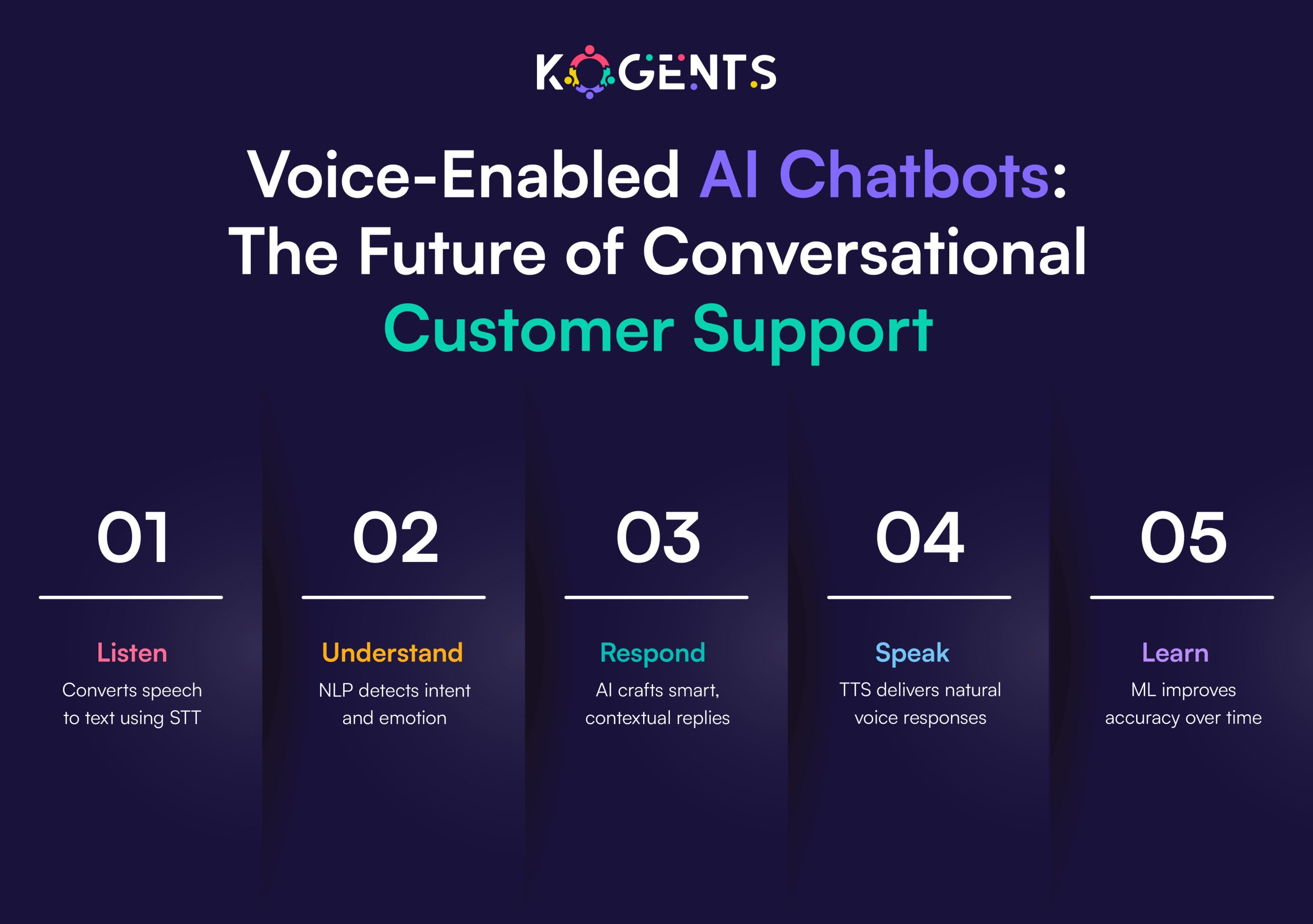
- Natural Language Processing (NLP): Understands text or voice queries.
- Natural Language Understanding (NLU): Interprets meaning and context.
- Machine Learning (ML): Improves accuracy over time.
- Generative AI: Crafts adaptive, personalized responses.
- Retrieval-Augmented Generation (RAG): Pulls factual data from verified sources.
Key Note: They integrate into CRMs (like Salesforce), support tools (like Zendesk), and messaging platforms, ensuring omnichannel support, from web chat to WhatsApp to social media.
Why Entrepreneurs & Solopreneurs Need AI Chatbots?
If you’re an entrepreneur, your most precious asset is time. You juggle marketing, sales, operations, and often, customer service.
That’s where AI chatbots change the game.
1. 24/7 Customer Support
AI chatbots provide instant, round-the-clock assistance, regardless of time zone. No downtime, no missed leads.
2. Cost Efficiency
Instead of hiring multiple agents, you can deploy an AI service desk chatbot at a fraction of the cost.
- Fast, Consistent Replies
Instant, accurate answers prevent customer frustration and improve first-response times, a key metric for customer satisfaction (CSAT).
4. Scalable Growth
Chatbots can handle 100 or 10,000 chats without adding new staff, perfect for fast-scaling solopreneurs.
5. Personalized Experiences
AI chatbots analyze past interactions to provide context-aware responses that make customers feel recognized and valued.
How AI Chatbots Work in Business & Healthcare?
Here’s what happens behind the scenes when a chatbot interacts with a customer:
- Message Input: The bot receives a query via chat, email, or voice.
- Intent Recognition: NLP identifies what the customer needs.
- Response Generation: ML models fetch or generate an appropriate reply.
- Escalation: Complex queries route to a human agent with full context.
- Continuous Learning: Feedback helps the bot improve over time.
Business Example
Companies like Zendesk use AI chatbots to manage 70% of tier-1 queries, allowing human agents to focus on complex issues.
Healthcare Example
Platforms like Babylon Health use AI chatbots to book appointments, triage symptoms, and follow up with patients, reducing administrative overhead.
How AI Chatbots Operate in Customer Service Workflows?
This is where chatbots become truly operational, embedded directly into daily support systems and workflows.
1. Automated Ticket Triage
Chatbots detect and classify customer requests (billing, refund, delivery, etc.) and create or update support tickets automatically in tools like Freshdesk or Zendesk.
2. Intelligent Self-Service
Bots instantly resolve FAQs by pulling answers from your knowledge base.
Example: “How do I change my plan?” triggers a relevant solution.
3. Context Retention Across Channels
AI chatbots keep track of ongoing conversations across web chat, email, and social media, ensuring customers never have to repeat themselves.
4. Smart Escalation to Humans
When a conversation turns emotional or complex, sentiment analysis kicks in, routing the customer to the right agent with conversation history intact.
5. CRM Synchronization
Every chat updates your CRM (like HubSpot or Salesforce) with new notes, preferences, and interaction data, helping you track leads and customers more effectively.
6. Analytics & Reporting
Modern bots analyze metrics like First Response Time, Resolution Rate, and Deflection Rate, turning customer data into business insights.
Example: Aisera’s AI Service Desk automates 65% of support requests and reduces response times by 40%, saving startups and mid-sized firms millions annually.
Use Cases for Entrepreneurs, Solopreneurs & Small Businesses
| Use Case | What It Does | Why It Matters for Founders | Example |
| E-Commerce Support Automation | Handles order tracking, returns, and product queries automatically. | Frees you from repetitive support tasks, boosting sales and satisfaction. | Shopify stores using Heyday by Hootsuite cut ticket volume by 45%. |
| Lead Generation & Qualification | Engages site visitors, asks qualifying questions, and routes warm leads. | Converts casual visitors into paying customers. | Solopreneurs using Intercom Fin saw a 3x rise in demo bookings. |
| Appointment Booking & Scheduling | Syncs with calendars for instant bookings or reschedules. | Eliminates back-and-forth emails and missed calls. | Clinics using Amelia AI reduced no-shows by 30%. |
| Customer Feedback Collection | Gathers post-purchase insights and satisfaction scores. | Helps entrepreneurs iterate based on real-time feedback. | SaaS startups using Typeform AI bots improved CX metrics by 25%. |
| Internal Helpdesk Automation | Answers employee FAQs (IT, HR, admin). | Saves internal time and reduces support burden. | Startups using Aisera’s internal chatbot cut internal tickets by 60%. |
| Social & Messaging Support | Manages WhatsApp, Facebook, and Instagram DMs. | Ensures no lead or inquiry slips through. | Influencer brands using Yellow.ai bots handle 90% of DMs automatically. |
Benefits of AI Chatbots
1. Cost Savings
That’s real money reinvested into growth.
2. Speed & Availability
They’re available 24/7, respond in seconds, and eliminate waiting queues, crucial for global solopreneurs managing multiple time zones.
3. Scalability Without Burnout
Chatbots scale effortlessly to handle surges in demand, such as holiday seasons or product launches, without needing extra hires.
4. Better Customer Experience
The best AI agents for customer support ensure personalized, fast, and accurate responses, improving CSAT and customer loyalty scores.
According to Salesforce, 61% of customers prefer AI-enabled self-service options.
5. Actionable Analytics
Every interaction powered by conversational AI for customer service is a goldmine of insight.
You can track frequent issues, detect churn signals, and identify upsell opportunities through chatbot analytics.
6. Consistent Brand Voice
Unlike humans, bots don’t get tired or emotional, ensuring consistent tone and professionalism across every interaction.
7. Human Empowerment
AI takes over repetitive work, allowing human agents to focus on relationship-building and complex problem-solving, where empathy truly matters.
Challenges & Limitations
Even the smartest AI customer service chatbots come with challenges, but each has a practical fix.
1. Limited Emotional Depth
AI can detect frustration but not always respond empathetically.
Solution: Integrate a human handoff once negative sentiment is detected.
2. Handling Complex Queries
Multi-step problems (like billing disputes) can confuse bots.
Solution: Combine AI with human-in-the-loop escalation for seamless resolution.
3. Data Security Risks
AI bots handle sensitive information, a potential privacy concern.
Solution: Use GDPR- and ISO-certified vendors with encryption and restricted data access.
4. Setup & Training
Initial setup requires effort; bots need training data.
Solution: Start with FAQs and gradually feed real interactions to improve learning accuracy.
5. Risk of Over-Automation
Relying too much on bots can make customer service feel robotic.
Solution: Keep human oversight in key decision paths and balance automation with empathy.
The Strategic Edge for Small Businesses
AI chatbots aren’t just support tools, they’re strategic enablers for growth and efficiency.
- Customer Insights: Every interaction helps identify trends, complaints, and opportunities.
- Sales Enablement: Bots can upsell or cross-sell intelligently.
- Global Expansion: Multilingual support opens new markets effortlessly.
- Brand Differentiation: Instant service builds credibility and customer trust.
- Time Freedom: For solopreneurs, that’s hours saved every week, time to innovate, not firefight.
AI Chatbots vs Other Tools
| Feature | AI Chatbots | Rule-Based Chatbots | Email Automation | Human Support |
| Context Awareness | High (via NLP/NLU) | Low | None | High |
| Response Speed | Instant | Fast | Slow | Variable |
| Scalability | Unlimited | Limited | Moderate | Limited |
| Personalization | AI-driven | Scripted | Basic | Human-level |
| Availability | 24/7 | Yes | No | No |
| Cost Efficiency | High ROI | Moderate | Medium | High |
| Best For | Startups & SMEs | FAQ Handling | Campaigns | Premium Cases |
Future of AI Chatbots
The next evolution of AI customer service chatbots is already unfolding:
- Generative AI & RAG: Bots that can reason, not just recall.
- Emotion Recognition: Chatbots that understand tone and adapt responses.
- Voice & Text Fusion: Seamless transitions between written and spoken communication.
- Proactive Agents: Bots that anticipate customer needs and act autonomously.
- Integration Ecosystems: Deeper ties with CRMs, ERPs, and analytics systems.
Case Study Spotlights
1. H&M
H&M’s chatbot handles order tracking, returns, and styling queries, reducing agent workload by 70%.
2. Bank of America – “Erica”
With over 25 million users, Erica automates transactions, balances, and reminders, saving thousands of agent hours monthly.
3. Sephora
Sephora’s chatbot provides personalized product suggestions, increasing engagement by 20%.
4. KLM Airlines
KLM’s multilingual chatbot halves average response times while maintaining high satisfaction
5. Shopify
Shopify’s Kit chatbot helps solopreneurs manage campaigns, saving 5–10 hours per week.
Conclusion
For entrepreneurs and solopreneurs, scaling support doesn’t have to mean scaling staff.
With AI chatbots for customer service, you can automate repetitive tasks, deliver faster responses, and personalize every interaction, all while keeping costs low.
AI isn’t here to replace your human touch; it’s here to amplify your impact.
By letting technology handle the routine, you free yourself to focus on what truly matters: building relationships, growing your brand, and creating exceptional customer experiences.
At Kogents.ai, we make this transformation effortless. Our intelligent chat solutions help you scale smarter, serve better, and grow faster, without adding extra hands to your team.
FAQs
What are AI chatbots for customer service?
They’re intelligent virtual assistants that automate customer interactions using AI, NLP, and machine learning.
How do they improve operations?
By automating ticketing, FAQs, and routing, they cut response times and reduce agent workloads.
Are they replacing humans?
No, they augment human agents by handling routine inquiries.
Which industries benefit most?
E-commerce, SaaS, healthcare, finance, and education.
Are AI chatbots secure?
Yes, enterprise-grade chatbots use encryption and comply with GDPR and ISO standards.
What’s the ROI?
Up to 60% cost reduction and 35% higher CSAT within six months of deployment.
Can they handle multiple languages and voice?
Absolutely, most modern bots are multilingual and voice-enabled.
How do they differ from rule-based bots?
AI bots learn and adapt; rule-based bots rely on static scripts.
How do I install one?
Platforms like Ada, Intercom, and Yellow.ai offer plug-and-play website integration.
What’s next for AI chatbots?
Generative AI will evolve bots into autonomous, context-aware digital employees.