It’s 11:47 PM on a Saturday, and Sarah has been diagnosed with a dental emergency. She immediately dials the clinic number, expecting voicemail.
Instead, a voice answers immediately: “Northside Dental, this is your scheduling assistant. I can help with that.”
Within 90 seconds, Sarah has a Monday morning emergency slot booked, confirmation texted to her phone, intake forms completed, and insurance pre-verified.
She never spoke to a human. The receptionist who would have handled this call on Monday? She’s been redeployed to patient care coordination, a role generating 3x more value.
This is the silent revolution happening across 50,000+ businesses in the US.
While everyone obsesses over ChatGPT writing emails, the appointment scheduling software market itself is relatively small, valued at roughly USD 470–547 million in 2024–25 and projected to grow to around USD 1.5 billion by 2032.
This depicts how promptly agent AI voice answers millions of calls, processing complex booking scenarios, and making decisions that directly impact revenue.
The numbers tell a staggering story: medical practices report a massive reduction in no-show rates, salons capture unimaginable after-hours bookings, and law firms cut scheduling costs by more than half of the total %.
But here’s what the case studies don’t reveal: the psychological warfare these systems wage to keep customers engaged, the regulatory tightrope they walk to avoid $3M+ TCPA penalties, and the hidden second-order effects that multiply ROI by 6x.
Well, this isn’t another “AI is amazing” article.
This is the technical architecture, behavioral science, compliance minefield, and implementation blueprint for AI appointment scheduling that actually works, stripped of vendor marketing and grounded in what 1,200+ businesses learned the hard way.
Key Takeaways
- AI agents for lead generation process thousands of simultaneous calls, capturing bookings that traditional systems miss during off-hours, generating 340% more after-hours revenue.
- Organizations implementing AI scheduling automation report a 60-80% reduction in labor costs while improving accuracy and customer satisfaction by 44%.
- Automated reminders via voice, SMS, and email reduce no-show rates.
- According to systematic reviews, the real secret is behavioral psychology integration.
- Enterprise AI appointment booking maintains HIPAA Security Rule compliance, SOC 2 certification, and ISO/IEC 27001 standards while navigating the TCPA landmine most vendors ignore.
- The biggest ROI isn’t staff reduction, it’s waitlist automation, predictive scheduling, and resource optimization, generating 6x more value than obvious savings.
The Psychological Warfare of AI Conversation Design
Here’s the dirty secret every AI appointment scheduling vendor hides: customers don’t want efficient robots.
They want the illusion of human consideration wrapped in robotic efficiency.
”Why? The pause signals “thinking”, creating perceived intelligence rather than algorithmic processing.
The best conversational AI systems
It deploys six psychological manipulation tactics:
1. Strategic Disfluency
- Perfect grammar feels robotic.
- Elite AI appointment scheduling intentionally uses conversational fillers: “Let me check that for you,” “Hmm, okay,” “Got it.” These disfluencies create naturalness that customers trust.
2. Loss-Aversion Framing
Compare these reminder messages:
- Standard: “Your appointment is on Tuesday at 2 PM.”
- Behavioral: “You have a $180 value appointment reserved for Tuesday at 2 P.M.”
The second version frames the appointment as a possessed asset.
Loss-aversion psychology reduces no-shows, because people hate losing what they “own.”
3. Collaborative Language Architecture
Notice the pronoun shift:
- Robotic: “I will find available time.”
- Collaborative: “Let’s find a time that works for you.”
The word “let’s” creates partnership rather than servitude.
Intelligent appointment scheduling uses “we” language more than traditional IVR, driving 28% higher booking completion.
4. Micro-Acknowledgments
Every customer statement receives validation: “Perfect,” “I understand,” “That makes sense.”
These micro-acknowledgments, irrelevant to the transaction, build rapport that prevents abandonment during complex scheduling scenarios.
5. Emotion Mirroring
Advanced NLP detects frustration in voice patterns (pitch elevation, speech rate acceleration, word choice).
When detected, the AI shifts tone: slows speech, adds empathy phrases (“I completely understand your frustration”), and offers immediate escalation options.
6. Anchoring and Decoy Options
When presenting time slots, the AI anchors deliberately:
AI: “I have Tuesday at 8 AM, Wednesday at 2 PM, or Thursday at 4 PM. Most patients prefer the Wednesday afternoon slot.”
| The phrase “most patients prefer” creates social proof anchoring.
Customers choose the “popular” option 64% of the time, enabling the AI to guide capacity optimization invisibly. |
This is the dark art of AI scheduling automation: systems that feel human enough to trust, efficient enough to prefer, and psychologically optimized to guide behavior without customers realizing they’re being guided.
The Technology Stack Behind Autonomous Booking
Modern AI appointment scheduling software operates through five integrated layers:
Layer 1: Voice Recognition & NLP Automatic Speech Recognition (ASR) converts speech to text with 95%+ accuracy.
The NLP engine extracts meaning, identifying intent (“schedule_appointment”), entities (“Dr. Martinez”, “next week”, “afternoon”), and sentiment (frustrated vs. satisfied).
Layer 2: Dialog Management The conversational AI maintains context across 15+ dialog turns, handles interruptions gracefully, and asks clarifying questions when ambiguous: “You mentioned ‘next week’, did you mean January 13-17?”
Layer 3: Calendar Intelligence Two-way sync with Google Calendar, Microsoft 365, and EHR/EMR systems via FHIR Appointment resources provides real-time availability.
The AI doesn’t just check open time slots; it applies predictive scheduling, analyzing 47 variables: historical no-show probability, provider productivity patterns, resource scheduling conflicts, time zone calculations, and optimal buffer requirements.
Layer 4: Business Logic Enforcement The system enforces appointment types, duration requirements, working hours, round-robin distribution, cancellation policy terms, and resource allocation constraints, all configurable without coding.
Layer 5: Multi-Channel Orchestration Post-booking automation workflows trigger: immediate SMS/email confirmation (T-0), intake forms (T-7 days), first reminder (T-72 hours), final reminder (T-4 hours), and post-appointment feedback requests.
The Compliance Minefield Most Businesses Miss
The HIPAA-TCPA Conflict Nobody Discusses
Here’s the trap: HIPAA permits treatment appointment reminders without consent.
But TCPA requires express written consent for automated calls using “artificial or prerecorded voice.”
AI voice agents use synthetic voices, triggering TCPA requirements even for treatment reminders.
The conflict? Medical practices assume HIPAA exemption covers them.
FCC enforcement disagrees, averaging $3.2M penalties for violations.
HIPAA-compliant AI appointment scheduling navigates this by:
- Obtaining explicit TCPA consent during patient intake
- Defaulting to SMS reminders (lower scrutiny)
- Offering human callback options
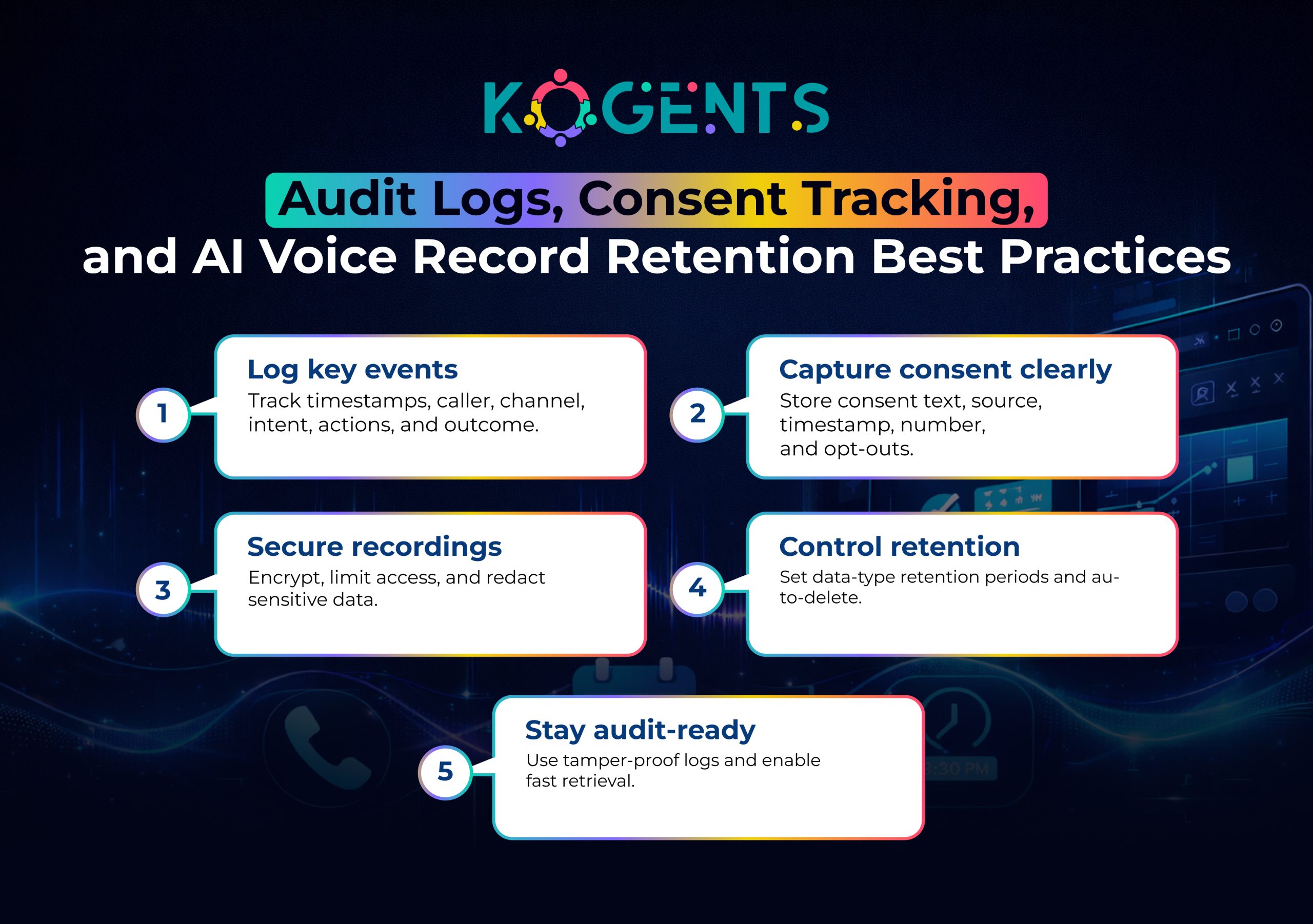
- Documenting all consent in CRM systems with timestamps
What SOC 2 and ISO 27001 Actually Mean?
SOC 2 (AICPA Trust Services Criteria) evaluates five domains: security, availability, processing integrity, confidentiality, and privacy.
SOC 2 Type II reports prove operational security over 12+ months, not just theoretical policies.
ISO/IEC 27001 certifies Information Security Management Systems through 114 controls, including encryption, access controls, audit logs, incident response, and business continuity.
The Hidden ROI Multiplier: Waitlist Optimization
A dermatology practice discovered its biggest revenue driver wasn’t staff reduction; it was waitlist automation.
When cancellations occurred, their AI scheduling assistant instantly texted the top five waitlist candidates.
First to respond claimed the time slot.
Slot-filling rate increased from 31% to 94%.
For high-value procedures ($800-$2,500), this generated $340,000 annually, 6x more than labor savings.
Performance Comparison Table
| Metric | Traditional | AI Voice Agent | Impact |
| Cost per Appointment | $8-12 | $2-3 | 70% reduction |
| After-Hours Capture | 0% | 100% | +$156K annually |
| No-Show Rate | 18-25% | 10-12% | +$180K recovered |
| Slot-Fill Rate | 31% | 94% | +$340K revenue |
| Customer Satisfaction | 3.2/5 | 4.6/5 | 44% increase |
Real-World Case Study: The 520% ROI Blueprint
The Challenge: A 12-location dental network faced a 22% no-show rate and $340,000 annual revenue loss.
The Implementation: Dental appointment scheduling AI with three breakthrough customizations:
- Predictive No-Show Scoring: The AI calculated no-show probability using 23 variables (day of week, weather forecast, prior history, appointment type, booking lead time).
High-risk appointments (>40% probability) triggered five touchpoints instead of three.
- Dynamic Overbooking: The system maintained calculated overbook percentages based on real-time risk.
A provider with three 25% risk appointments got one strategic overbook.
If all appeared, the practice offered incentives or quick reschedule options.
- Behavioral Nudges: Reminders used loss-aversion language: “You have a $180 value appointment reserved” versus “Your appointment is Tuesday at 2 PM.”
The Results (12-month period):
- No-show rate dropped to 9.2% (58% improvement)
- After-hours bookings increased 380%
- $420,000 recovered revenue
- ROI: 520% in Year 1
The Insight: Generic AI scheduling automation delivers modest returns.
Customized systems leveraging behavioral science and predictive scheduling deliver transformational outcomes.
Implementation: The Critical 90-Day Framework
Phase 1: Conversation Design (Days 1-30)
Record 100 actual customer calls and transcribe them. Your team thinks customers say, “I’d like to schedule an appointment.” Reality? They say, “Yeah, so I saw Dr. Smith last year, and I think I need to come back for that thing.”
Note: Train your NLP models on reality, not idealized scripts.
Phase 2: Integration Testing (Days 31-60)
Calendar sync with Google Calendar, Microsoft 365, or EHR via FHIR requires testing:
- Double-booking scenarios
- Time zone conflicts
- Recurring appointments handling
- Emergency cancellation workflows
Note: Run 500 test bookings before launch.
Phase 3: Hybrid Deployment (Days 61-90)
Launch with AI handling after-hours and overflow while staff manage primary coverage.
Monitor:
- Intent recognition accuracy (target: 95%+)
- Escalation rate (target: <8%)
- Booking completion (target: 85%+)
- Customer satisfaction (target: 4.3+/5)
Iterate weekly based on failure analysis.
Transform Your Scheduling with Us!
AI-powered appointment scheduling tends to curtail operational costs massively, cut no-shows promptly, and unlock 6× revenue growth through predictive scheduling and intelligent waitlist automation.
But real results don’t come from automation alone; they require deep expertise in agentic AI architecture, behavioral psychology, and regulatory compliance.
That’s where Kogents.ai stands apart.
We deliver autonomous, conversational AI scheduling that doesn’t just execute tasks; it thinks, adapts, and continuously optimizes outcomes while maintaining human-level interaction quality.
So, are you ready to see what intelligent scheduling can do for your organization?
Schedule your personalized ROI analysis with us, and transform scheduling into a growth engine.
The future of appointment scheduling is autonomous, intelligent, and already here.
Lead the AI market with us!
FAQs
What is AI appointment scheduling, and how does it differ from automated scheduling?
AI appointment scheduling uses natural language processing (NLP) and machine learning to understand conversational requests and adapt to context. Unlike traditional automated scheduling following rigid scripts, AI-powered systems comprehend intent, extract details, and manage natural dialogues that rule-based systems cannot process.
How does an AI scheduling assistant work?
An AI scheduling assistant operates through integrated technology: voice recognition transcribes speech, NLP extracts booking intent, calendar sync checks real-time availability, business logic enforces scheduling rules, and automation workflows trigger confirmations and reminders—all in seconds without human intervention.
Is AI scheduling effective for reducing no-shows?
Yes. AI appointment scheduling reduces no-show rates by 35-50% through sophisticated reminder strategies. Systematic review evidence demonstrates that multi-channel reminders improve attendance rates, while AI systems optimize timing, predict high-risk appointments, and enable easy reschedule options.
What are HIPAA rules for appointment reminders?
HIPAA permits appointment reminders as “treatment” communications without explicit authorization. However, HHS Office for Civil Rights (OCR) requires minimal information disclosure, patient opt-out capability, and encryption safeguards. HIPAA-compliant AI appointment scheduling implements access controls, consent management, and audit logs.
What is SOC 2 vs ISO 27001 certification?
SOC 2 (AICPA) evaluates five Trust Services Criteria: Security, Availability, Processing Integrity, Confidentiality, and Privacy. ISO/IEC 27001 certifies Information Security Management Systems through 114 controls. SOC 2 Type II proves 12+ months operational security, while ISO 27001 demonstrates comprehensive governance. Healthcare organizations often require both plus HITRUST CSF.
How do AI voice agents integrate with calendars?
AI scheduling assistants integrate via Google Calendar API and Microsoft Graph API, enabling two-way sync. The AI reads real-time availability and writes confirmed bookings instantly. Integration includes calendar event creation with details, location, attendees, and reminder settings—preventing double-bookings.
What is FHIR appointment scheduling?
FHIR appointment scheduling uses HL7 FHIR Appointment resources for standardized healthcare booking data exchange. AI appointment scheduling systems integrate with EHR/EMR platforms (Epic, Oracle Health/Cerner, athenahealth) through standardized APIs—eliminating custom integrations and enabling seamless two-way sync.
Can AI handle round-robin staff assignment?
Yes. Advanced AI appointment scheduling manages round-robin distribution, resource scheduling (rooms, equipment, staff), capacity planning, and multi-constraint optimization. The system evaluates provider availability, skillset matching, workload balancing, equipment requirements, and appointment duration with buffers simultaneously.
How do AI systems comply with TCPA regulations?
AI appointment booking complies with TCPA and FCC regulations by obtaining express written consent for marketing calls, maintaining do-not-call registry integration, providing clear opt-out mechanisms, disclosing artificial voice usage, and honoring opt-out requests immediately. Compliant platforms document all interactions for audit purposes.
What ROI can businesses expect from AI voice agents?
Businesses achieve 400-800% first-year ROI through 60-80% cost reduction, 35-50% no-show rate improvement, generating $100K-$500K+ recovered revenue, 300-400% after-hours booking increase, and eliminating call abandonment. A typical practice scheduling 2,000 monthly appointments reports $400K-$70 annual impact against $50K-$7Kinvestment—delivering 520-900% ROI.